FED, Zorki, Zenit: three names found at every flea market in Eastern Europe, all descended from the same German camera, the Leica II. The first two are rangefinders, the third an SLR. Kiev cameras come from the Contax instead. This guide explains where each family comes from, how each viewing system works, how to tell them apart at a glance, what Soviet underwater housings were, and what to check before you buy.
OCTOBER 2026•15 MINUTE READ
by Marwen Yahyaoui
Krasnogorsk-3 16 mm cine camera, with its manual and film reels.
The 16 mm Красногорск-3 (Krasnogorsk-3) cine camera carries the “Зенит” (Zenit) logo on its side. It comes from the Krasnogorsk Mechanical Works near Moscow, КМЗ (KMZ), the factory that also built the Зоркий (Zorki) and Zenit still cameras. According to the English Wikipedia, 105,435 were made from 1971 to 1993, with a Метеор-5-1 (Meteor) 1.9/17-69 mm zoom, a spring motor running about 25 seconds at 24 frames per second, and reflex viewing through the lens. That is the same viewing system as a Zenit. To see where it comes from, go back to Kharkiv in 1927.
FED: Leica copies built by a commune of street children
On 29 December 1927 a labour commune for homeless children opened in Kharkiv, Ukraine. It was named after Felix Edmundovich Dzerzhinsky, founder of the Soviet political police. The educator Anton Makarenko ran it at first, and its workshops started with electric drills, according to the history published by the factory.
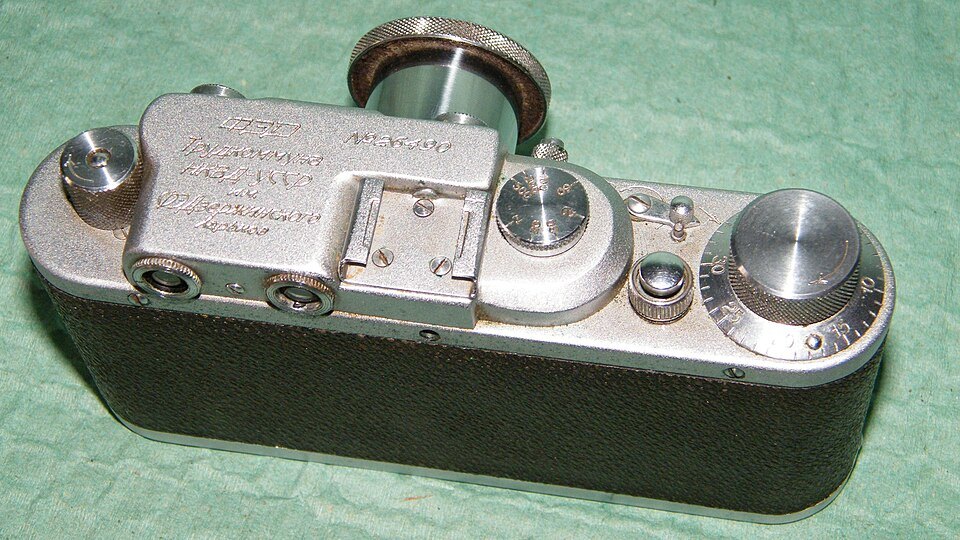
In the early 1930s the commune set out to copy the German Leica. According to the Russian Wikipedia, thirty cameras were assembled by hand in 1933, and a first batch of 500 came out in April 1934: a near-exact copy of the Leica II. The name is made of Dzerzhinsky’s initials: ФЭД (FED), for Ф. Э. Дзержинский. Bodies from the 1930s are engraved on the top plate “Трудкоммуна НКВД-УССР им. Ф. Э. Дзержинского, Харьков” (Trudkommuna NKVD-USSR imeni F. E. Dzerzhinskogo, Kharkov): the commune came under the НКВД (NKVD), the interior commissariat, of Ukraine.
1930s FED: the top plate engraved with the name of the Ukrainian NKVD commune, and the two separate eyepieces. Photo Andshel, Wikimedia Commons, CC BY-SA 3.0.
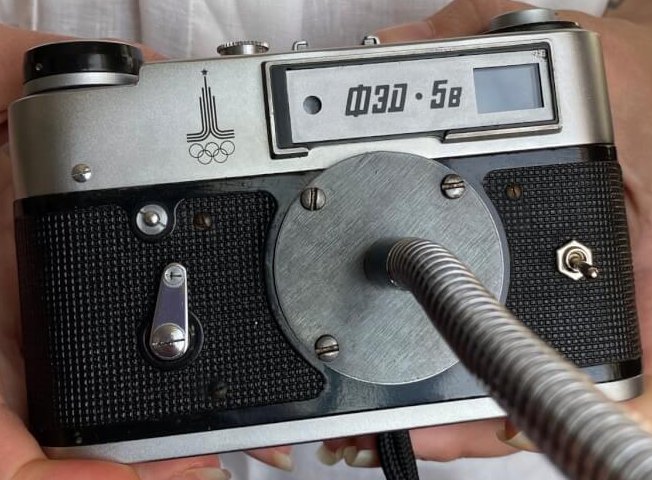
During the war Kharkiv was occupied and the factory was evacuated to Berdsk in Siberia, where it assembled only a small number of cameras. The first FED stayed in production until 1955. Its successor, the FED-2, combined viewfinder and rangefinder in a single eyepiece. According to the English Wikipedia, the FED-4 (1964-1977) added an uncoupled selenium meter, and the FED-5 came in three versions, including the meterless FED-5В (FED-5V). Production stopped in the 1990s. The factory states that 8,647,000 cameras were made since the beginning.
A 1980 FED-5V with the Moscow Olympics emblem, turned into a lamp: the lamp arm takes the place of the lens.
Zorki: the FED rebuilt at Krasnogorsk
After the war the FED documentation was passed on to KMZ, a factory set up in 1942 at Krasnogorsk. Production started there in 1948. The first cameras were marked “ФЭД 1948 Зоркий” until 1949, then simply Зоркий, a word meaning “sharp-sighted”. Like the Leica II and the first FED, the first Zorki has two eyepieces: you frame through one and focus through the other.
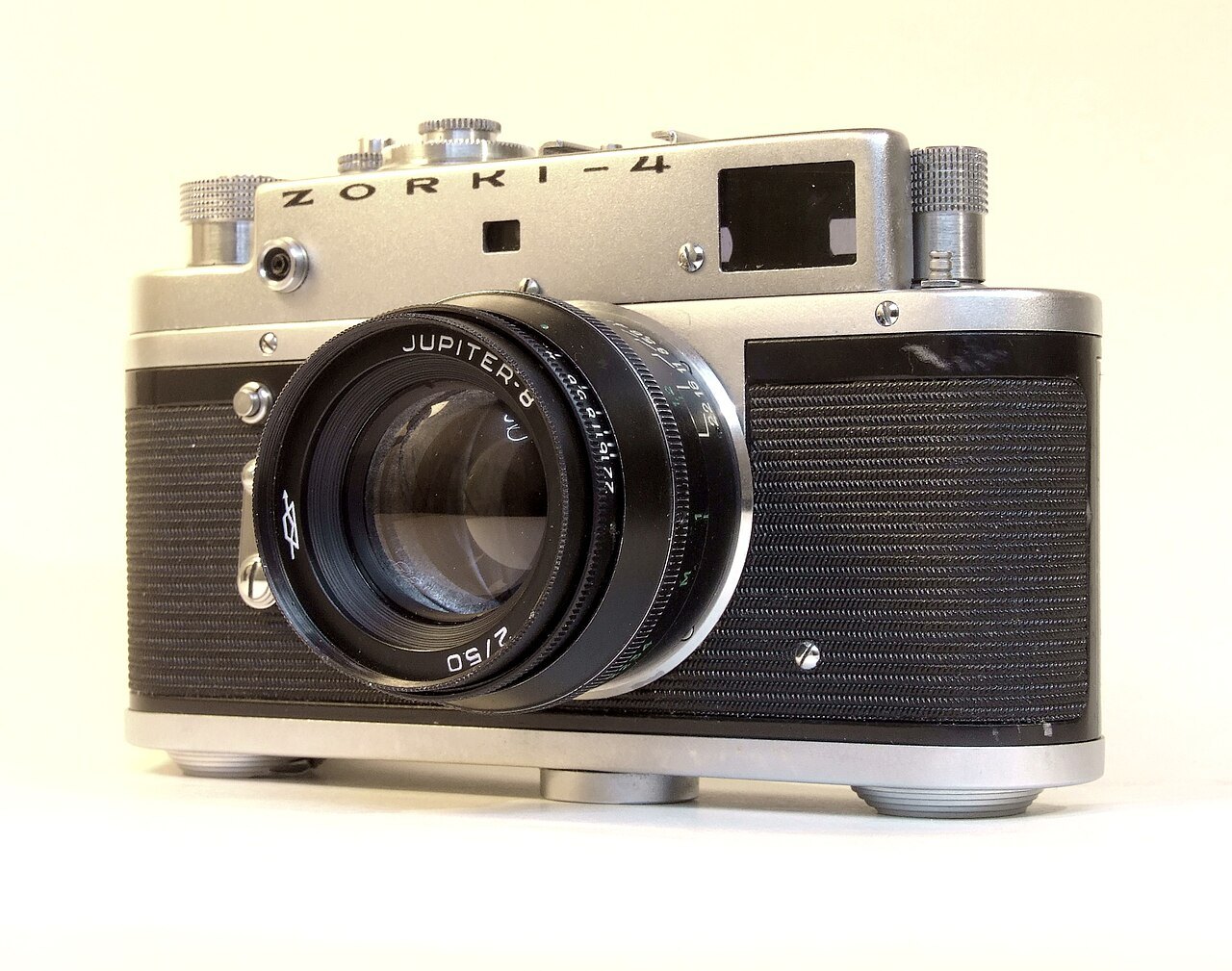
The most common model is the Zorki-4, made from 1956 to 1973 in 1,715,677 units according to the Russian Wikipedia and Camerapedia. It combines viewfinder and rangefinder in one eyepiece. On this model, according to Camerapedia, the first two digits of the serial number give the year of manufacture. The Zorki-4K, from 1972, replaces the film advance knob with a lever.
Zorki-4 with a Jupiter-8 2/50 lens. Photo Mohylek, Wikimedia Commons, CC BY-SA 3.0.
Zenit: the SLR derived from the Zorki
In 1952 KMZ added a mirror and a prism to the Zorki body. The first Zenit was made from 1952 to 1956 in 39,019 units, according to the Russian Wikipedia. It was the first Soviet camera with a pentaprism. Its mirror does not return by itself: it only comes back down when the shutter is wound. Its viewfinder shows only about two thirds of the picture.
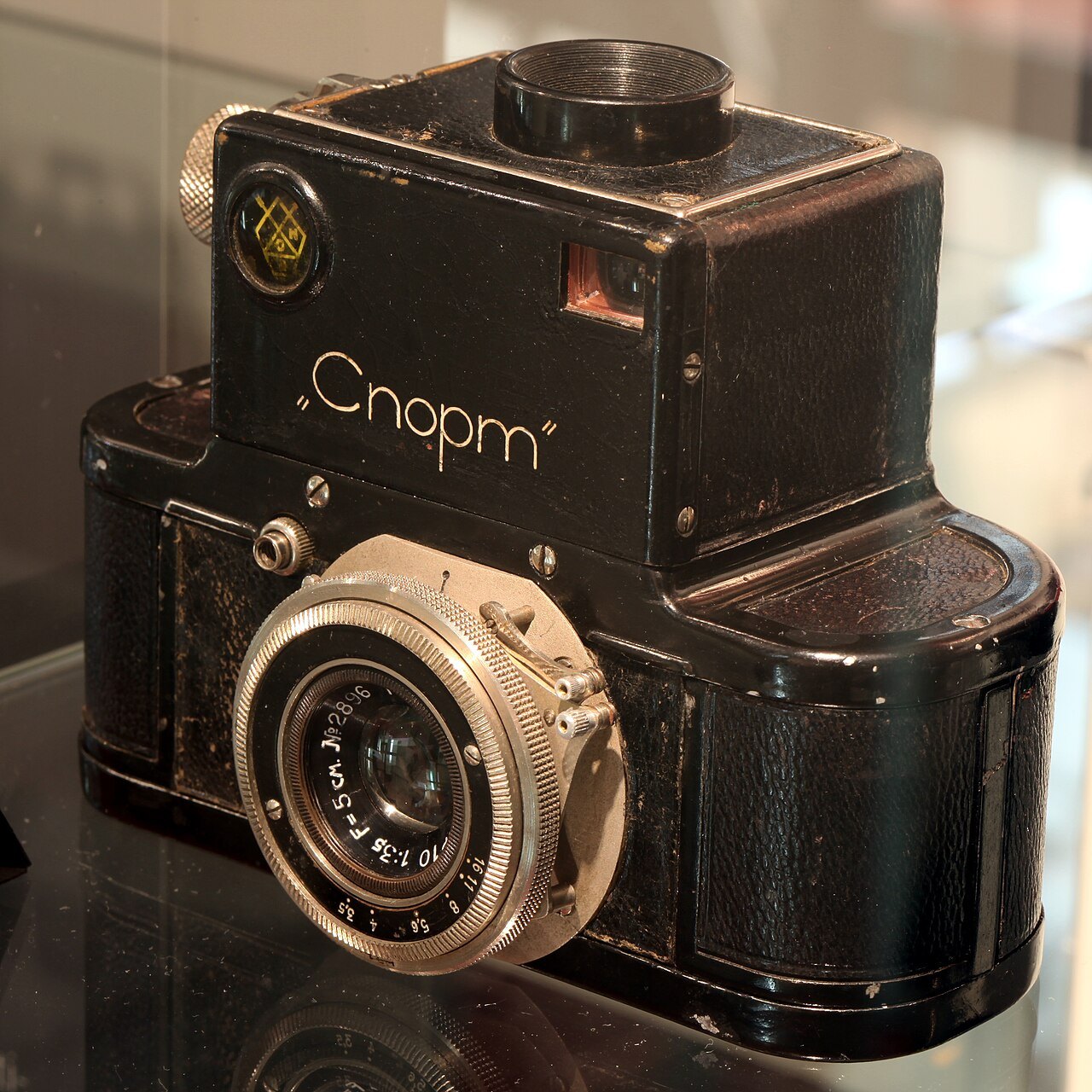
The SLR was nothing new in the USSR. From 1937 to 1941 the ГОМЗ (GOMZ) factory in Leningrad built about 20,000 of the Спорт (Sport). Soviet books called it the world’s first 35 mm SLR. Western sources give that place to the German Kine Exakta, on sale from 1936.
The GOMZ Спорт (Sport), the first Soviet 35 mm SLR: its name is painted in Cyrillic on the body. Photo Rama, Wikimedia Commons, CC BY-SA 2.0 FR.
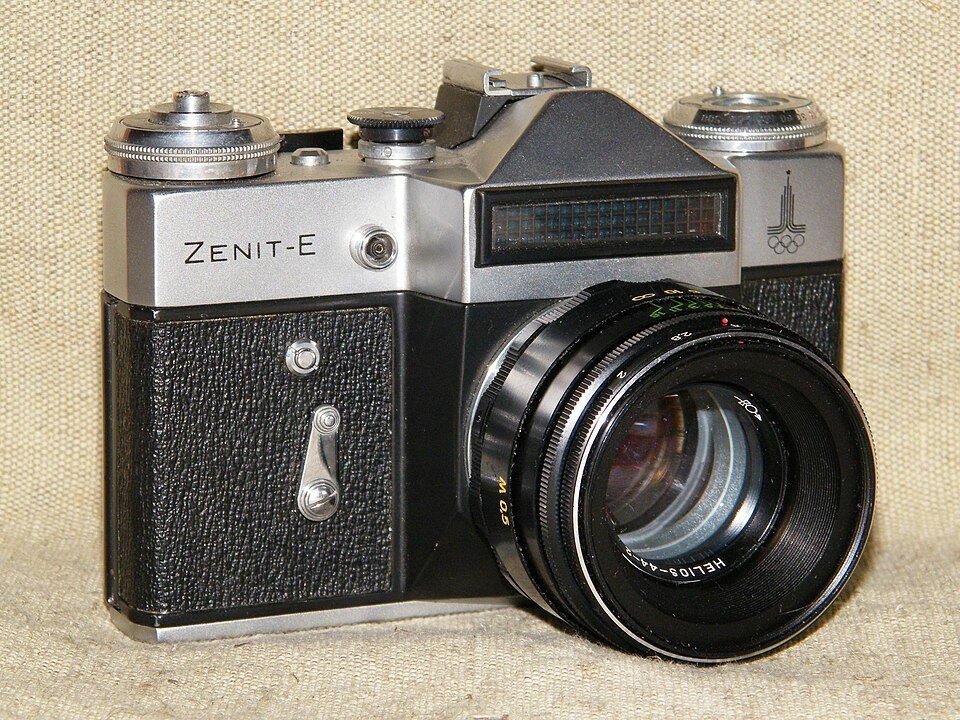
The most widespread model is the Zenit-E. KMZ built it from 1965 to 1982, and the Vileyka plant in Belarus, part of the BelOMO group, until 1986. The Russian Wikipedia gives over 8 million units, 3,334,540 of them at Krasnogorsk. It has an uncoupled selenium meter and was sold with a Гелиос-44-2 (Helios) 2/58 or an Индустар-50-2 (Industar) 3.5/50. Its screw mount is M39 at first, then M42. Until 1967 its mirror was still of the non-return type.
Zenit-E with the Moscow Olympics emblem and a Helios-44 lens. Photo Andshel, Wikimedia Commons, CC BY-SA 4.0.
In 1980, again according to the Russian Wikipedia, the Zenit-E cost 100 roubles with the Helios-44-2, and 110 roubles in its Olympic emblem version. That is nearly 58% of the average Soviet monthly wage of 1985 (190.1 roubles gross). Measured against the average gross French salary of 2024, the same share comes to a little over €2,000.
What about Kiev cameras?
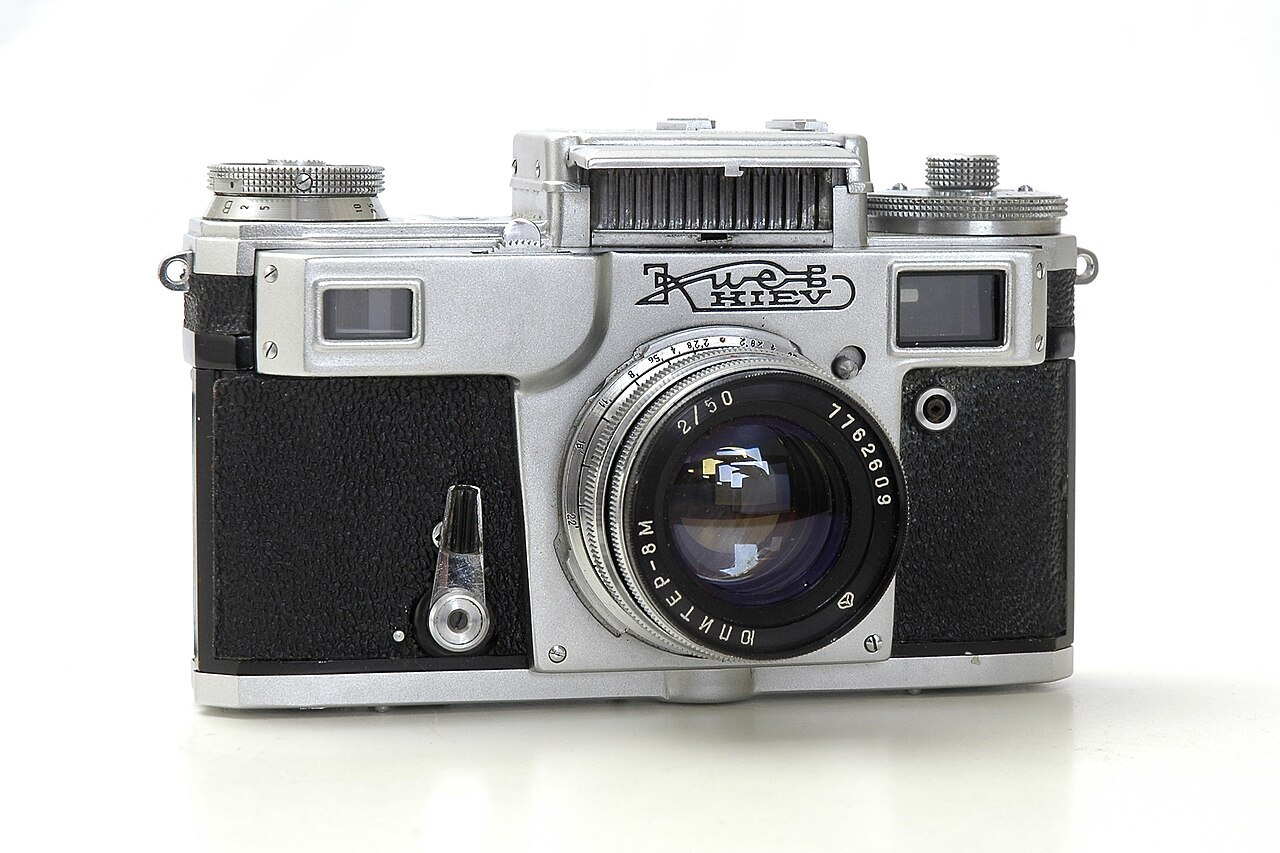
Киев (Kiev) cameras are the other family of Soviet rangefinders. They come from the Арсенал (Arsenal) factory in Kyiv and descend not from the Leica but from the German Contax II and III. According to the English Wikipedia, after the war the USSR had the Contax tooling remade by the Dresden toolmaker that had produced the first set, then moved it to Kyiv together with German instructors. Kiev cameras keep the Contax bayonet, unrelated to the screw mount of FED and Zorki. The Kiev-4 and 4A are the most common.
Kiev-4 with a Jupiter-8M 2/50 lens: the two rangefinder windows sit at either end of the top plate. Photo Dmitry Makeev, Wikimedia Commons, CC BY-SA 4.0.
Rangefinder vs SLR: what your eye sees
A rangefinder, whether FED, Zorki or Kiev, has two light paths. The lens sends the image onto the film. To frame, you look through a separate window. To focus, the rangefinder shows two images of the same subject: one comes through the viewfinder window, the other enters through a second window a few centimetres away and is reflected by a mirror or prism that swivels as you turn the lens ring. When the two images overlap, the lens is in focus. The distance between the two windows is called the rangefinder base.
The weak point is parallax: the viewfinder is offset from the lens. The difference is negligible at a distance, grows as the subject gets closer, and close-up framing becomes approximate. In return the camera has no mirror: it is smaller, quieter, and its viewfinder does not black out at release.
An SLR like the Zenit has only one path. Light goes through the lens onto a mirror set at 45°, which sends it up to a focusing screen. Above it, the pentaprism turns the image upright and sends it to the eyepiece. You see what the lens sees, with no parallax, whatever lens is fitted. At release the mirror swings up, the shutter opens and the viewfinder goes black for the exposure. On the first Zenit and on Zenit-E cameras made before 1967 it stays black until you wind on: tick the box in the diagram to see it.
A hump on top houses the pentaprism: it is an SLR, a Zenit in most cases. No hump, and two or three windows on the front: it is a rangefinder, FED, Zorki or Kiev.
Two eyepieces at the back: separate viewfinder and rangefinder, as on the first FED and the first Zorki. One eyepiece: they are combined, as on the FED-2 and later models, or on the Zorki-4.
The mount: Leica-type screw on FED and Zorki, Contax bayonet on Kiev, M39 then M42 screw on Zenit.
A selenium meter on the front points to a later model, FED-4 or Zenit-E, not an early one.
Same thread does not mean same mount. The M39 of early Zenit cameras has the thread of FED and Zorki, but a flange distance of 45.2 mm instead of 28.8 mm: the lens screws on and will not focus. The flange distance of pre-war FED cameras was not standardised, according to the Russian Wikipedia: each lens was matched to its body. To read the engravings, our guide to reading Cyrillic on a Soviet watch dial gives the alphabet.
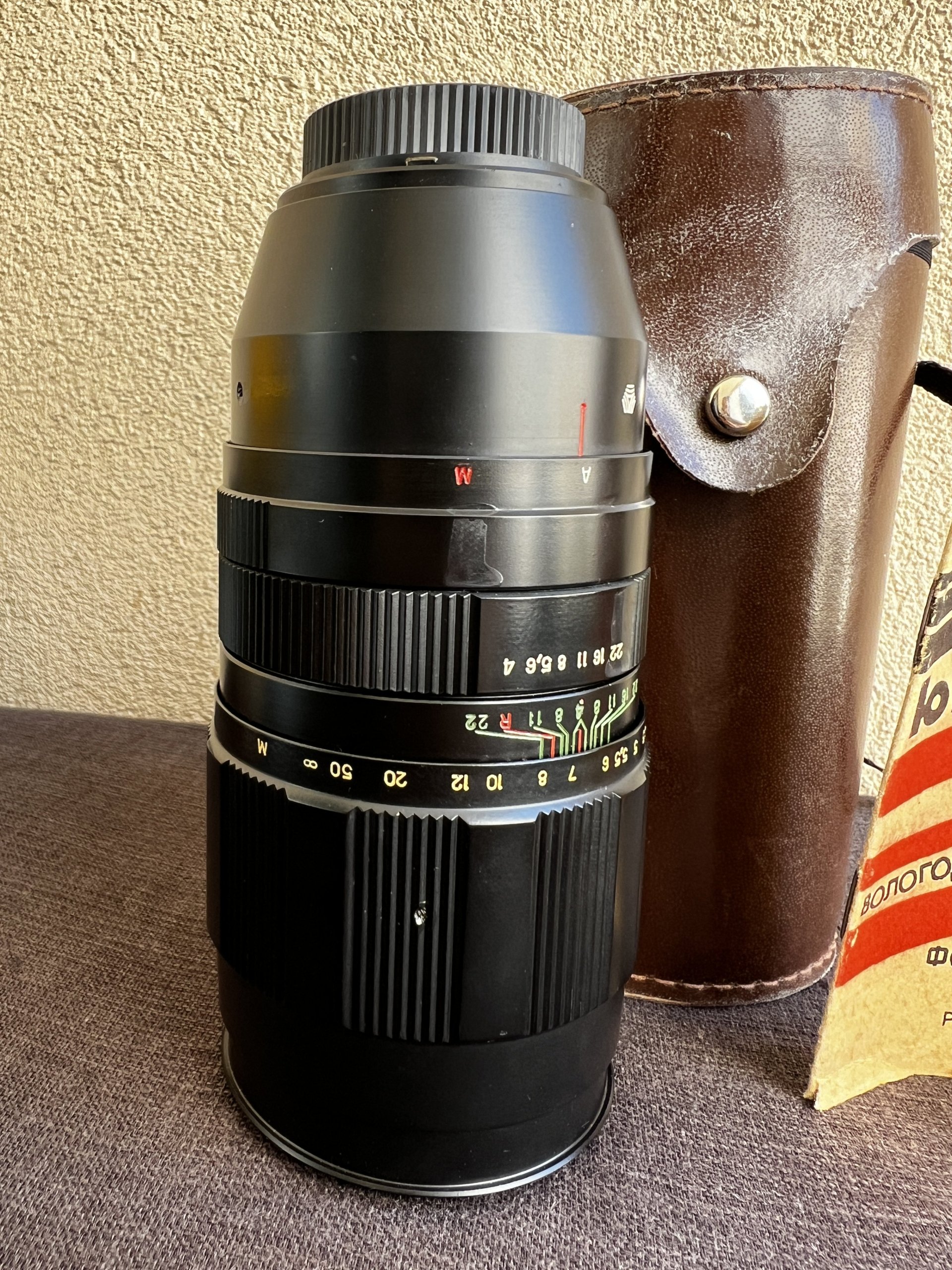
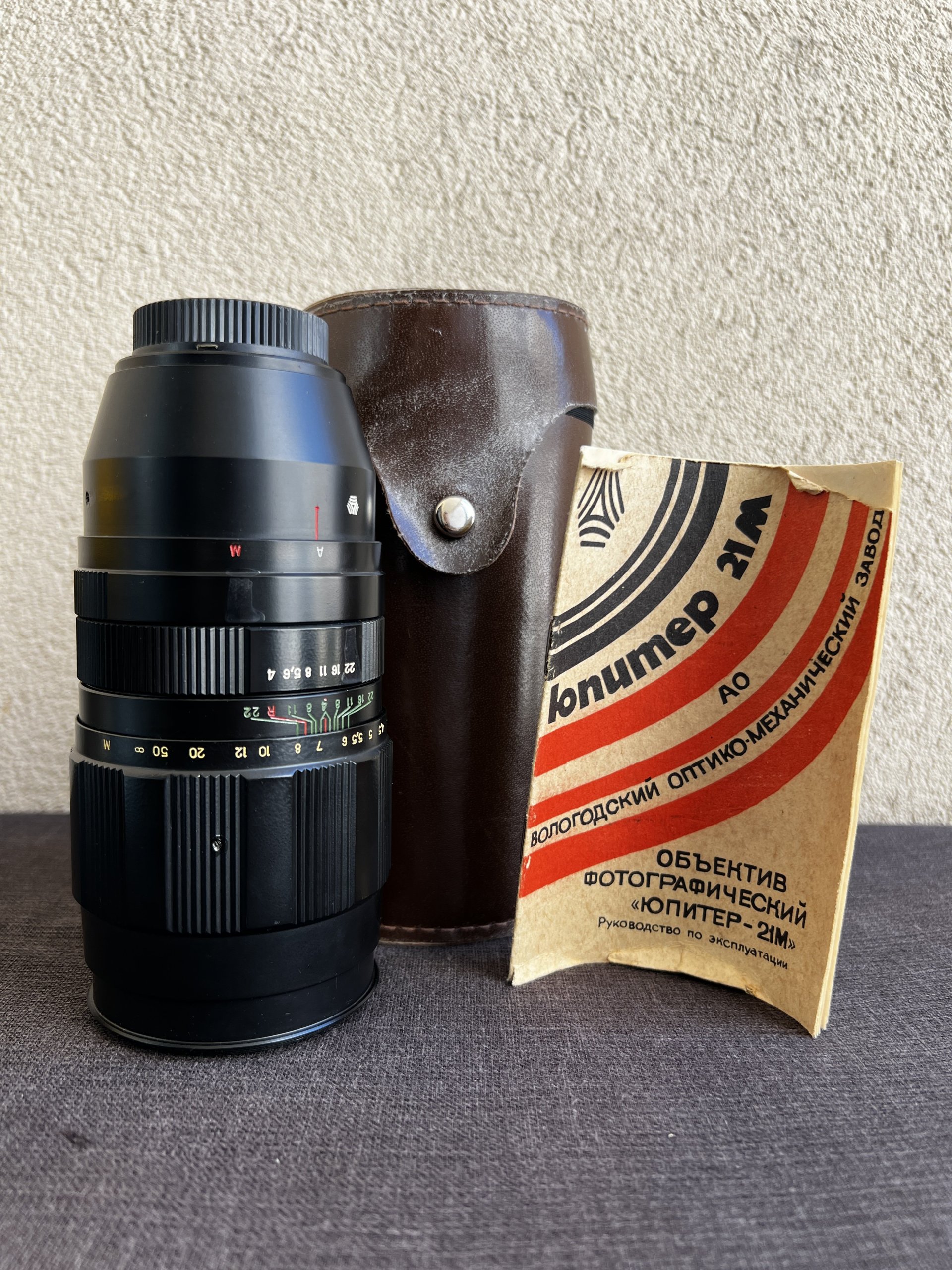
Jupiter-21M 4/200 telephoto lens from the Vologda plant, with its case.
M42 is the mount of the most common Zenit cameras. The Юпитер-21М (Jupiter-21M) 4/200 in stock is an example. Its manual describes it as a telephoto lens with a “jumping” diaphragm that stops down at the moment of release, made for cameras of the “Зенит” and “Практика” (Praktica) type, for shooting from a distance, for wildlife photography and for architectural details. It comes from the Vologda Optical-Mechanical Plant and its inspection certificate is dated 1996, after the end of the USSR. Its optical design goes back to the 1950s. It is new old stock, with its case, box and manual.
Underwater: Soviet camera housings
Amateur underwater photography took off in the 1950s. According to the English Wikipedia, the Rolleimarin housing, developed with Hans Hass, went on sale in 1954, and the waterproof Calypso camera, designed in 1957, became the Nikonos in 1963. The USSR built its own housings in the 1960s. Three models have passed through our shop.
LOMO still camera housing, 1966: port, frame finder and handles. Sold.
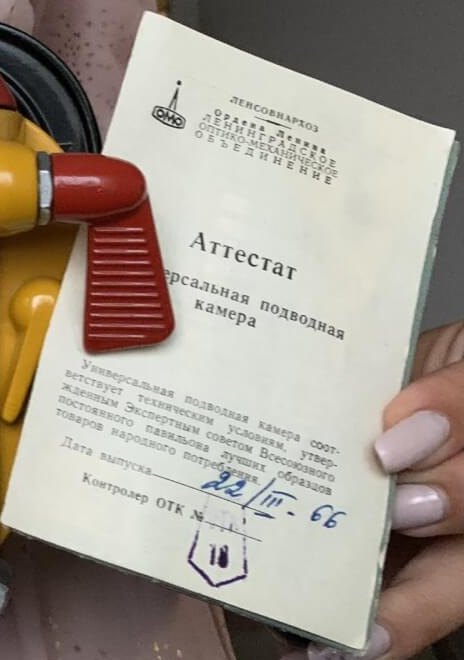
Its certificate: Универсальная подводная камера, dated 22 March 1966.
The first is a housing for a still camera. Its certificate carries the letterhead of the Ленинградское оптико-механическое объединение (Leningradskoye optiko-mekhanicheskoye obyedineniye), the Leningrad Optical-Mechanical Association, ЛОМО (LOMO), and names it “Универсальная подводная камера” (universalnaya podvodnaya kamera), “universal underwater chamber”. The date of manufacture is written by hand, 22 March 1966, above the stamp of inspector no. 18. Its cardboard box is marked “Фото бокс” (foto boks). This example was new, with its box, manual, accessories and leather neck strap. According to Vladimir Zverev, who keeps a history of Soviet underwater photography, this LOMO housing, which he calls the УКП (UKP), took fourteen camera models, including the FED, Zorki, Kiev, Zenit and Start, and was rated to 40 metres.
The plate of a KPF-1 housing: no. 65095 under the KMZ emblem, a prism crossed by an arrow.
The second is a grey housing of the КПФ-1 (KPF-1) type, aluminium, about 3 kg, for military use, also carried on a neck strap. Its plate carries no. 65095 under the emblem of the Krasnogorsk plant, KMZ: a prism crossed by an arrow.
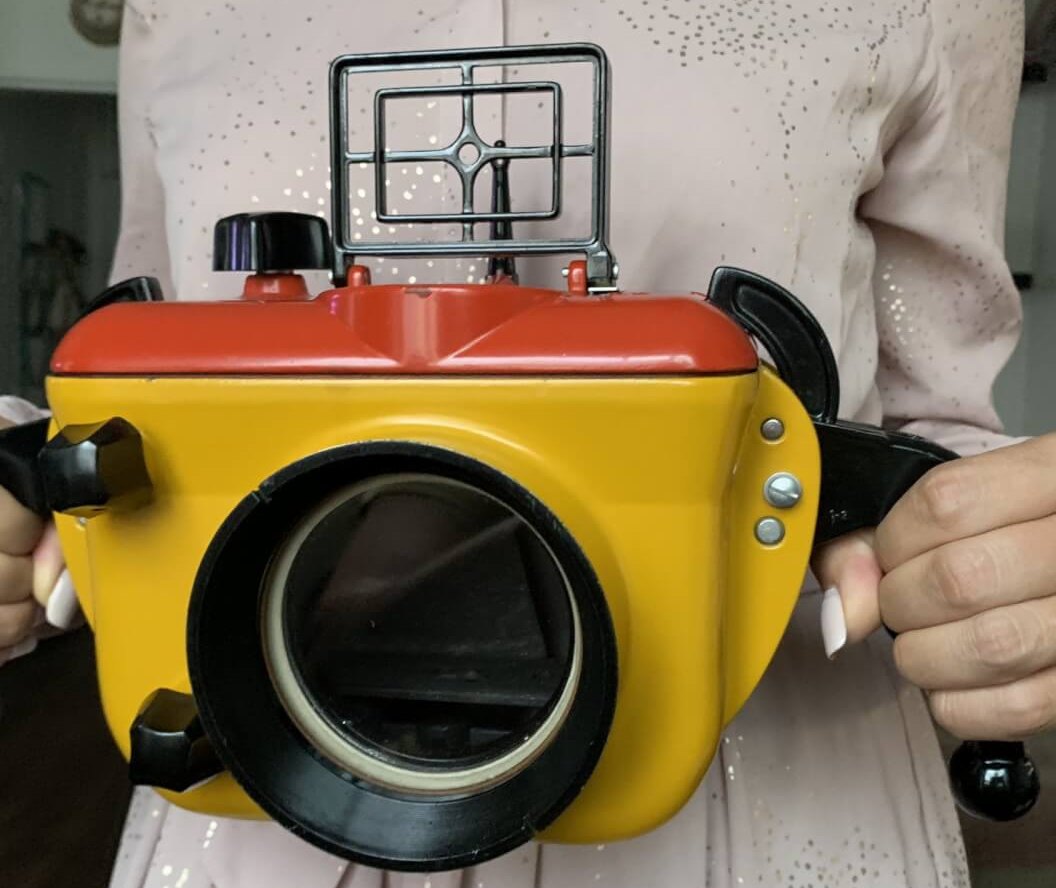
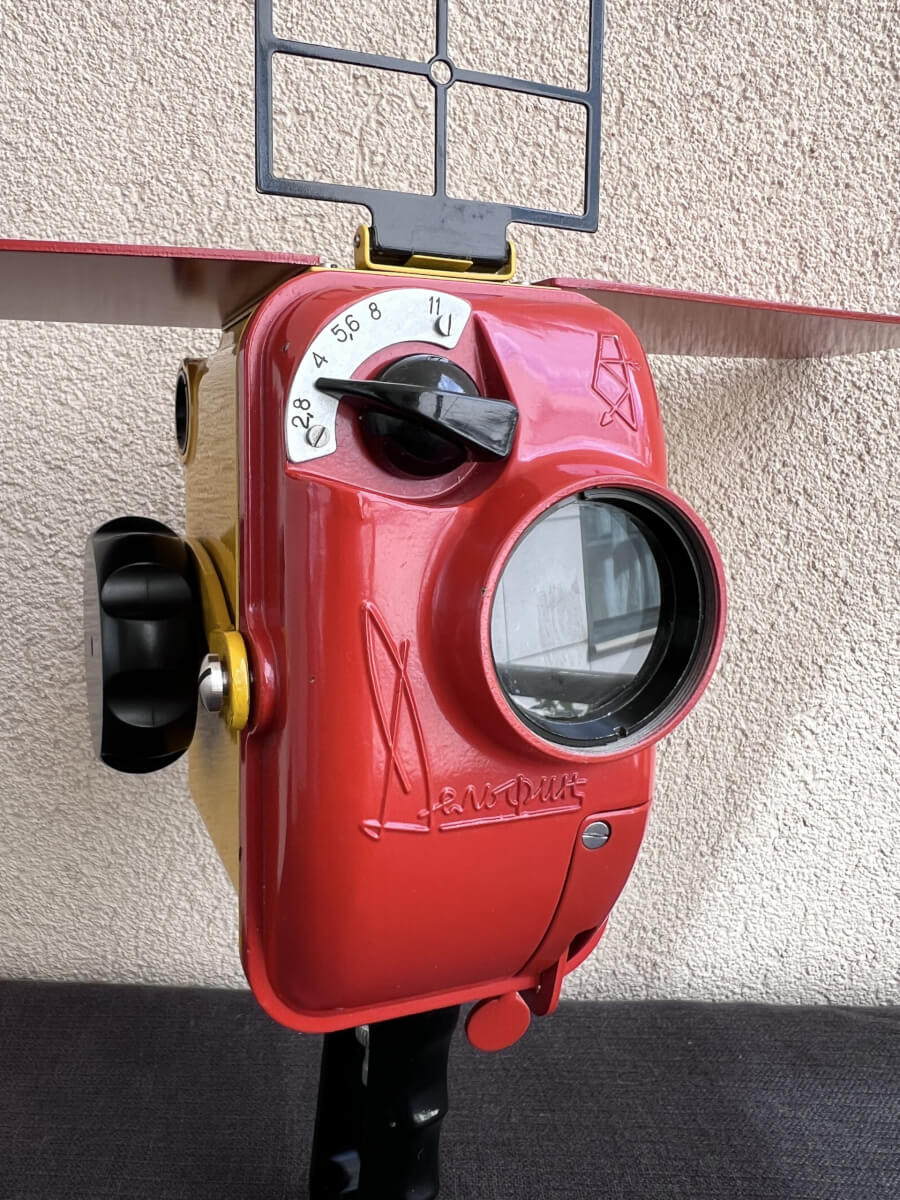
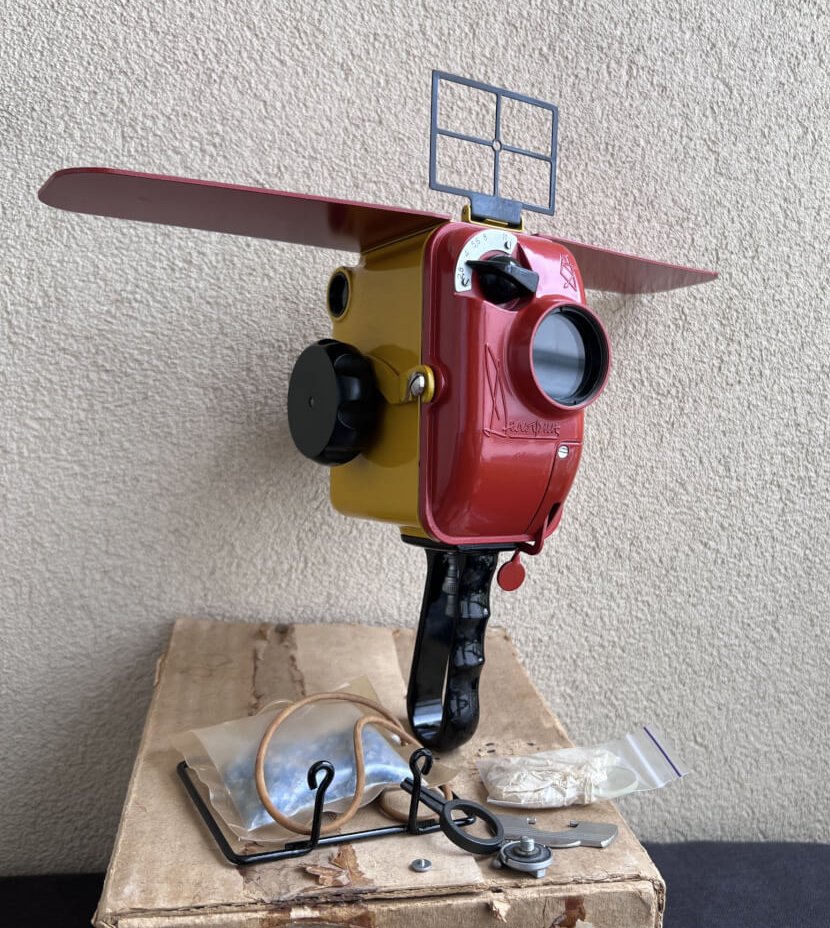
Delfin housing for an 8 mm cine camera: the name Дельфин moulded into the shell, the aperture scale from 2.8 to 11 and the frame finder.
The third is made not for a still camera but for a cine camera. The Kazan Optical-Mechanical Plant, КОМЗ (KOMZ), had been making an 8 mm amateur cine camera, the “Экран” (Ekran), since 1961, according to the Russian site Interesmir. It gave it a housing, the “Дельфин” (Delfin, “dolphin”), whose name is moulded in cursive script into the red shell.
The shell comes in two parts, one yellow and one red, clamped together by a screw bracket. Three controls pass through the wall: a large knob that winds the camera’s spring, a lever that sets the aperture, from 2.8 to 11, and a red lever that releases. Since the camera’s own viewfinder is hidden, you aim with a metal frame finder on top. Two detachable wings steady the housing in the water.
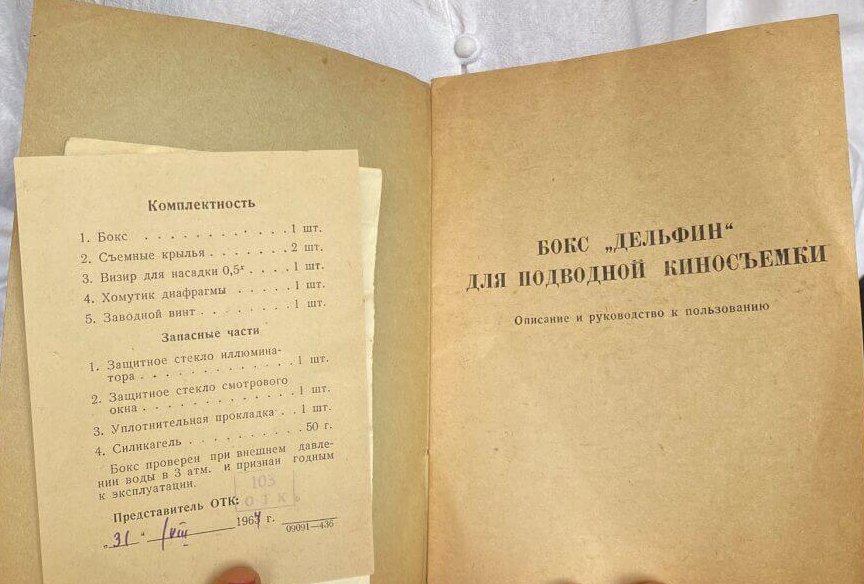
The manual Бокс „Дельфин“ для подводной киносъемки and its 1964 inspection slip.
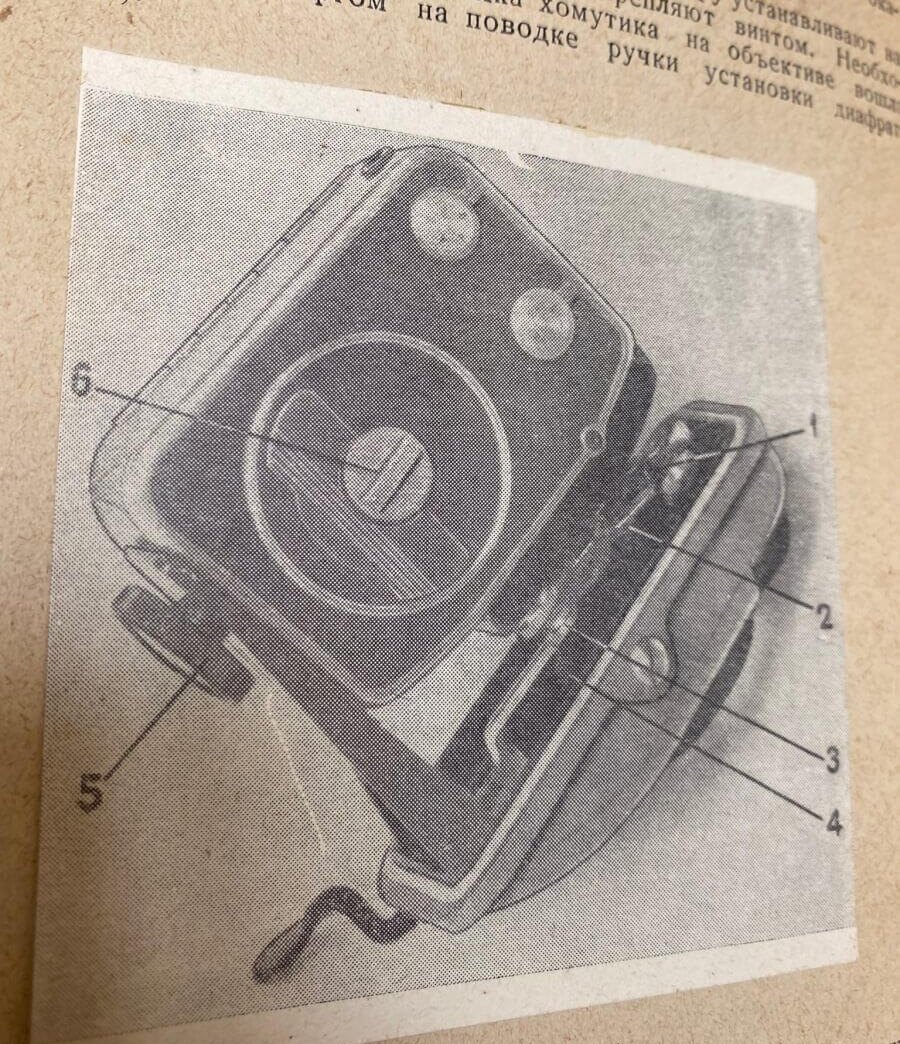
Figure 3 of the manual: the camera fitted on the bracket of the front wall.
The factory manual, kept with one of the housings in stock, is titled “Бокс „Дельфин“ для подводной киносъемки” (Boks “Delfin” dlya podvodnoy kinosyomki), “Delfin housing for underwater filming”. Its inspection slip lists what was supplied: the housing, two detachable wings, a finder for the 0.5× wide-angle attachment, an aperture collar and a winding screw, with a spare port glass, a spare viewing window glass, a gasket and 50 grams of silica gel. It states that the housing was tested under an external water pressure of 3 atmospheres. It is dated 1964.
Before a dive, the manual says, you give the housing ten to fifteen strokes of a bicycle pump, then submerge it: bubbles show a leaking seal. After the sea, rinse it in fresh water. Filming advice follows. You cannot talk underwater and gestures are hard to read, so agree on everything on shore with the people you are going to film. Small fish are filmed from one or two metres with the standard lens, people from two and a half to three and a half metres with the wide-angle attachment.
Three Delfin housings are in stock: the 1964 one with its manual, a second like new with its box and accessories, and a third without papers. A housing of another model, also for an 8 mm cine camera, is in stock, incomplete. The diver’s equipment of the same period is described in our guide to the Soviet diving helmet.
Around the camera: aircraft, darkroom, classroom
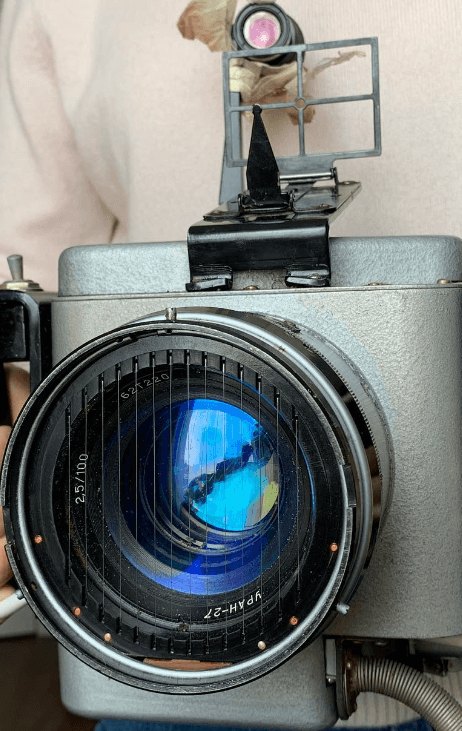
РА-39 aerial reconnaissance camera: the Uran-27 2.5/100 lens and its frame finder. Sold.
The Kazan plant mostly built aerial cameras. The one that passed through our shop carries the plate “РА-39” (RA-39), no. 620133: a daytime reconnaissance camera, also used to record the results of bombing. Its Уран-27 (Uran-27) 2.5/100 lens is heated, and fine wires are stretched across the front element. We also have in stock an aircraft camera clock, 30 mm across, hand-wound, new in its box.
S-64 photographic copying stand: the camera on its column, between two lamps, standing on its case.
In the laboratory the camera was also a copying tool. The S-64 in stock is a copying stand: a camera body fixed to a column, lens pointing down, between two lamps. It was used to copy documents in photo laboratories and embassies during the Cold War. It is complete, in its case, with its accessories and papers.
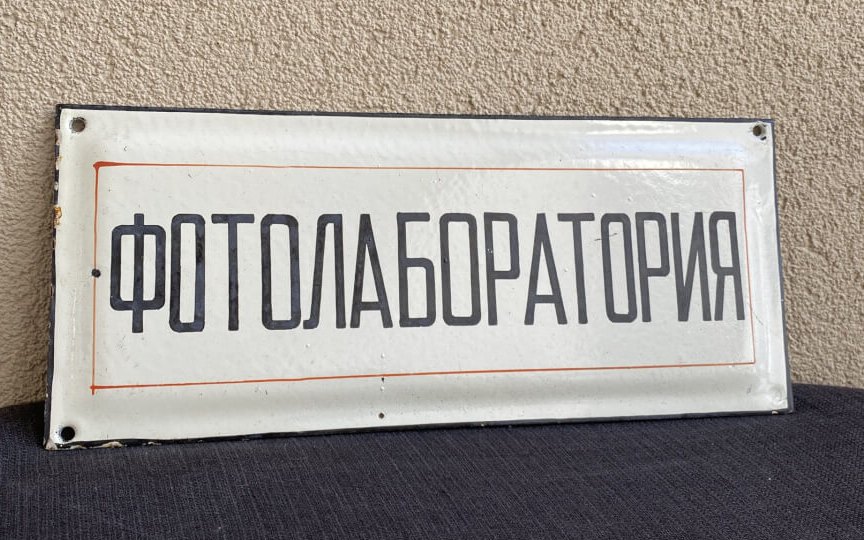
Enamel plate ФОТОЛАБОРАТОРИЯ, photo laboratory, 20 × 9 cm. Sold.
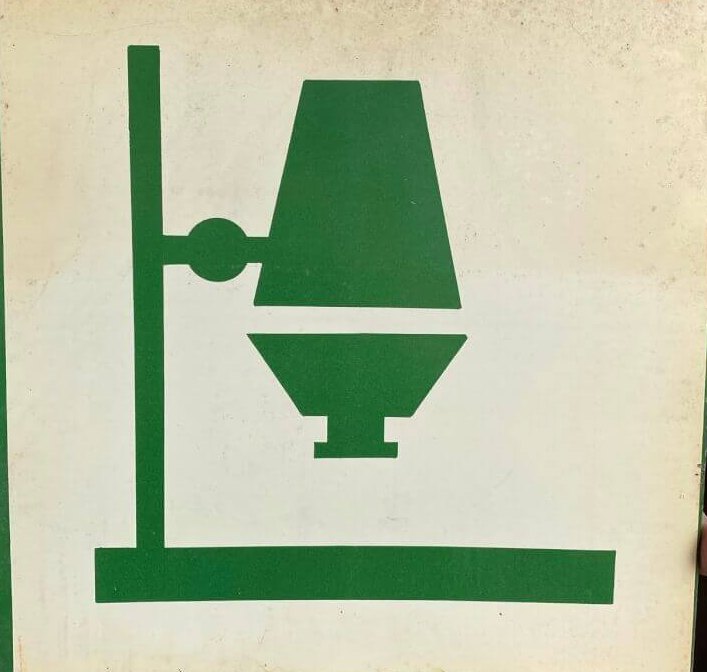
Door plate from a photography classroom, mid-1980s. Sold.
Photography was taught at school. Two plates that passed through the shop come from schools: a 20 × 9 cm enamel plate reading “ФОТОЛАБОРАТОРИЯ” (fotolaboratoriya, “photo laboratory”), and a painted sheet-metal plate from the mid-1980s, 26.5 × 26.5 cm, once fixed to the door of the photography classroom. It shows an enlarger.
Wooden tripod from Minsk, 1959.
Its label: Культпром artel, Minsk, stamped 22 July 1959, first grade.
The wooden tripod in stock has kept its label. It was made in Minsk by the “Культпром” (Kultprom) artel, a cooperative of the Белмебельпромсоюз (Belmebelpromsoyuz), the union of furniture cooperatives of Belarus. Quality control stamped it on 22 July 1959, first grade. It has not been used, weighs 1 kg and sets to three heights: 60, 105 and 140 cm.
Before you buy
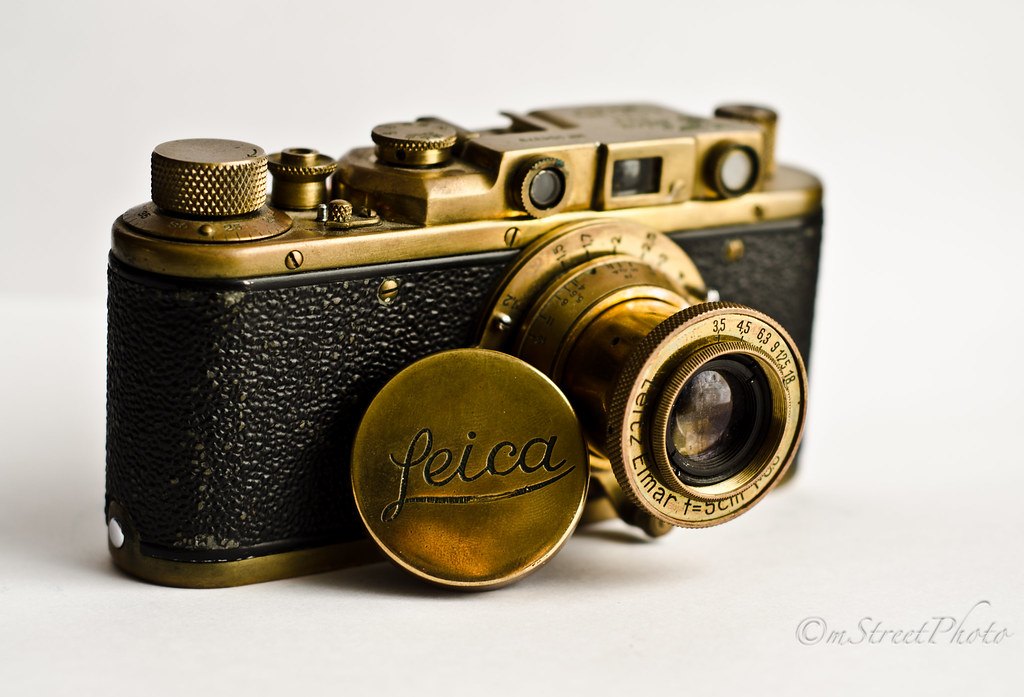
Fake Leicas. According to the Russian Wikipedia, the first FED and the first Zorki were the basis of many counterfeits: bodies re-engraved with the Leica name, often with German inscriptions or an unusual finish. The American collector Mike Eckman, who published a guide on the subject in 2020, estimates that over 99% of fake screw-mount Leicas started out as a FED or a Zorki. He gives these tells: crude, imprecise numbers with no paint fill on the shutter speed dial and on the frame counter; a wide gap to the left of the accessory shoe and soft edges on the top plate; a metal arm instead of the Leica’s round rangefinder coupling wheel; a focusing tab that locks at infinity around 9 o’clock, against 7 o’clock on a Leica. Any one of these, he writes, is enough to call a fake. A FED or a Zorki sold under its own name is not a fake.
A fake Leica, a copy: brass body and a cap engraved Leica. According to the file description on Wikimedia Commons, probably a restyled post-war FED or Zorki. Photo John Vance, Wikimedia Commons, CC BY 2.0.
Copies and reissues of the other models. We found no reported copy of Zenit or Kiev cameras, or of the underwater housings. These cameras were made by the million, and the risk is rather a worn or incomplete example.
The mirror that stays up. On the first Zenit and on Zenit-E cameras made before 1967, the viewfinder stays black after the shot until you wind on. This is how they were designed.
Lenses. Check the mount before buying a lens for a body: the Leica-type screw, the Zenit M39, the M42 and the Kiev bayonet are not interchangeable.
Two factories. The Zenit-E was made at Krasnogorsk and in Belarus. Both markings exist.
Housings. Look at the port glass, the seals, whether the wings and the frame finder are present, and the papers: the manual and the inspection slip date the example.
As with any collector’s piece, research thoroughly, compare several examples and rely on trusted collectors’ sites and buying guides.
Our lenses and optical instruments are in the Optics category, the housings in the Diving category.
The ДП-5В (DP-5V) is the field radiometer of Soviet civil defence: a green Bakelite console, a probe with a rotating gamma, beta and check-source shield, headphones and a manual that explains operation and maintenance. The one in this article served in an industrial bakery in Chișinău and was serviced in March 1991. Its owner shared his photos and documents with us, and we turned them into a tool that lets you operate it on screen, step by step.
The Moscow Games, from 19 July to 3 August 1980, boycotted by some sixty countries, produced more objects than any Soviet event: a bear cub, Misha, drawn by Viktor Chizhikov, an emblem made of running tracks, five thousand torches, watches from every factory, platinum coins, rings, tea glass holders, posters. This guide tells the story of the Games and reviews the objects, with the marks that authenticate them and the prices.
The 3017 chronograph of the First Moscow Watch Factory carries a five-digit number on the balance cock. The most common dating method reads it as a single series, from 1959 to 1979. Four factory passports show there are two, and that the same number can point to two watches made ten years apart. Here is how to read the number, the dial, the logo and the bridge, with a decoder to date your Strela, Poljot or Sekonda.
This website uses cookies to improve your experience while you navigate through the website.
Out of these cookies, the cookies that are categorised as necessary are stored on your browser as they are essential for the working of basic functionalities of the website.
We also use third-party cookies that help us analyse and understand how you use this website.
These cookies will be stored in your browser only with your consent.
You also have the option to opt out of these cookies.
But opting out of some of these cookies may affect your browsing experience.
Necessary cookies are absolutely essential for the website to function properly. This category only includes cookies that ensure basic functionalities and security features of the website. These cookies do not store any personal information.
Cookies that are not strictly necessary for the website to work and that are used specifically to collect personal data through analytics, ads and other embedded content are called non-necessary cookies. User consent is required before these cookies run on the website.
✕
Soviet in Paris
Offline right now. Leave your message and your email, we reply within 24 hours.
Hello 👋 A question about an item, an order or shipping? Write to us.
Your email is used only to reply to you.
Subscribe to our newsletter and get 10% off your first order.
Subscribe
★ New pieces before anyone else
★ New blog articles
★ Soviet in Paris news and updates
Join the Party
10% off your first order
Receive your welcome card and our next arrivals.
Your code appears here and is also sent to you by email. You can leave the Party in one click, at any time.