Vostok watches come from a factory born of an evacuation: in October 1941 the Second Moscow Watch Factory was sent to Chistopol, in Tatarstan. It set up in a distillery, made mine mechanisms, then Pobeda watches, before becoming the watch supplier of the Ministry of Defence in 1965. The story of the factory, from the war to today, and one landmark for each model family.
On 15 October 1941 the Evacuation Council ordered the Second Moscow Watch Factory to leave for Chistopol, on the Kama river. Dismantling began on 20 October. 170 wagons of machinery and 488 people, 128 of them engineers and technicians, set off for Kazan, where the first wagons arrived on 1 November. The first barge reached Chistopol on 10 November.
Things then went badly. According to the Tatarstan archives, quoted by the newspaper “Реальное время”, the town had received no instructions to host a factory. It was given the Chistopol distillery and 2,000 square metres, a quarter of the space needed. Only 28 wagons arrived before the Kama froze. The rest of the machines began the winter in the open, on the quay at Kazan.
In December about 2,000 horse-drawn carts were mobilised. According to the factory, machines kept arriving until February 1942, by horse, along the ice road across the Kama, in temperatures of minus forty. Power came from an old tractor engine. For lack of hands, teenagers of 14 and 15 were taken on and assembled the machines alongside the Muscovites.
1942 to 1945: Factory No. 835
During the war the factory was known by a number, 835, and worked for the front. From early 1942 it produced magnetic detonators and grenade bodies, then automatic parachute-opening devices. The factory also lists tank clocks, igniters for anti-tank grenades, the mechanism of a 60-day delay mine, aircraft fuel-consumption gauges and torpedo parts.
In 1943 an order from the People’s Commissariat for Mortar Armament had it assemble a wristwatch for the front, the K-43 “Кировские” (Kirovskie). On 24 August 1945 it was ordered to switch to consumer goods, clockwork toys included.
1946 to 1957: Pobeda, submarines and dashboards
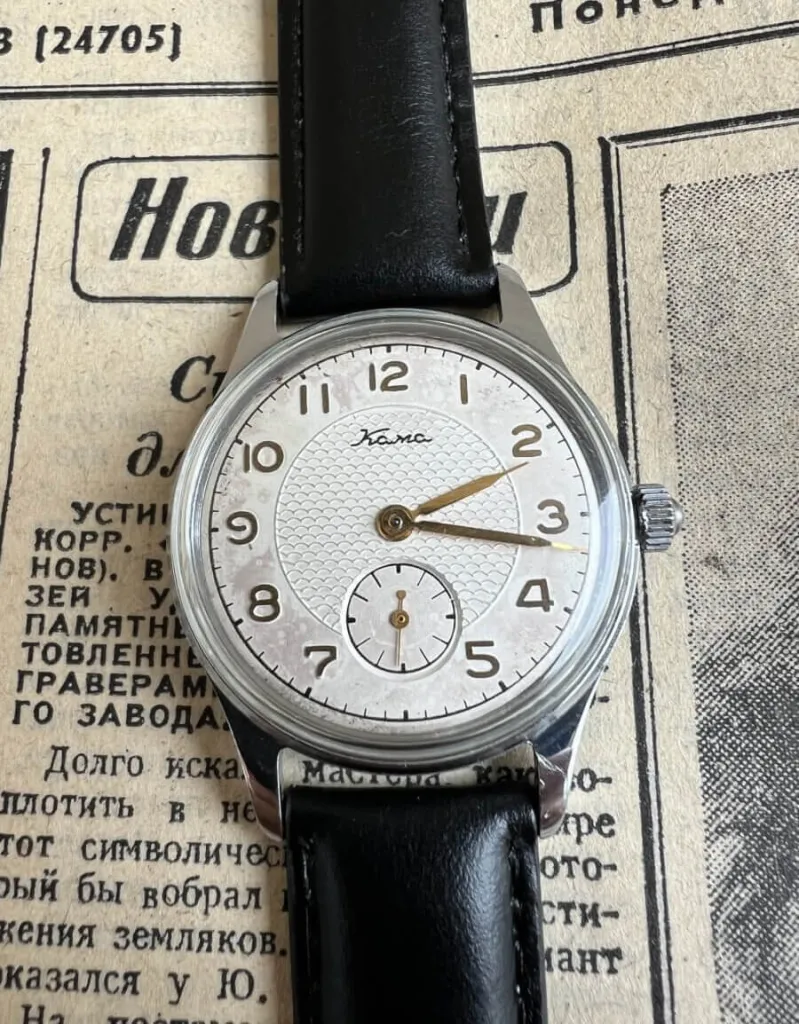
From 1946 Chistopol assembled the “Победа” (Pobeda) from parts supplied by the Penza factory. By 1949 it made the whole watch. It remained its main model for several decades. In 1952 the Pobeda gained shock protection and a moisture-protected case, then near-identical variants appeared: Raduga and Yantar in 1954, Kama in 1955.
Kama from the 1950s, dial with a honeycomb border.
The factory did not only make watches. From 1946 it produced marine clocks for submarines, with an hour hand that makes one turn in 24 hours, and the dashboard clock of the Pobeda car: a mechanical clock whose spring was wound by an electric motor. It also made luminous hands and dials for many other factories in the country.
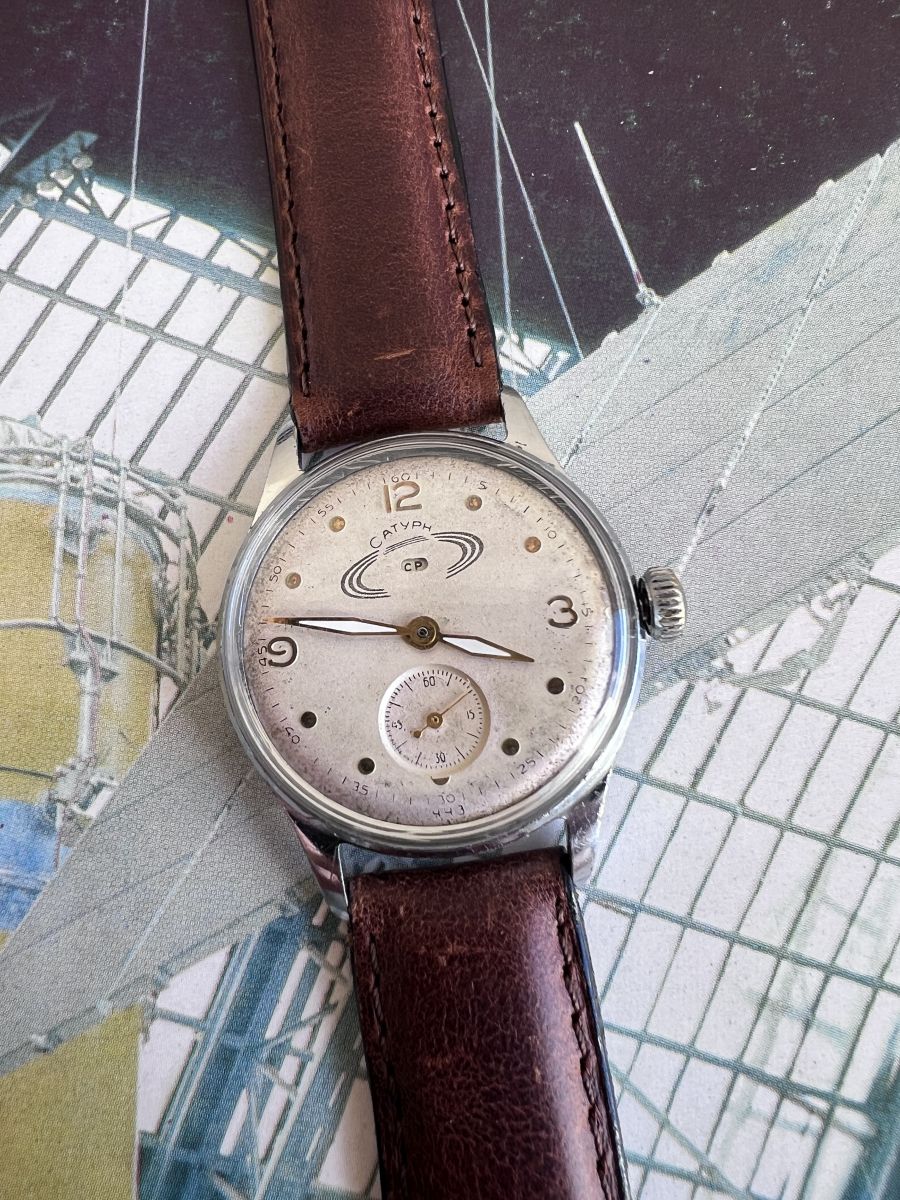
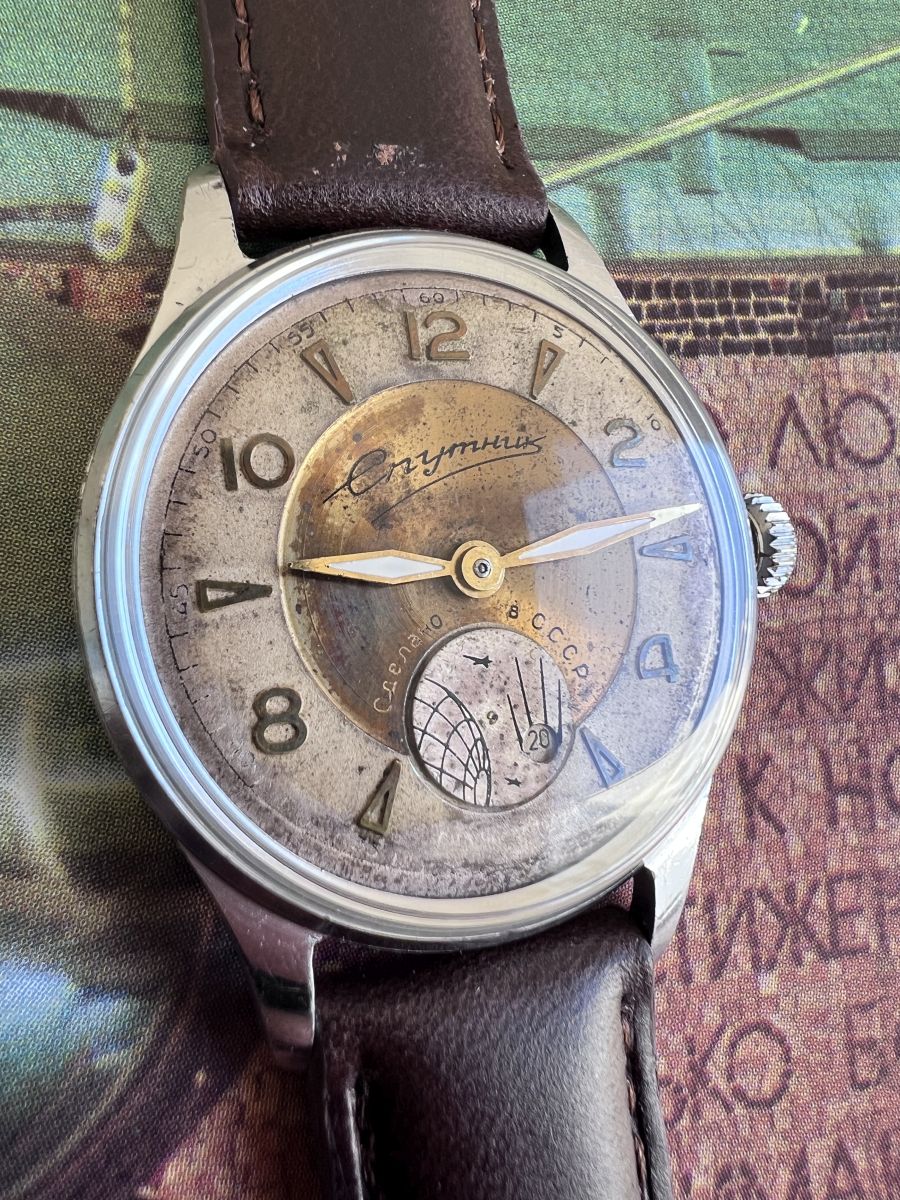
Until 1969 the name on a Soviet dial designated the movement or the model, not the factory. A Pobeda could come from Moscow, Chistopol or Samara. This is why Chistopol dials read “Сатурн” (Saturn), “Спутник” (Sputnik) or “Кама” (Kama), and sometimes the initials “ЧЧЗ”, for “Чистопольский часовой завод”, the Chistopol Watch Factory.
Sputnik from the Chistopol factory: a rotating disc replaces the seconds hand.
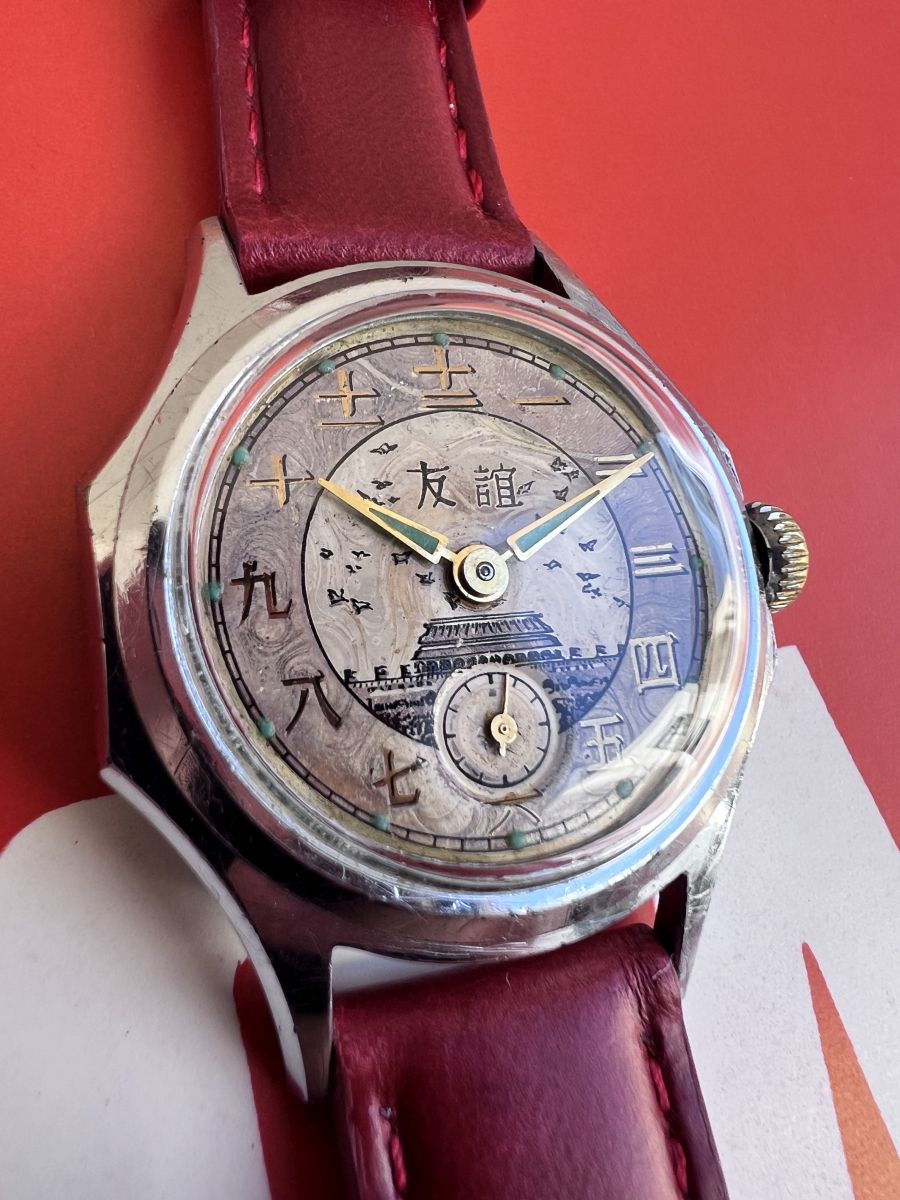
Druzhba, “friendship”: dial with Chinese numerals, 1950s.
1957: “Vostok” before the Vostok spacecraft
The name Vostok appeared in Chistopol in 1957, four years before Gagarin flew aboard the spacecraft of the same name. It then designated a precision watch, the K-28 “Восток”, first with sub-seconds, then with centre seconds and the calibre 2809. Its rate was stated as between minus 5 and plus 10 seconds a day, thanks to a hairspring in an alloy little affected by temperature.
This watch won a large gold medal at the Leipzig fair. The factory gives the year as 1962, the Tatar encyclopedia Tatarica as 1965, the trade magazine “Часовой Бизнес” as 1968. According to that magazine, the 2809 movements that failed precision certification were sold under another name: “Волна” (Volna).
In 1960 Chistopol developed a 22 mm calibre. The first watches fitted with it were called “Мир” (Mir). It became the basis of the whole range, with a calendar version in 1963, the 2214. The factory has exported since 1957.
1965 to 1969: the military, the Amphibia, a single brand
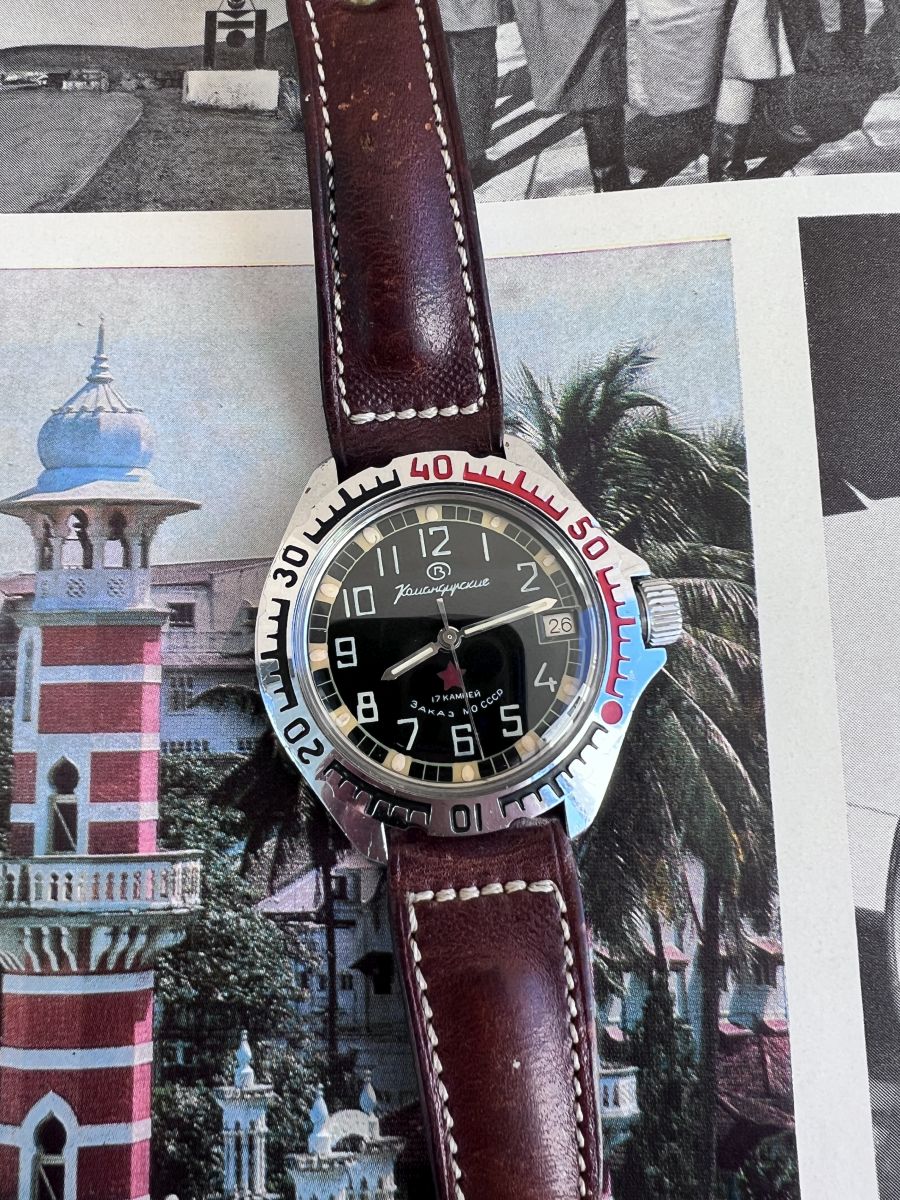
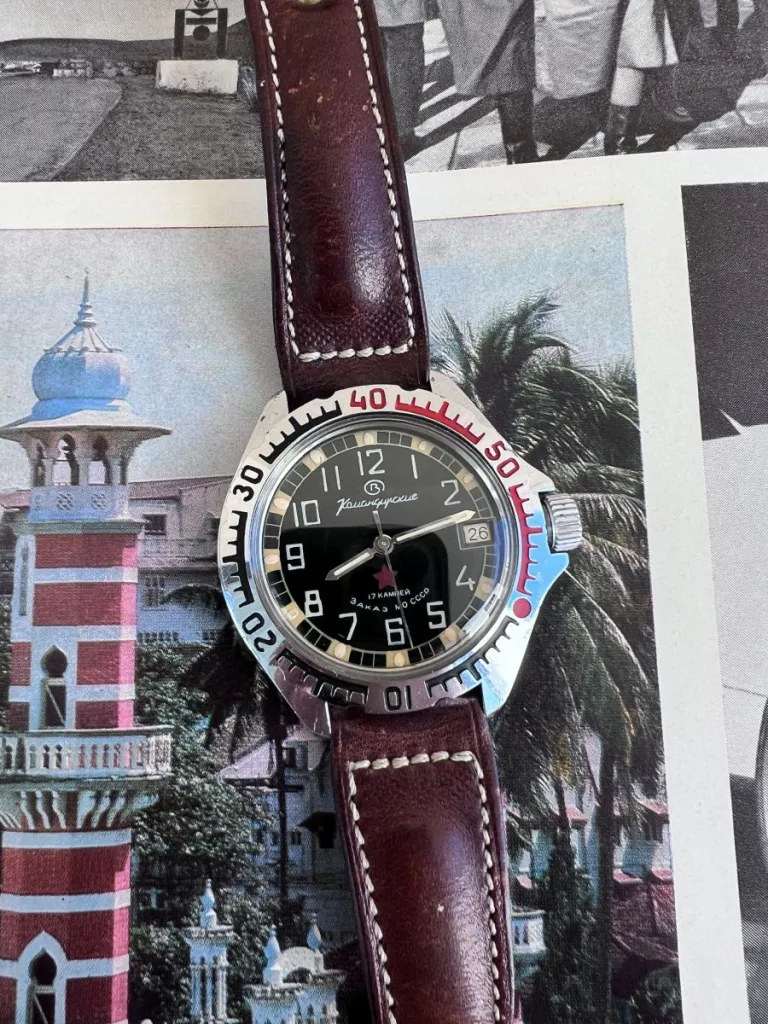
In 1965 the factory became the official watch supplier of the Soviet Ministry of Defence and created the Komandirskie. The first ones had luminous numerals and hands, a water-protected case and the marking “Заказ МО СССР”, but no rotating bezel yet.
Komandirskie No. 891604, marked “Заказ МО СССР”.
The Amphibia followed in 1967. Its name was chosen through a contest inside the factory. It was the first stainless steel case made in Chistopol, which had worked in brass until then. Steel is far harder: the lugs broke off during stamping. According to its designer Mikhail Novikov, the first cases therefore came out with mere stubs instead of lugs, until the factory learned to stamp the case in twelve passes. That grade of steel did not exist in the country: it had to be added to the state standard.
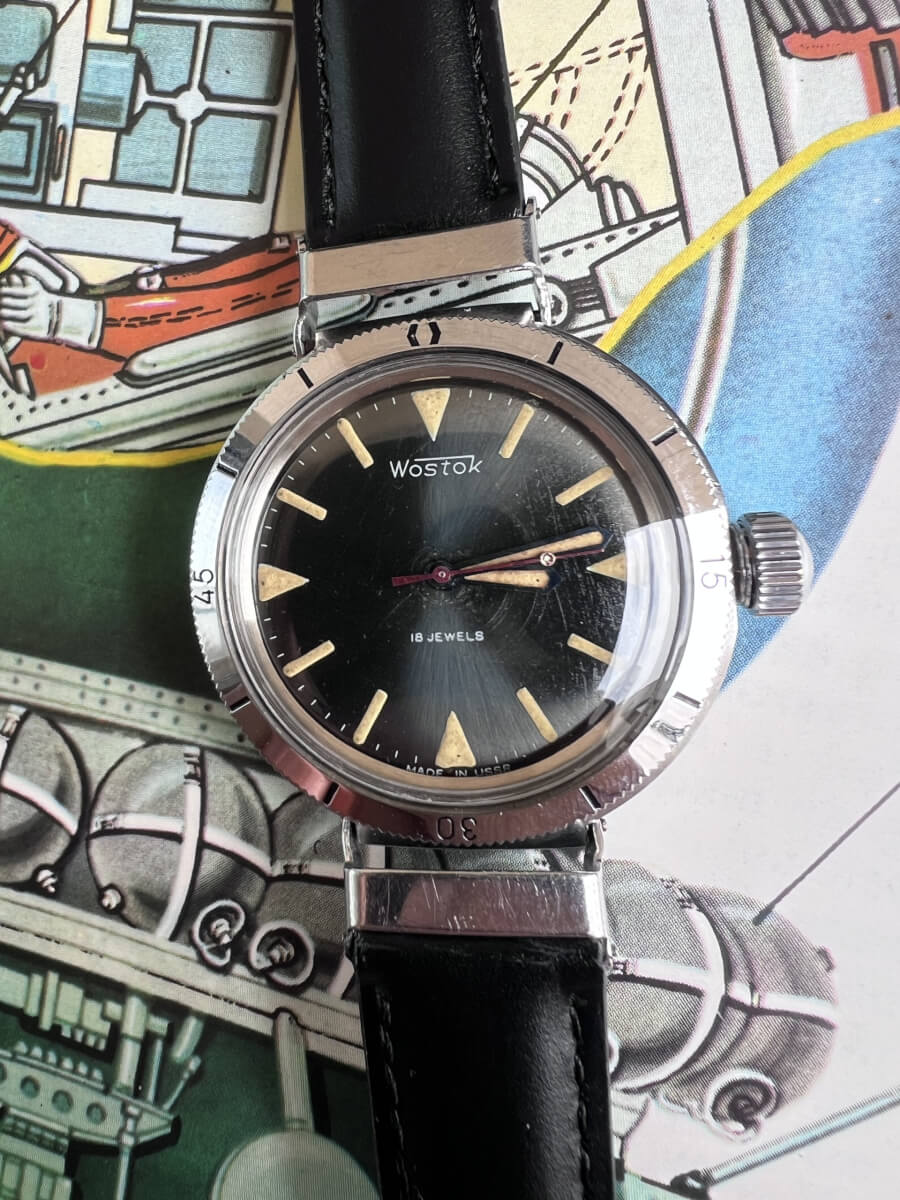
Export “Wostok” Amphibia, calibre 2209, with swing lugs.
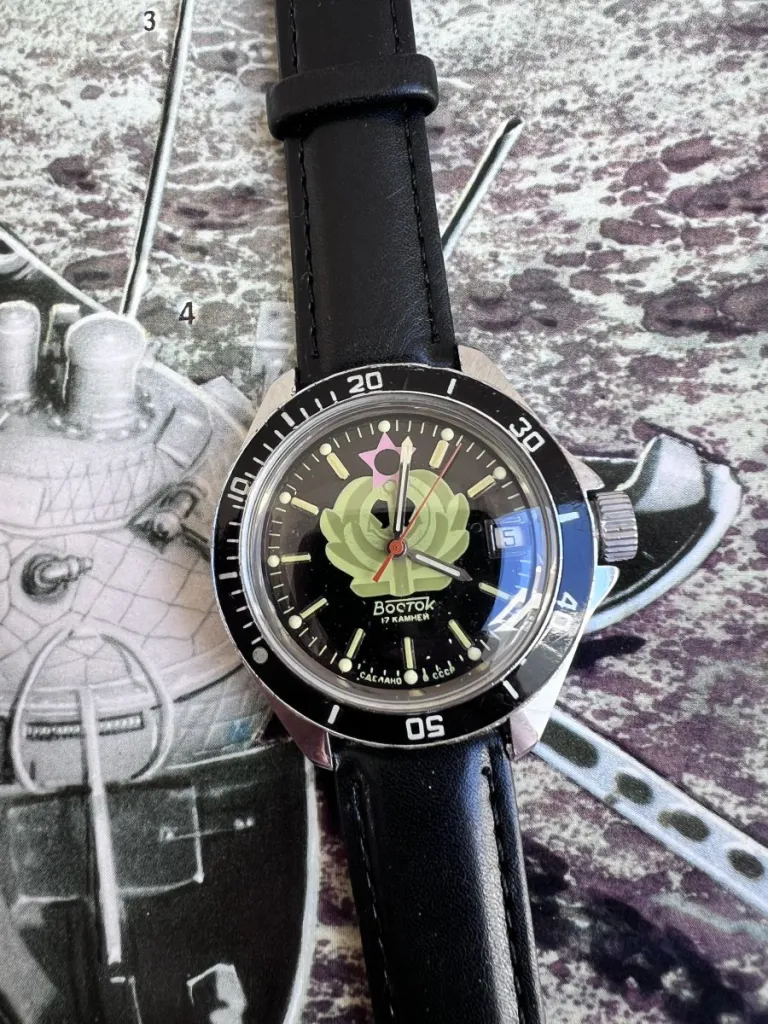
From 1969 all the factory’s watches carried a single brand: Vostok. Those for the home market are marked “Восток”, export ones “Wostok”. In 1975 an Amphibia went into space: it was part of Georgy Grechko’s kit for a 29-day flight aboard Soyuz 17 and the Salyut 4 station.
One landmark per model family
Komandirskie, 1965
Chrome-plated or gilt case. The marking “Заказ МО СССР” means “order of the Ministry of Defence of the USSR”. See the Komandirskie guide.
Amphibia, 1967
Stainless steel case and a stated water resistance of 200 metres. The first calibres were the 2209 (18 jewels, 18,000 beats per hour), then the 2409A. See the Amphibia guide and our article on the water resistance of a vintage Vostok.
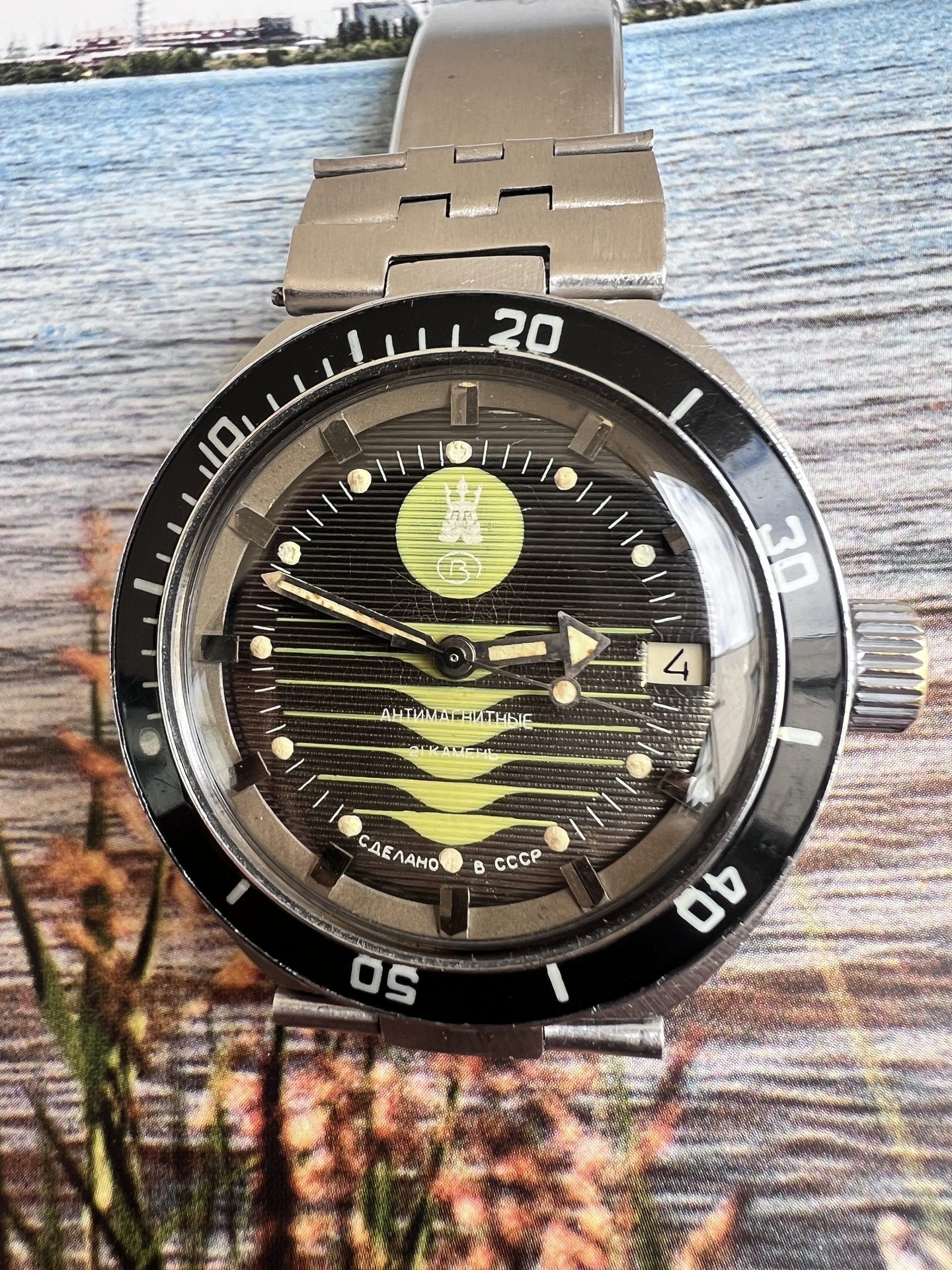
Neptune, mid-1980s
A heavier case, known as the “Neptune”, fitted with the automatic calibre 2416Б.
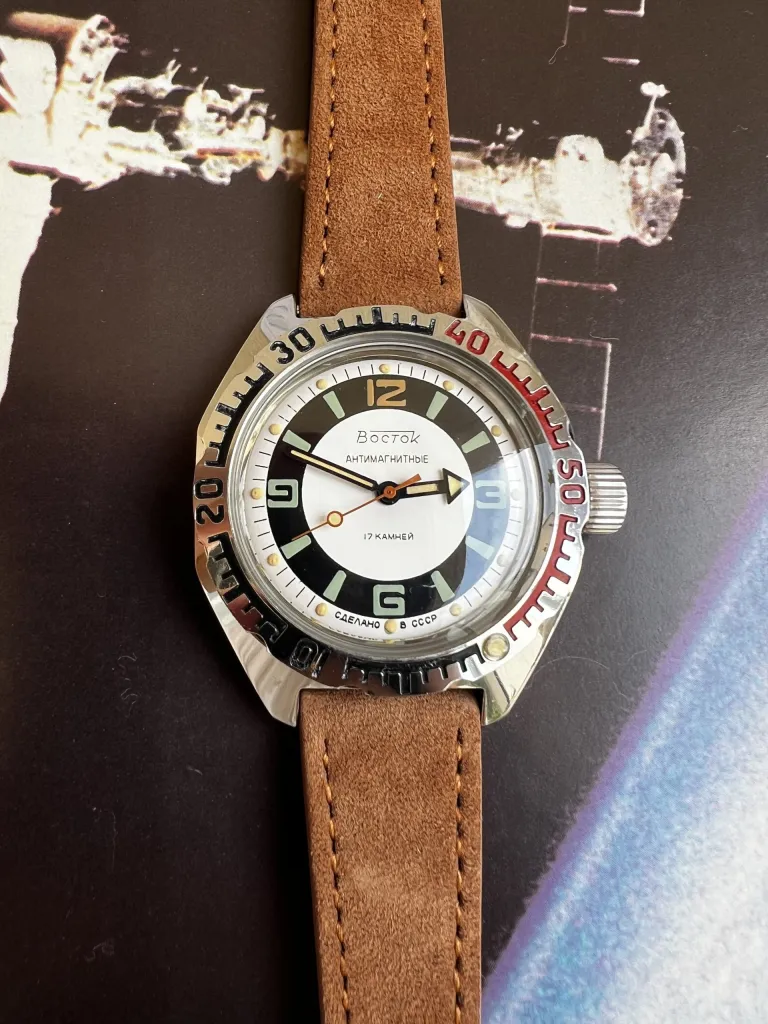
Vostok Neptune with a bakelite bezel. The dial reads “Антимагнитные” and “Сделано в СССР”.
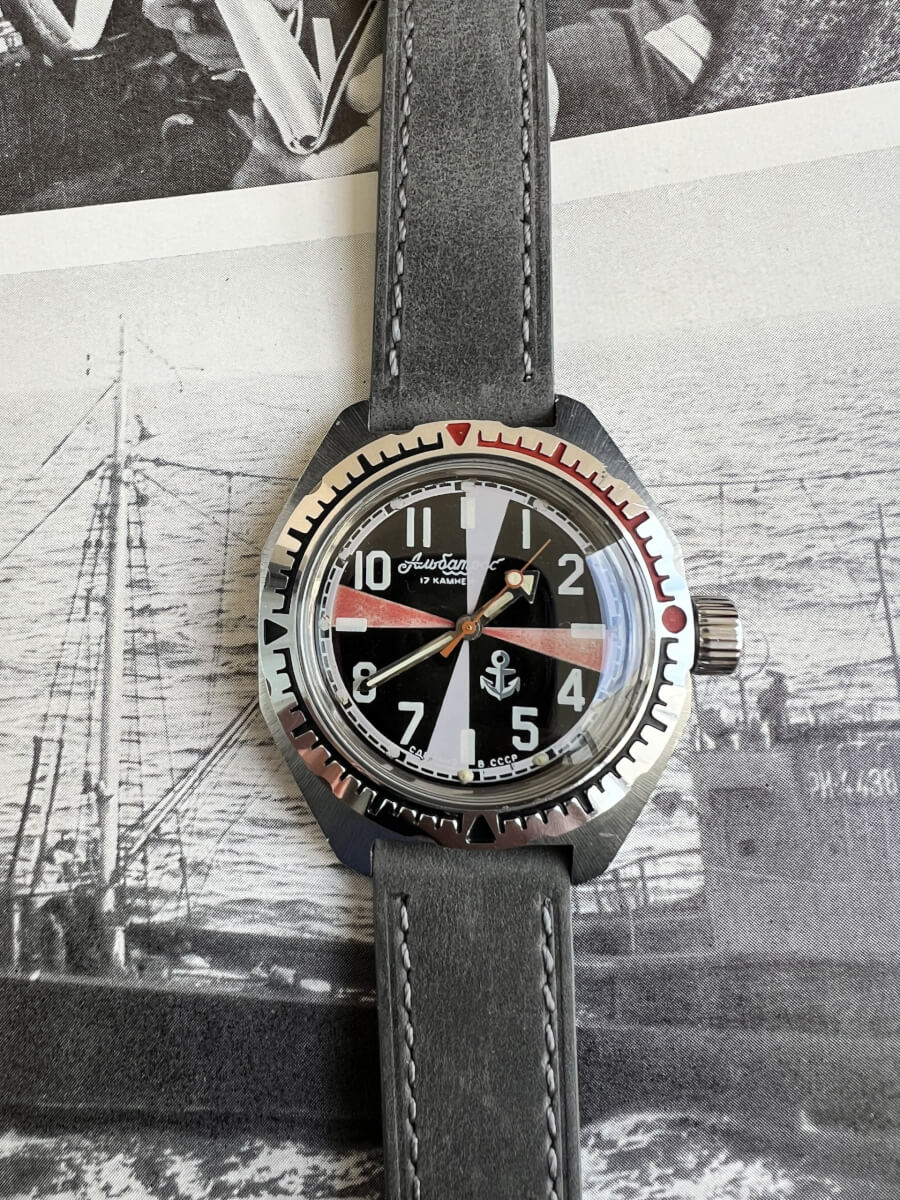
Radio Room and Albatros, 1990
A series of Amphibias with the 470 case and calibre 2409A; the first batch of Radio Room dials dates from February 1990. The dial reads “Альбатрос” and “17 камней”.
Vostok Radio Room type 1, “Альбатрос” dial.
1970s and 1980s: the 24 mm calibre and the 1980 record
The 24 mm calibre, the one used in today’s Komandirskie, was designed from 1966. The first watches fitted with it came out in the early 1970s: this is the family of the hand-wound 2414A, 17 jewels, 19,800 beats per hour, with date. The automatic 2416Б arrived in the 1980s: it is the calibre of the Vostok automatic shown in our mechanical, automatic or quartz guide.
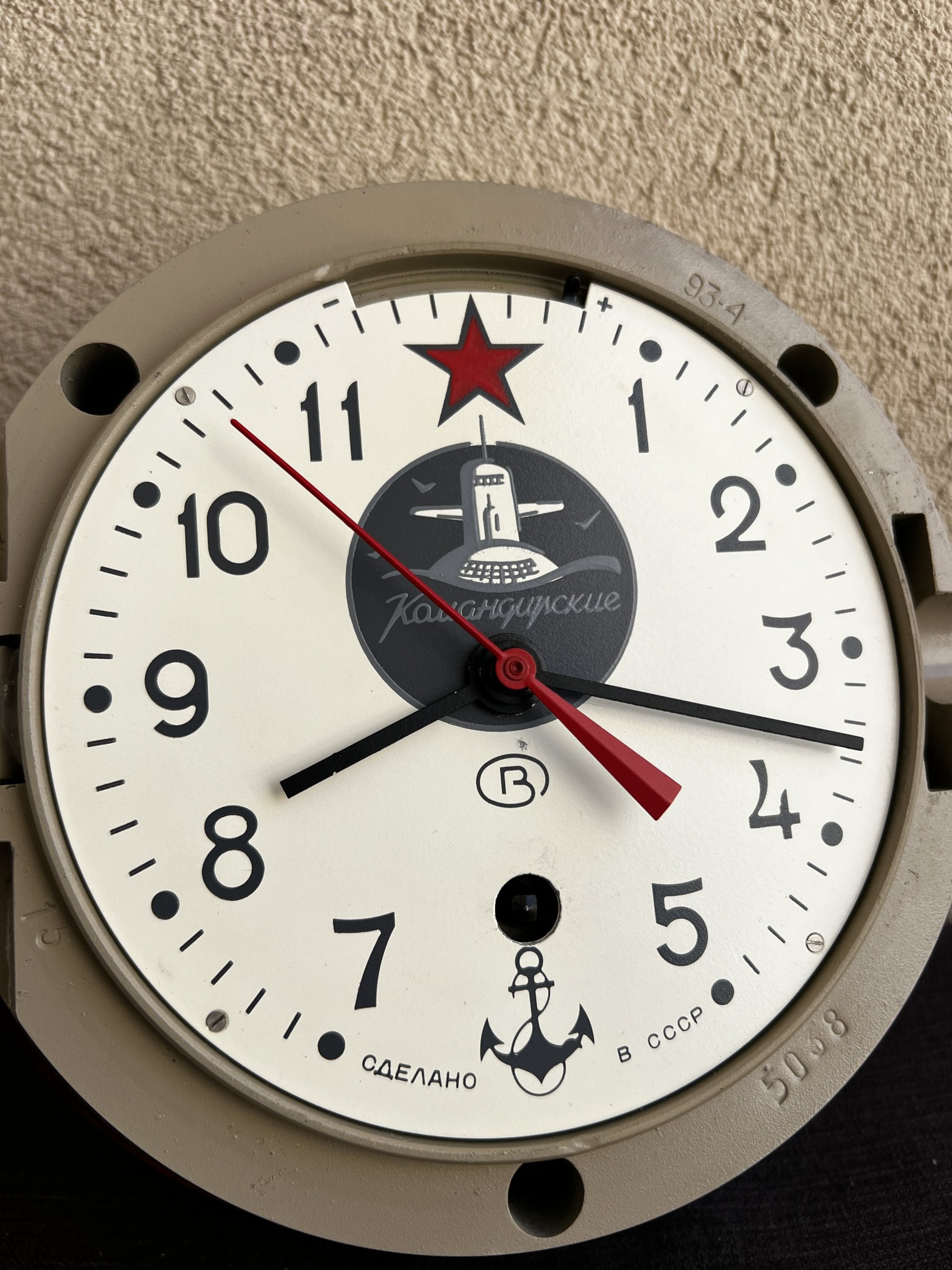
According to the factory, 1980 was the record year: 4.5 million watches. Tatarica gives 2.5 million for 1990. The factory went on producing ship’s clocks for the navy, which also carry the name “Командирские”.
Radio room clock, 1983. The red sectors mark the radio silence minutes.
1989 to 1993: exports, the Desert Shield and fake Komandirskie
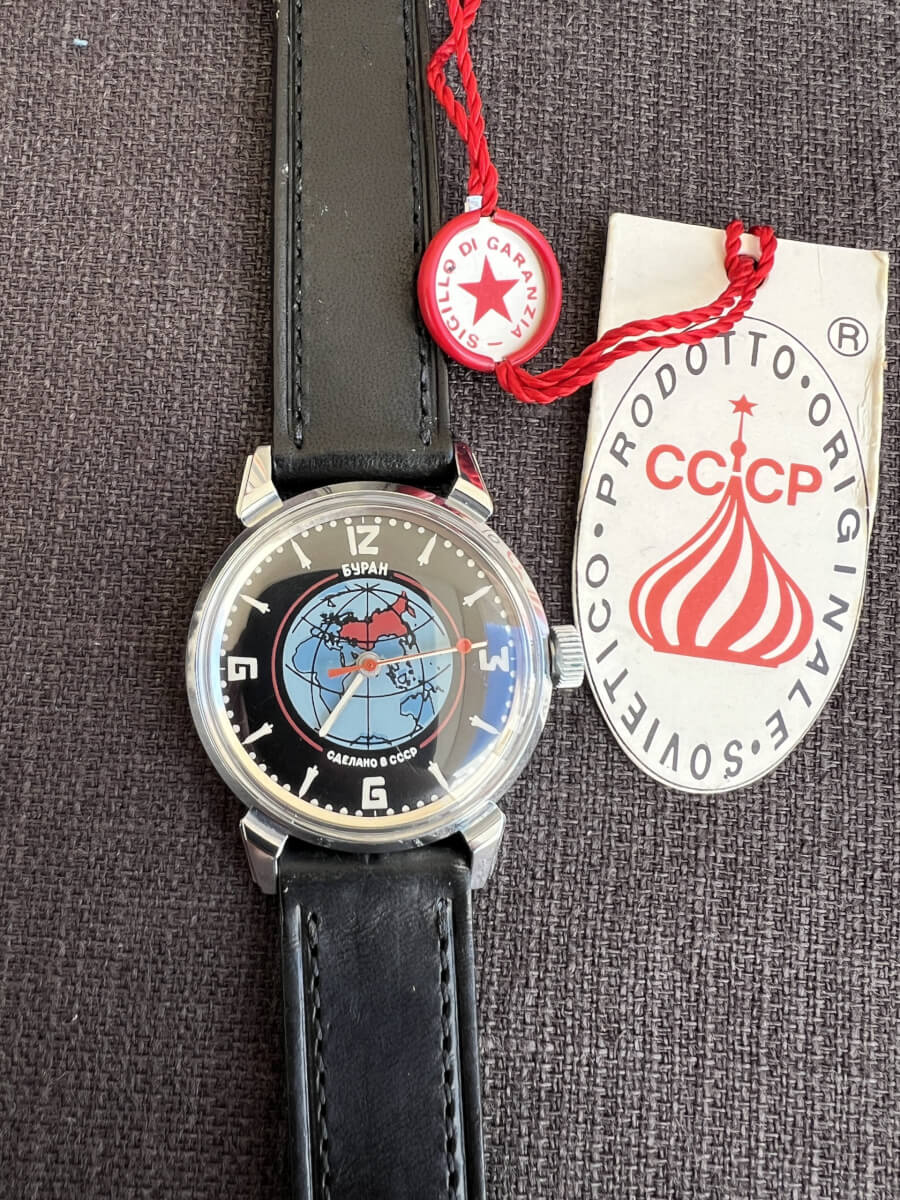
In the late 1980s a large share of production went abroad, notably to Italy through the importer Time Trend.
Vostok Buran from October 1989, with its Italian tag “Prodotto originale sovietico”.
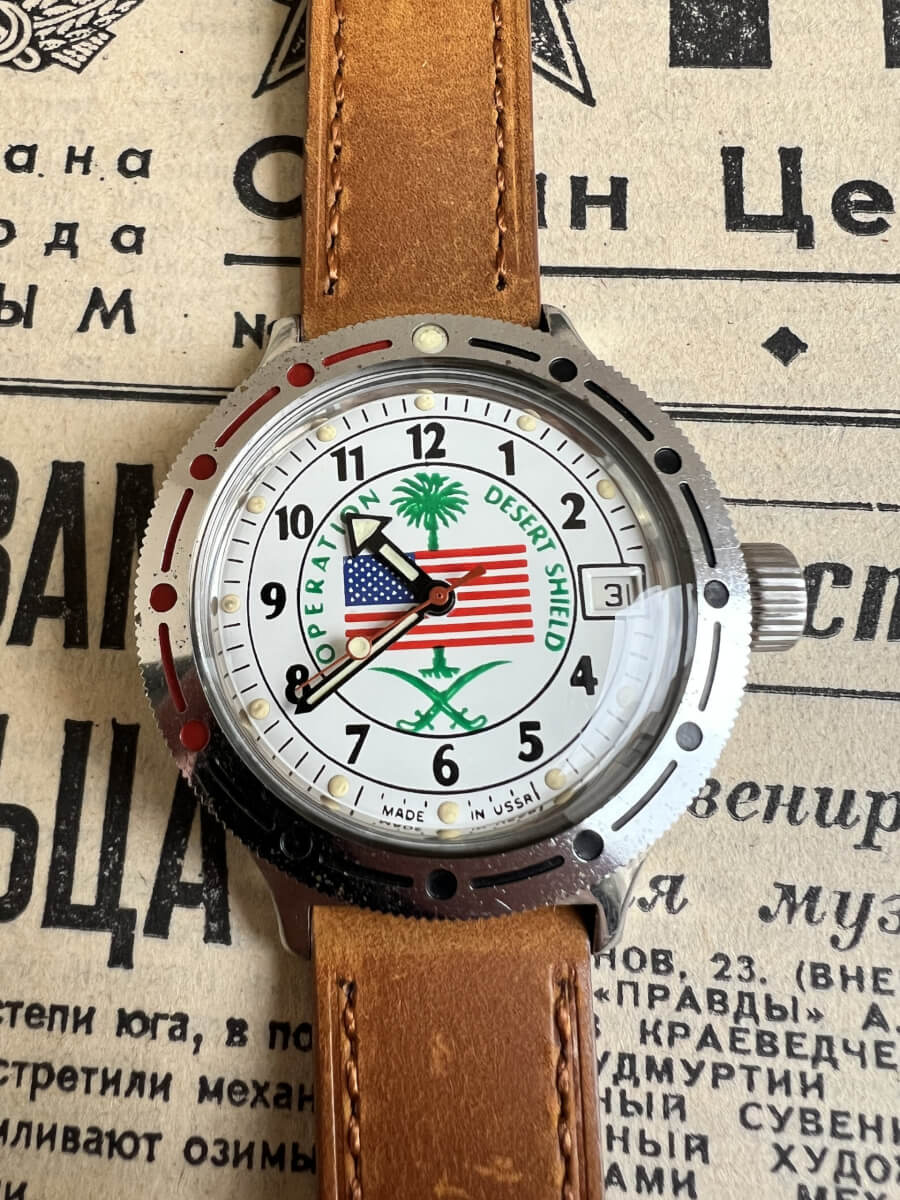
In 1991 the factory made the “Desert Shield”, named after the American operation in the Gulf. The newspaper Kommersant wrote at the time that it withstood 20 atmospheres. The same article, dated 25 November 1991, already reported fake Komandirskie: sold for 150 dollars in shops in Cyprus, they contained a chronograph movement from the First Moscow Watch Factory, and their passport misspelled the name of the town as “CISTOPOL”.
Vostok Desert Shield, 1991, dial marked “Made in USSR”.
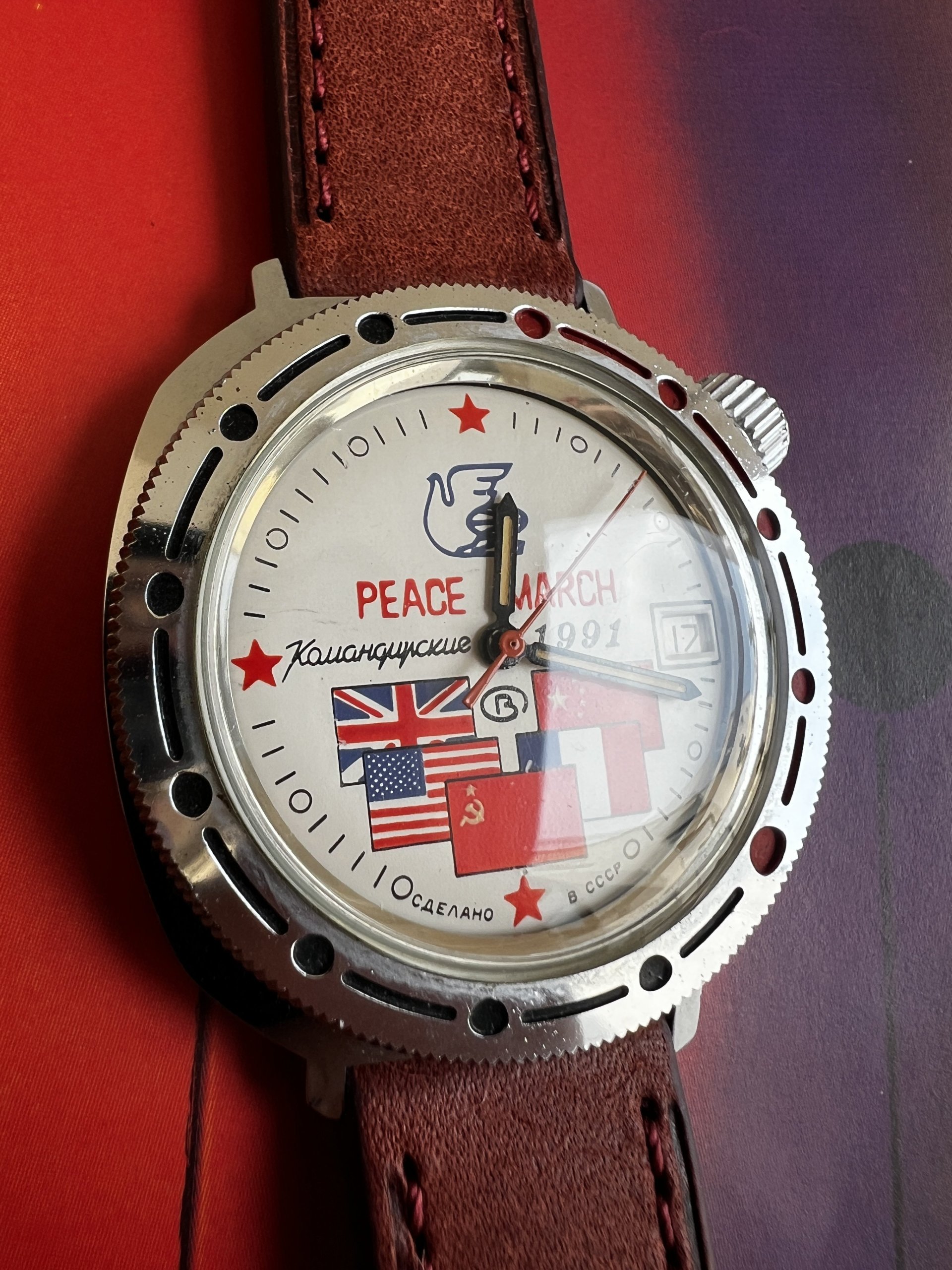
Komandirskie “Peace March”, 1991.
On 1 July 1993, in Zurich, the factory gave the Swiss firm BN-Trading the exclusive right to sell its watches worldwide, for 500,000 pieces a year, under the names Komandirskie, Generalskie, Admiralskie and KGB.
Since 1993
The marking “Заказ МО СССР” disappeared after 1991, and “Сделано в России” replaced “Сделано в СССР” on dials. According to Tatarica the factory became a joint-stock company in 1993. On 28 September 2010 the Arbitration Court of Tatarstan declared it bankrupt. Kommersant noted that this company had not made watches since 2006 and that the rights to the brands had passed to a related company.
Production carries on under another structure. In 2016 its head, Ivan Grachev, told the newspaper “Бизнес Online” that it produced 15,000 to 18,000 Komandirskie and Amphibia a month, with 450 people including subcontractors. A watch has 218 parts, 93% of them made on site: only the jewels, leather straps and metal bracelets are bought in.
Vostok today makes Amphibias that reuse the sector dial of the Radio Room. They are told apart at a glance from a 1990 Albatros: the details are in the Amphibia guide.
Dating a Vostok: four clues
The dial marking. “Сделано в СССР” or “Заказ МО СССР” indicates a Soviet piece, so earlier than the end of 1991. “Сделано в России” indicates a piece made after 1991. There are exceptions: dials printed in 1991 with “Сделано в СССР” may have been fitted in 1992 or 1993. What these markings mean is explained in our guide to reading Cyrillic on a dial.
The case and the calibre, which must match the period of the dial. An automatic 2416Б in a barrel-shaped case points to a put-together watch.
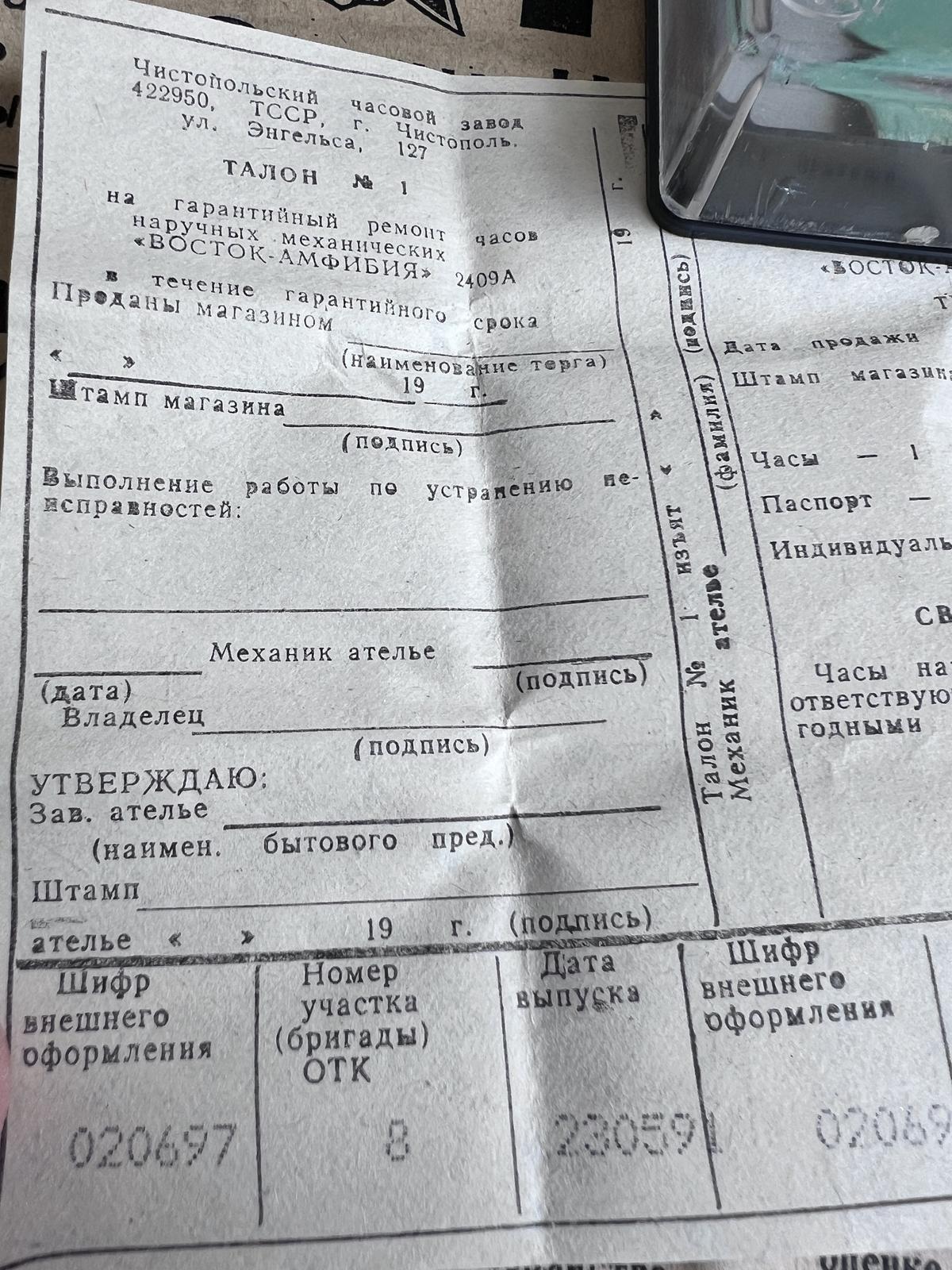
The passport, when there is one: the month and year of manufacture are stamped in it, with the inspector’s number.
The case-back number helps estimate the age, but exact dating often remains difficult.
Warranty coupon of a Vostok Amphibia 2409A. At the bottom, the box “Дата выпуска”, date of manufacture.
All our Vostok watches are in the Vostok category.
The ДП-5В (DP-5V) is the field radiometer of Soviet civil defence: a green Bakelite console, a probe with a rotating gamma, beta and check-source shield, headphones and a manual that explains operation and maintenance. The one in this article served in an industrial bakery in Chișinău and was serviced in March 1991. Its owner shared his photos and documents with us, and we turned them into a tool that lets you operate it on screen, step by step.
The Moscow Games, from 19 July to 3 August 1980, boycotted by some sixty countries, produced more objects than any Soviet event: a bear cub, Misha, drawn by Viktor Chizhikov, an emblem made of running tracks, five thousand torches, watches from every factory, platinum coins, rings, tea glass holders, posters. This guide tells the story of the Games and reviews the objects, with the marks that authenticate them and the prices.
The 3017 chronograph of the First Moscow Watch Factory carries a five-digit number on the balance cock. The most common dating method reads it as a single series, from 1959 to 1979. Four factory passports show there are two, and that the same number can point to two watches made ten years apart. Here is how to read the number, the dial, the logo and the bridge, with a decoder to date your Strela, Poljot or Sekonda.
This website uses cookies to improve your experience while you navigate through the website.
Out of these cookies, the cookies that are categorised as necessary are stored on your browser as they are essential for the working of basic functionalities of the website.
We also use third-party cookies that help us analyse and understand how you use this website.
These cookies will be stored in your browser only with your consent.
You also have the option to opt out of these cookies.
But opting out of some of these cookies may affect your browsing experience.
Necessary cookies are absolutely essential for the website to function properly. This category only includes cookies that ensure basic functionalities and security features of the website. These cookies do not store any personal information.
Cookies that are not strictly necessary for the website to work and that are used specifically to collect personal data through analytics, ads and other embedded content are called non-necessary cookies. User consent is required before these cookies run on the website.
✕
Soviet in Paris
Offline right now. Leave your message and your email, we reply within 24 hours.
Hello 👋 A question about an item, an order or shipping? Write to us.
Your email is used only to reply to you.
Subscribe to our newsletter and get 10% off your first order.
Subscribe
★ New pieces before anyone else
★ New blog articles
★ Soviet in Paris news and updates
Join the Party
10% off your first order
Receive your welcome card and our next arrivals.
Your code appears here and is also sent to you by email. You can leave the Party in one click, at any time.