USA USSR Space Bridge - Cap - Cold War
$51.99Unique piece
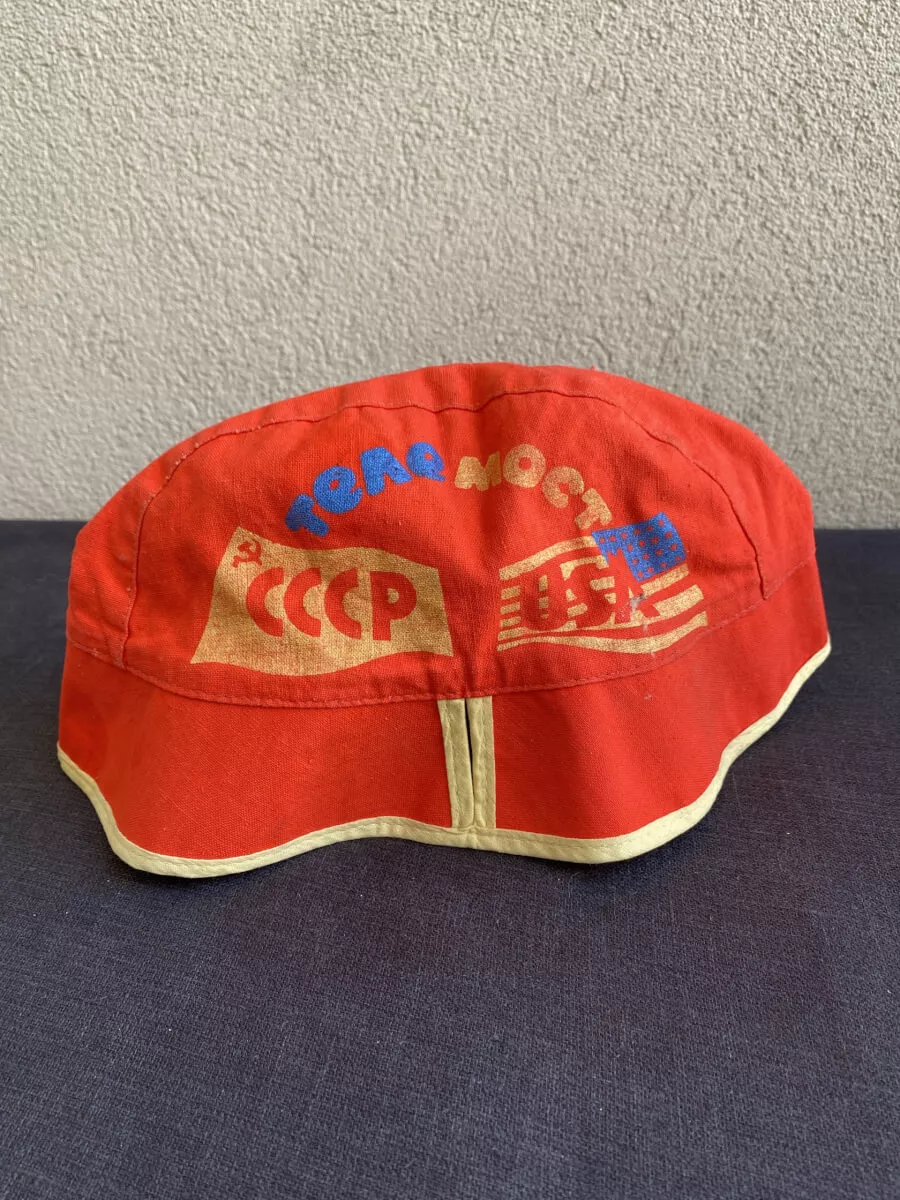
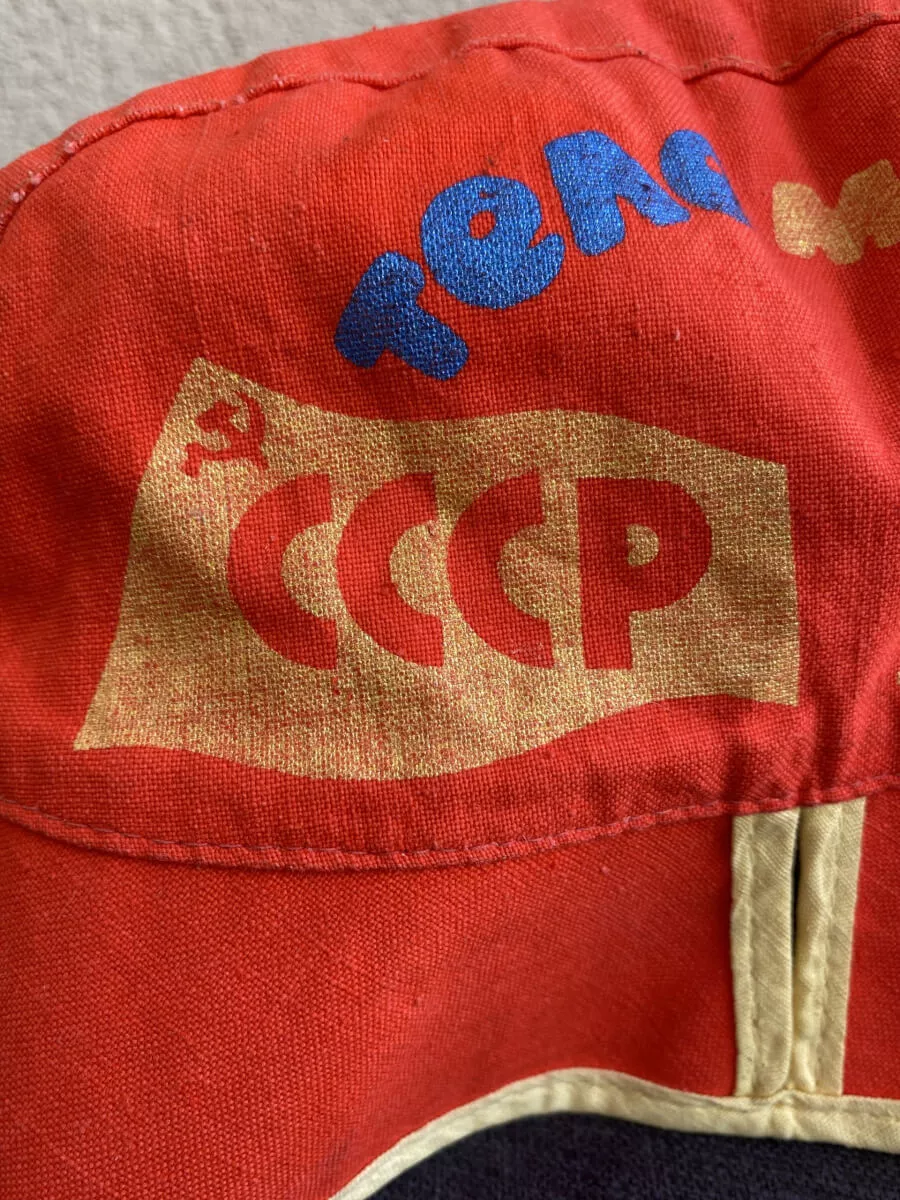


USA USSR Space Bridge - Cap - Cold War
$51.99Unique piece
Souvenir in the form of a cap given to the participants in the space bridges that linked Soviet and American citizens in the 1980s. The American-Soviet space bridge was a series of experimental international broadcasts between Soviet and American viewers.
1 in stock
Message received, dear comrade.
Our information desk usually replies within 24 hours at the address provided.Death of Leonid Brezhnev in November. Yuri Andropov succeeds him at the head of the CPSU.


Souvenir in the form of a cap given to the participants in the space bridges that linked Soviet and American citizens in the 1980s.
The American-Soviet space bridge was a series of experimental international broadcasts between Soviet and American viewers, produced by a group of communication enthusiasts at the end of the Cold War. Translated from the Russian word telemost (literally, “television bridge”), a space bridge was an interactive public television link between two or more geographically separate and culturally distinct places, a form of public videoconference.
The first space bridge was an agreement between the Unuson company and Gosteleradio of the USSR for the US Festival, sponsored by the computing pioneer Steve Wozniak. On 5 September 1982 a television link was established for the first time between the Soviet Union and the United States. On the Soviet side, Joseph Goldin and Yuli Gusman were at the controls. On the American side there were the Documentary Guild, producer Mark Warner and associate producer Lester Gray of King Broadcasting.
The participants in this space bridge could see one another, ask questions and receive answers, and also hold a musical dialogue. The programmes of the later space bridges consisted not only of concerts and greetings but also of discussions on various subjects, in which eminent scientists, public figures, cosmonauts and journalists took part. Phil Donahue and Vladimir Pozner hosted the meeting on the American and Soviet sides respectively. According to Pozner’s book Parting With Illusions, many American television channels did not want to buy these space bridges. As a result, only eight million people in the United States watched the programmes, against 180 million in the USSR.
Additional information
| Weight | 0.25 kg |
|---|---|
| Dimensions | 20 × 15 × 10 cm |