Voskhod Rocket Model - Large Metal Desk Model - Baikonur USSR 1980s
$1,139.99Unique piece

Voskhod Rocket Model - Large Metal Desk Model - Baikonur USSR 1980s
$1,139.99Unique piece
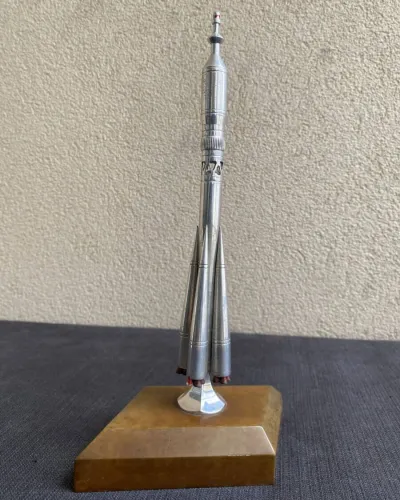
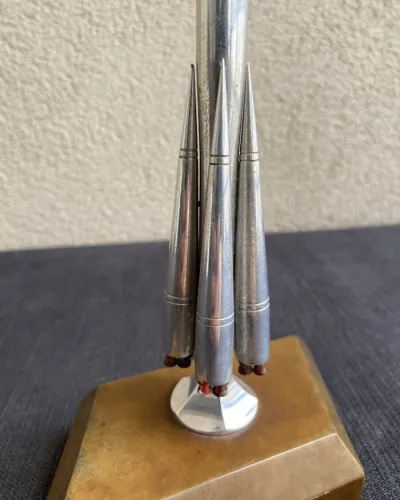
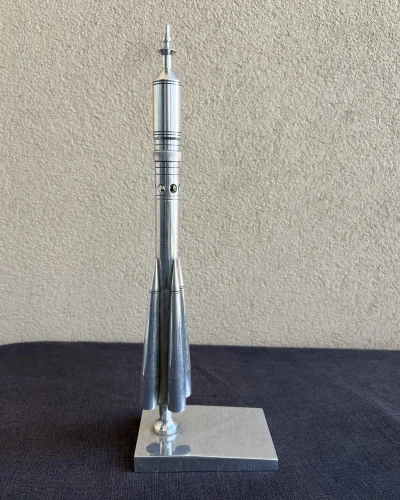
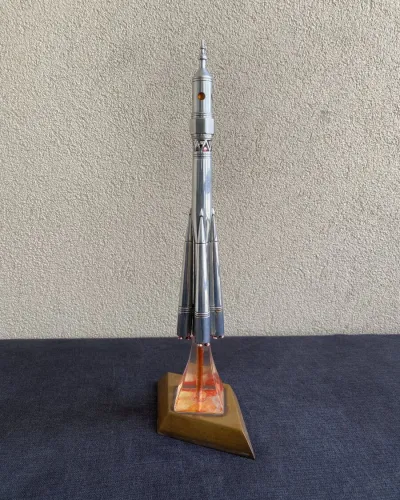
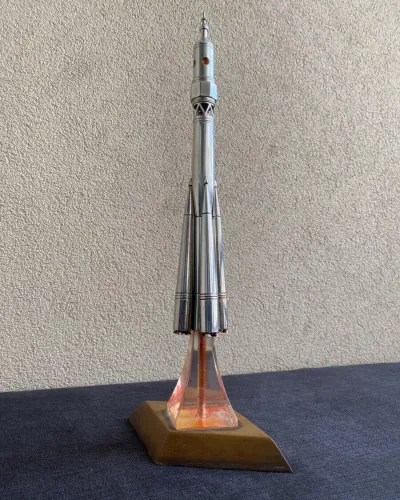
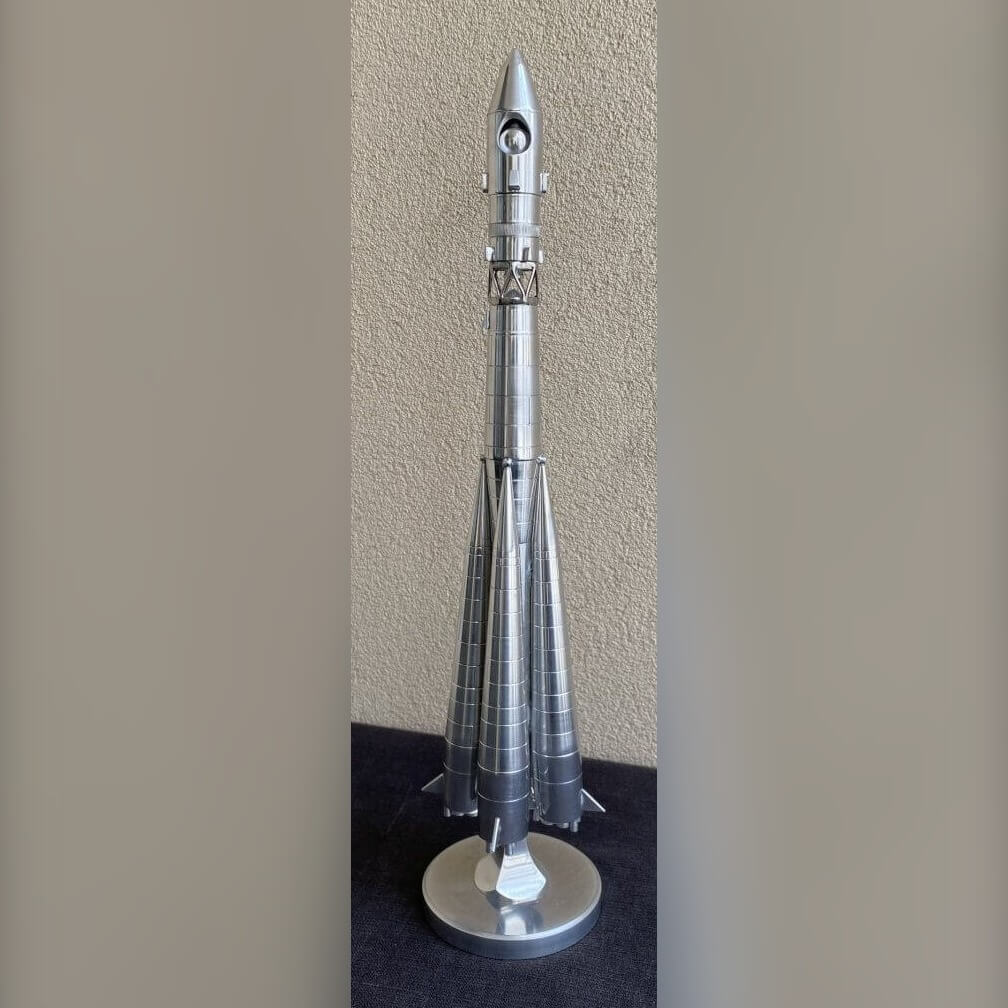
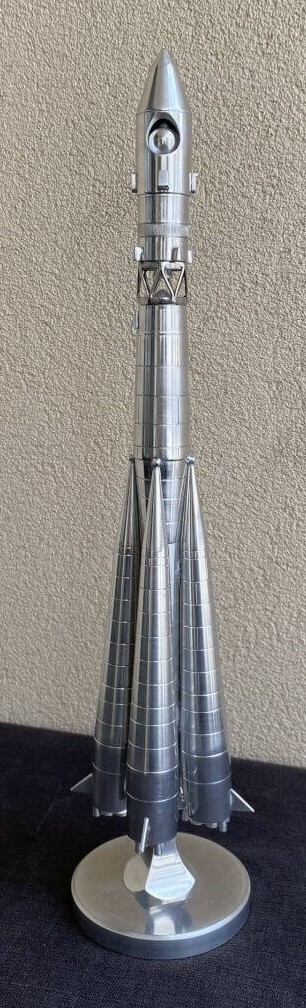
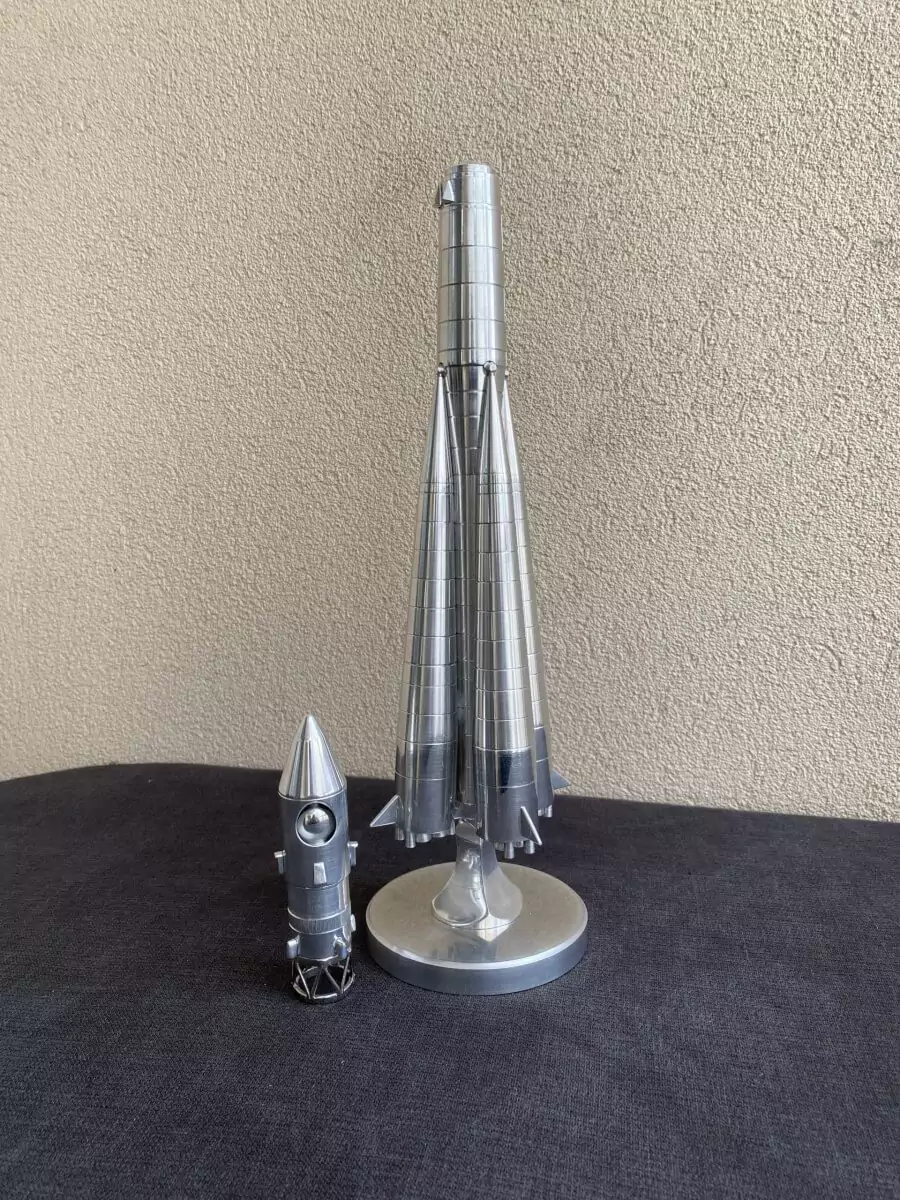
Large desk model of the Voskhod rocket in polished metal, on a stand and fully demountable, with finely detailed nozzles, boosters and lattice truss. Presented to Lieutenant General L.T. Baranov at Baikonur in the 1980s.
1 in stock
Message received, dear comrade.
Our information desk usually replies within 24 hours at the address provided.Invasion of Afghanistan (1979), boycotted Moscow Olympics (1980). Gorbachev comes to power in 1985, launching Perestroika and Glasnost. Chernobyl in 1986.
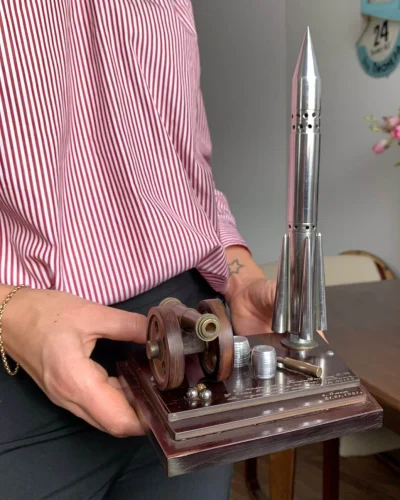
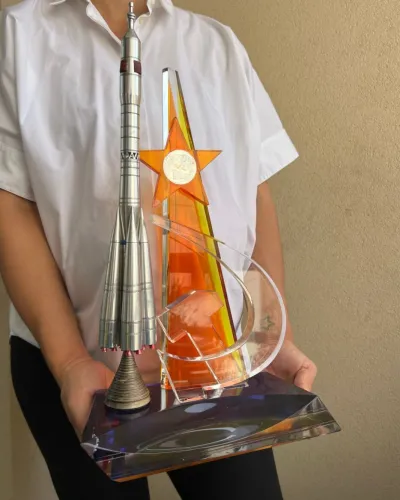
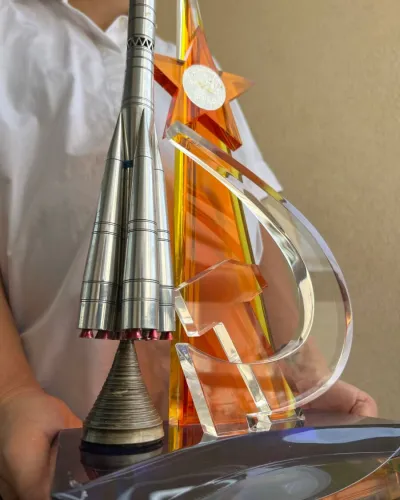
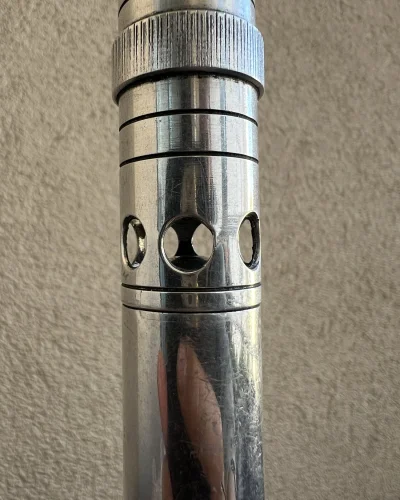
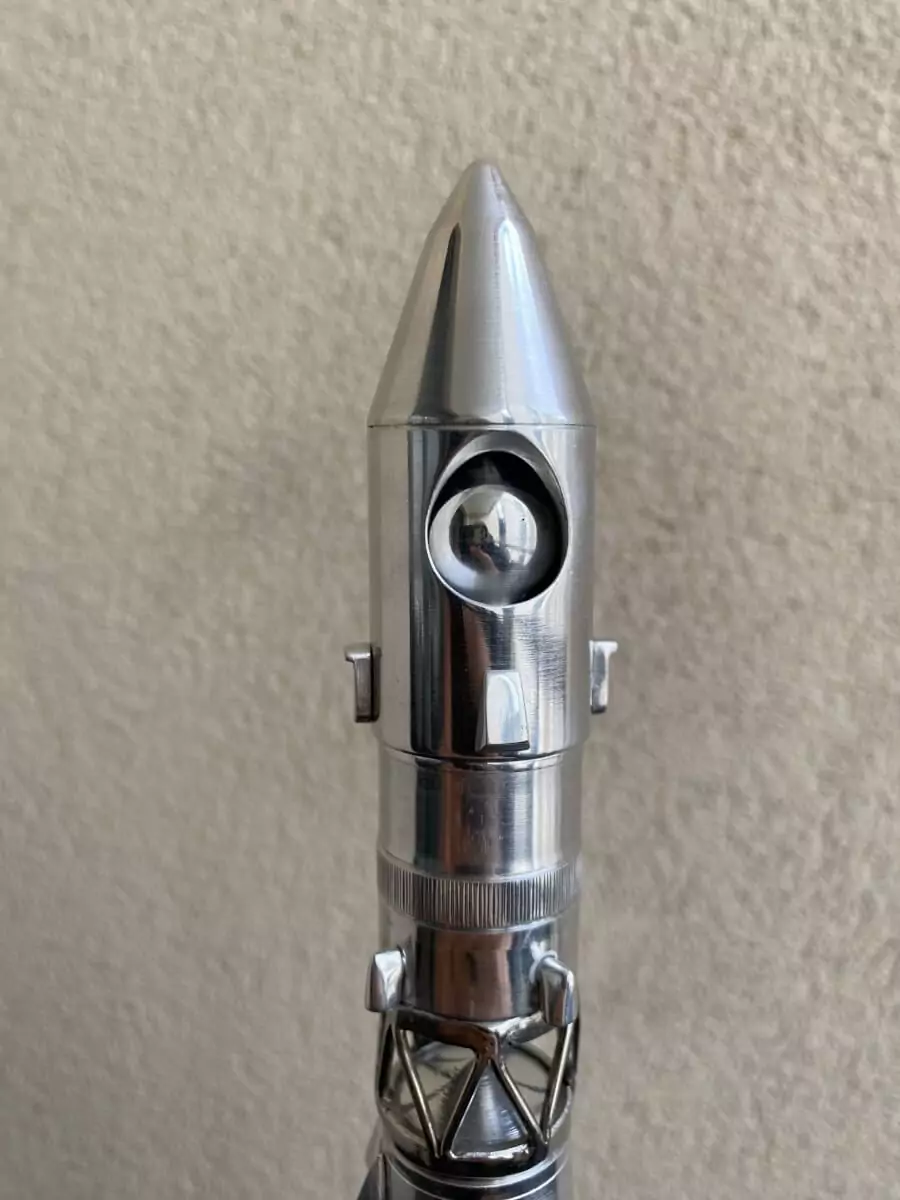
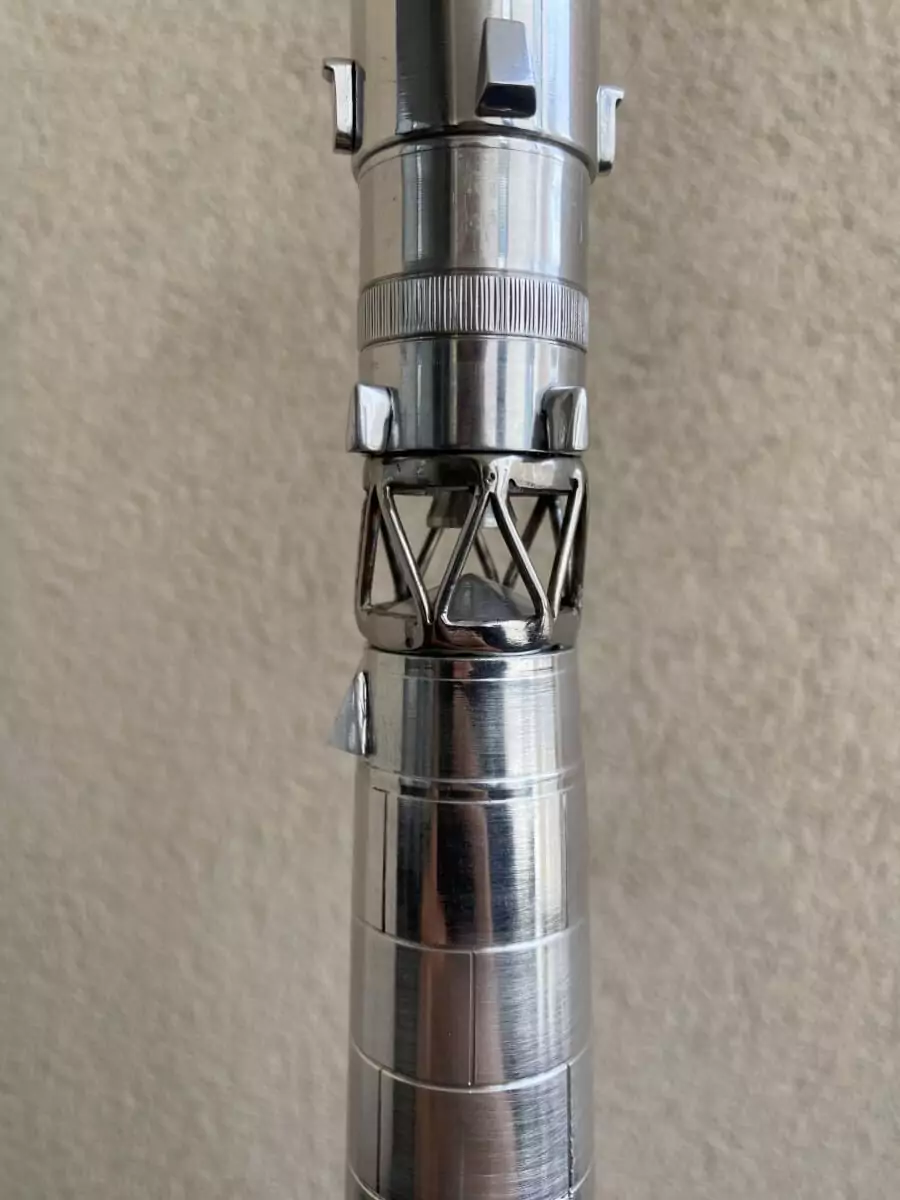
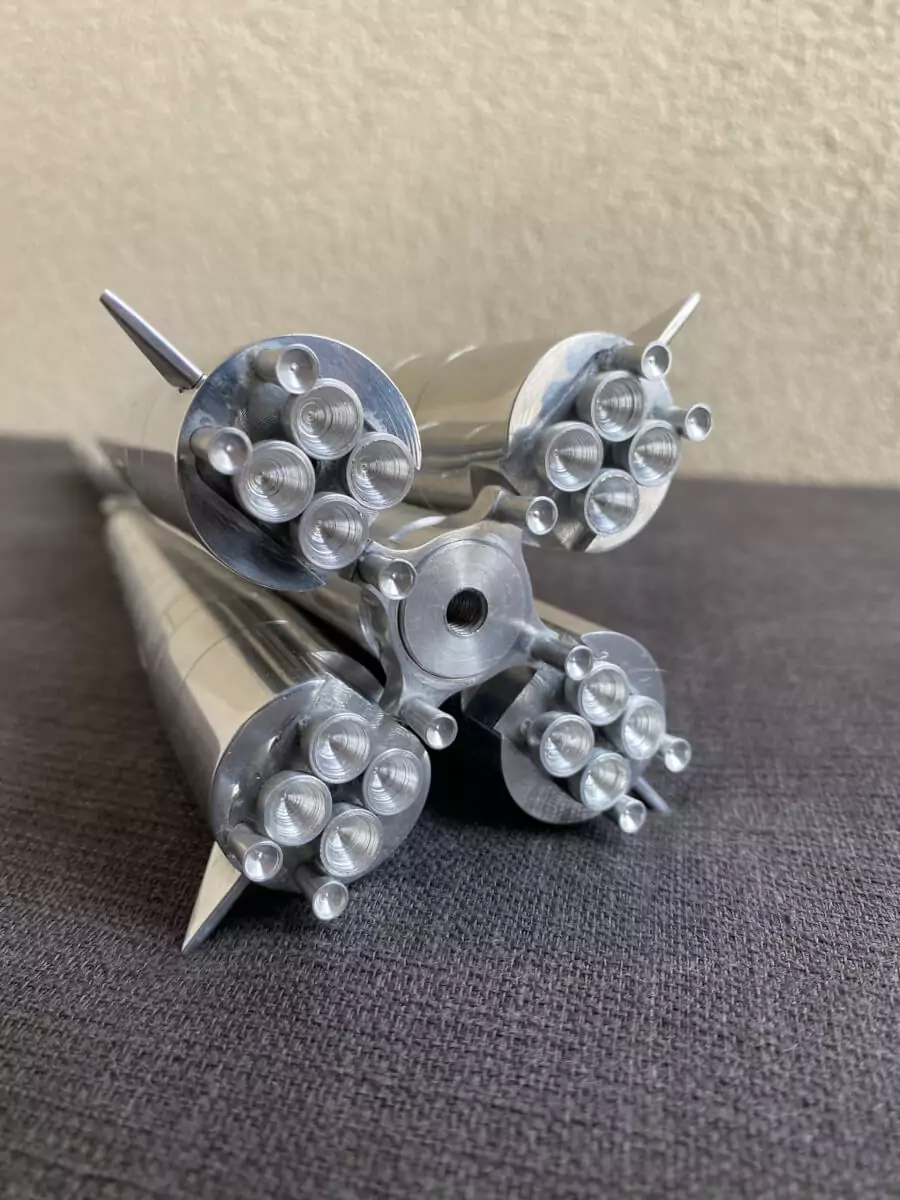
Large desk model of the Voskhod rocket, made entirely of polished metal and displayed upright on a round base. The model reproduces in fine detail the launcher’s central core surrounded by four conical strap-on boosters. Under each booster are the four main nozzles and the two small vernier nozzles, as on the real engine. At the top, the spacecraft fairing has a round opening showing the spherical capsule, and the connection to the upper stage is an open lattice truss.
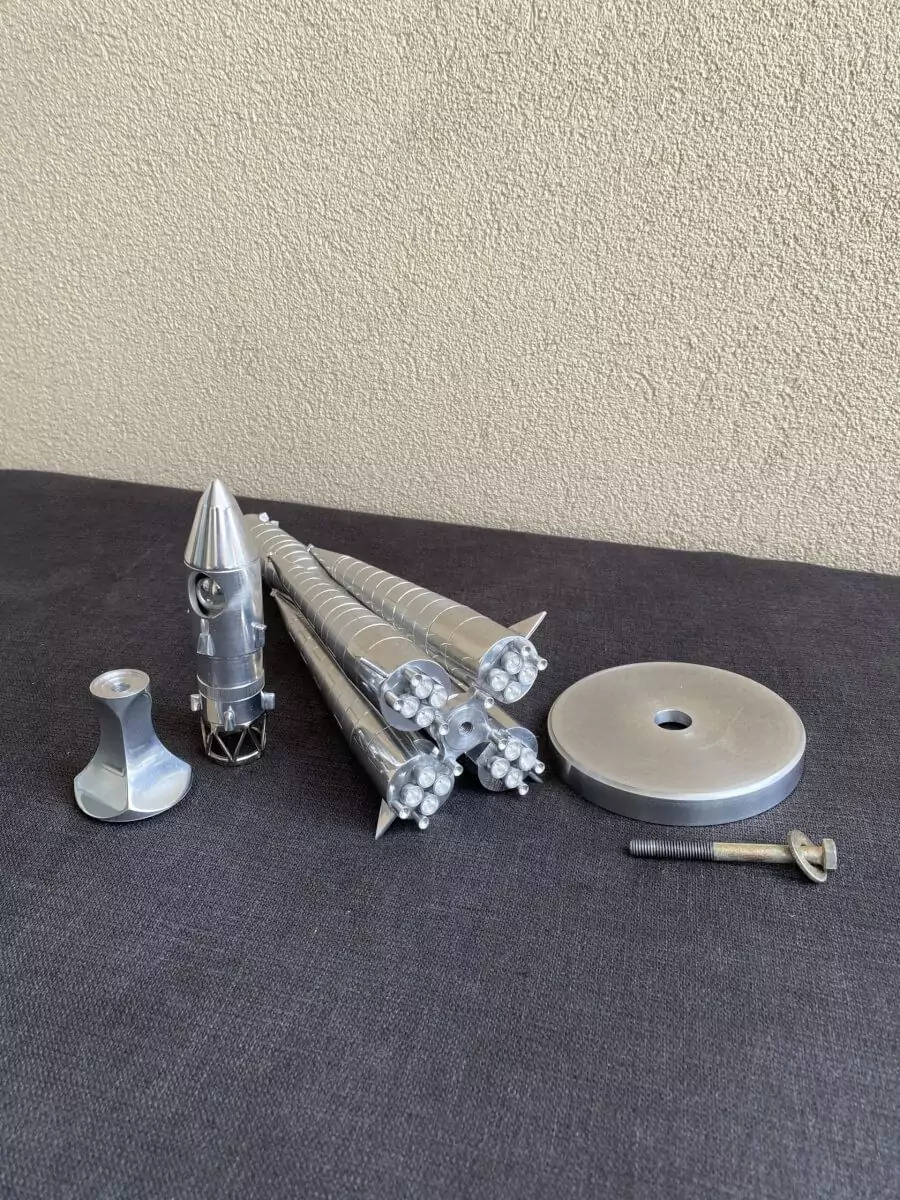
The model comes apart into several pieces: upper section with the spacecraft, rocket body with boosters, foot, base and fixing bolt. It was presented to Lieutenant General L.T. Baranov at the Baikonur cosmodrome in the 1980s, at a time when the site, in Kazakhstan, was run by the Soviet military.
The Voskhod launcher (11A57) was derived from Sergei Korolev’s R-7 missile, the rocket family that had already put Sputnik and then Yuri Gagarin into orbit. Fitted with a more powerful third stage than the Vostok rocket, it could lift a heavier spacecraft. On 12 October 1964 it launched Voskhod 1 from Baikonur with Vladimir Komarov, Konstantin Feoktistov and Boris Yegorov on board, the first time a crew of several men went into space. On 18 March 1965, Voskhod 2 carried Pavel Belyayev and Alexei Leonov, who made the first spacewalk in history. The launcher then put many satellites into orbit until the mid 1970s.
Very good condition, complete with its base and fixing bolt.
Additional information
| Weight | 1.8 kg |
|---|---|
| Dimensions | 40 × 30 × 20 cm |