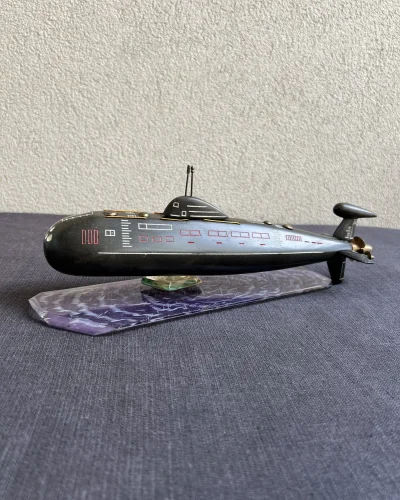
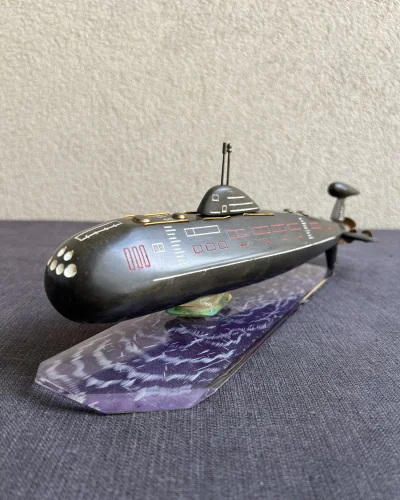
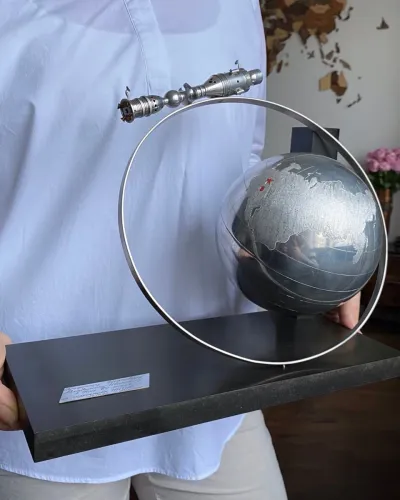
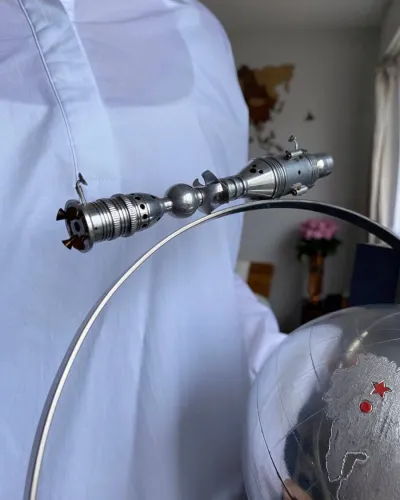
Soviet Soyuz Rocket - Aluminium Desk Model - USSR Space Program
$299.99Unique piece
Soviet Soyuz Rocket - Aluminium Desk Model - USSR Space Program
$299.99Unique piece
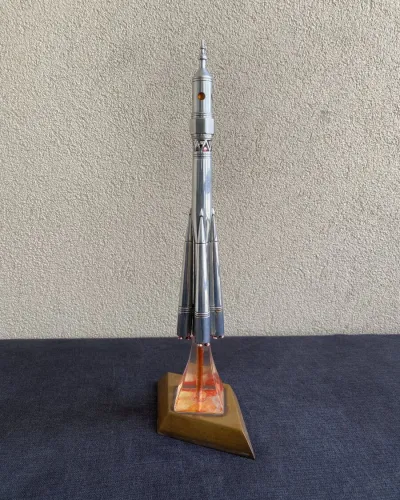
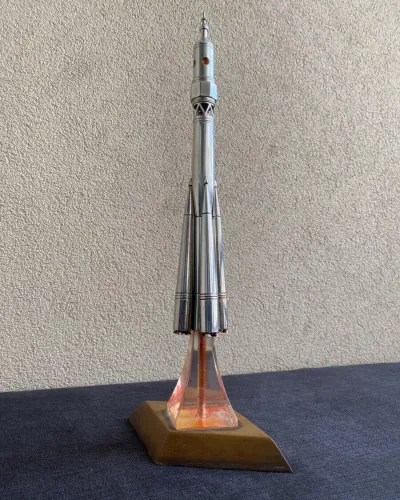
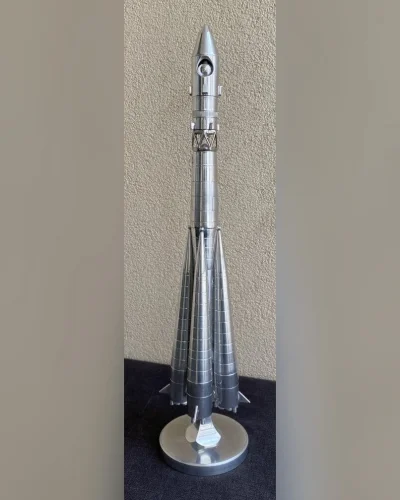
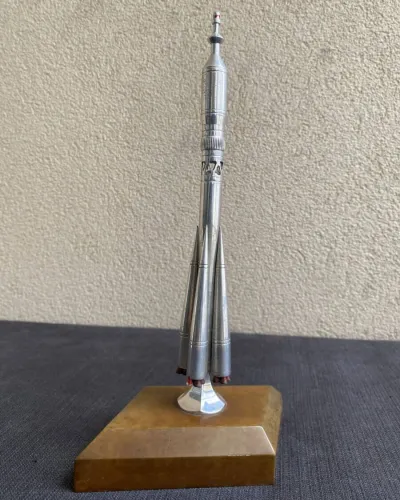
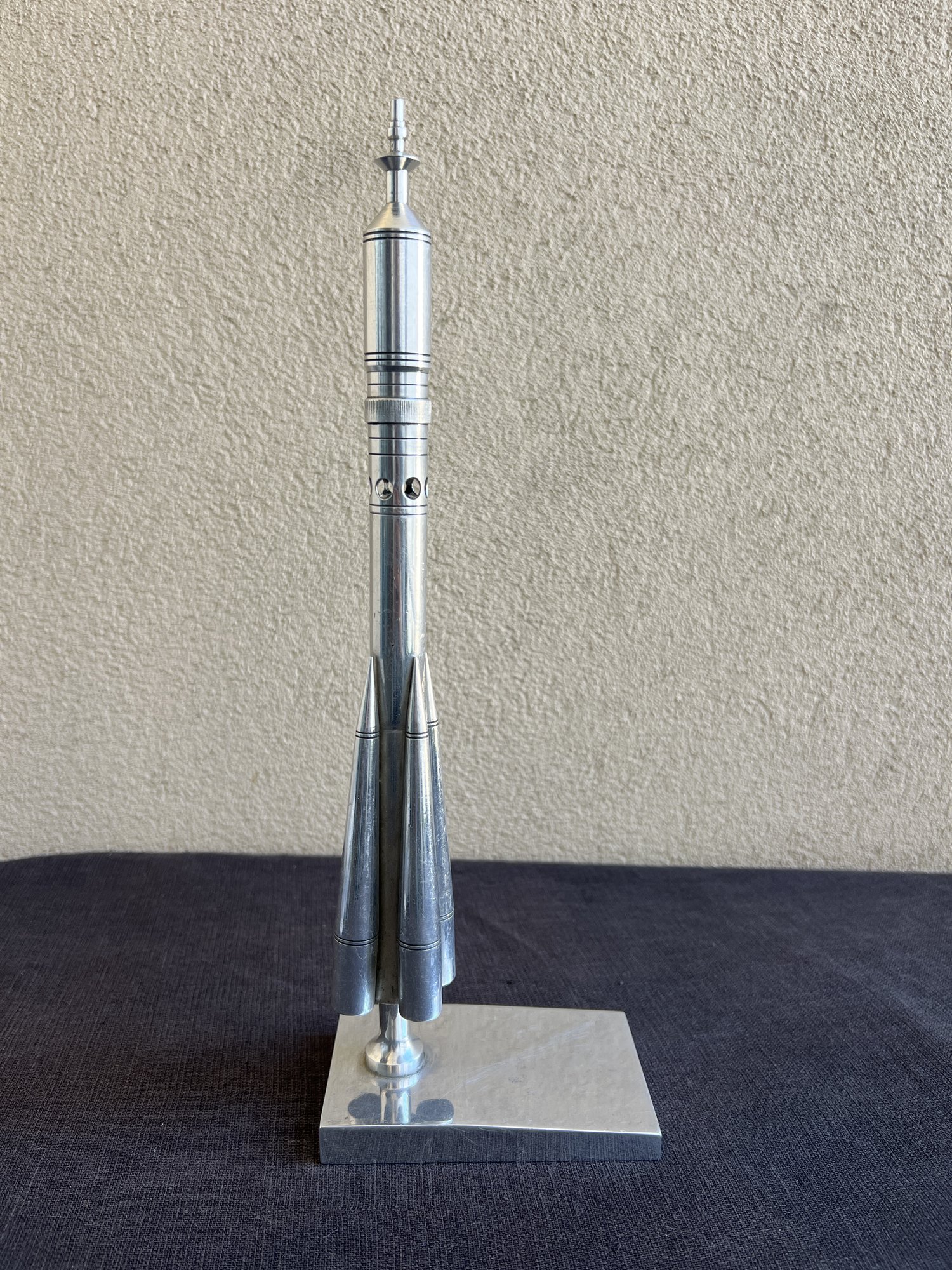
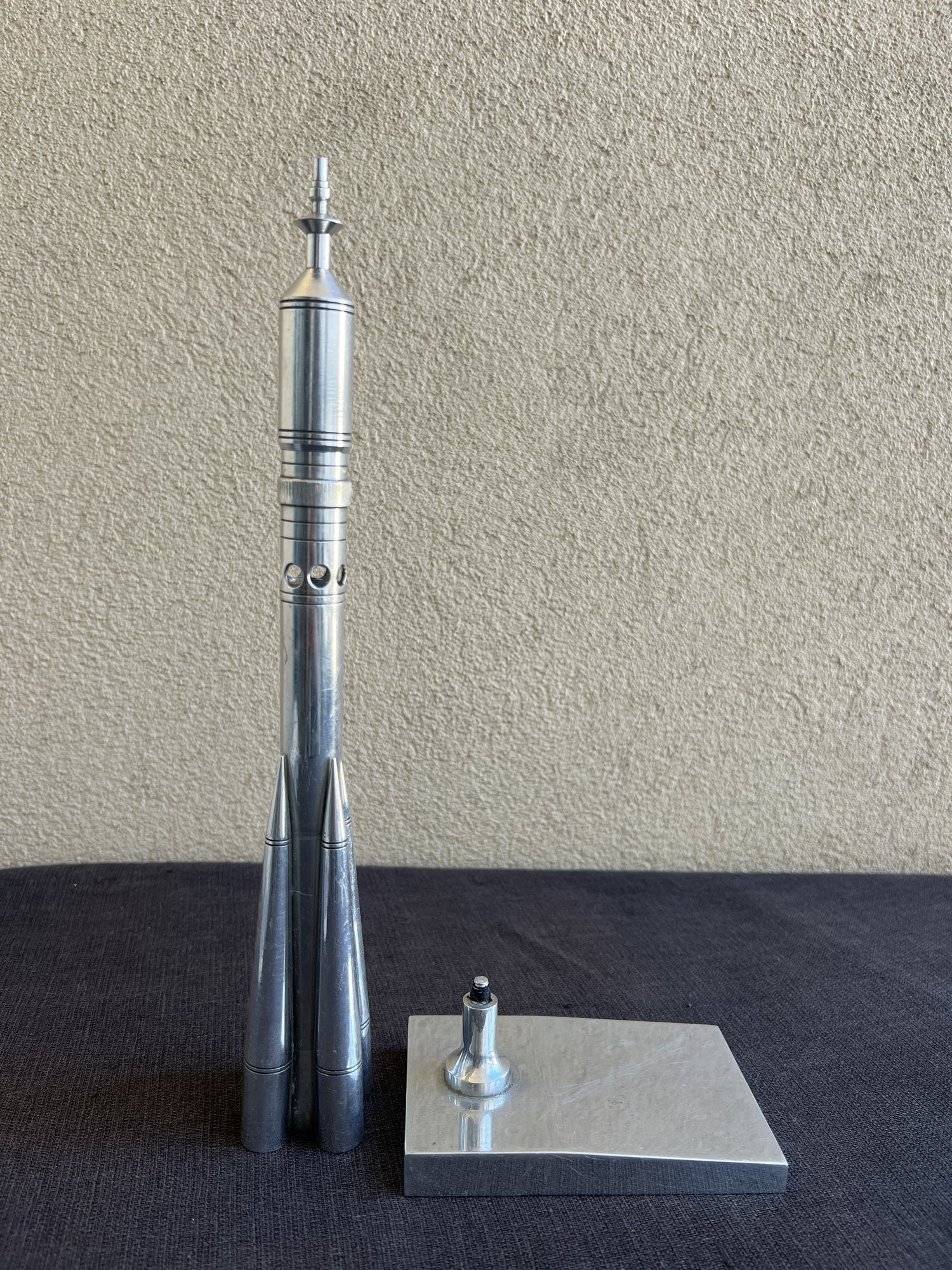
A 36 cm aluminium Soyuz rocket, made in the USSR in the 1980s. Derived from Korolev’s R-7, the Soyuz carried every Soviet crew into orbit from 1967. The rocket lifts off its stand.
1 in stock
Message received, dear comrade.
Our information desk usually replies within 24 hours at the address provided.Invasion of Afghanistan (1979), boycotted Moscow Olympics (1980). Gorbachev comes to power in 1985, launching Perestroika and Glasnost. Chernobyl in 1986.

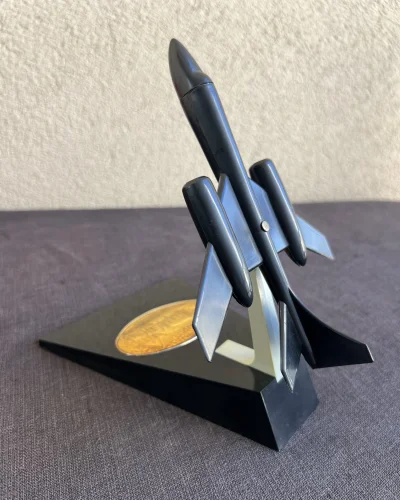
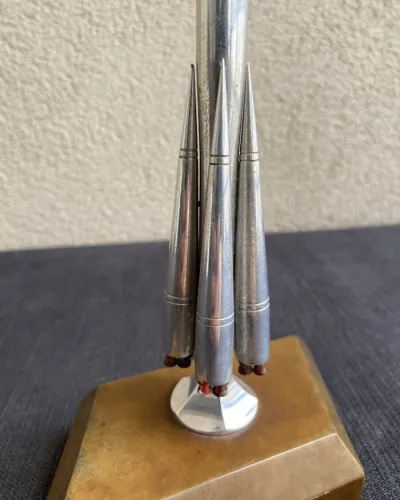
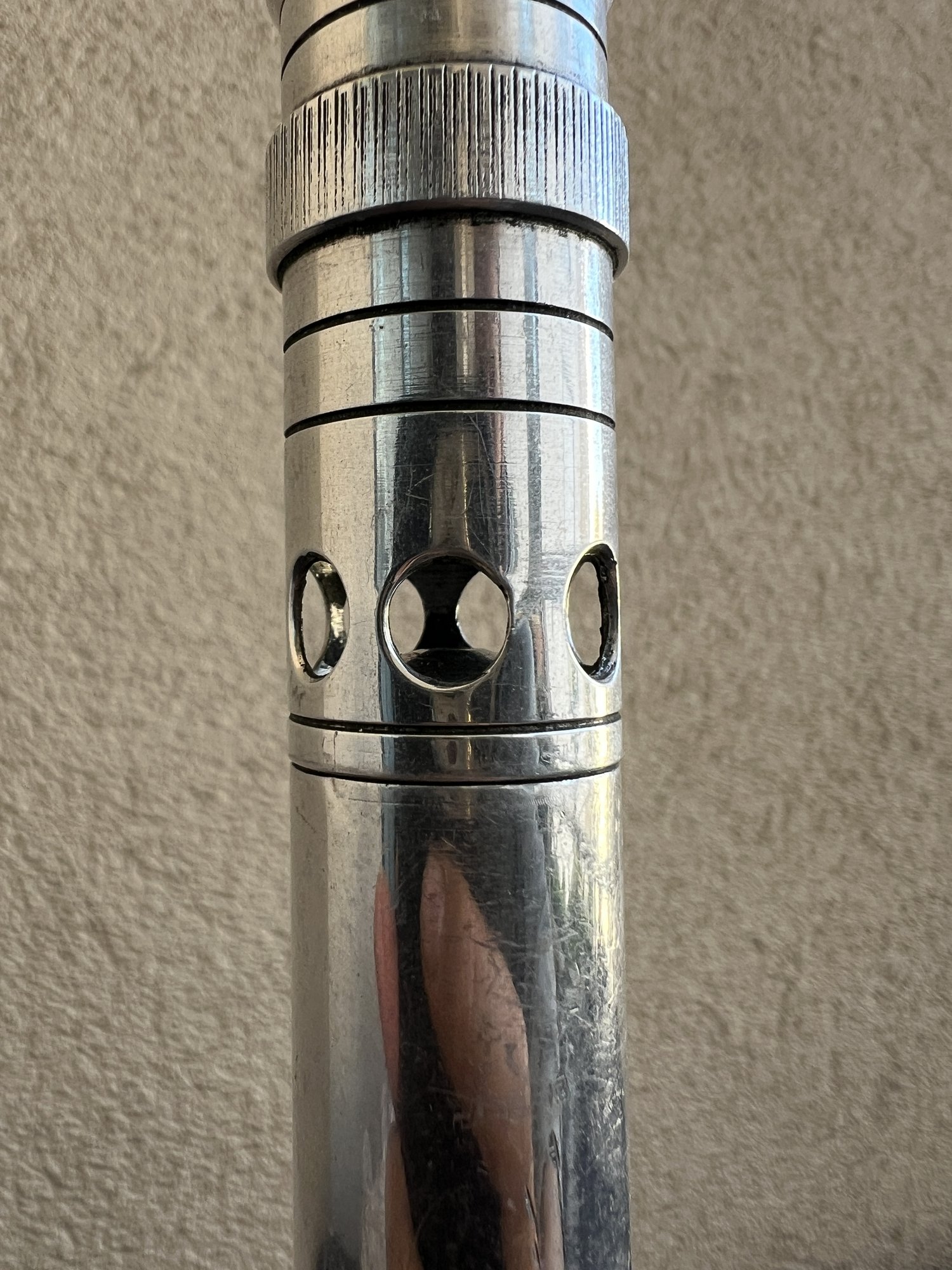
Soviet aluminium desk model of the Soyuz launch vehicle, standing 36 cm high. The rocket fits onto a pin set in the base and can be lifted off.
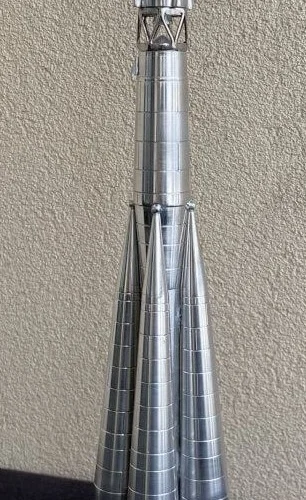
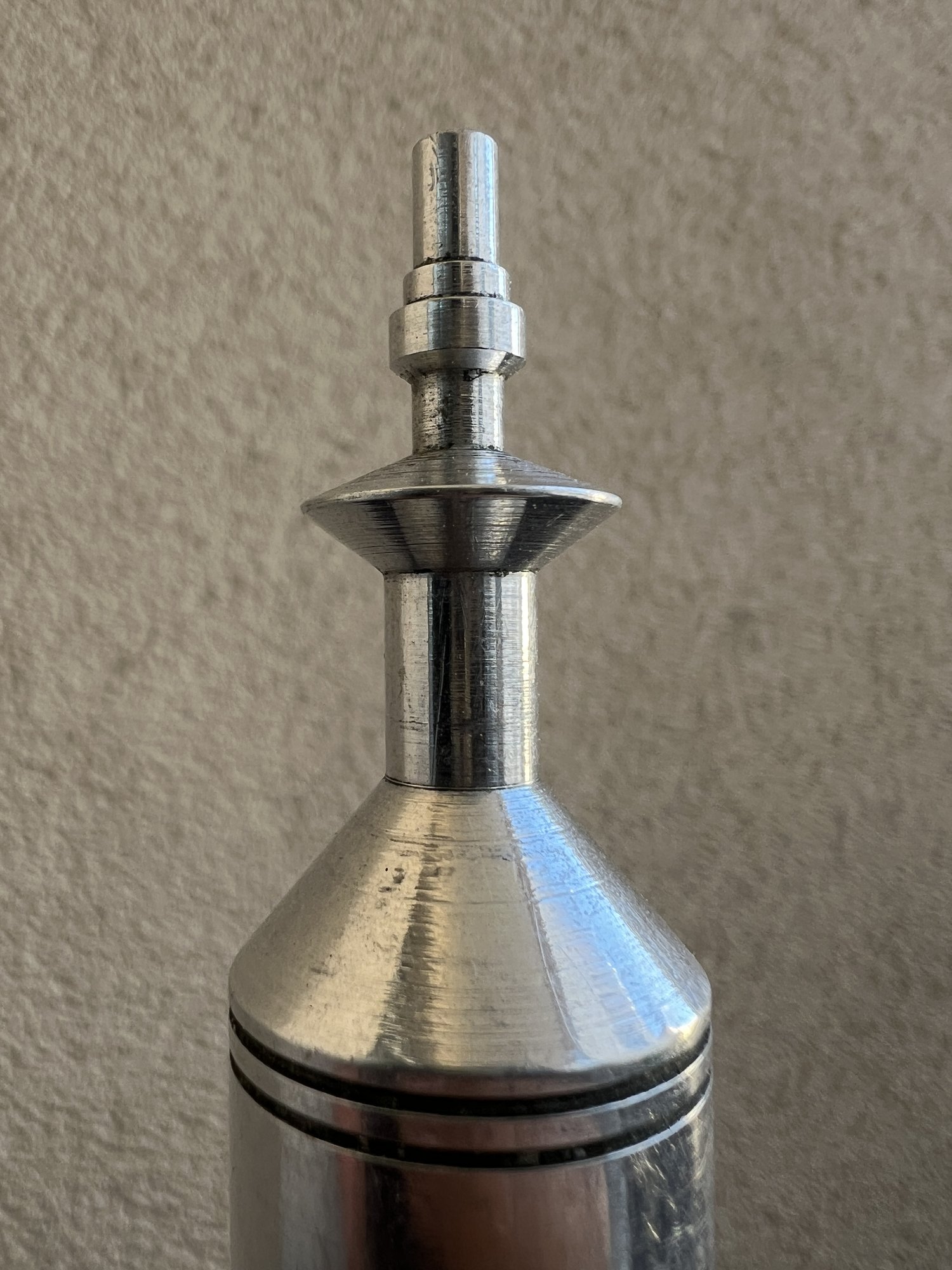
The Soyuz launcher is a direct descendant of the R-7, the first intercontinental ballistic missile, designed by Sergei Korolev’s bureau. The same family put Sputnik into orbit in 1957 and, as the Vostok variant, carried Yuri Gagarin in 1961. It is identified by its four strap-on boosters clustered around the core stage and by the launch escape tower on top of the fairing, built to pull the crew capsule clear in case of failure at lift-off. Introduced in the mid-1960s, it flew every Soviet crew from Soyuz 1 in 1967 onwards, supplied the Salyut stations and later Mir, and its successors still fly from Baikonur today.
Models of this kind were made in small batches in the workshops of aerospace and defence plants, often from offcuts, and given as presents for anniversaries, retirements or official visits. This one carries no inscription or plaque, so the factory cannot be traced. It probably dates from the 1980s.
Signs of use and light scratches over all surfaces, no missing parts or dents.
Additional information
| Weight | 1.5 kg |
|---|---|
| Dimensions | 45.0 × 25.0 × 15.0 cm |