




Soviet Jet Throttle Lever RUD - USSR Cockpit Control - SPS Detent
Soviet Jet Throttle Lever RUD - USSR Cockpit Control - SPS Detent
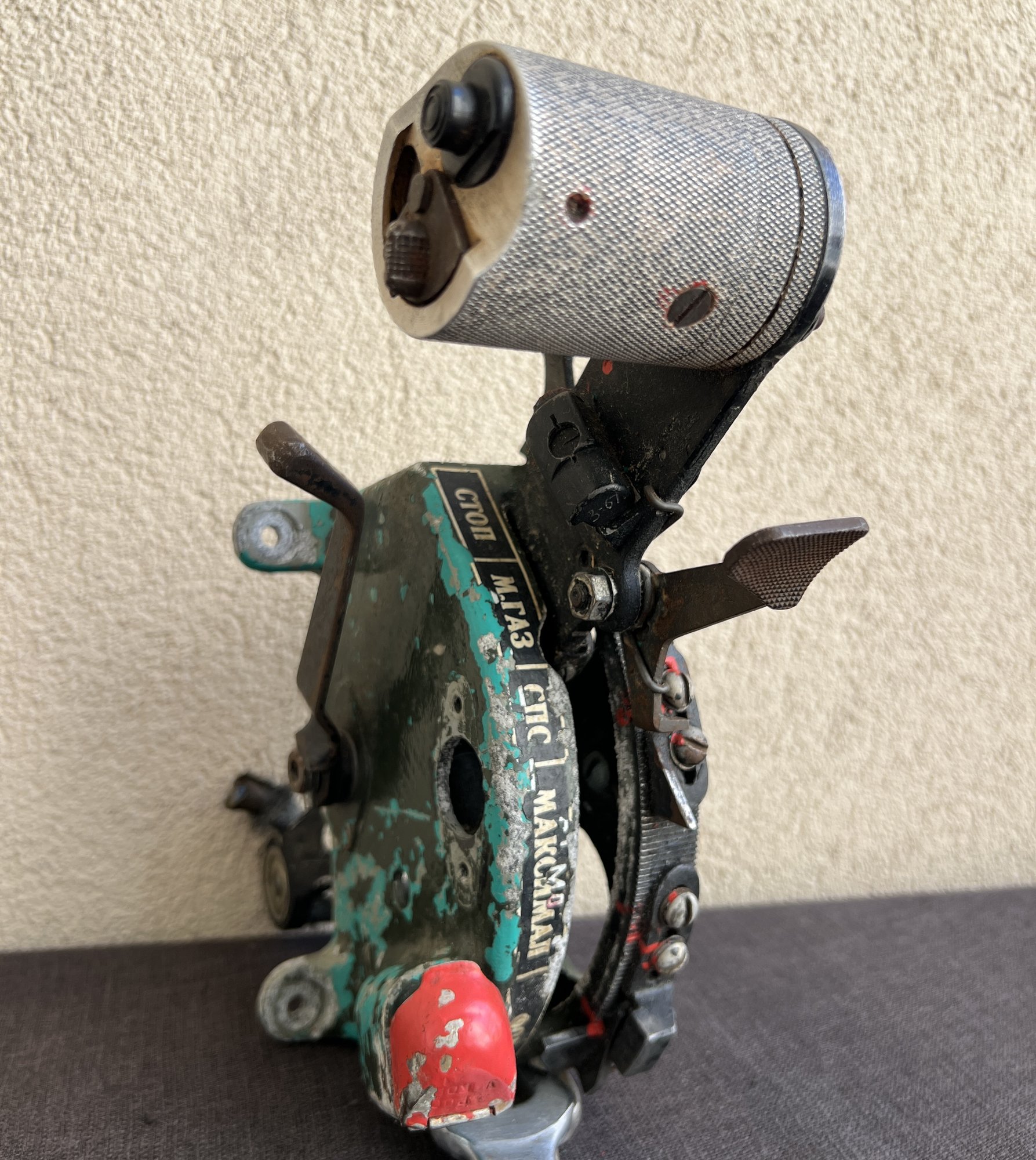
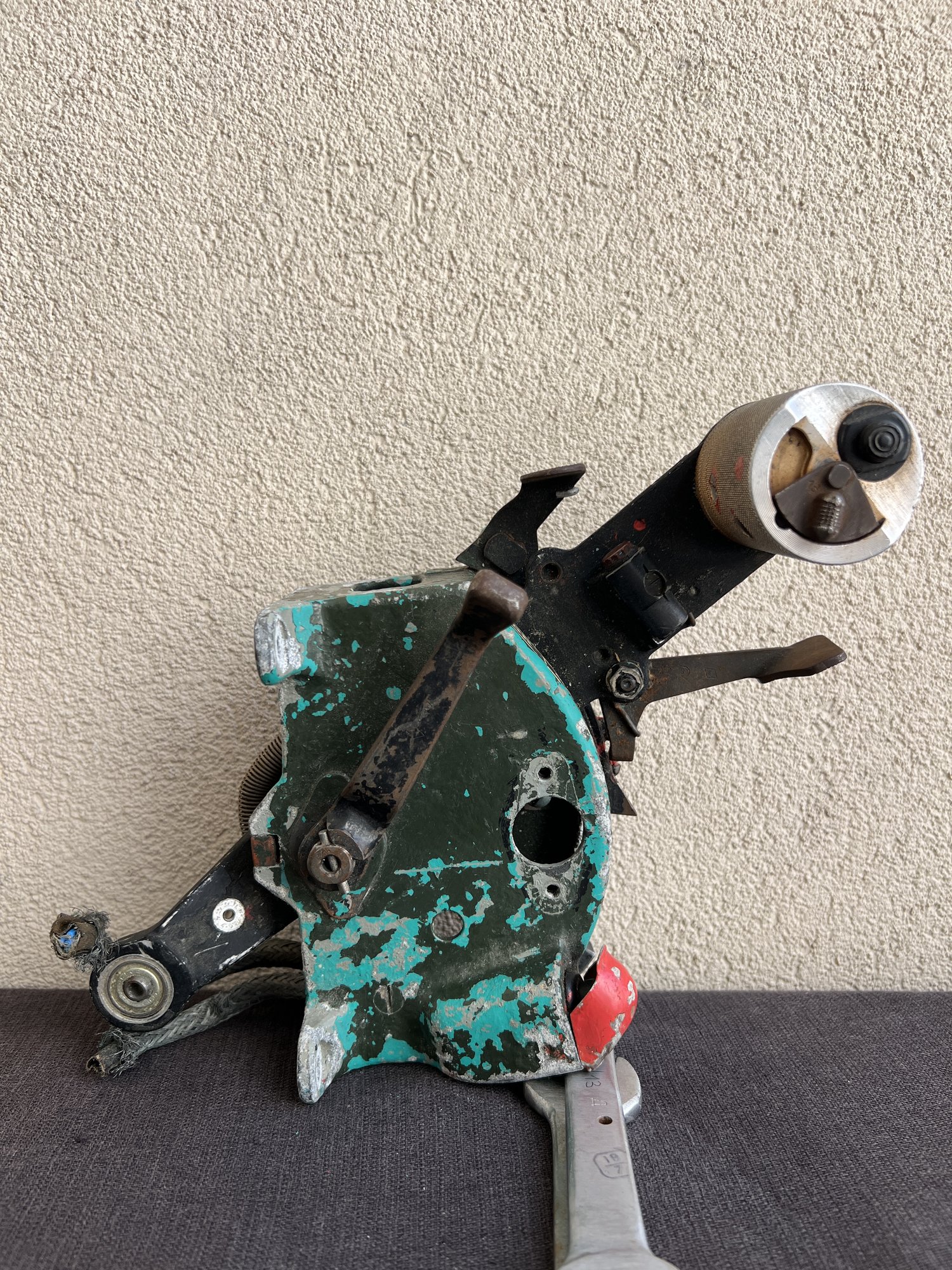
A 30 cm РУД engine control lever from a Soviet jet, the throttle a fighter pilot held in the left hand.
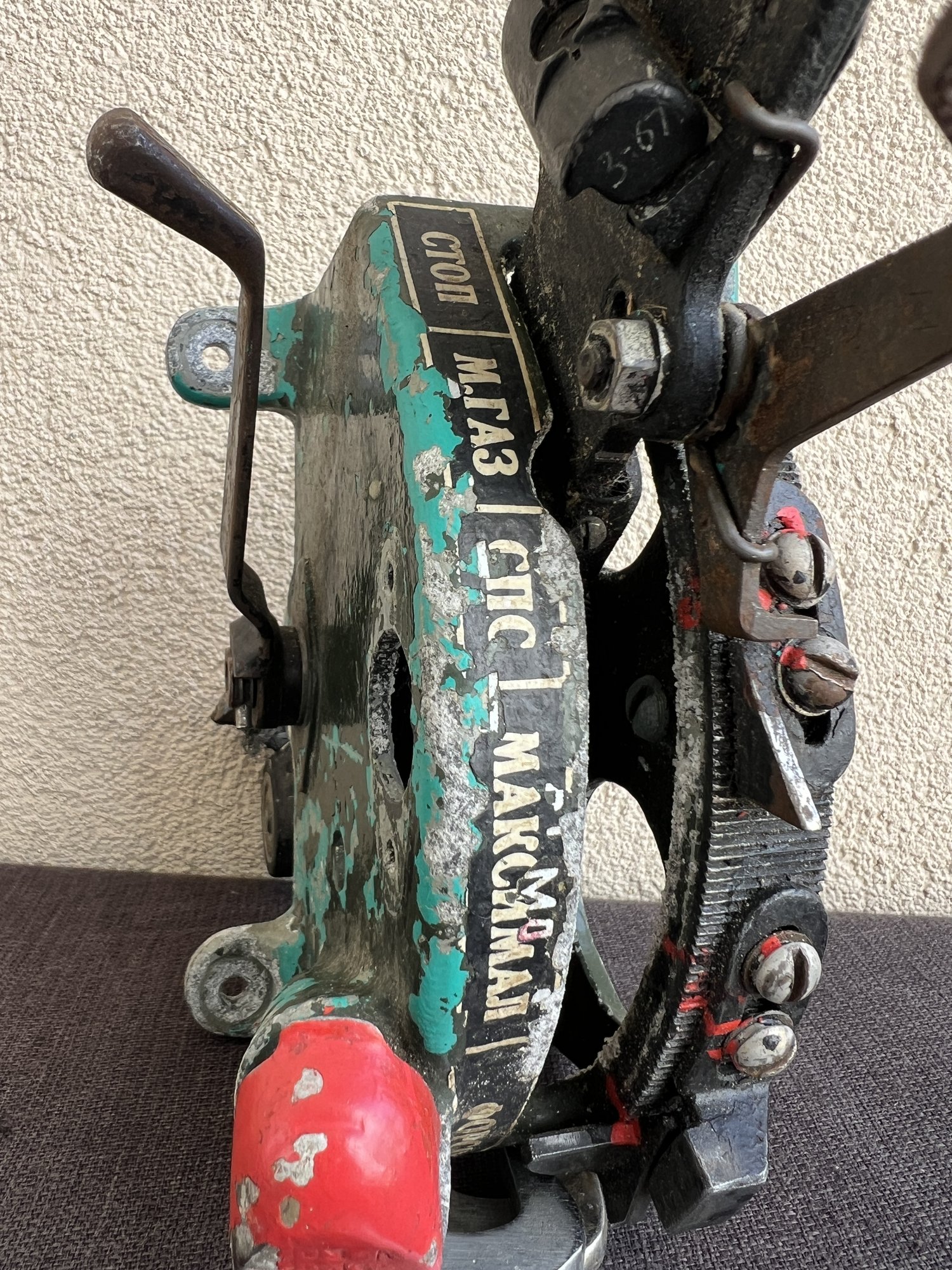
Its quadrant shows the СПС detent for flap blowing, a feature of early 1960s Soviet fighters. Complete mechanism with honest service wear.
Sold
Sale price
For newsletter subscribers. One price per month.
Like this model?
We sometimes find another one. Leave your email and we will let you know when it is listed.
Soviet Jet Throttle Lever RUDOne email per arrival of this model, one-click unsubscribe. Your address is used for nothing else.

Message received, dear comrade.
Our information desk usually replies within 24 hours at the address provided.Related products
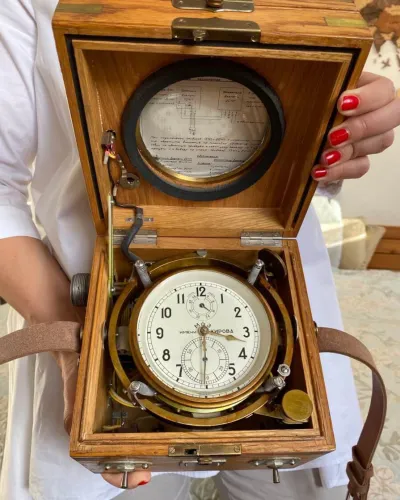
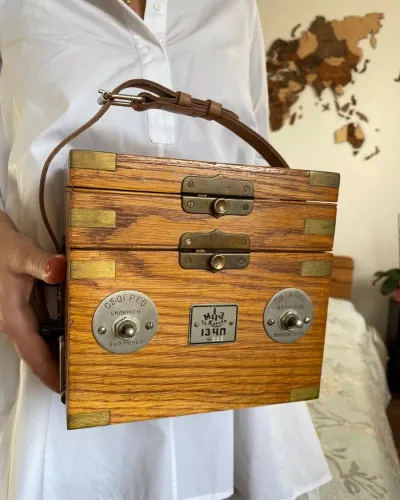
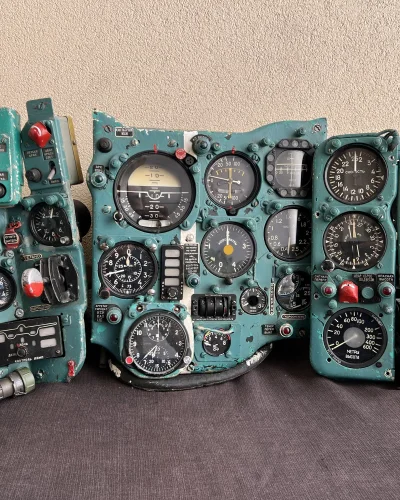
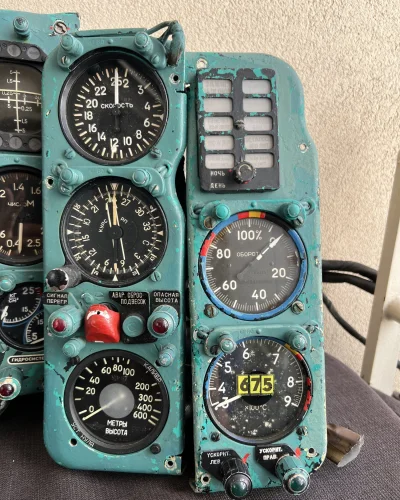

Peak of the space race won by the USSR: Sputnik 1 (1957), Gagarin's flight (1961), Tereshkova the first woman in orbit (1963). Khrushchev leads de-Stalinisation until 1964, then Brezhnev ushers in stagnation. Scientific and cultural high point.






Throttle lever from a Soviet jet aircraft, 30 cm long. Soviet aviators called it the РУД, short for рычаг управления двигателем (engine control lever). The pilot worked it with the left hand, and its quadrant still carries the Cyrillic power settings: СТОП (Stop), М.ГАЗ (low throttle, meaning idle), СПС and МАКСИМАЛ (maximum power).
The СПС mark is the telling detail. It stands for сдув пограничного слоя, boundary layer blowing: bleed air from the engine compressor was blown over the flaps to cut approach speed and shorten the landing run. The engine had to stay at a high enough setting to feed the system, hence a dedicated detent on the lever. The MiG-21 is the obvious candidate: the SPS system arrived on it in the early 1960s and became the selling point of the PF(SPS) and PFM versions, built to operate from shorter runways. If that reading holds, this lever once sat in the cockpit of a front line Cold War interceptor.
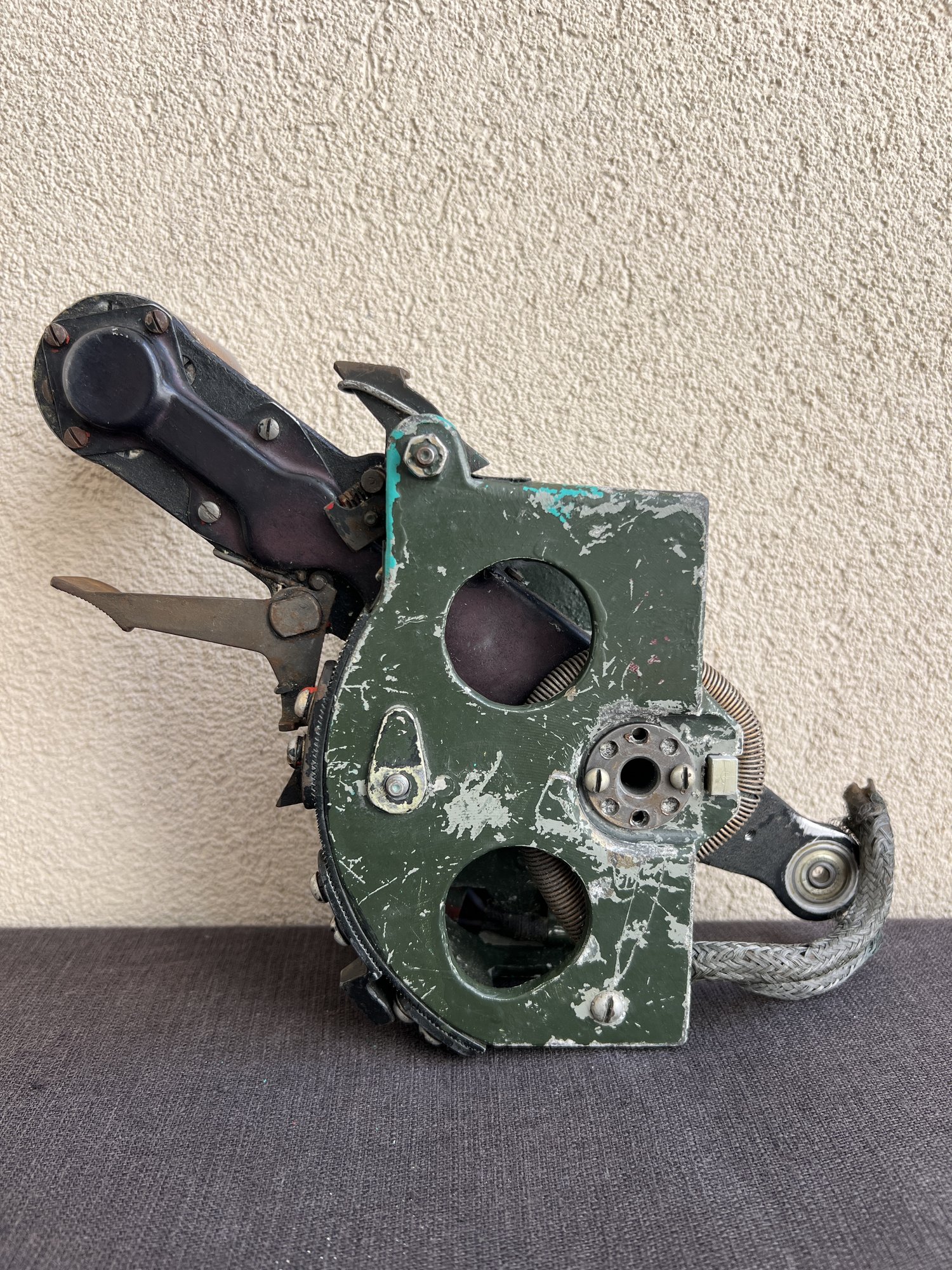
The piece probably dates from the 1960s, based on the 3-67 stamp on the lever head, which may stand for March 1967. The mechanism is complete with its housing, detents, return springs and the braided control cable that ran to the engine. Layers of workshop paint and wear on the housing show long service and several repaints. A cockpit control rarely seen outside museums, best displayed as found.
This piece is part of a group of equipment from a Soviet MiG-21 built from 1968 onwards, kept in the reserve collection of a military museum in Germany.
Additional information
| Weight | 2.5 kg |
|---|---|
| Dimensions | 40.0 × 30.0 × 20.0 cm |

