Soviet Cockpit Connector Block - Military Aircraft Part - No. 6P0704
$63.99Unique piece
Soviet Cockpit Connector Block - Military Aircraft Part - No. 6P0704
$63.99Unique piece
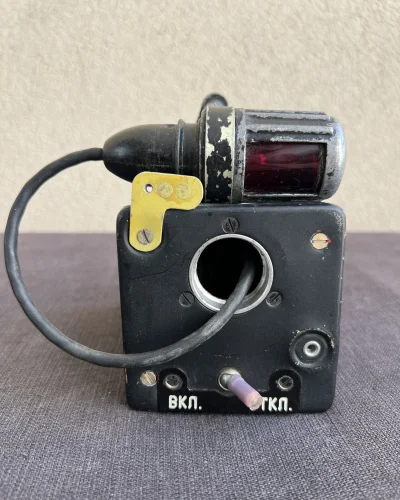
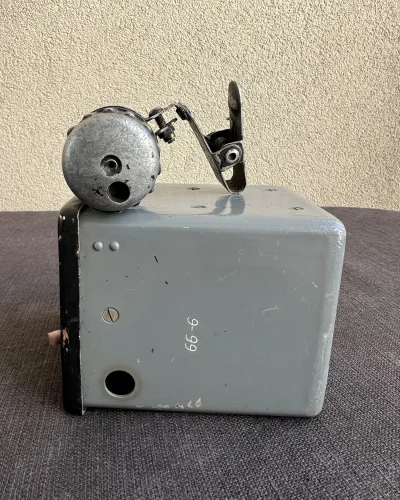
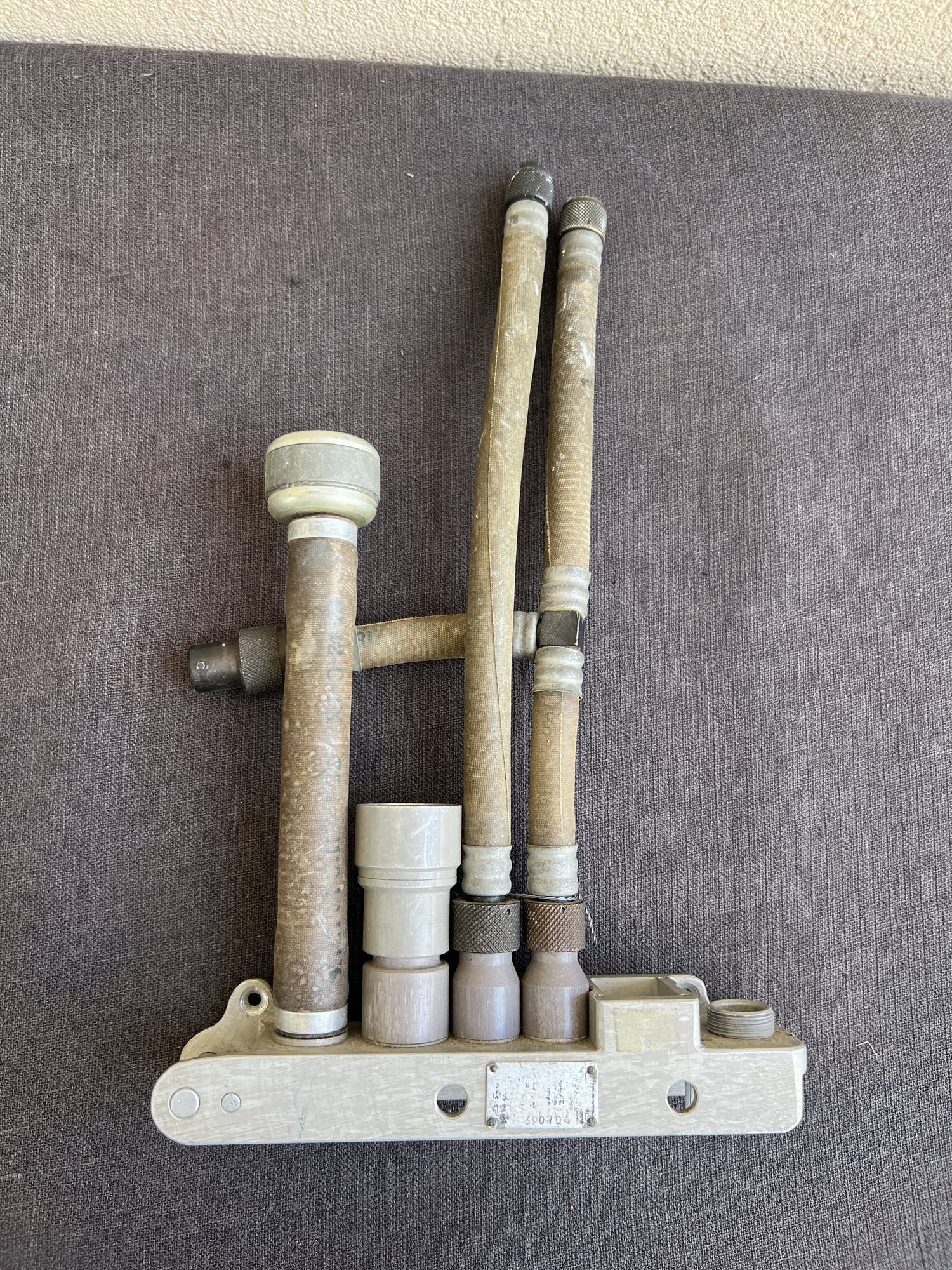
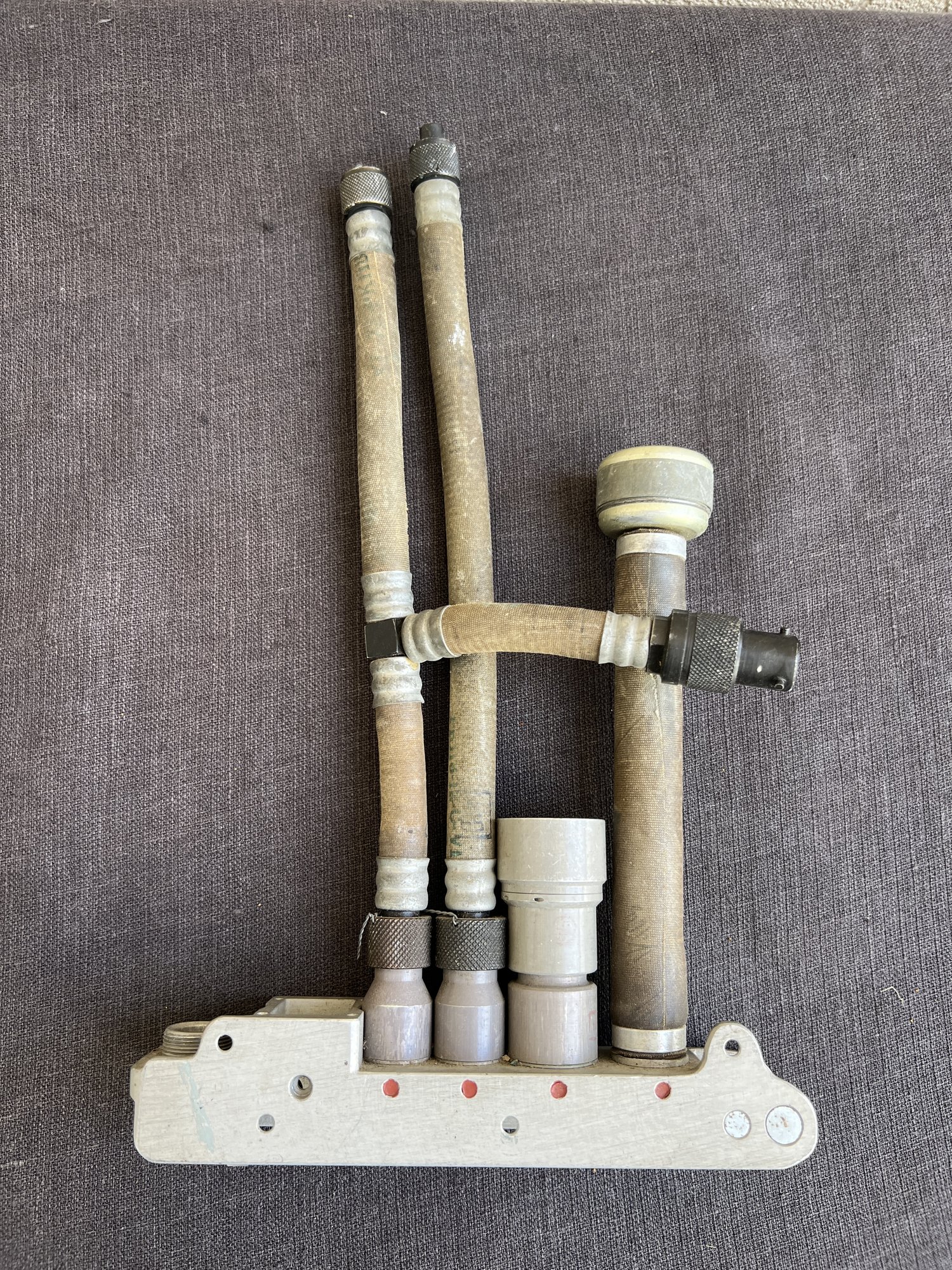
Soviet military aircraft cockpit connector block: light alloy base, three sheathed hoses with screw fittings and a bayonet electrical connector.
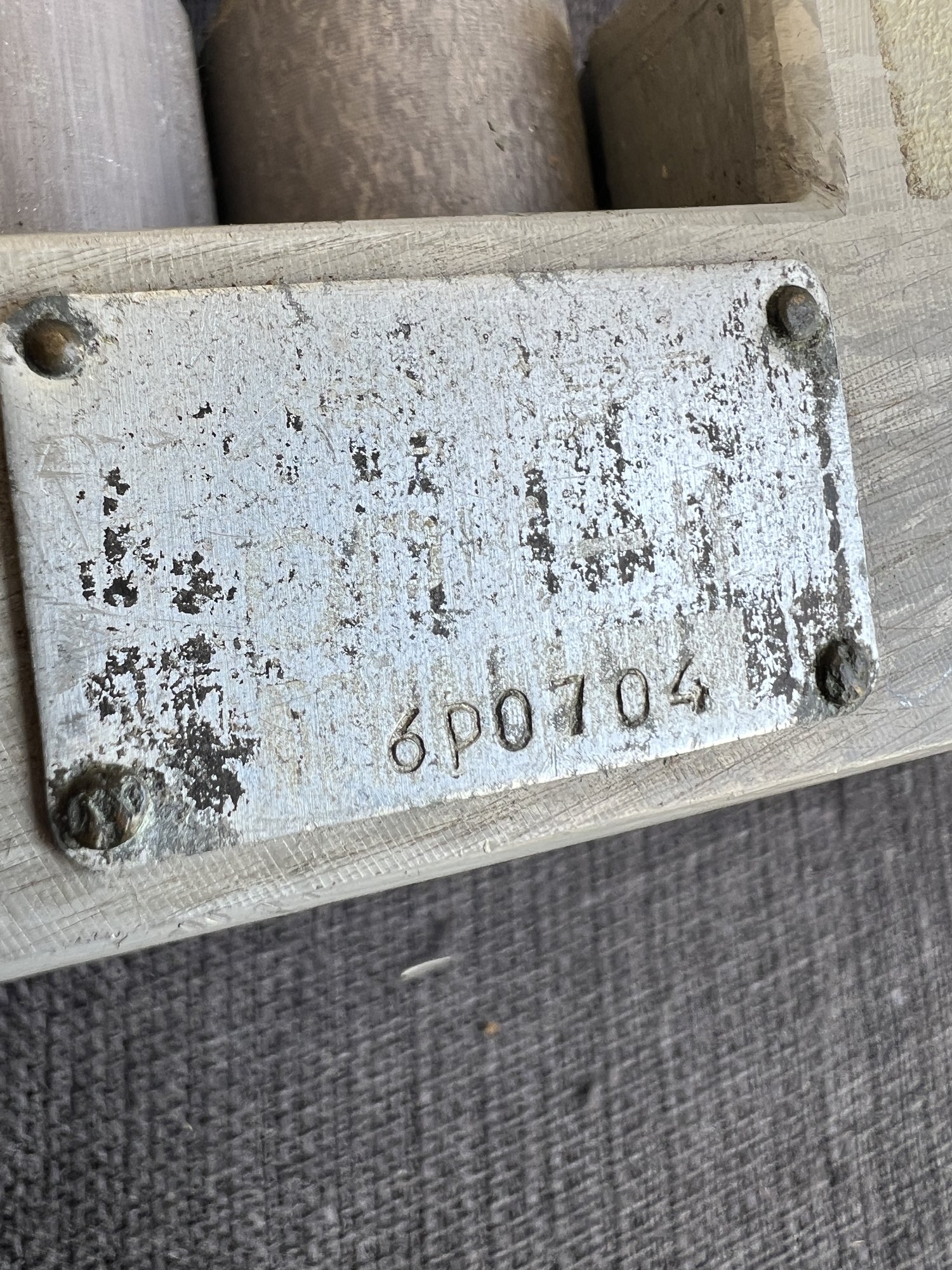
Plate stamped with serial number 6P0704, complete with its hoses.
1 in stock
Message received, dear comrade.
Our information desk usually replies within 24 hours at the address provided.The Brezhnev era. Détente with the West, SALT treaties, the Apollo-Soyuz mission. Economic stagnation and growing corruption.
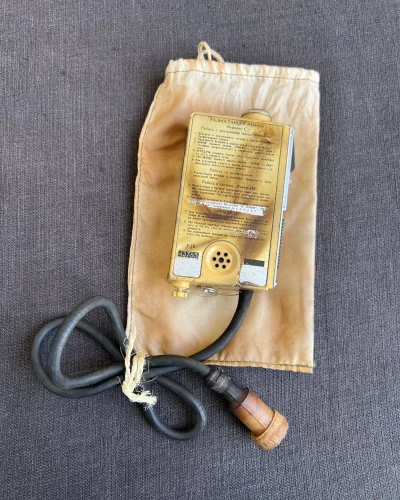
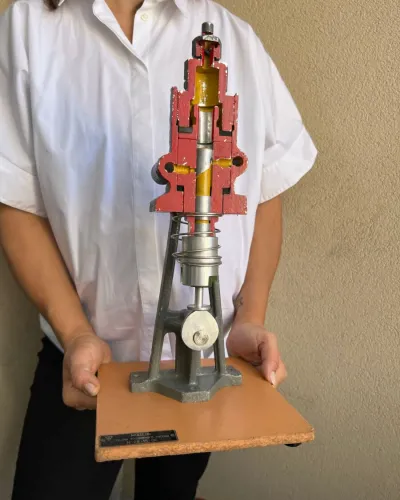
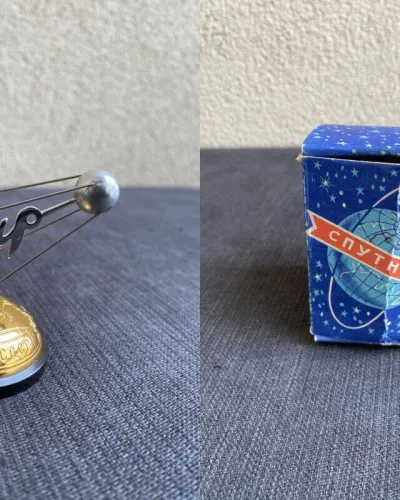
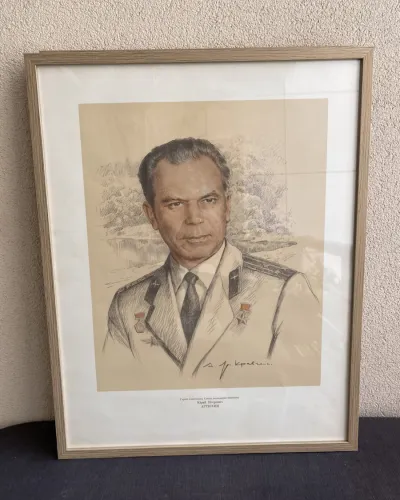
A cockpit component from a Soviet military aircraft. One hypothesis: a pilot services connector block of the ОРК type (ORK, a unified communications connector). The part combines a light alloy base carrying three textile-sheathed hoses with screw fittings, plus a line fitted with a bayonet electrical connector.
In a Soviet fighter, the pilot was linked to the aircraft by several circuits at once: oxygen for the mask, pressurised air for the anti-g suit, ventilation for the flight suit and the radio line to the helmet. Instead of plugging each hose in separately, Soviet engineers grouped these lines into a single block mounted on the ejection seat. The pilot connected everything in one movement before the flight, and on ejection the block split automatically, one half staying in the cockpit, the other leaving with the pilot and the seat.
The link with a fighter cockpit is hard to ignore: the number of lines, the radio connector and the mounting points of the base all point to that use. If that reading is right, this piece was one of the last physical connections between a pilot and his aircraft.
The riveted plate carries the serial number 6P0704, stamped into the metal. The other markings on the plate have worn away. The piece likely dates from the 1970s, judging by the design of the hoses and fittings. It measures 30 x 18 x 4 cm. Wear from use, marks and dirt on the textile sheathing, complete and never taken apart.
This piece is part of a group of equipment from a Soviet MiG-21 built from 1968 onwards, kept in the reserve collection of a military museum in Germany.
Additional information
| Weight | 1.2 kg |
|---|---|
| Dimensions | 35.0 × 25.0 × 10.0 cm |