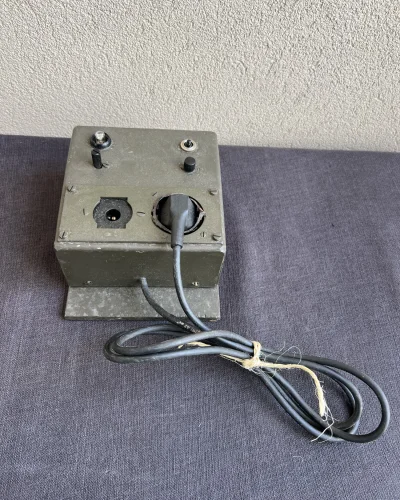
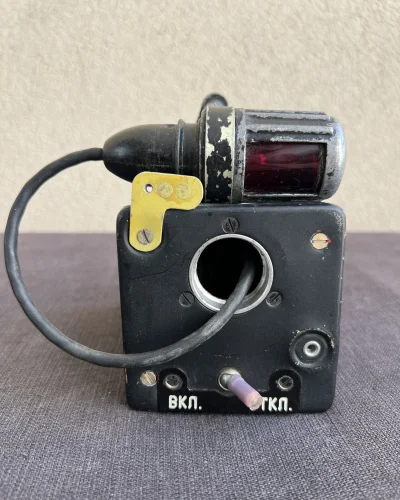
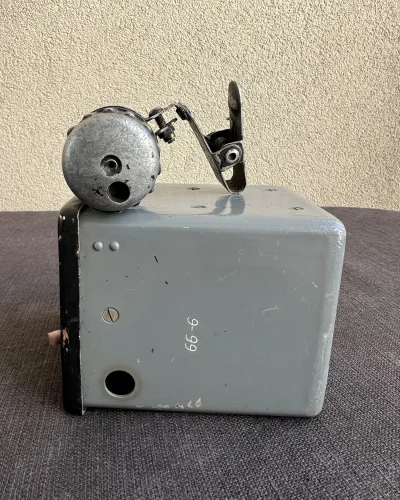
Soviet NPL-M Pilot Kneeboard - East German Air Force - Handwritten Notes
$167.99Unique piece
Soviet NPL-M Pilot Kneeboard - East German Air Force - Handwritten Notes
$167.99Unique piece
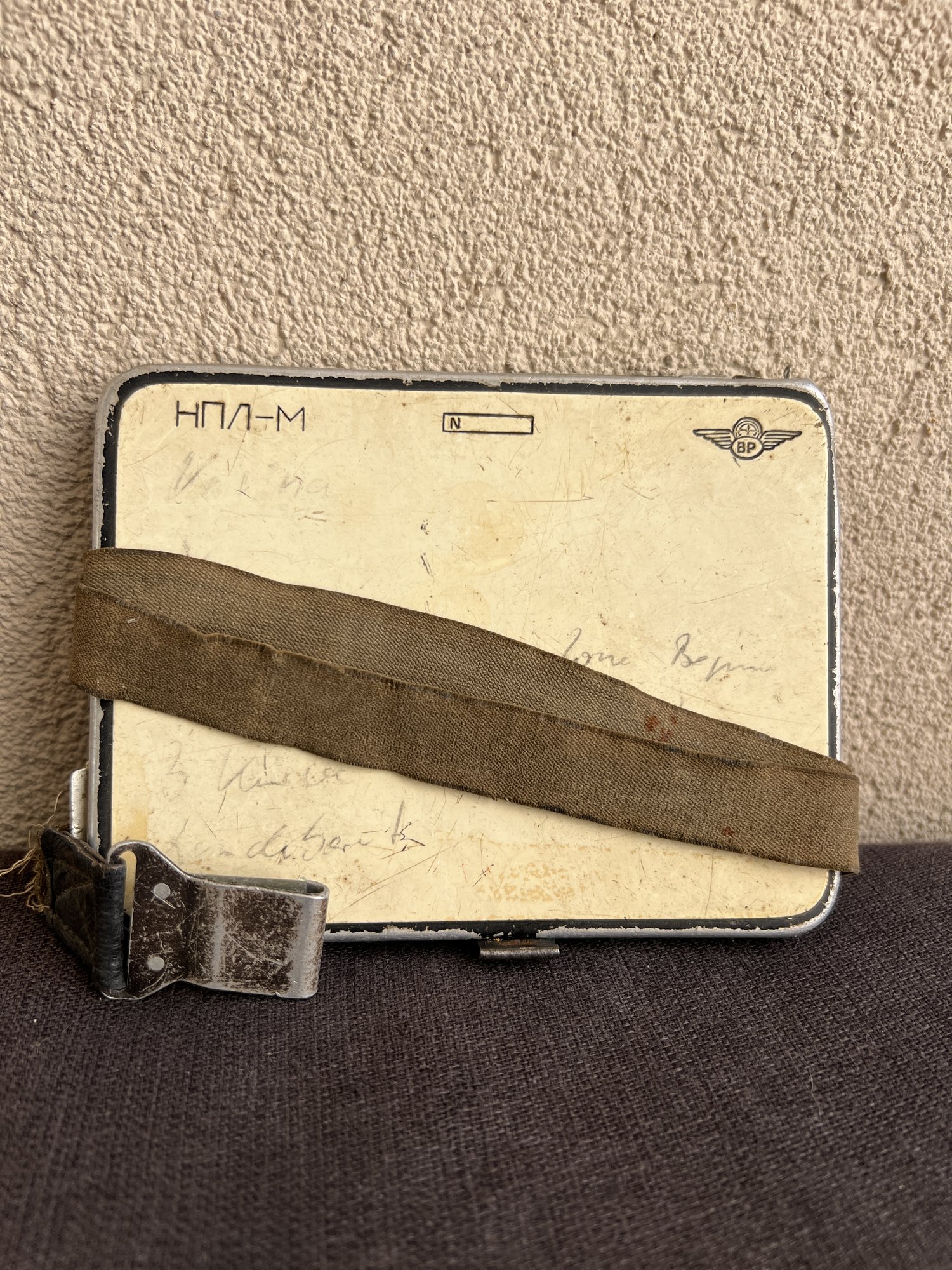
Soviet NPL-M thigh kneeboard flown by an East German pilot, complete with navigation computer, pencil and German flight cards.
A handwritten emergency checklist orders the pilot to avoid crossing into West Germany. Stamped October 1973.
1 in stock
Message received, dear comrade.
Our information desk usually replies within 24 hours at the address provided.The Brezhnev era. Détente with the West, SALT treaties, the Apollo-Soyuz mission. Economic stagnation and growing corruption.


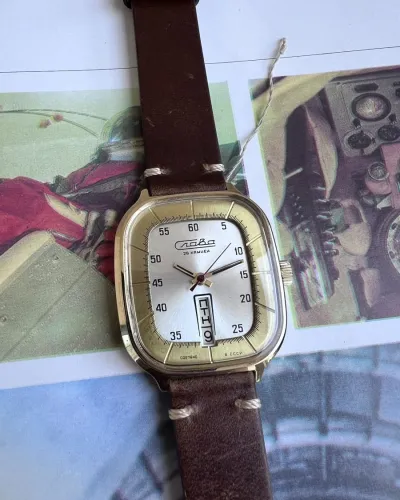
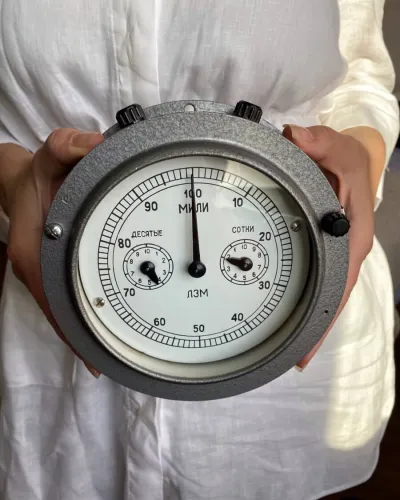
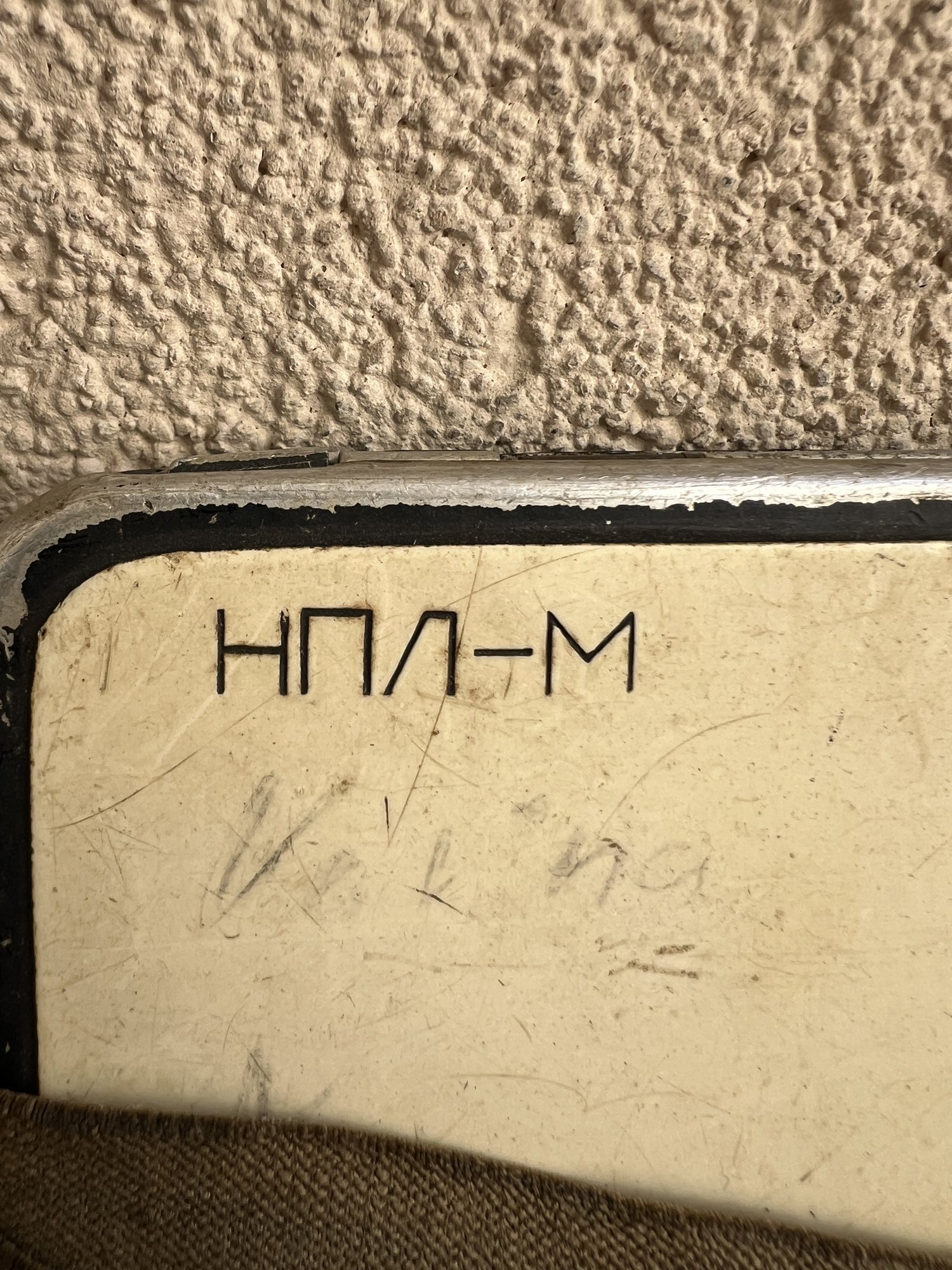
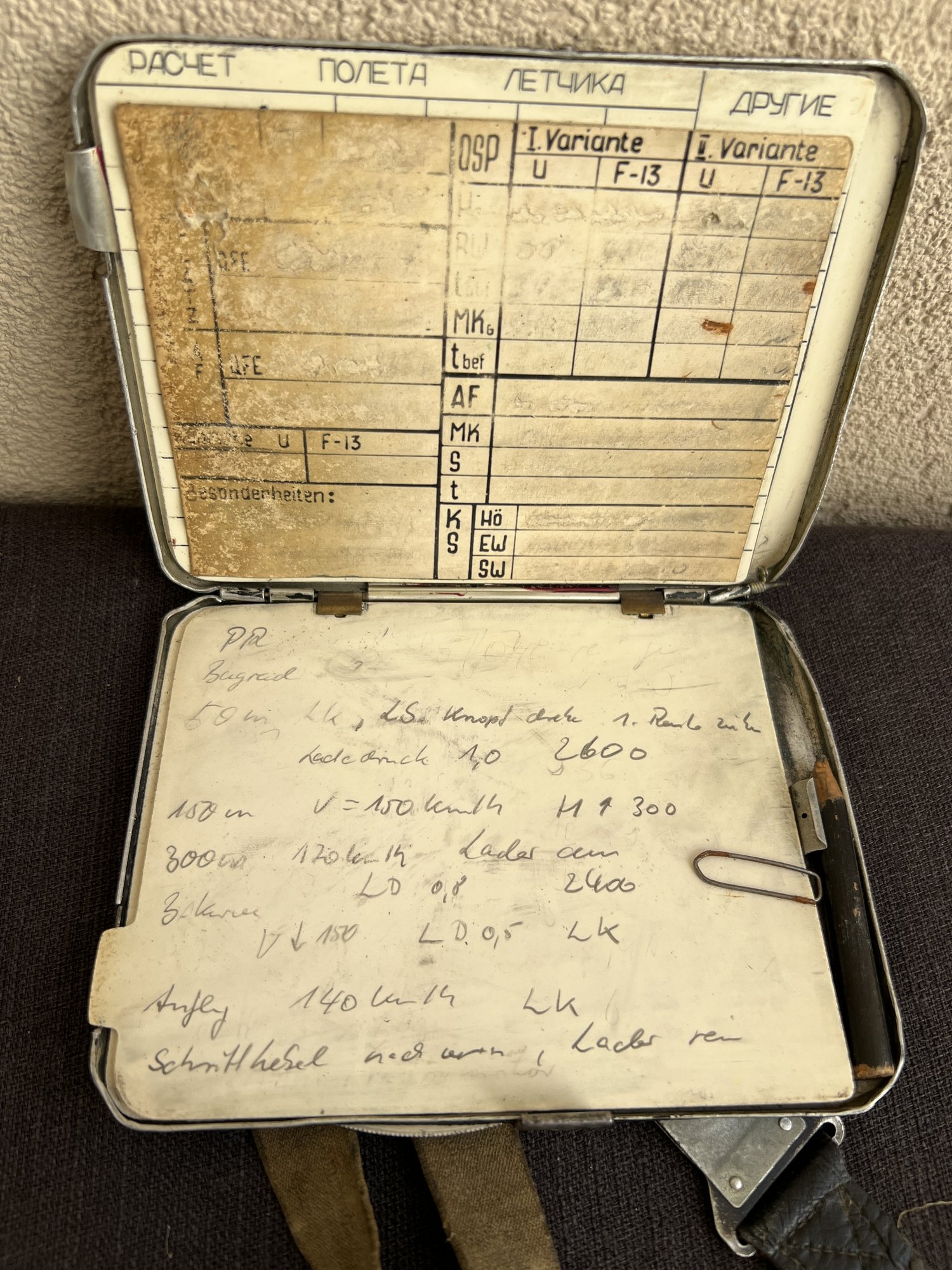
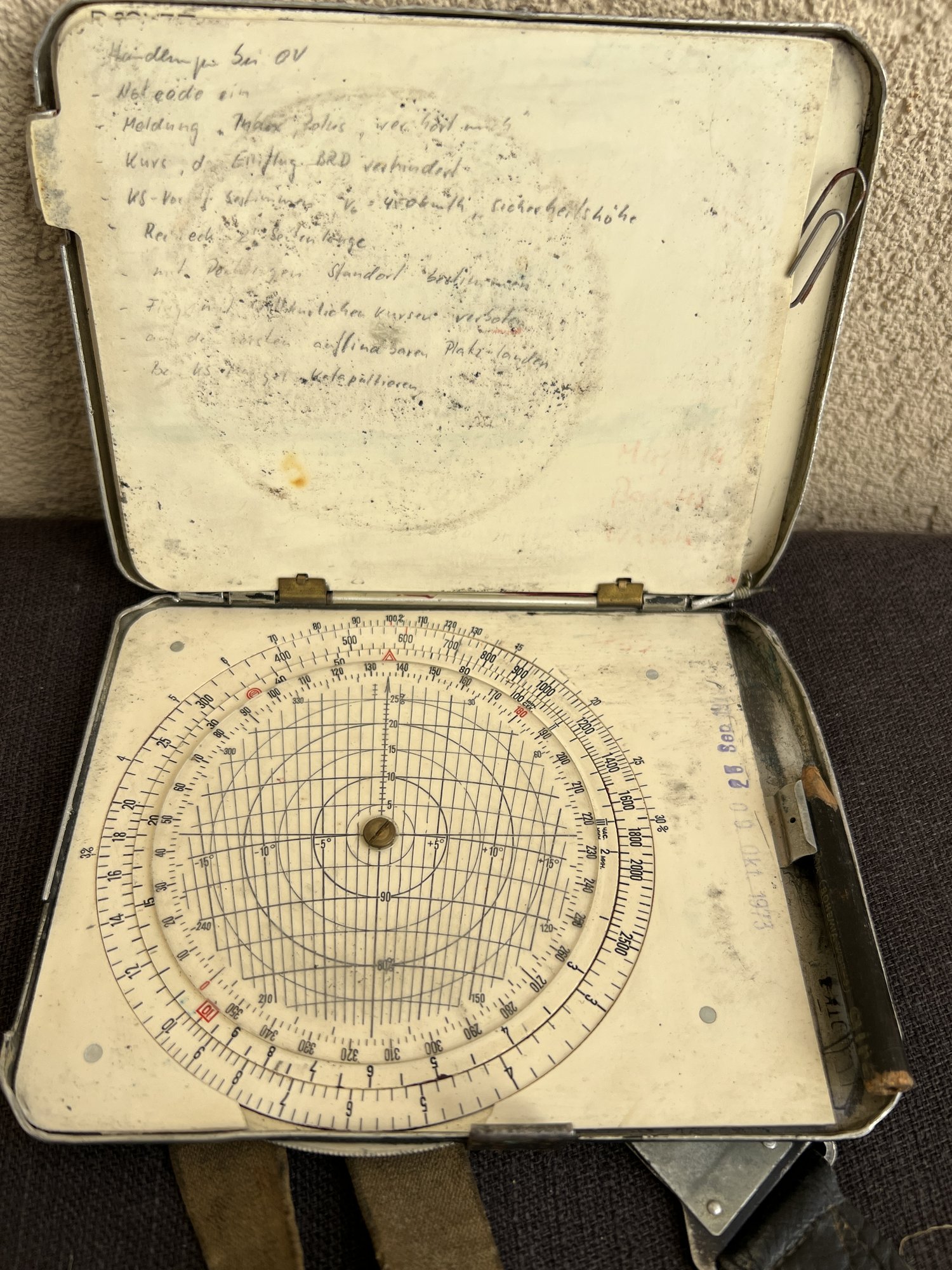
Soviet NPL-M thigh kneeboard. The Cyrillic designation НПЛ-М stands for наколенный планшет лётчика, модернизированный (pilot’s knee board, modernised). Strapped to the pilot’s thigh with its band and buckle, it kept the flight plan, mission data and a navigation computer within reach in the cockpit. Inside are a circular navigation computer used to work out the wind triangle, ground speed, flight time and drift, removable cards, a wooden pencil and a holding paper clip. The lid card is headed РАСЧЕТ ПОЛЕТА ЛЕТЧИКА (Pilot’s flight calculation), with a column marked ДРУГИЕ (Other). The lid also bears a winged emblem with the letters « ВР ».
This example was used in the German Democratic Republic. A German printed flight card (QFE, Besonderheiten, I. Variante and II. Variante) sits inside the Soviet frame, and every pencil note is written in German. One of them lists the « Handlungen bei OV », the actions to take in case of an in-flight emergency: switch on the distress code, send a radio report, « Kurs d. Einflug BRD verhindern » (prevent any entry into West Germany), fix the position by bearings, land at the nearest airfield, eject if needed. These instructions reflect what flying along the Iron Curtain meant, where a heading error could take an NVA pilot across the inner German border. Another page records flight settings by altitude: 150 km/h, manifold pressure, engine rpm and a 140 km/h approach speed.
A stamp dated October 1973 on the computer board places its service in the 1970s. One hypothesis: the recorded speeds and supercharger settings (« Lader ein ») point to a piston-engined machine, a helicopter or a trainer, rather than a jet fighter. The kneeboard is offered in used condition, with its pencil notes, wear marks and period fabric strap.
This piece comes from the reserve collection of a military museum in Germany, from the same lot as a Soviet MiG-21 built from 1968 onwards.
Additional information
| Weight | 0.5 kg |
|---|---|
| Dimensions | 25.0 × 20.0 × 10.0 cm |