Surveyor's Astrolabe - Koni Moscow - Imperial Russia - Bronze
$1,325.99Unique piece
Surveyor's Astrolabe - Koni Moscow - Imperial Russia - Bronze
$1,325.99Unique piece
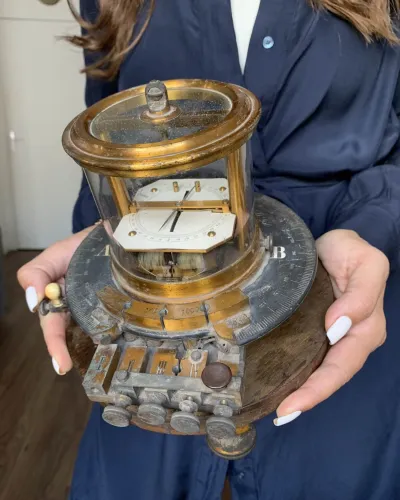
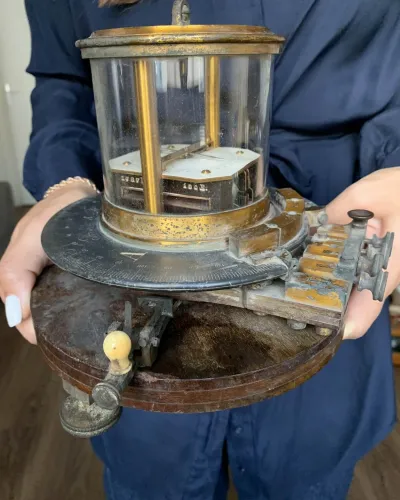
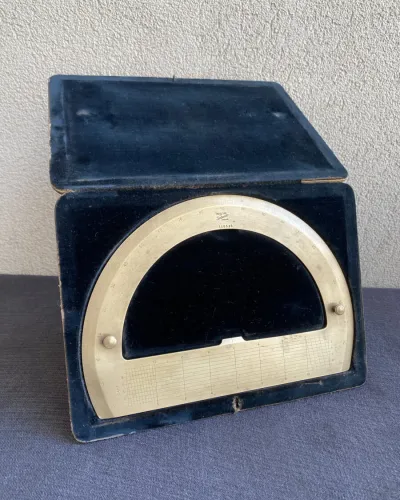
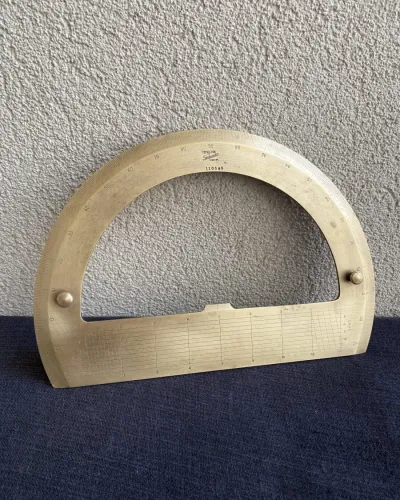
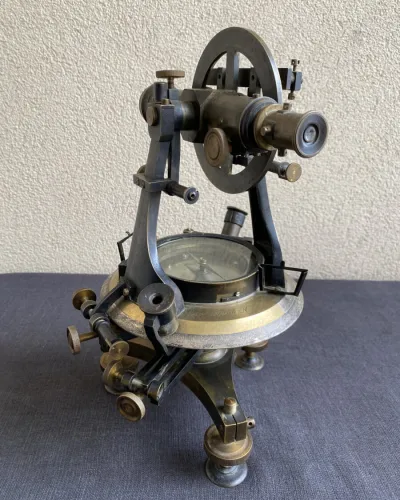
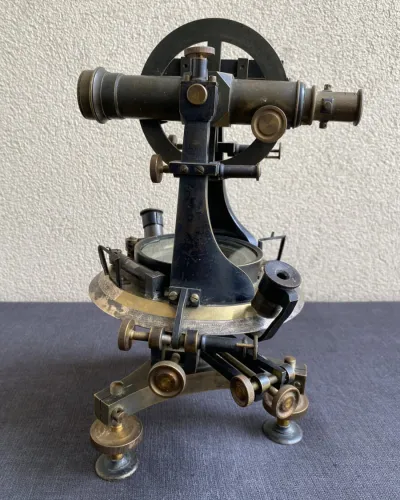
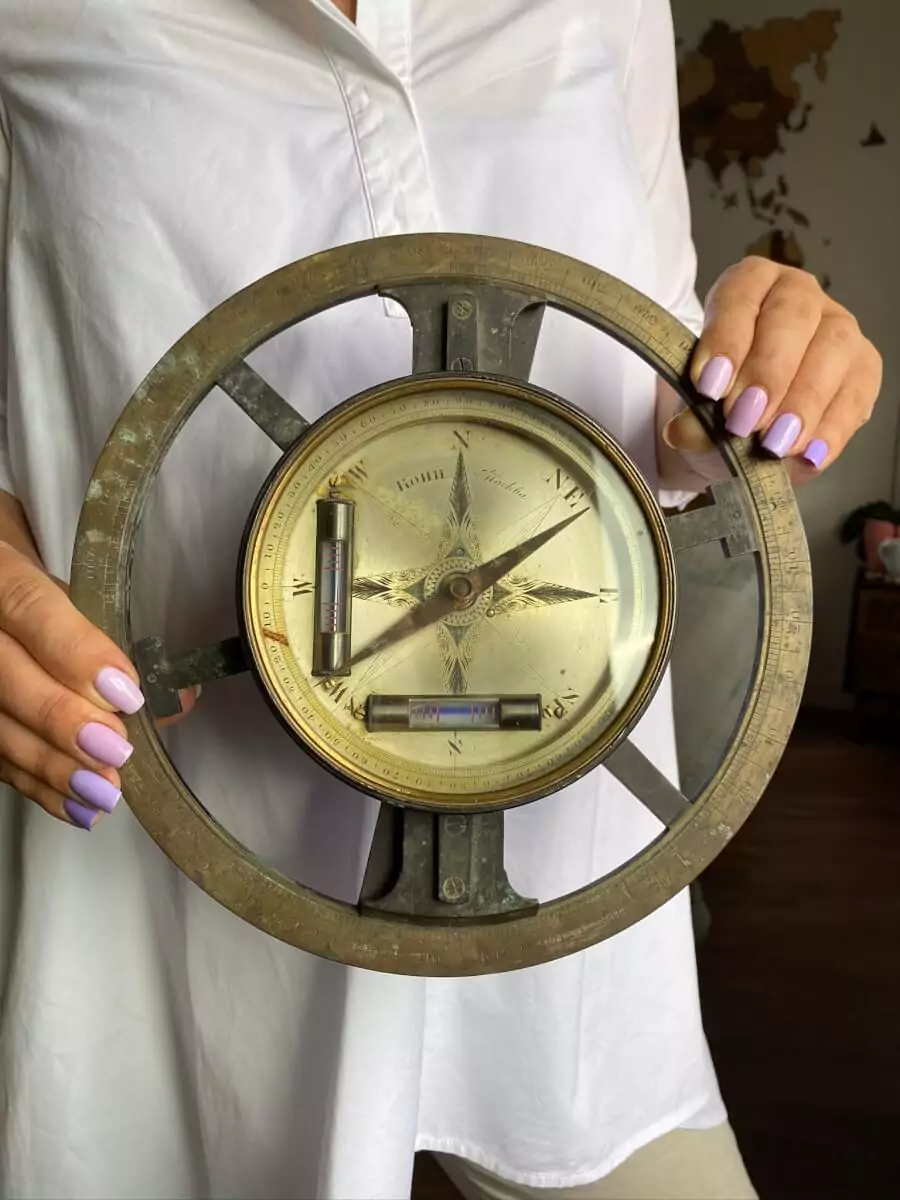
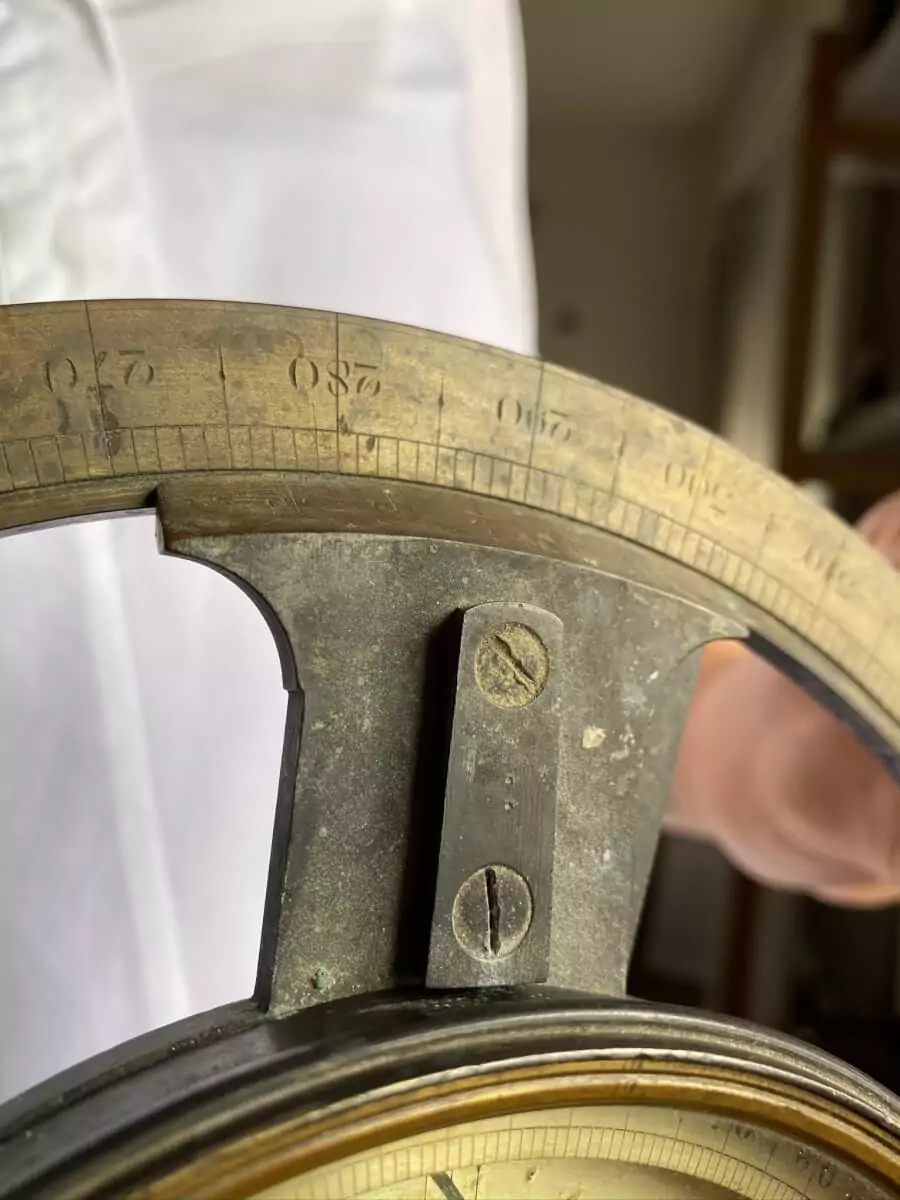
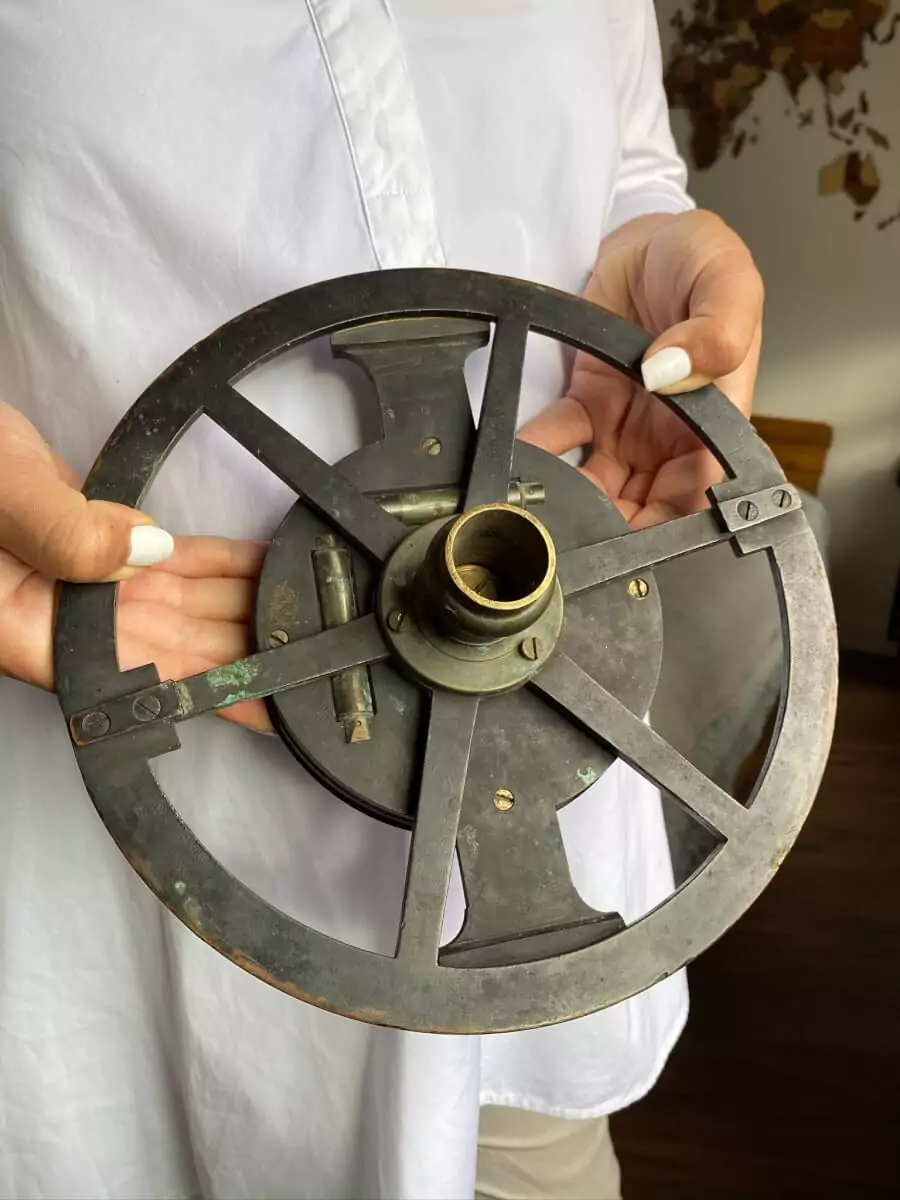
Bronze surveyor’s astrolabe made in Moscow by Koni, Imperial Russia, around 1870-1880, with graduated circle, glazed compass and two spirit levels. Diameter 25 cm, weight 2,439 grams.
1 in stock
Message received, dear comrade.
Our information desk usually replies within 24 hours at the address provided.A piece that predates the USSR, from the time of the Russian Empire.
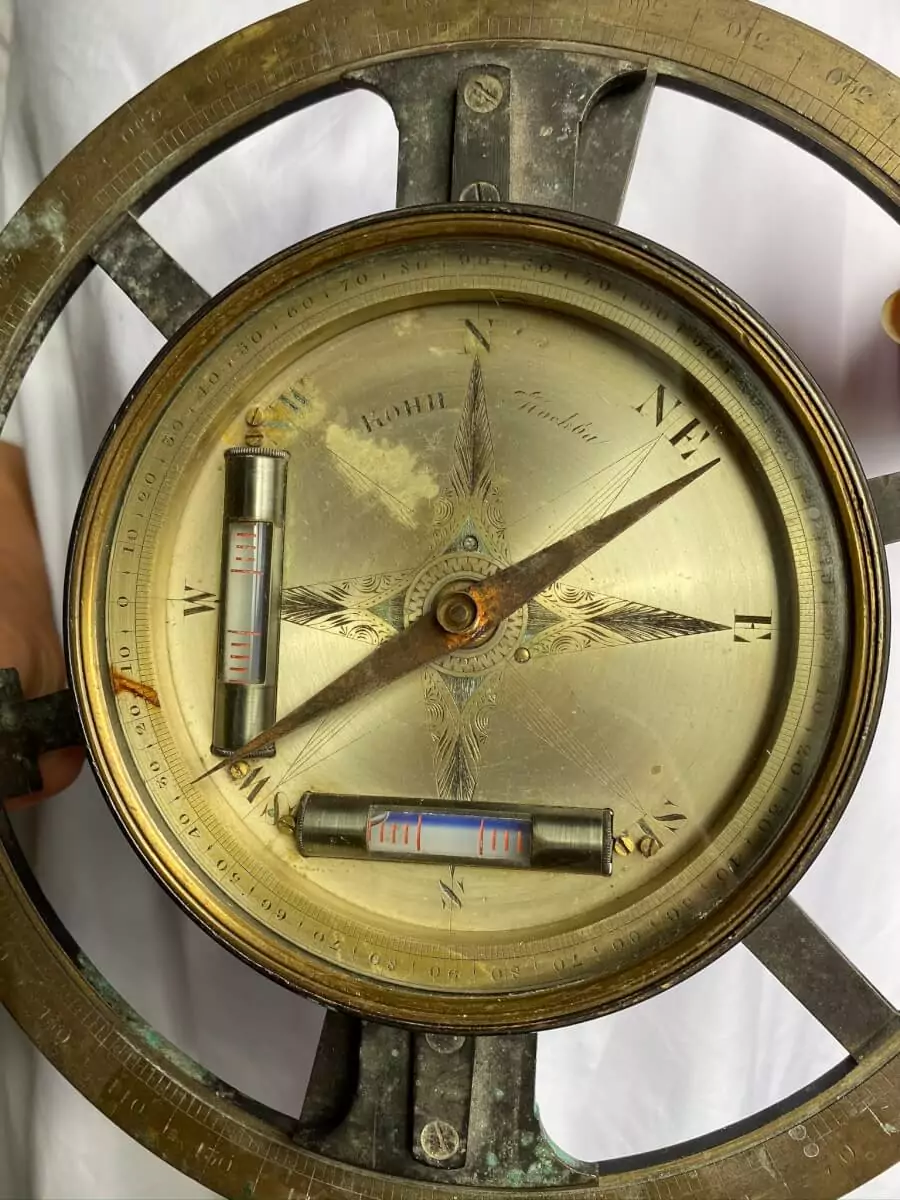
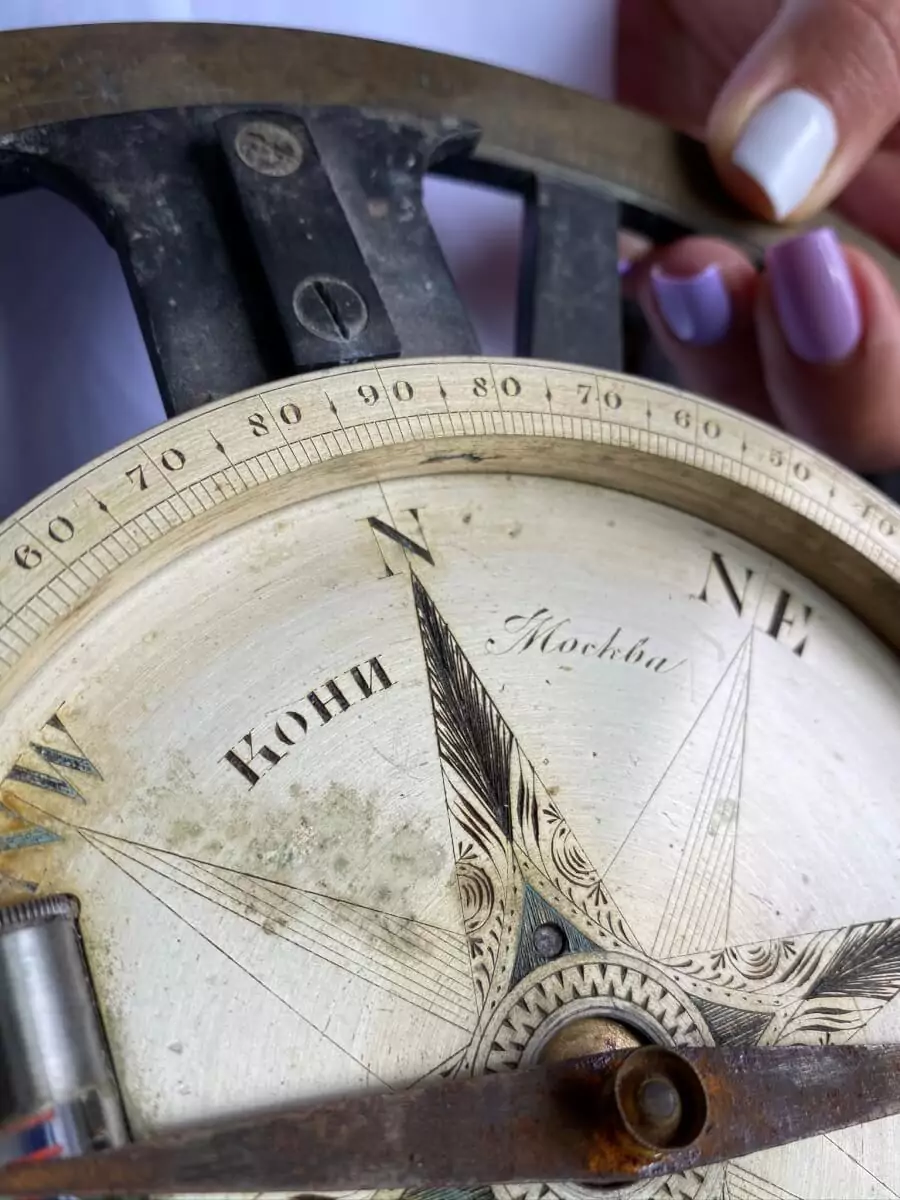
An extremely rare piece: a surveyor’s astrolabe made in Moscow, Imperial Russia, by a German master named Koni. The name КОНИ (Koni) and the word Москва (Moscow) are engraved on the compass dial.
In Russian, астролябия (astrolabe) does not mean the astronomical instrument but a land-surveying one: a horizontal graduated circle on which a sighting alidade rotates, with a compass at the centre. It was used to measure angles in the field and was probably the most widely used instrument among Russian land surveyors in the 19th century. When Catherine II relaunched the General Land Survey in 1765, the Surveying Chancery already held some 1,200 of them.
The Koni business is on record. At the All-Russian Exhibition of Manufactures held in Moscow in 1865, the jury noted that Koni and Schwabe both ran shops in Moscow with well-equipped workshops, able to make complex instruments themselves, and ranked their instruments first class. Koni also showed a new-pattern astrolabe with a telescope, first developed by Schwabe for the Survey Corps. The name was long established in the trade: according to the Brockhaus and Efron encyclopaedia, the father of the playwright Fyodor Koni, born in Moscow in 1809, owned the only optician’s shop in the city. It was most likely the same family.
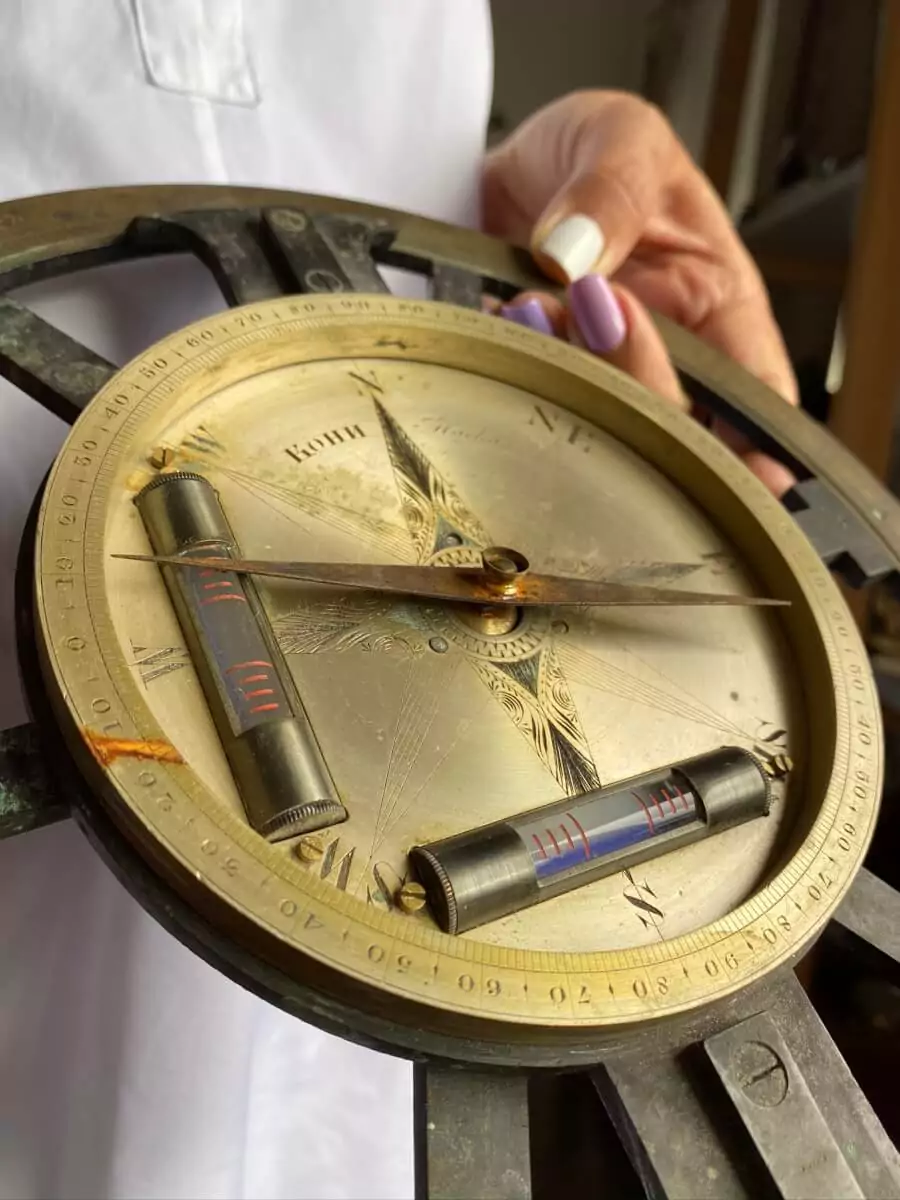
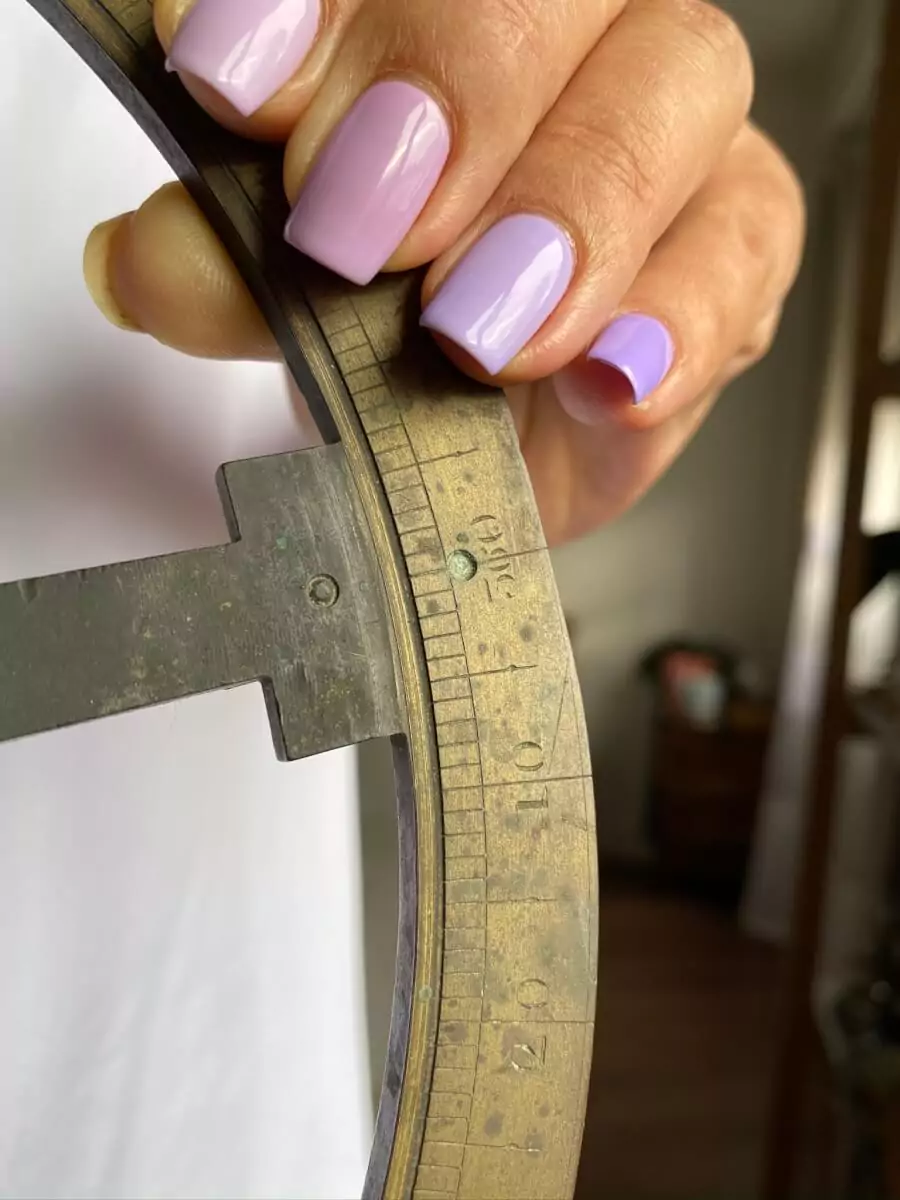
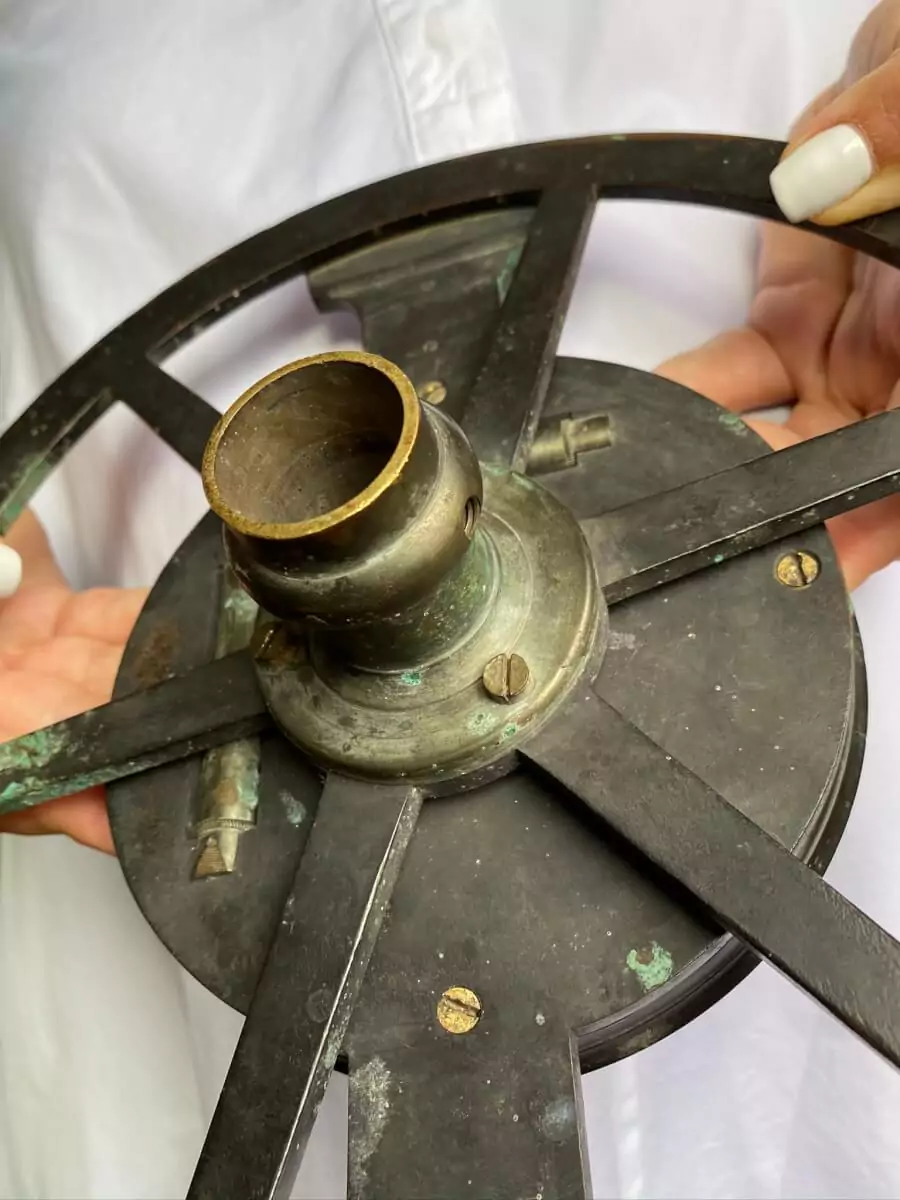
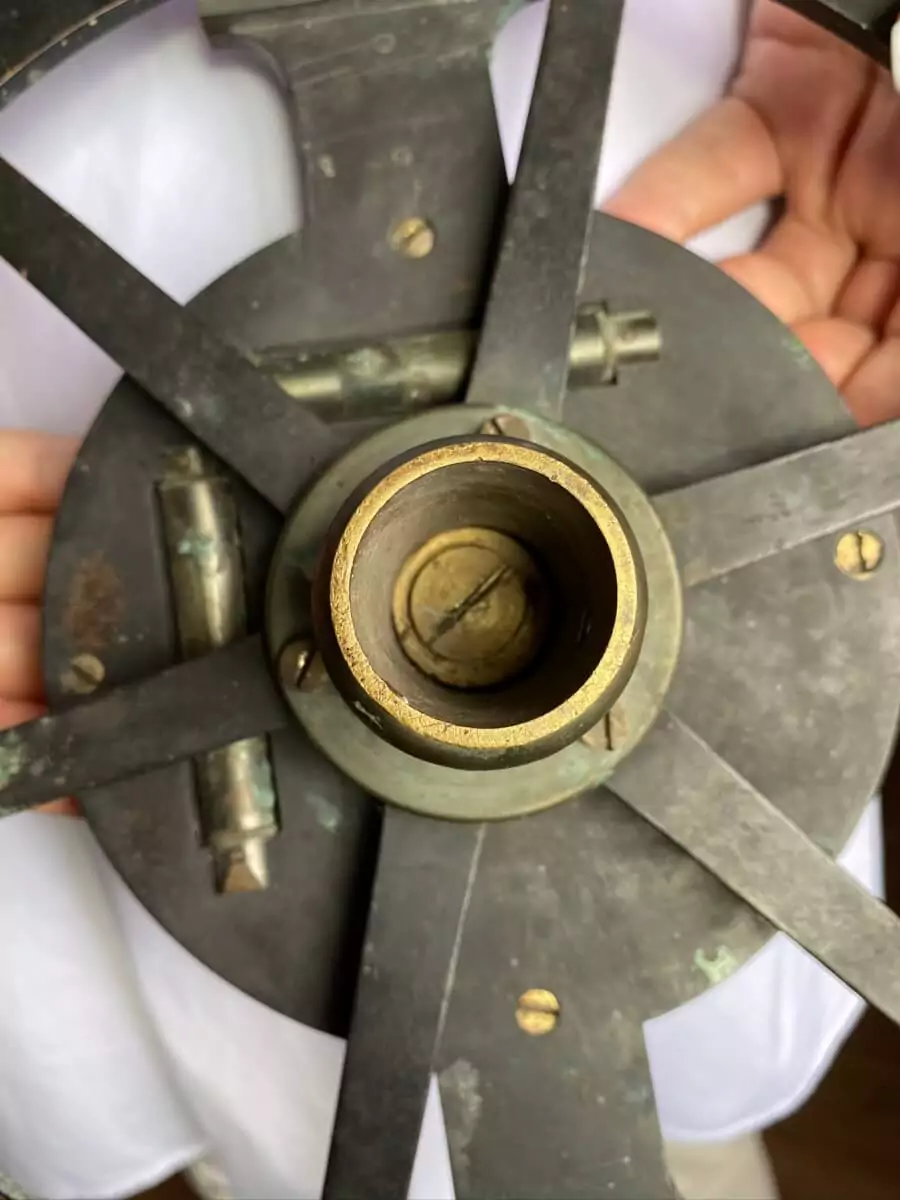
This example keeps its outer circle graduated to 360 degrees and, at the centre, its glazed compass with an engraved compass rose and two spirit levels for setting the instrument level. A socket on the back allowed it to be mounted on a stand. It is not dated: we estimate it to the late 19th century, around 1870-1880, as the Koni workshop is recorded in Moscow from 1865.
Bronze, diameter 25 cm, weight 2,439 grams. Signs of age and some oxidation. In working order.
Additional information
| Weight | 3 kg |
|---|---|
| Dimensions | 25 × 25 cm |