Fedorov Stage FS-5 - Microscope - Crystals - Leningrad 1954
$1,266.99Unique piece
Fedorov Stage FS-5 - Microscope - Crystals - Leningrad 1954
$1,266.99Unique piece
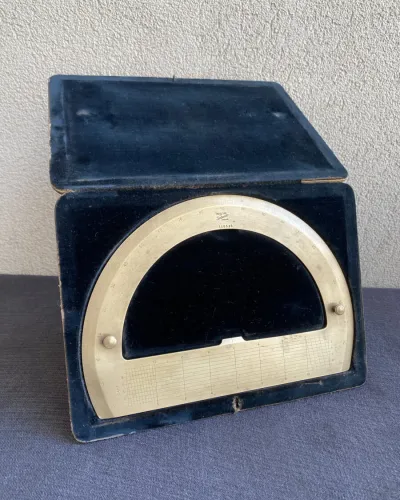
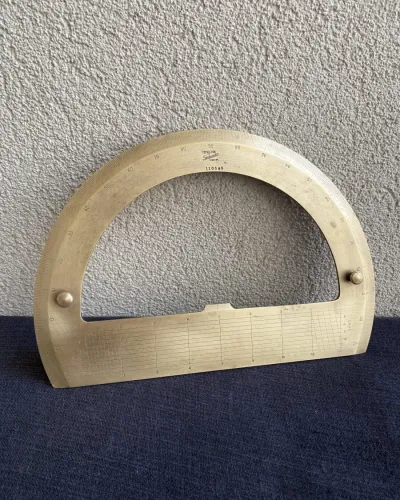
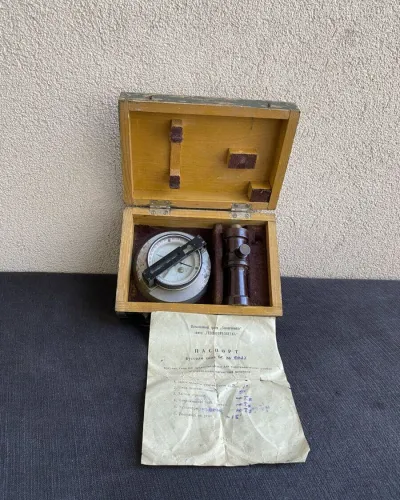
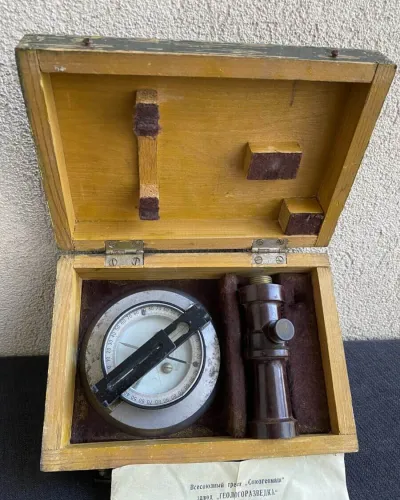
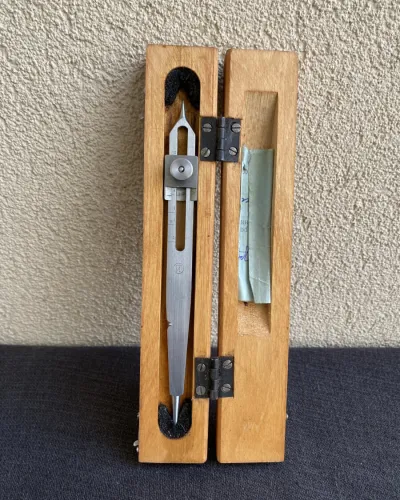
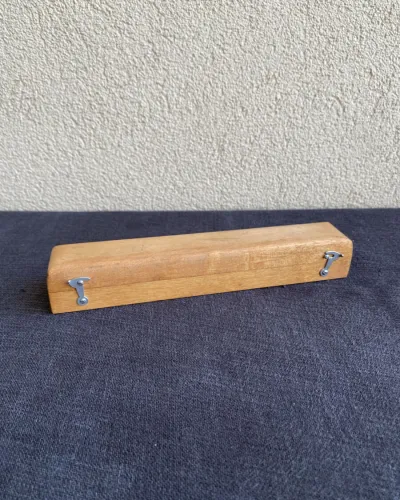
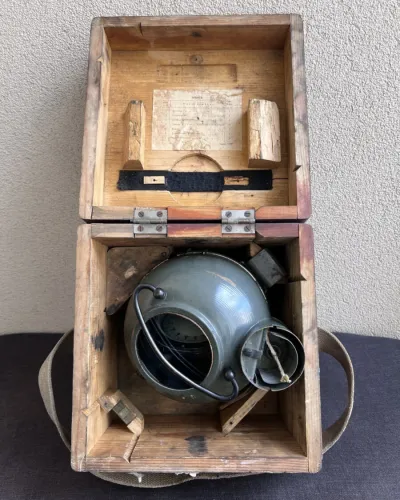
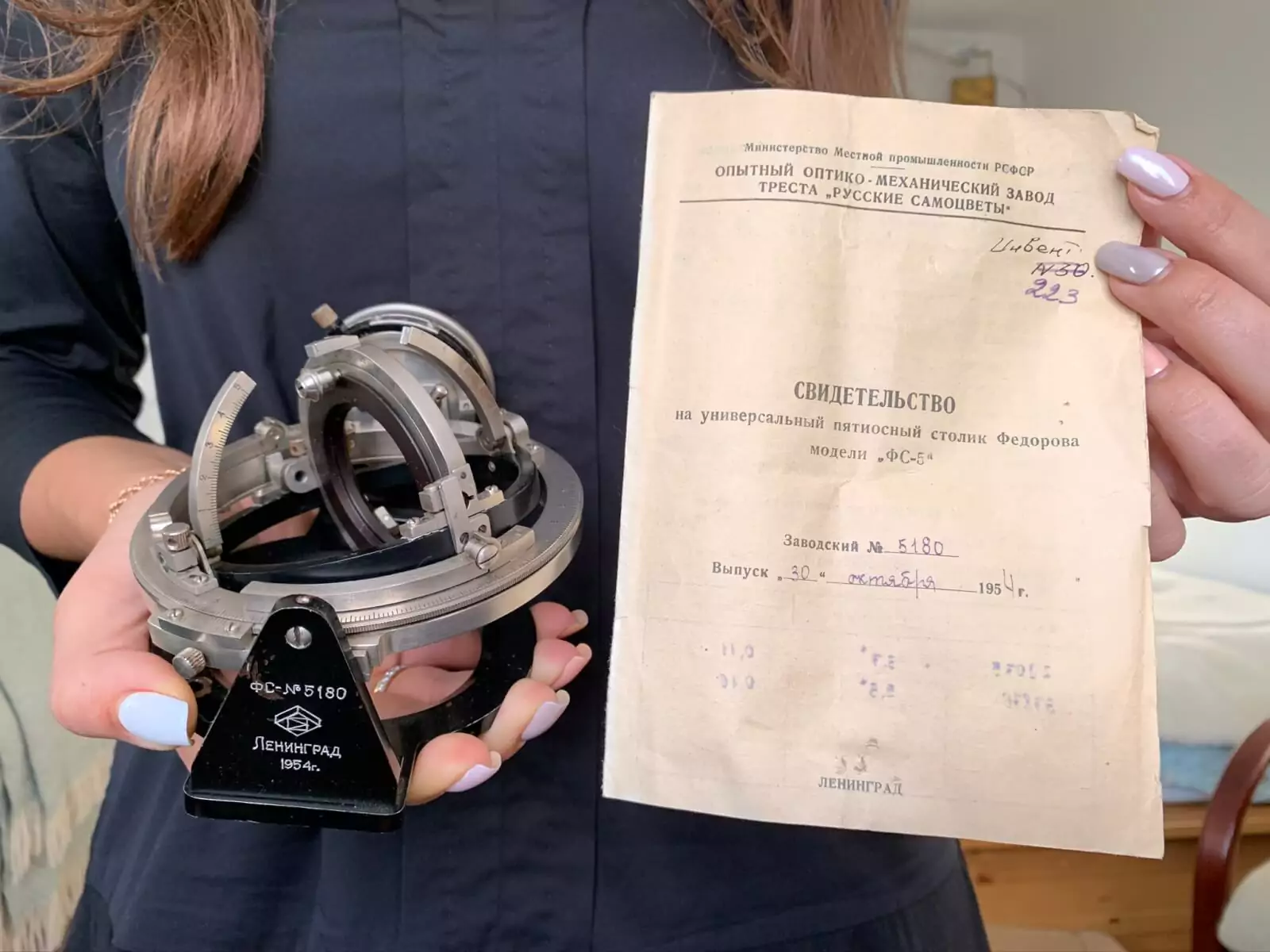
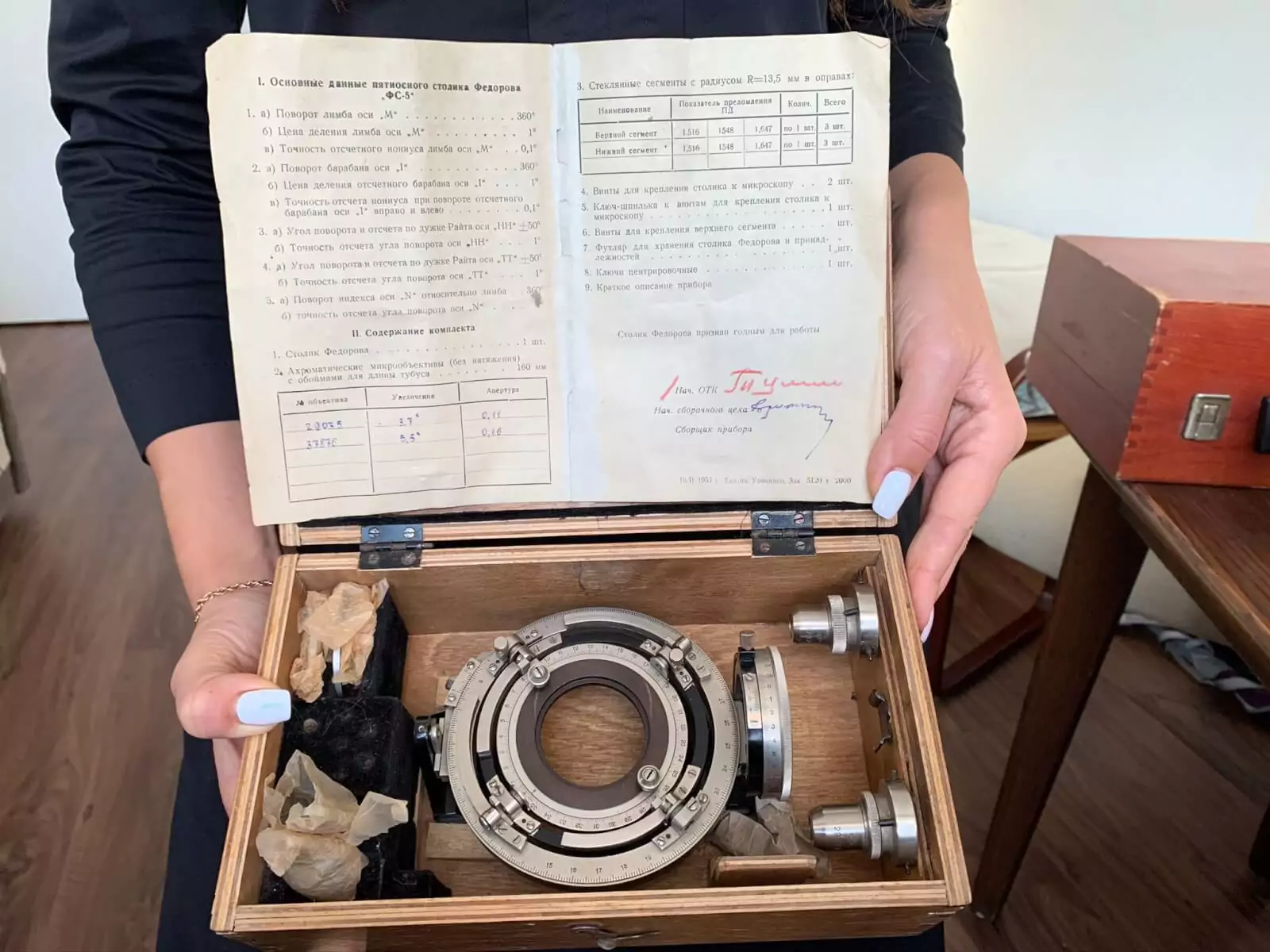
Fedorov FS-5 five-axis universal stage for polarising microscope, made in Leningrad in 1954. In its wooden case, as new, with two objectives, four glass segments and its factory certificate.
1 in stock
Message received, dear comrade.
Our information desk usually replies within 24 hours at the address provided.The world's first civil nuclear power plant enters service at Obninsk.

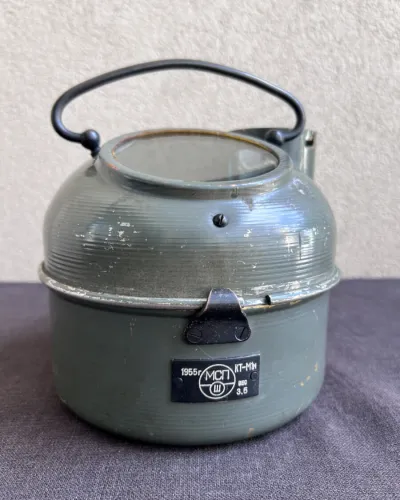
A Fedorov stage, used to position and observe a crystal in three dimensions. This is the FS-5 model, a five-axis universal stage that fits onto a polarising microscope, made in Leningrad in 1954. It bears serial number 5180, the same as on its factory certificate.
The instrument is named after Evgraf Fedorov (1853-1919), the Russian crystallographer and mineralogist who derived the 230 space groups and became the first elected director of the St Petersburg Mining Institute in 1905. He proposed the stage in 1891, working on the principle of the theodolite. The thin section of mineral sits between two glass hemispheres, which limit the deviation of light, and can be tilted and rotated about several axes under the microscope. This makes it possible to measure the orientation of the crystal’s optical directions and so identify the mineral. The first models had two axes, Fedorov described a four-axis version in 1896, and the American Emmons added the fifth in 1929. The Fedorov stage long remained a working tool in mineralogy and petrography.
Its certificate names the maker as the Experimental Optical-Mechanical Works of the Russkie Samotsvety (Russian Gems) trust in Leningrad, then under the RSFSR Ministry of Local Industry. This state trust, formed in 1922, also included the Peterhof lapidary works. In 1962 the factory joined the association that was renamed LOMO in 1965. The certificate is dated 30 October 1954 and signed by the heads of technical control and of the assembly shop.
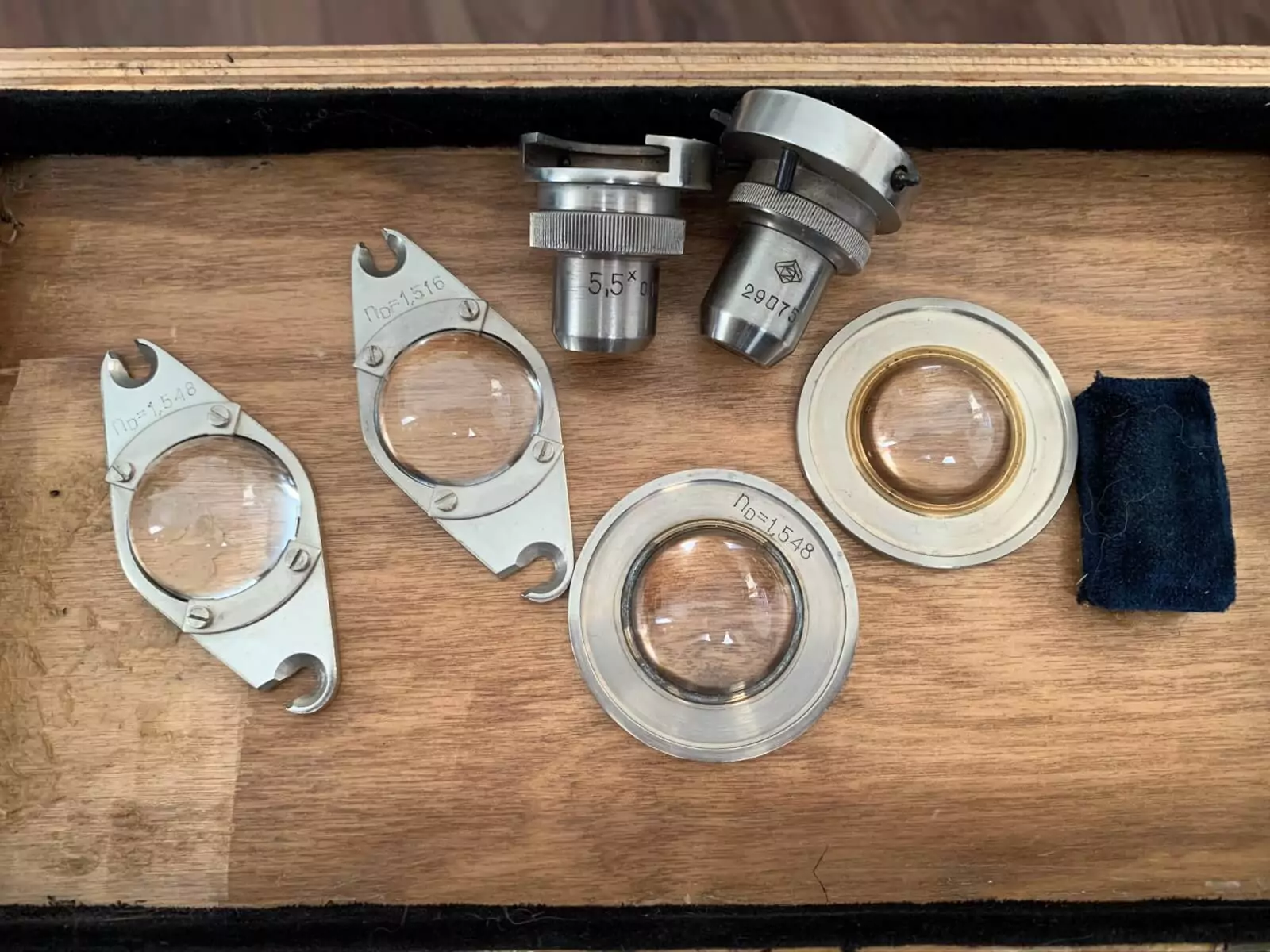
We offer it in its wooden case, in as-new condition, with its certificate. Included are two objectives, 3.7×0.11 and 5.5×0.16, and four glass segments: upper segments nD 1.548 and 1.647, lower segments nD 1.516 and 1.548. The certificate carries a handwritten inventory number, most likely that of the laboratory or institute that received it.
Additional information
| Weight | 2.5 kg |
|---|---|
| Dimensions | 20 × 25 × 25 cm |