




Brass Money Box - USSR State Labour Savings Bank
Brass Money Box - USSR State Labour Savings Bank
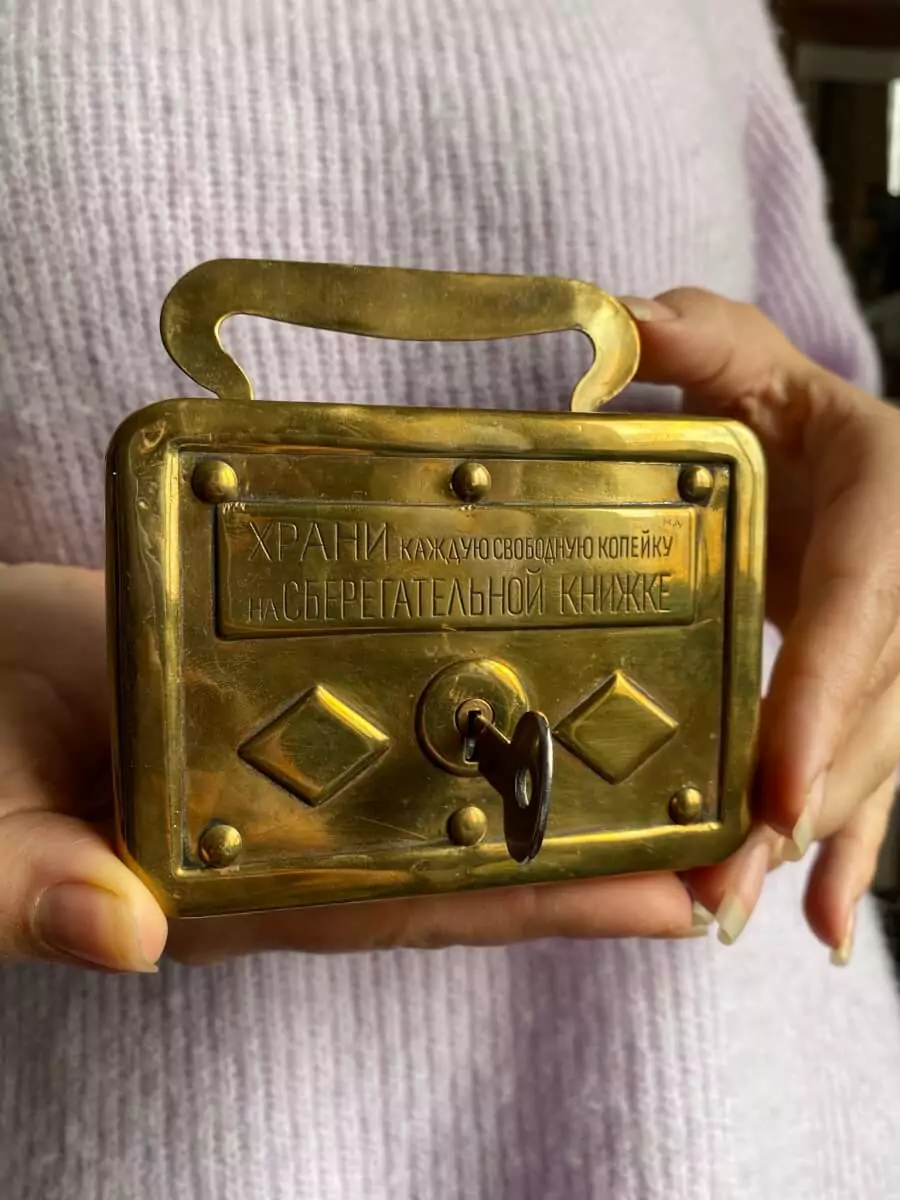
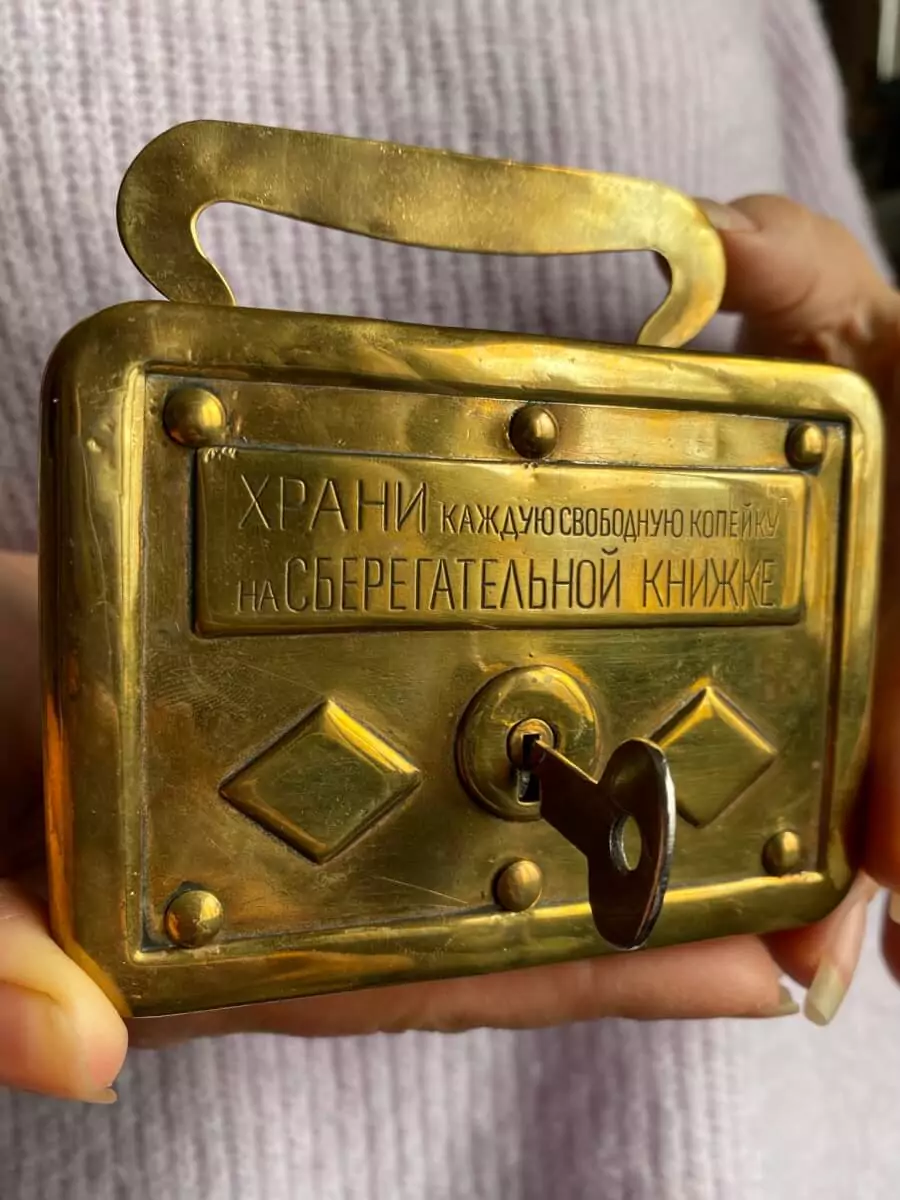
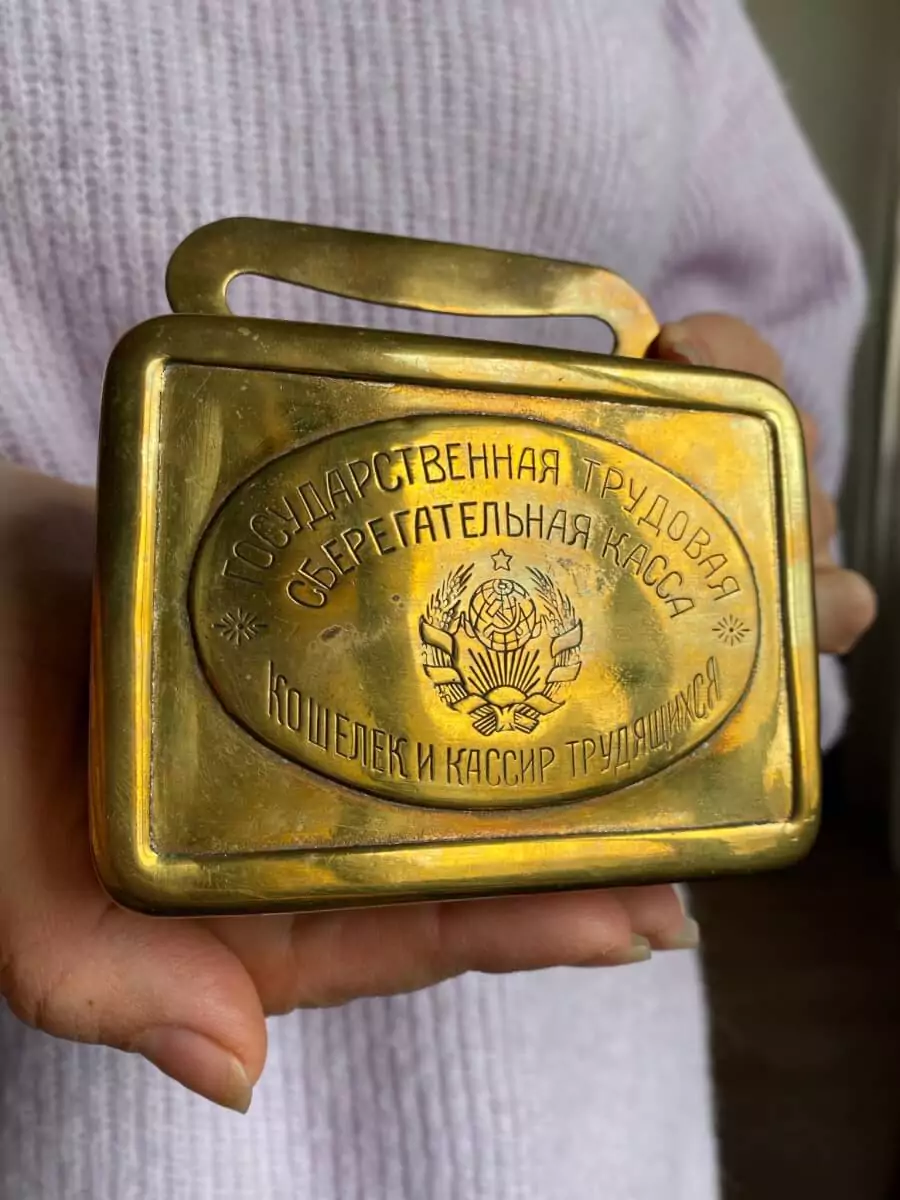
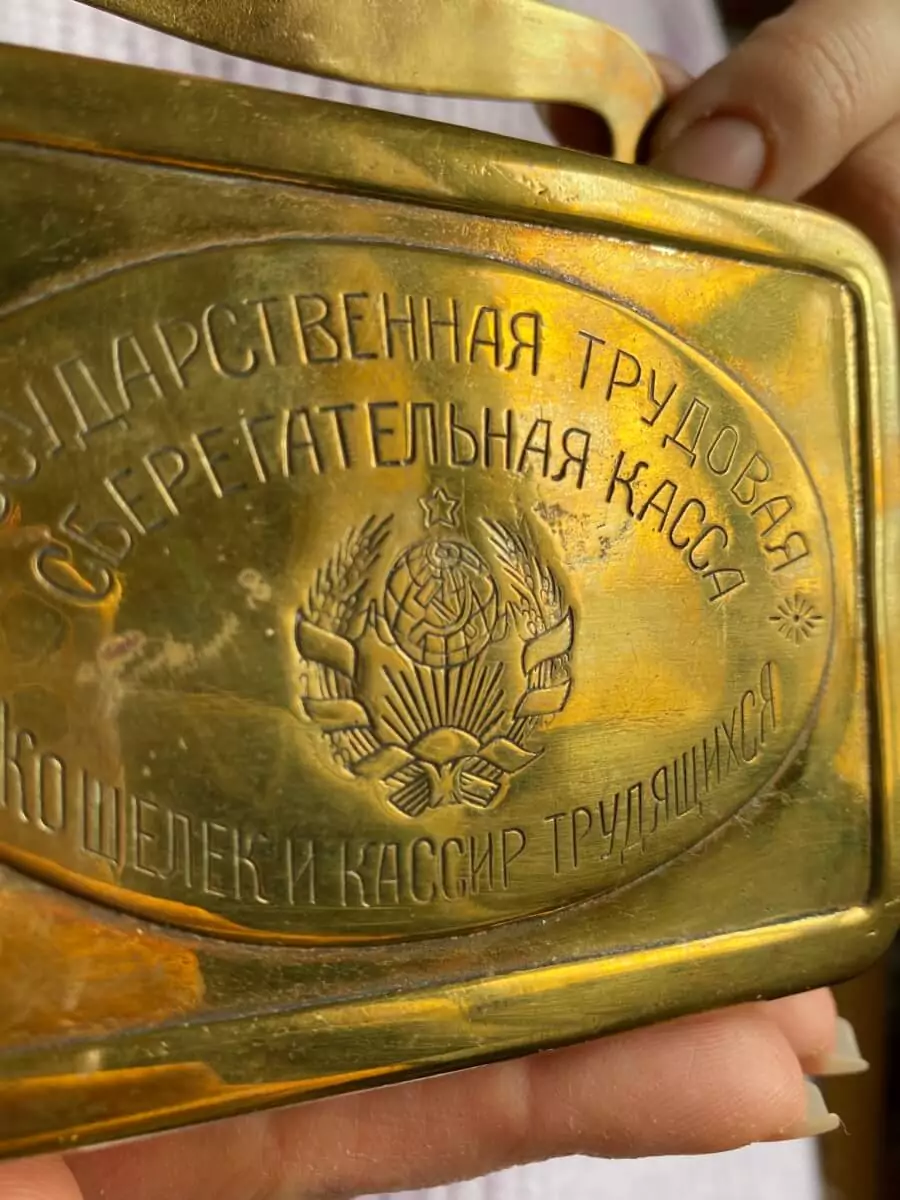
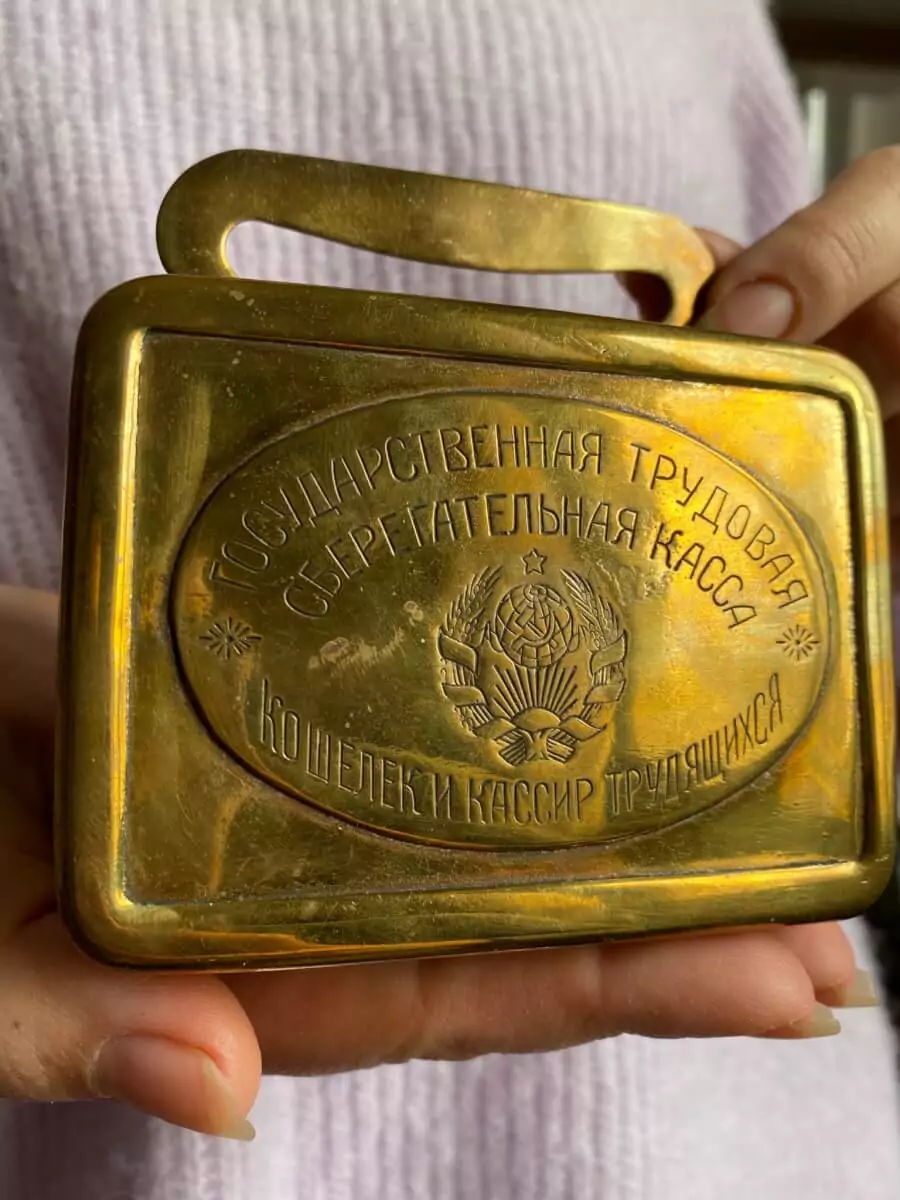
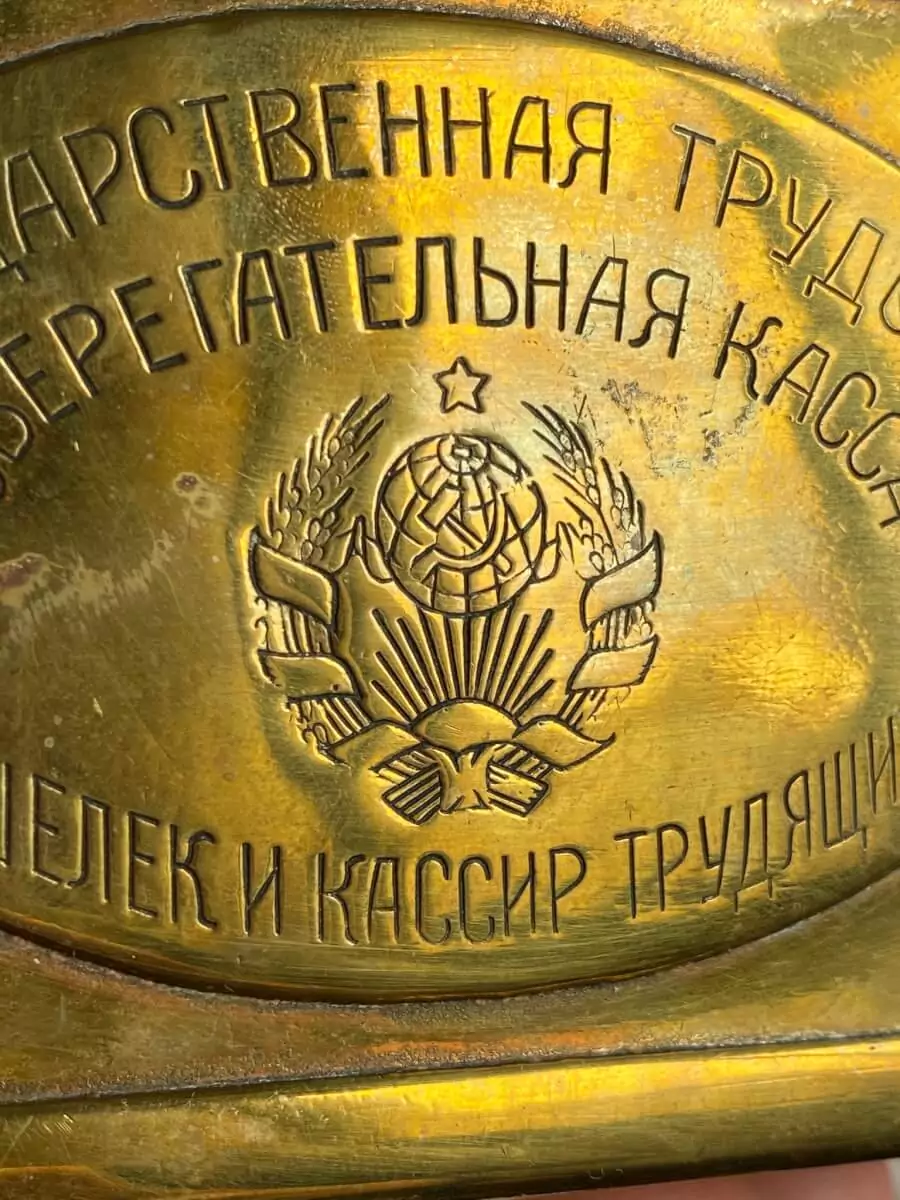
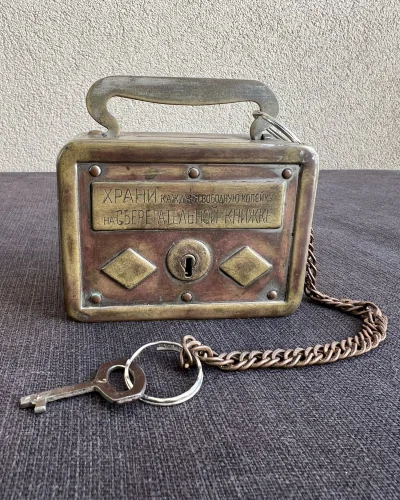
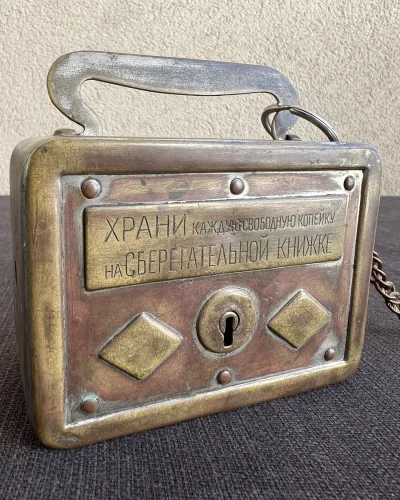
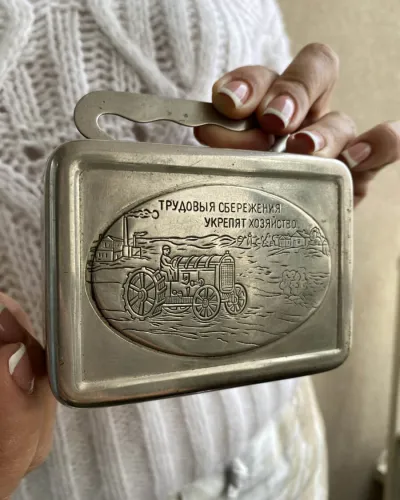
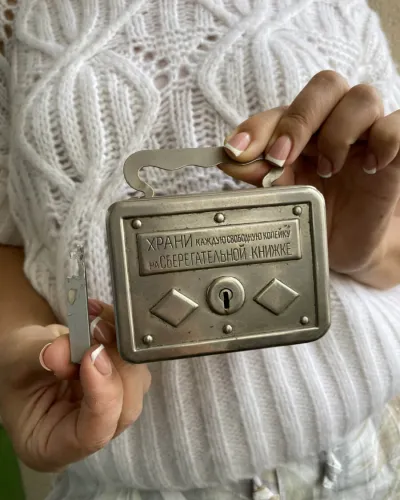
Propaganda money box, produced to the order of the federal savings bank in the late 1920s, most likely by the Leningrad mint. Offered complete, with its key.
Dimensions 10.2 x 7.5 x 5.2 cm. Still working.
Sold
Sale price
For newsletter subscribers. One price per month.
Like this model?
We sometimes find another one. Leave your email and we will let you know when it is listed.
Brass Money BoxOne email per arrival of this model, one-click unsubscribe. Your address is used for nothing else.
Message received, dear comrade.
Our information desk usually replies within 24 hours at the address provided.Related products
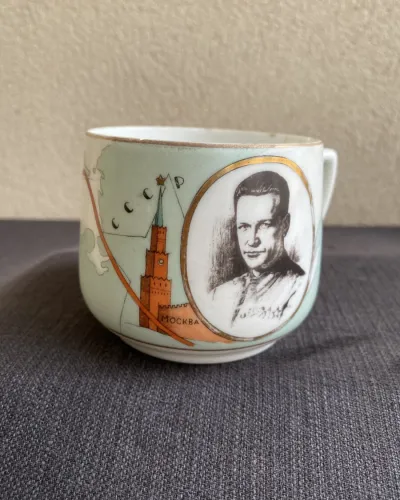
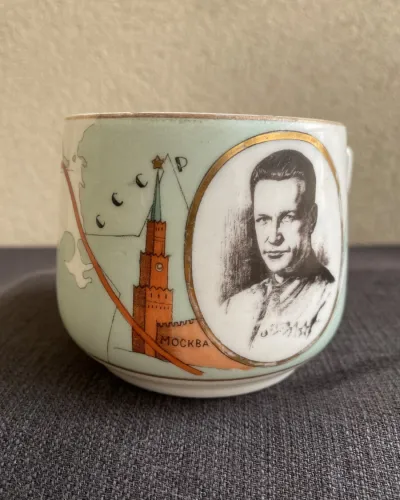
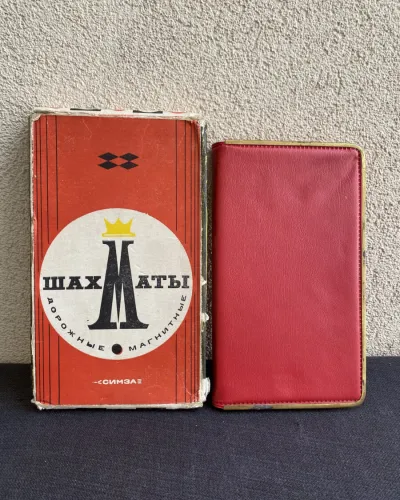
Lenin's New Economic Policy, founding of the USSR in 1922. Height of the avant-garde: Rodchenko, Mayakovsky, Eisenstein, El Lissitzky.
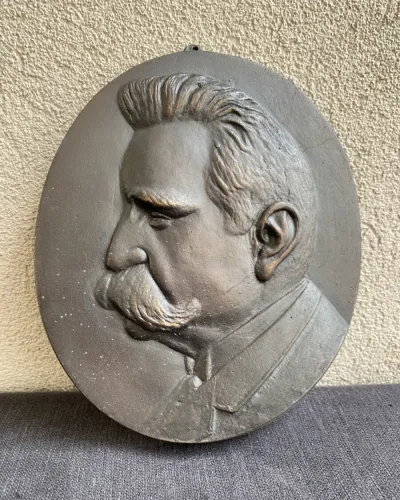


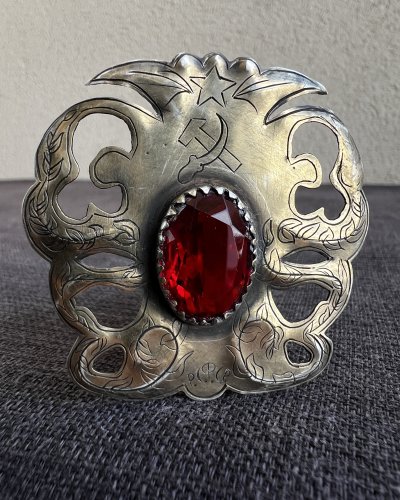
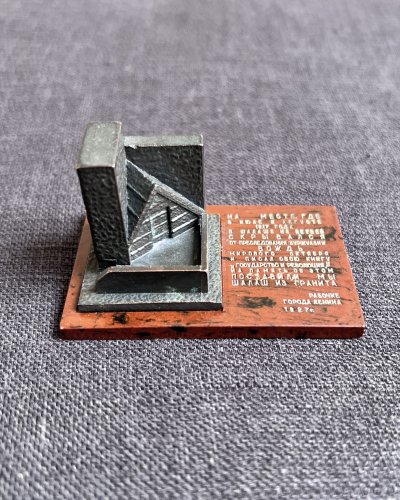
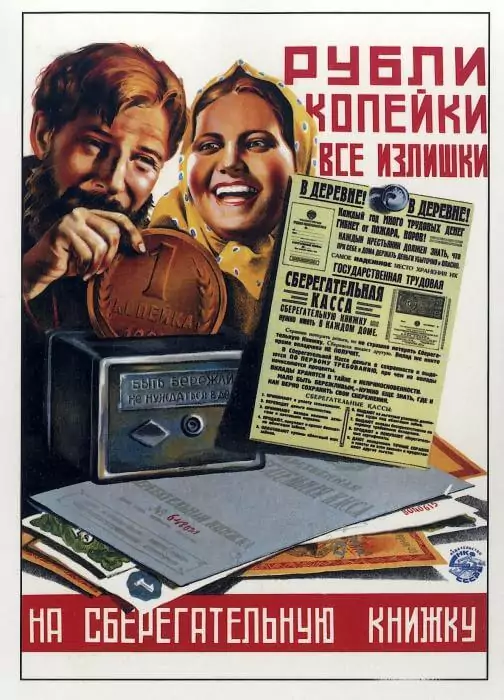
Propaganda money box, produced to the order of the federal savings bank in the late 1920s.
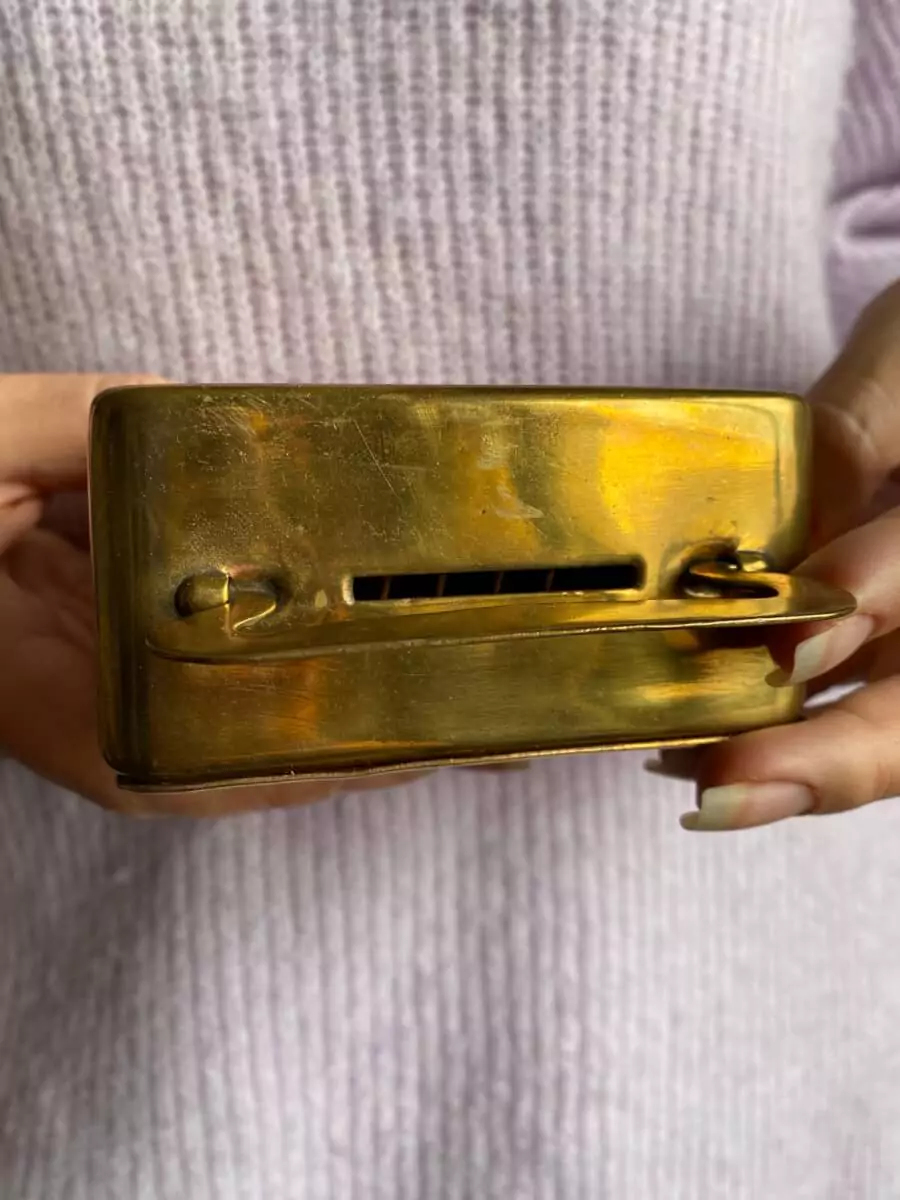
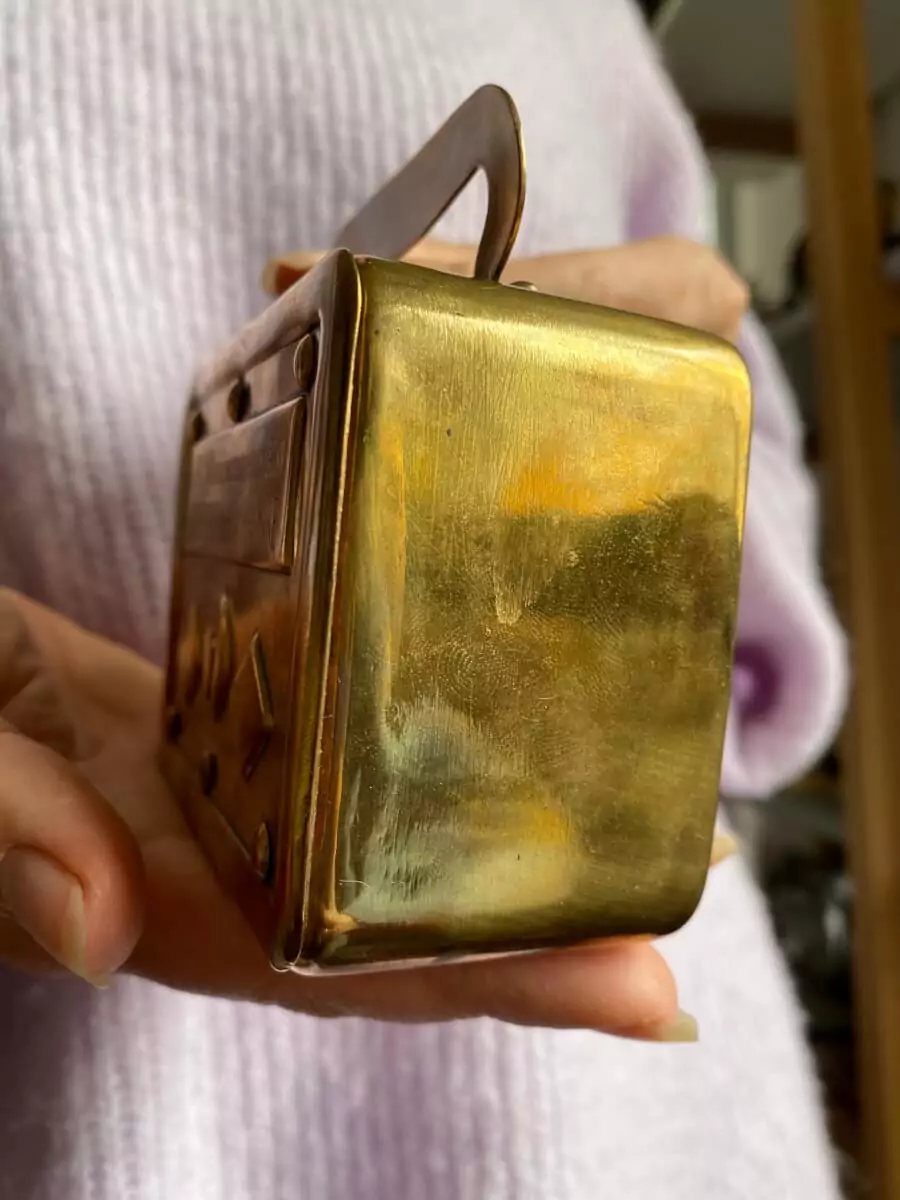
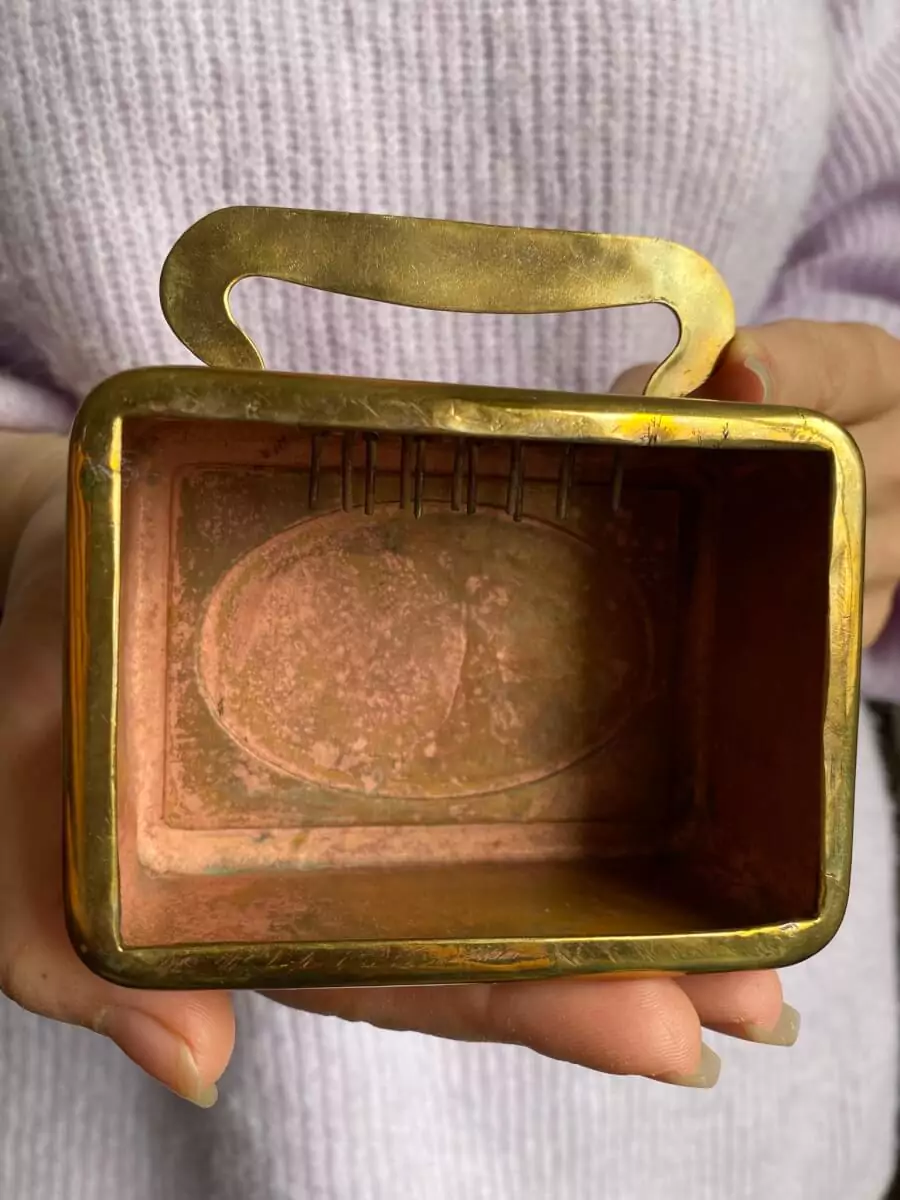
The maker is most likely the Leningrad mint. The design recalls a suitcase with a folding handle (dimensions 10.2 x 7.5 x 5.2 cm).
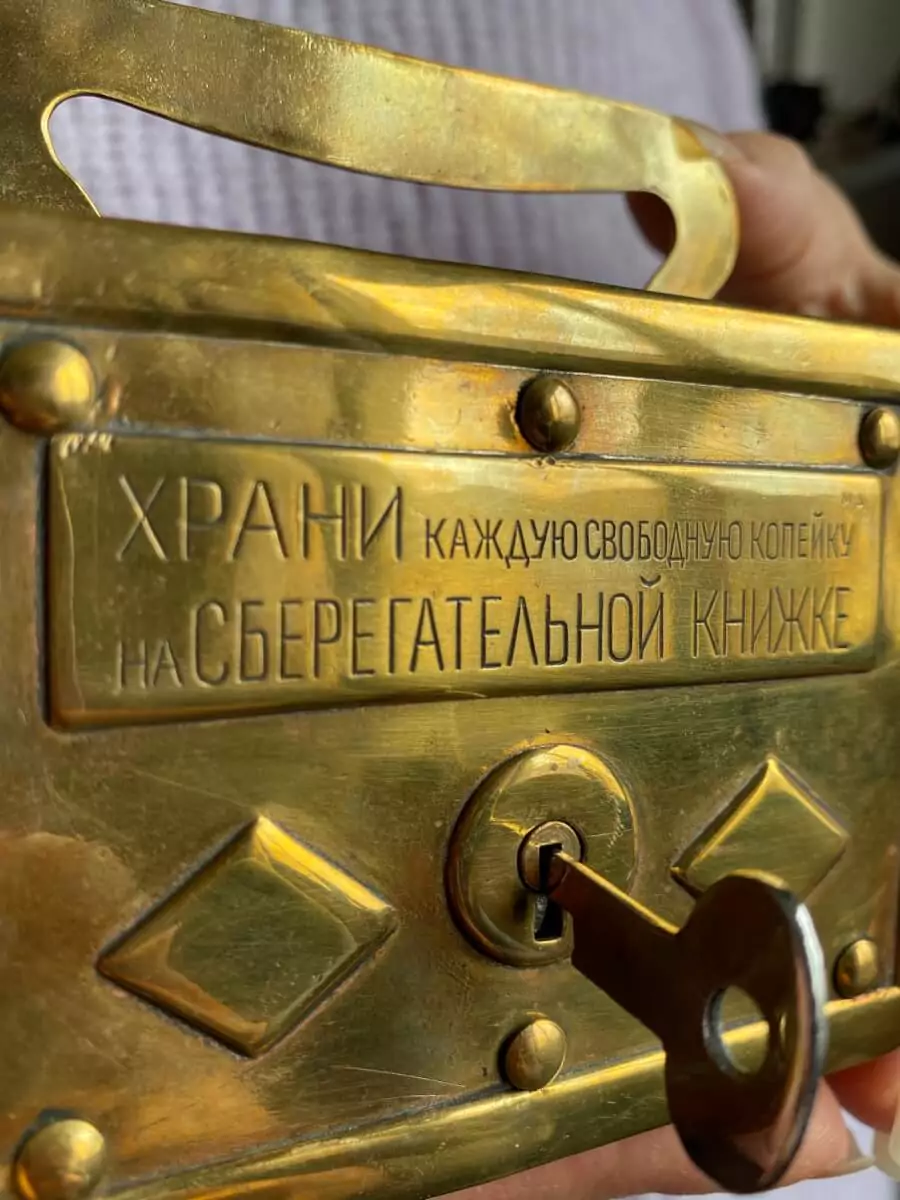
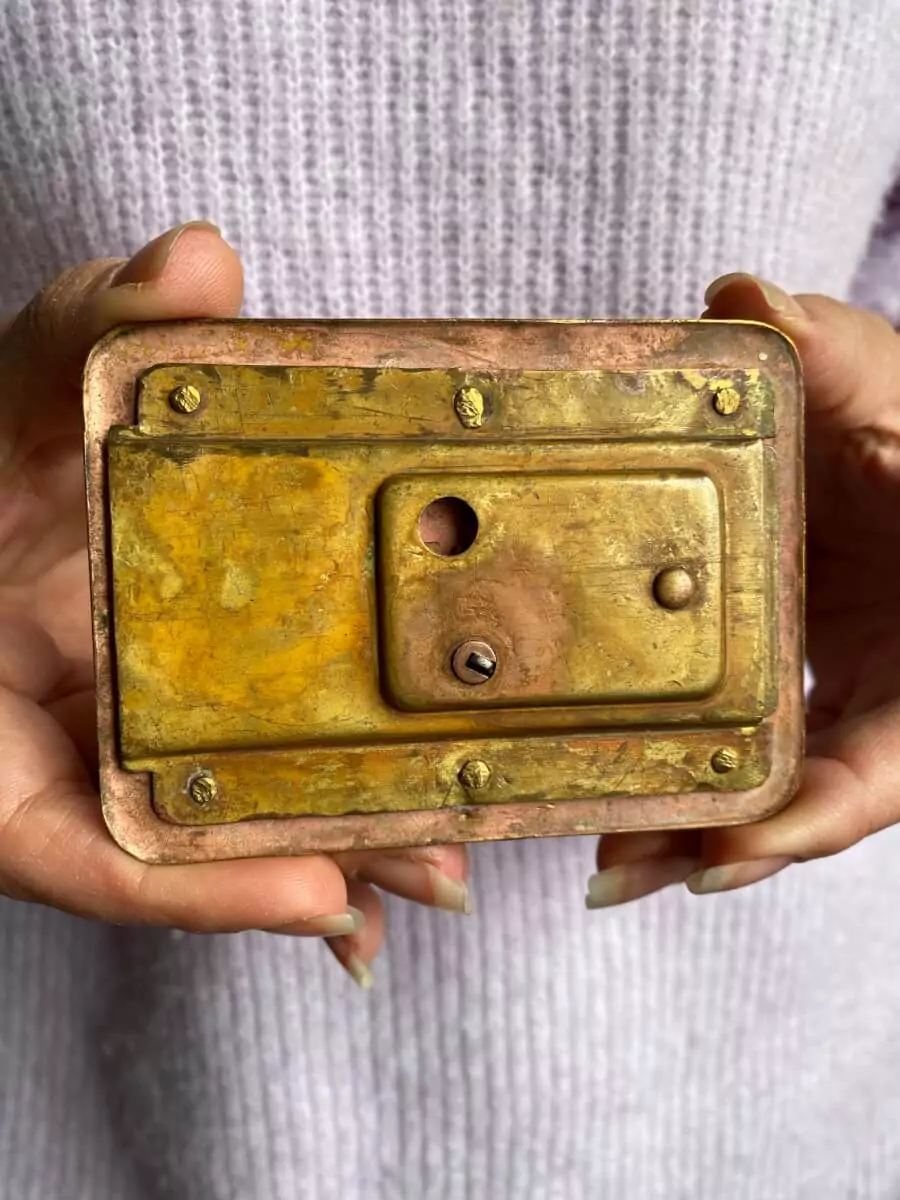
The money box is offered here complete: there is even a key.
There are two openings for money: an oblong one on the top for coins, and a round one on the side for banknotes.
Notes were rolled up before being pushed inside.
Soviet citizens were given a money box of this kind in the late 1920s when they opened a savings account. The state bank encouraged citizens to keep and bring back every kopeck so that it could be invested and contribute to the industrialisation of the country under the first five year plan. As it happens, it was often the banker who kept the key, so as not to tempt the saver; the box is metal, which does not make opening it early any easier, and an ingenious device stops the coins falling out if the box is turned over.
A rare and iconic object, still working. It is easy to imagine giving it to someone deciding to stop smoking, or to save, or to fund a trip. You need only keep the key, as they did at the time.
Additional information
| Weight | 0.7 kg |
|---|---|
| Dimensions | 10.2 × 7.5 × 5.2 cm |

