




RSFSR Brooch - Faceted Red Stone - Silver - 1920s
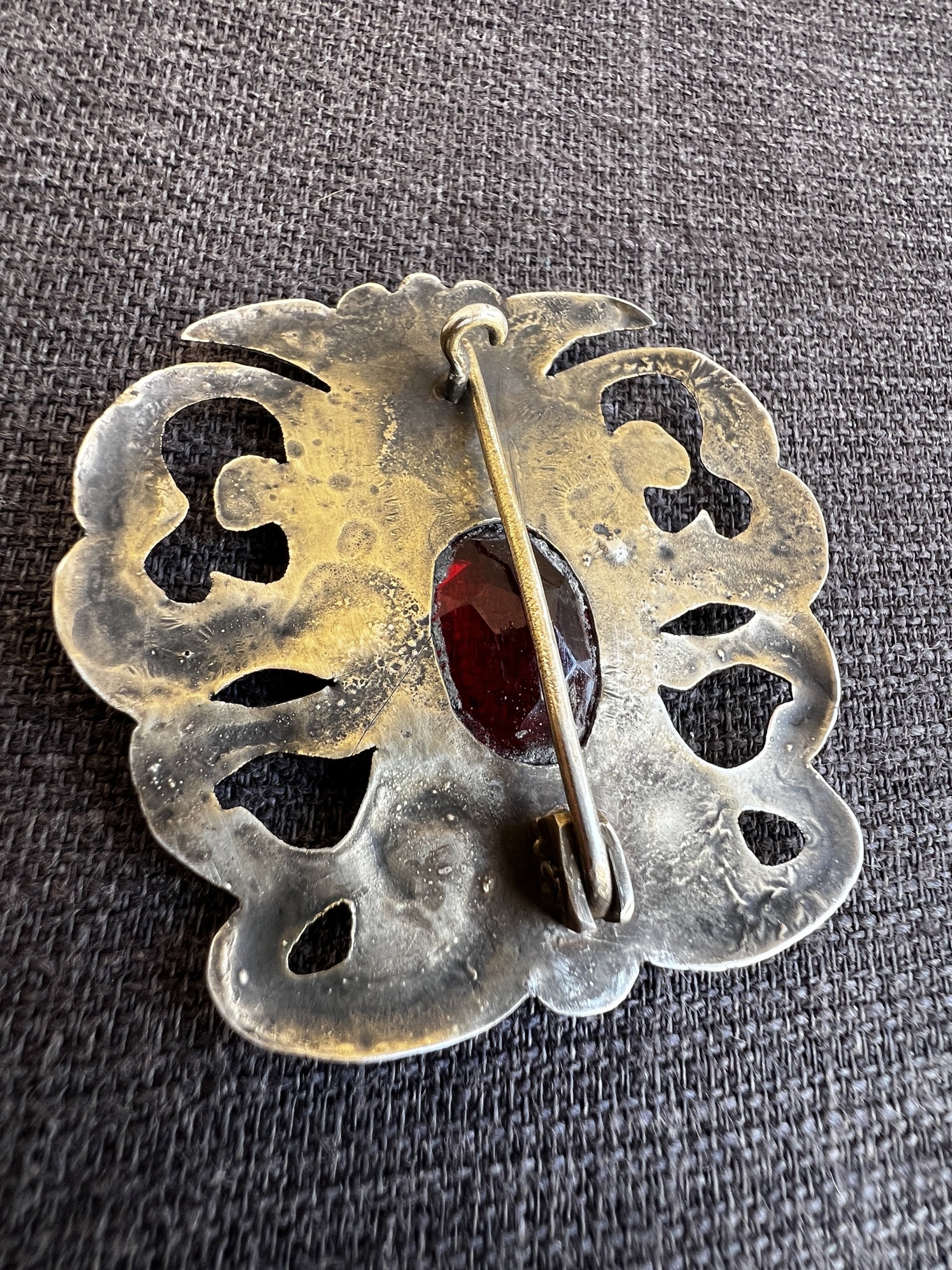
RSFSR Brooch - Faceted Red Stone - Silver - 1920s
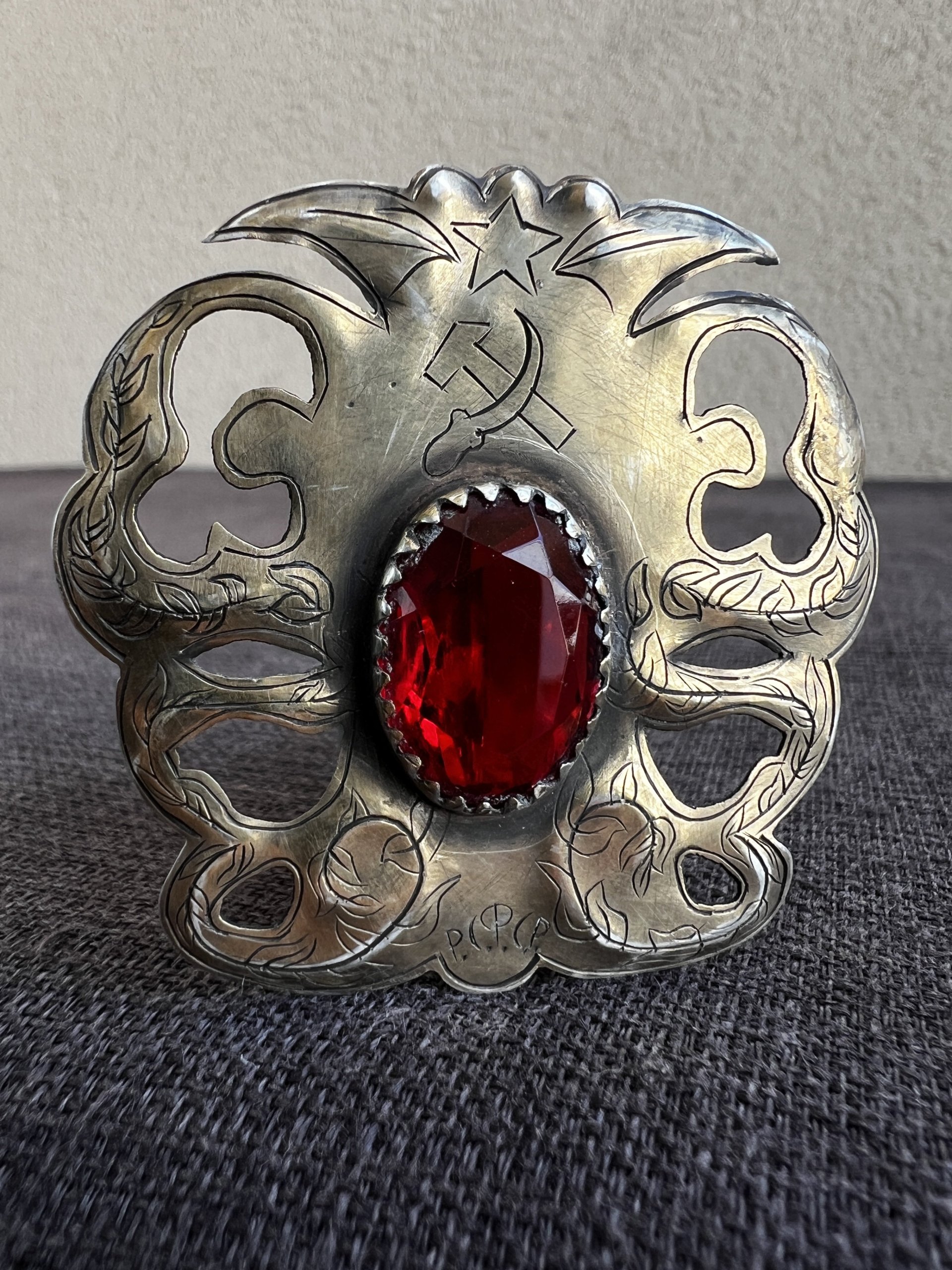
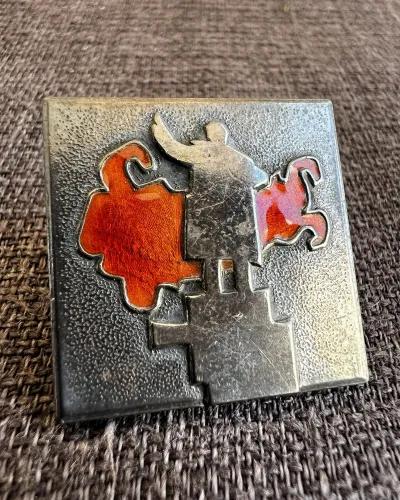
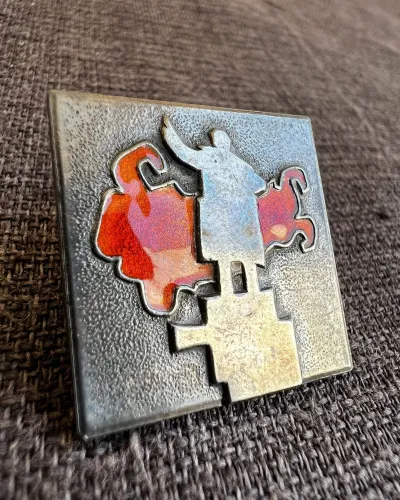
Rare 1920s RSFSR brooch in pierced silver, set with a faceted red stone and carrying the founding Soviet symbols.
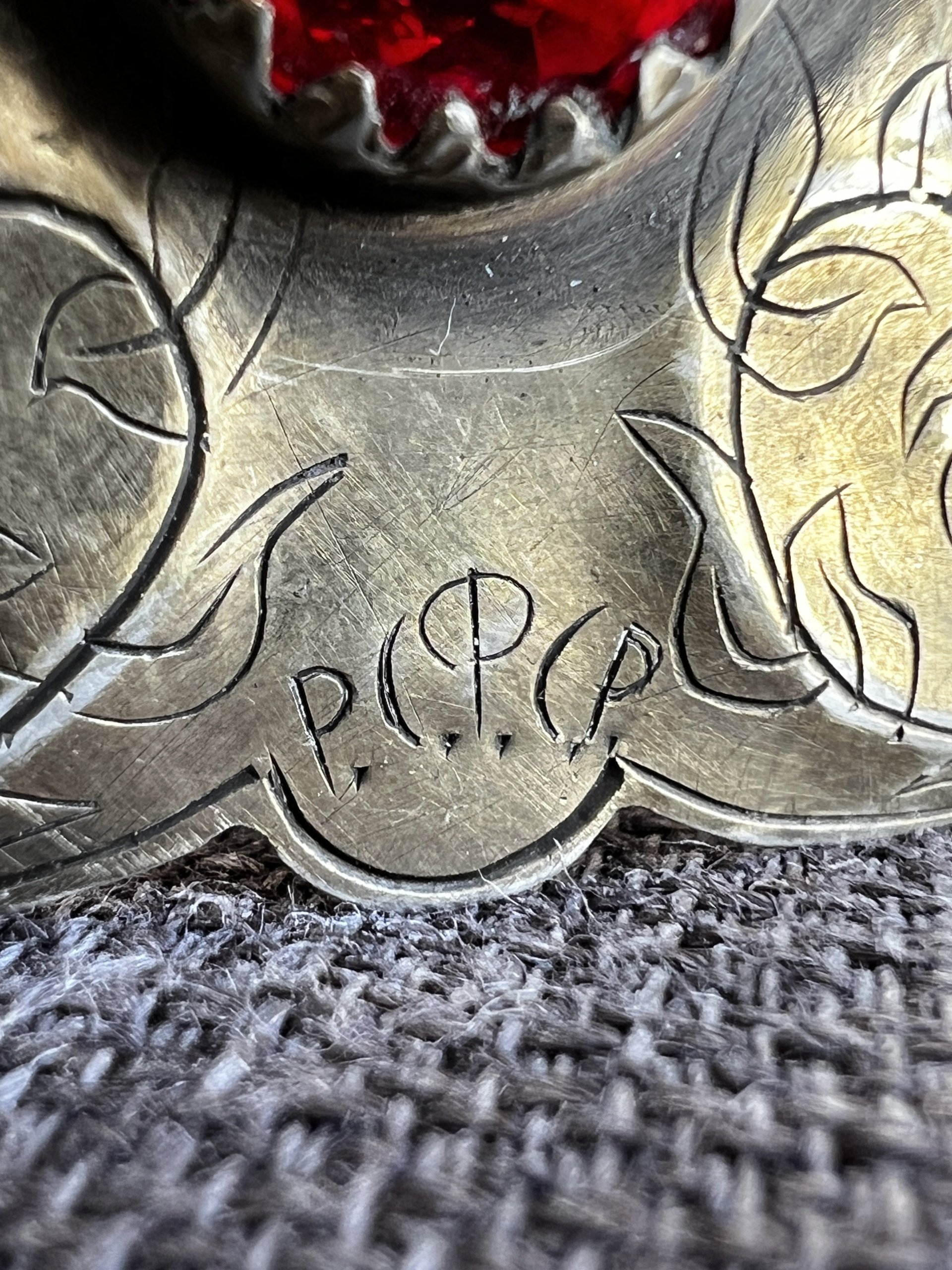
A handcrafted piece engraved with the initials РСФСР (RSFSR), which belonged to a Red Army commander, a trace of the earliest years of Soviet power before the creation of the USSR. Very good condition.
Sold
Sale price
For newsletter subscribers. One price per month.
Like this model?
We sometimes find another one. Leave your email and we will let you know when it is listed.
RSFSR BroochOne email per arrival of this model, one-click unsubscribe. Your address is used for nothing else.
Message received, dear comrade.
Our information desk usually replies within 24 hours at the address provided.Related products
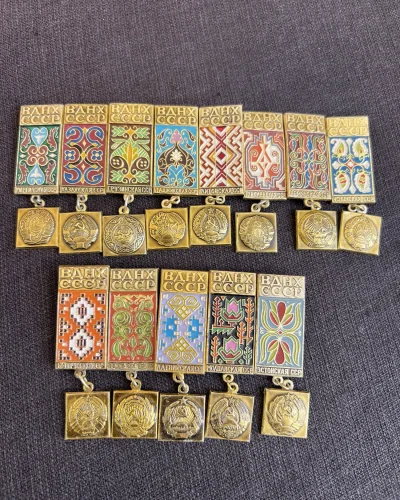
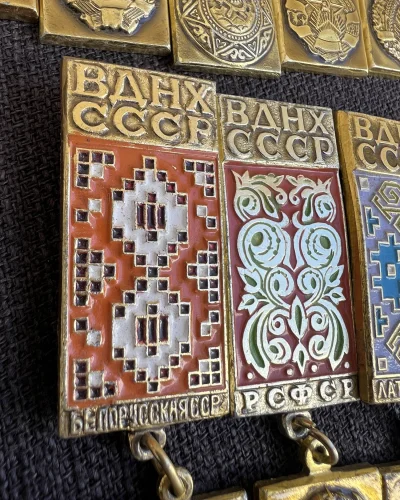
Lenin's New Economic Policy, founding of the USSR in 1922. Height of the avant-garde: Rodchenko, Mayakovsky, Eisenstein, El Lissitzky.



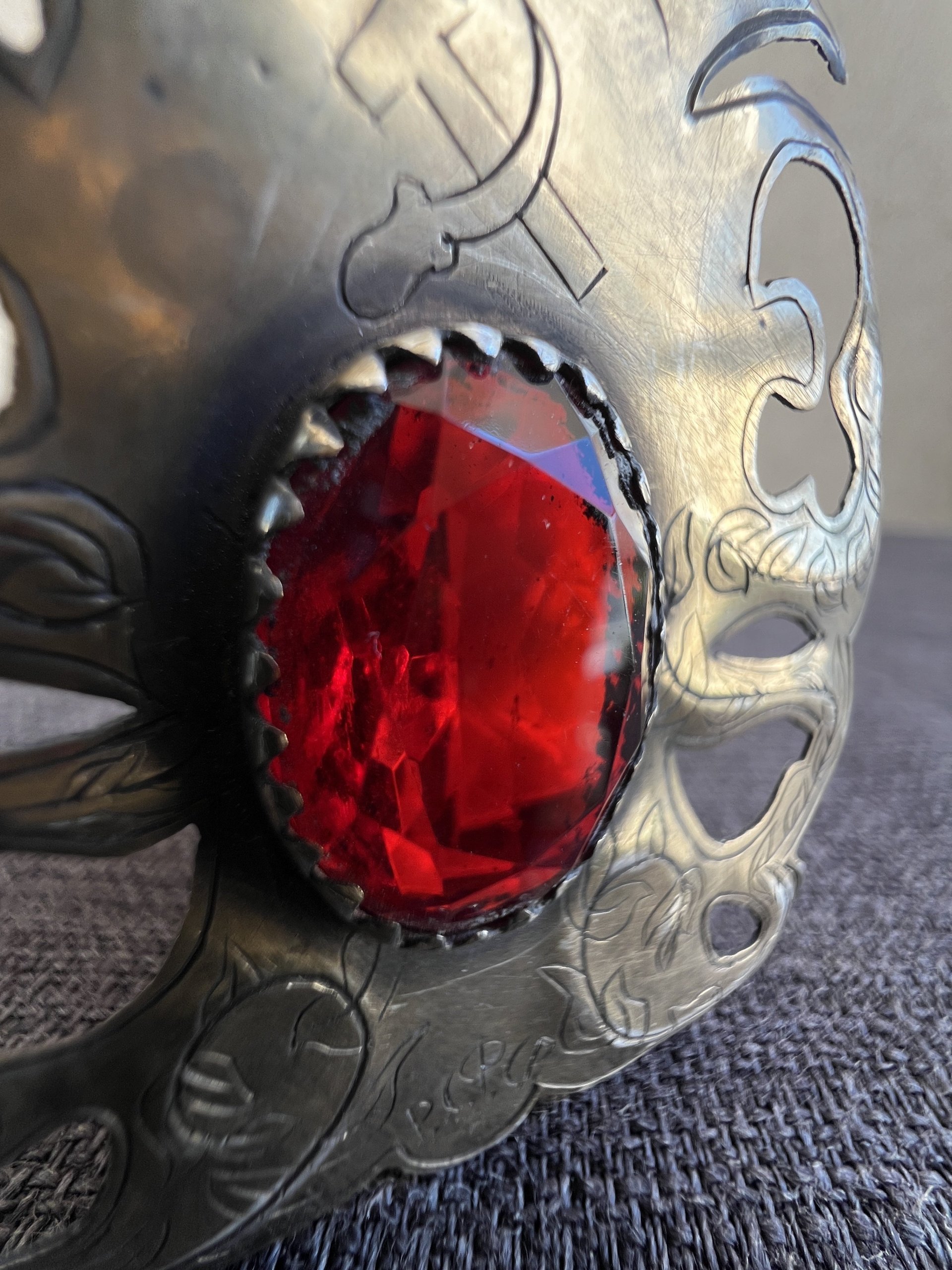
Soviet brooch from the earliest years of the RSFSR (Russian Soviet Federative Socialist Republic), in pierced and engraved silver, set at the centre with a large faceted red stone held in claws. Around 5×5 cm, a finely made handcrafted piece.
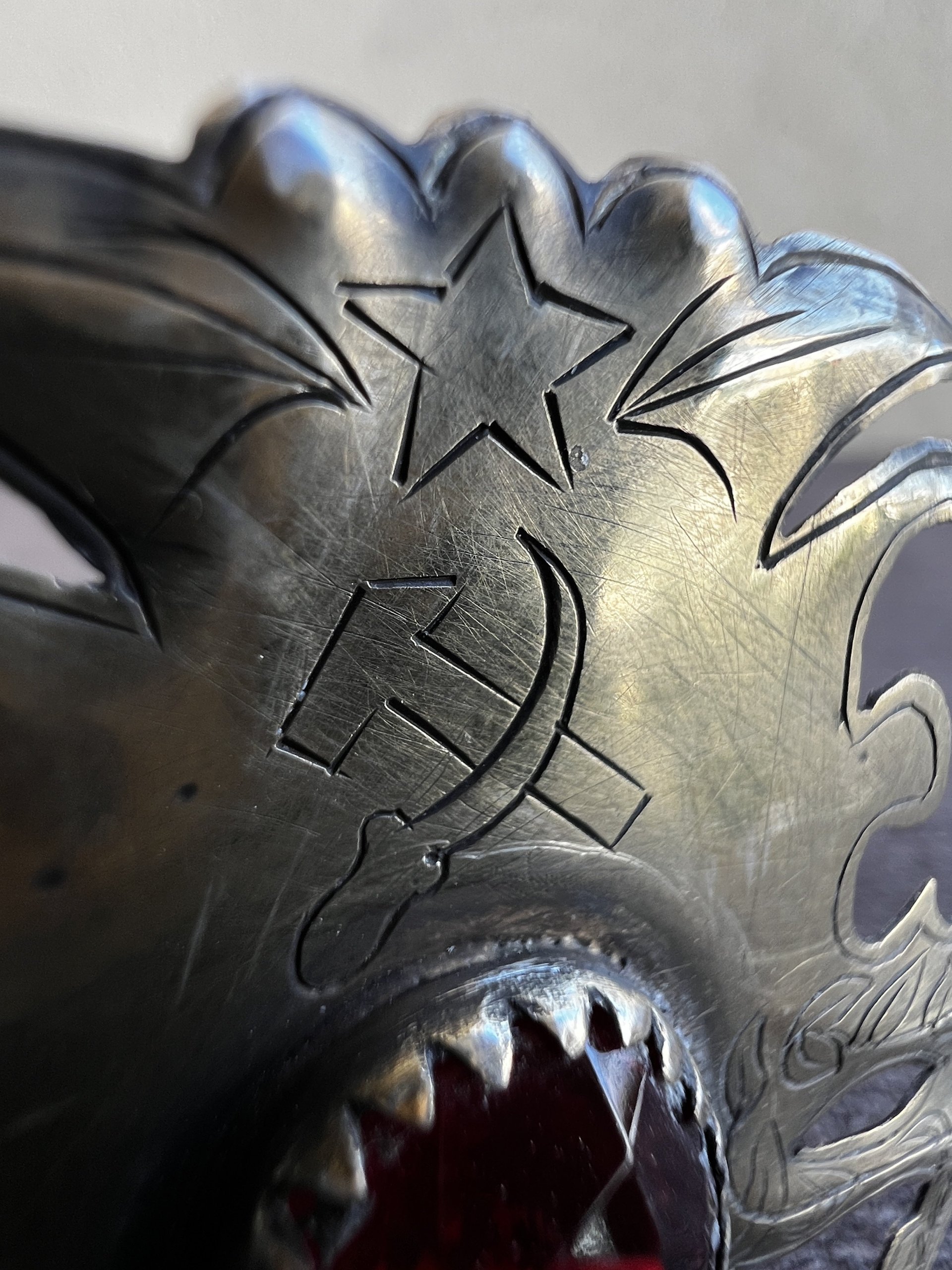
The pierced decoration shows the founding symbols of the young Soviet state: a five pointed star and the hammer and sickle, engraved by hand into the metal and surrounded by clover and leaf shaped piercings. The border carries engraved foliage, and the initials Р.С.Ф.С.Р. (RSFSR) are engraved on the front, placing the piece in the period before the Soviet Union itself.
The RSFSR was proclaimed on 25 January 1918, before the USSR was formally created on 30 December 1922. Objects marked РСФСР rather than СССР (USSR) are among the earliest surviving material traces of Bolshevik power, produced during the turbulent years of the civil war and the first consolidation of the regime. This brooch, in its handwork and its symbols, belongs to that pivotal period of Soviet history. Several details narrow the dating. The crossed hammer and sickle were adopted as a state emblem only in the spring of 1918 and appeared for the first time on the Sovnarkom seal in July 1918. The abbreviation engraved here with full stops, Р.С.Ф.С.Р., matches exactly the form used on official seals of late 1918, before the punctuation gradually disappeared during the 1920s. Finally, the composition, with the star above and the hammer and sickle below and no globe or wheat ears, corresponds to the small emblem used under the constitutions of 1918 and 1924.
Until the winter of 1919 the insignia of the Red Army were regulated by no one: stars, armbands and emblems worn on the cap, sleeve or chest were introduced by commanders themselves and made locally by craftsmen, artels and small workshops, from carefully made silver examples to crude tinplate pieces. This brooch, unique and hand engraved, belongs to that unregulated civil war production. According to the history passed on by the seller, it belonged to a commander of the RKKA, the Workers’ and Peasants’ Red Army. The style of the engraved scrollwork and the clover piercings points to Caucasian silverwork, where this kind of handwork on silver was common, rather than to a Moscow workshop.
Unhallmarked silver, which is usual for a handcrafted piece of this period and region. The red stone, faceted on both sides and open set in a notched claw, is most likely glass, as on most jewellery of the period.
The back reveals a simple pin fastening with a C hook and no safety catch, typical of handmade jewellery of the time. The natural patina of the metal reflects the age of the piece. Very good general condition for an object more than a century old.
Additional information
| Weight | 0.3 kg |
|---|---|
| Dimensions | 20 × 20 × 10 cm |

