




Stakhanov Carved in Bone - Hero Miner of 1935 - Bakelite Base USSR
Stakhanov Carved in Bone - Hero Miner of 1935 - Bakelite Base USSR
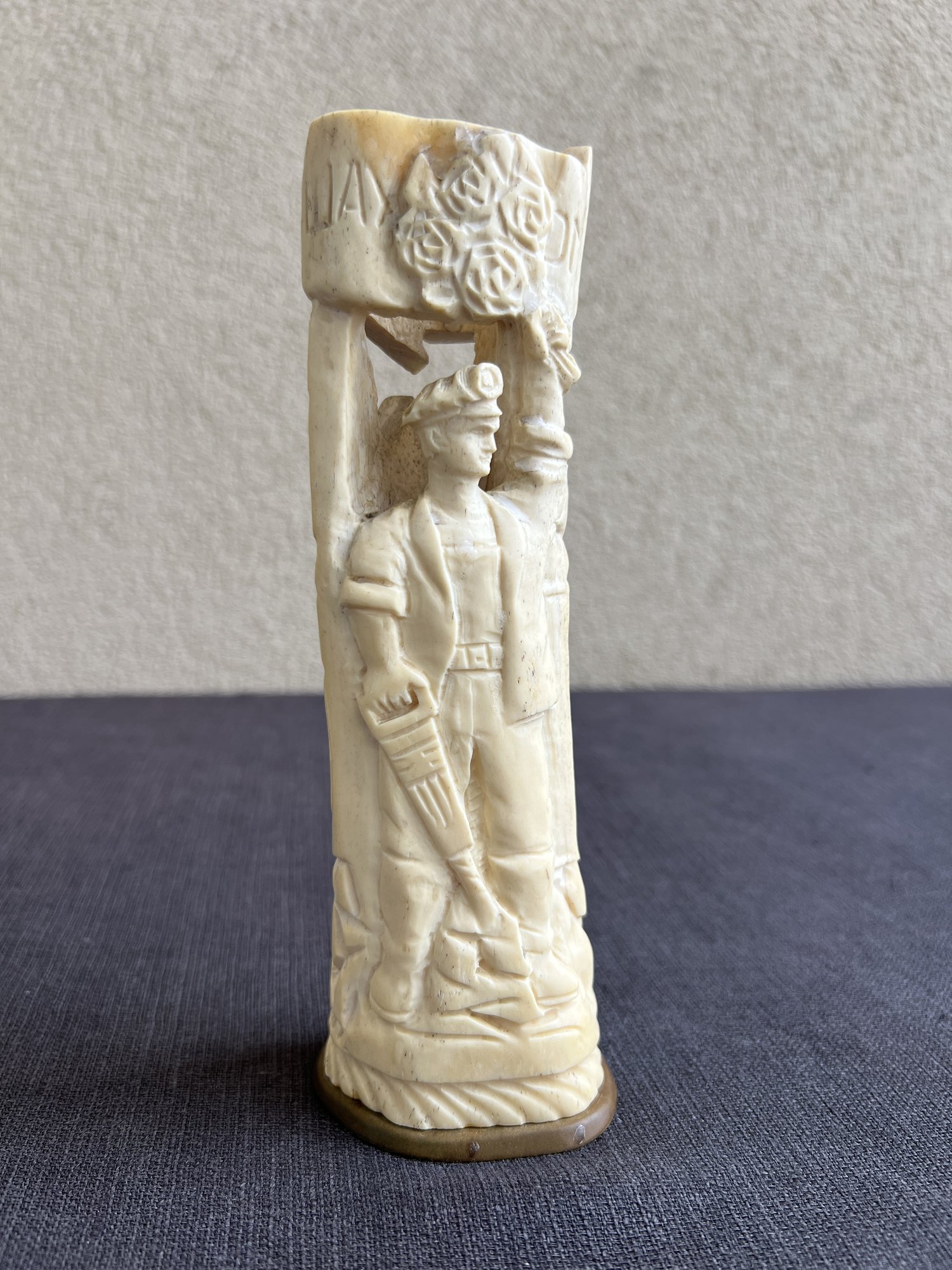
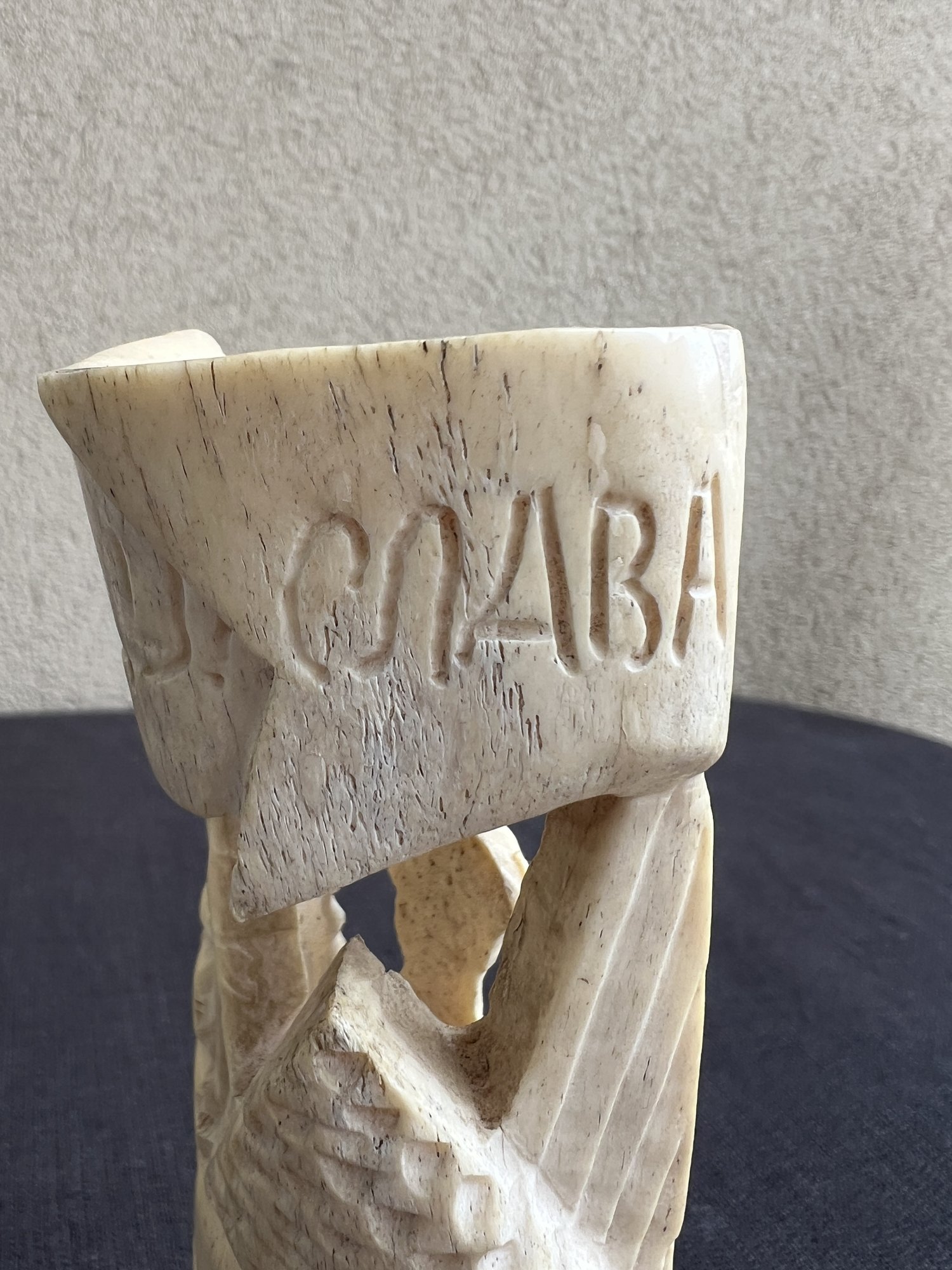
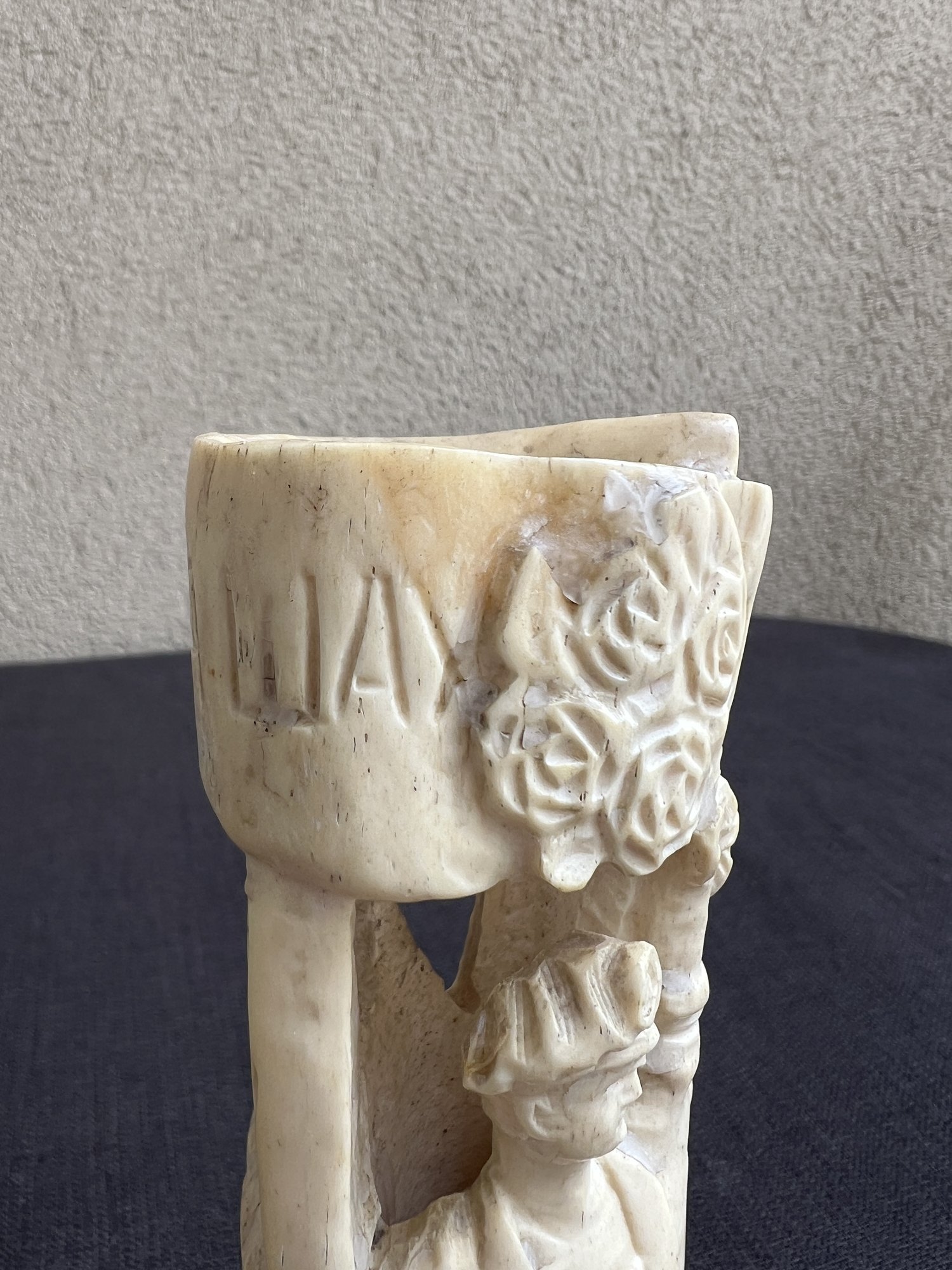
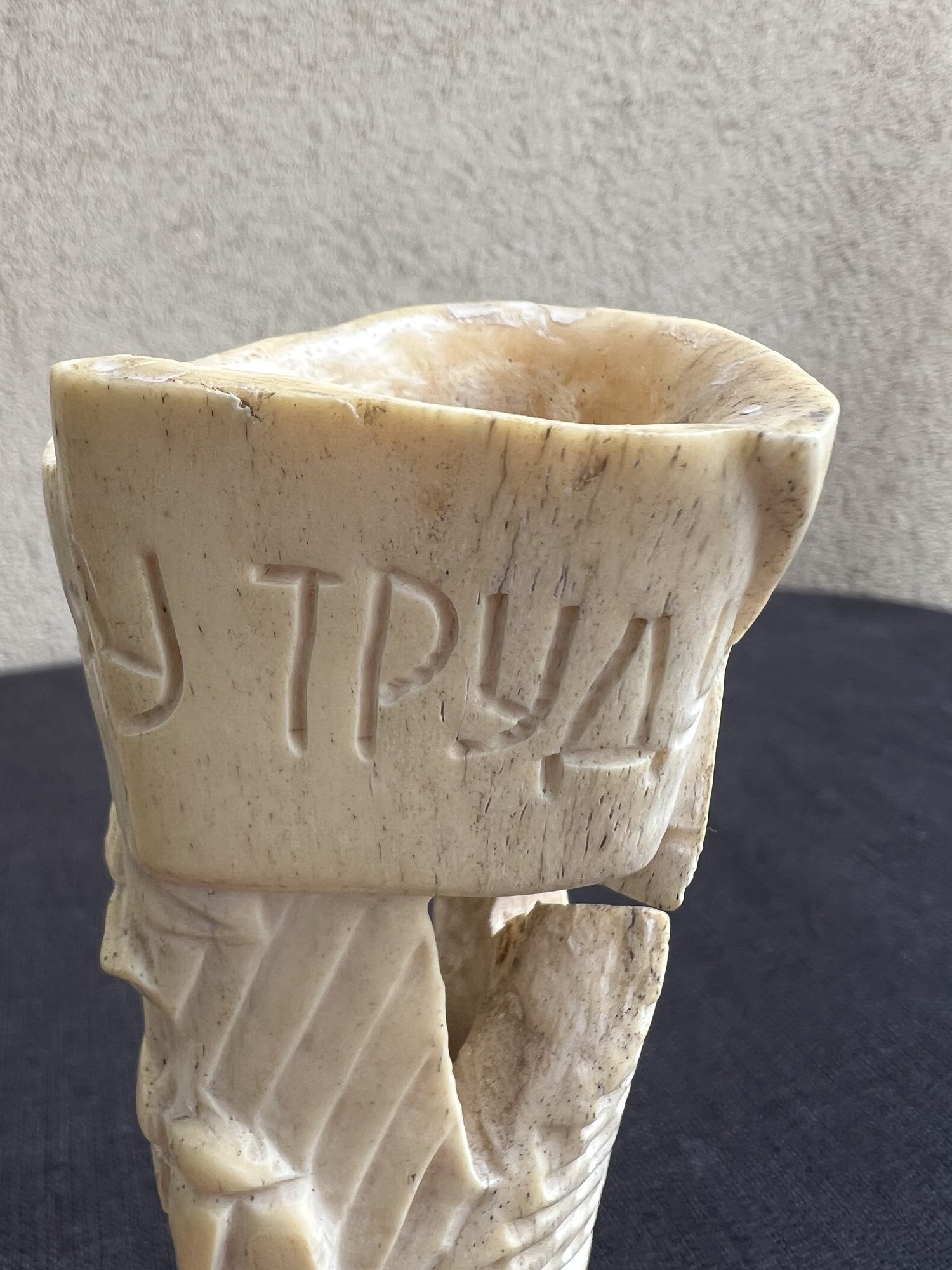
Soviet carved cow bone figure of a coal miner on a bakelite base, with the slogan Glory to miners’ labour, a tribute to the Stakhanovite movement.
In 1935 Stakhanov cut 102 tonnes of coal in one shift. Small chips from age.
Sold
Sale price
For newsletter subscribers. One price per month.
Like this model?
We sometimes find another one. Leave your email and we will let you know when it is listed.
Stakhanov Carved in BoneOne email per arrival of this model, one-click unsubscribe. Your address is used for nothing else.
Message received, dear comrade.
Our information desk usually replies within 24 hours at the address provided.Related products
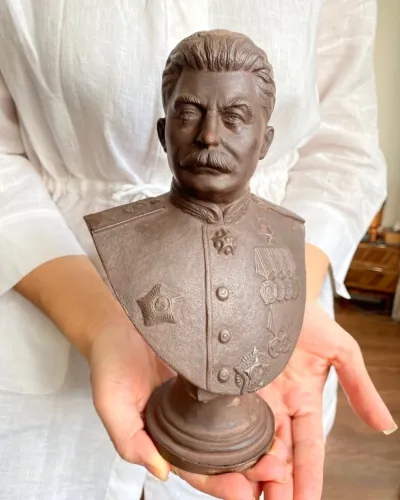
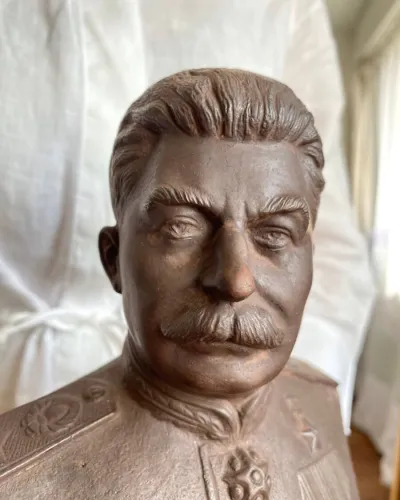
Death of Stalin in 1953, Khrushchev. Secret speech of 1956, relative openness. Launch of Sputnik in 1957.
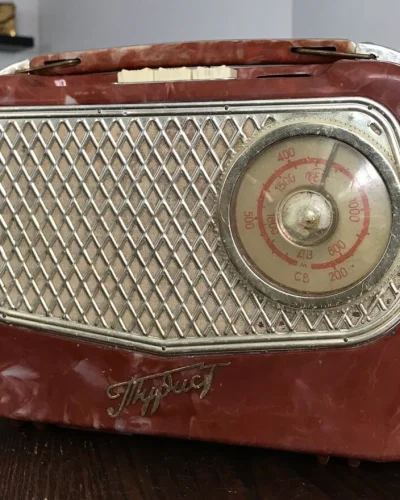
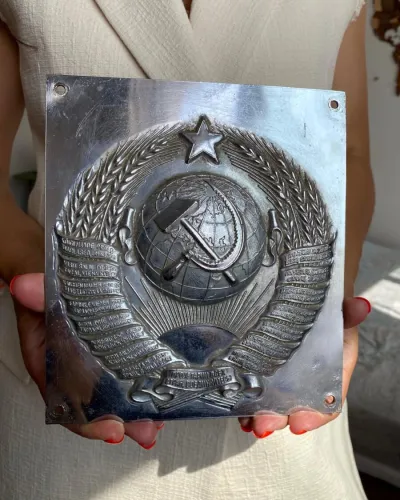
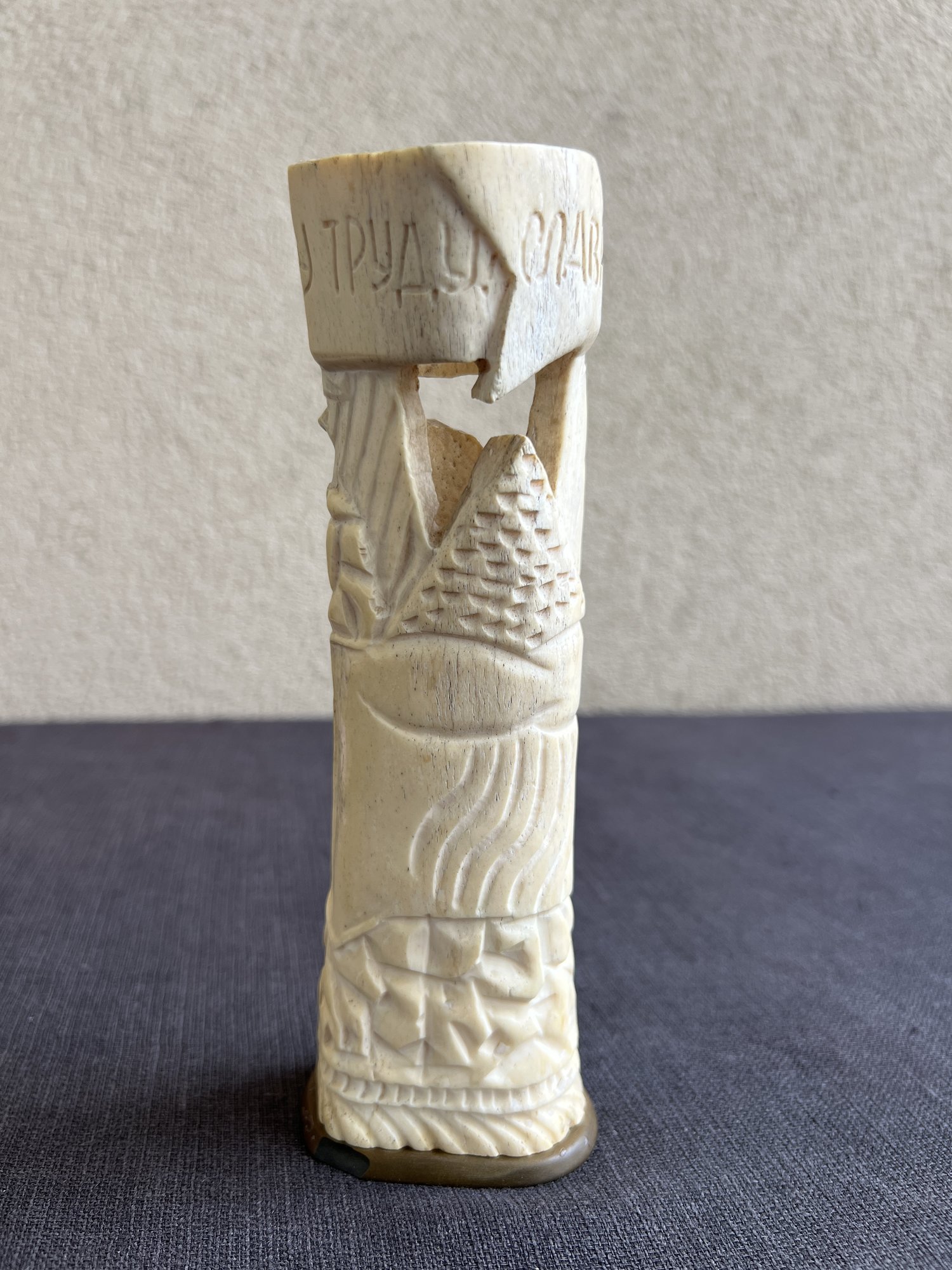
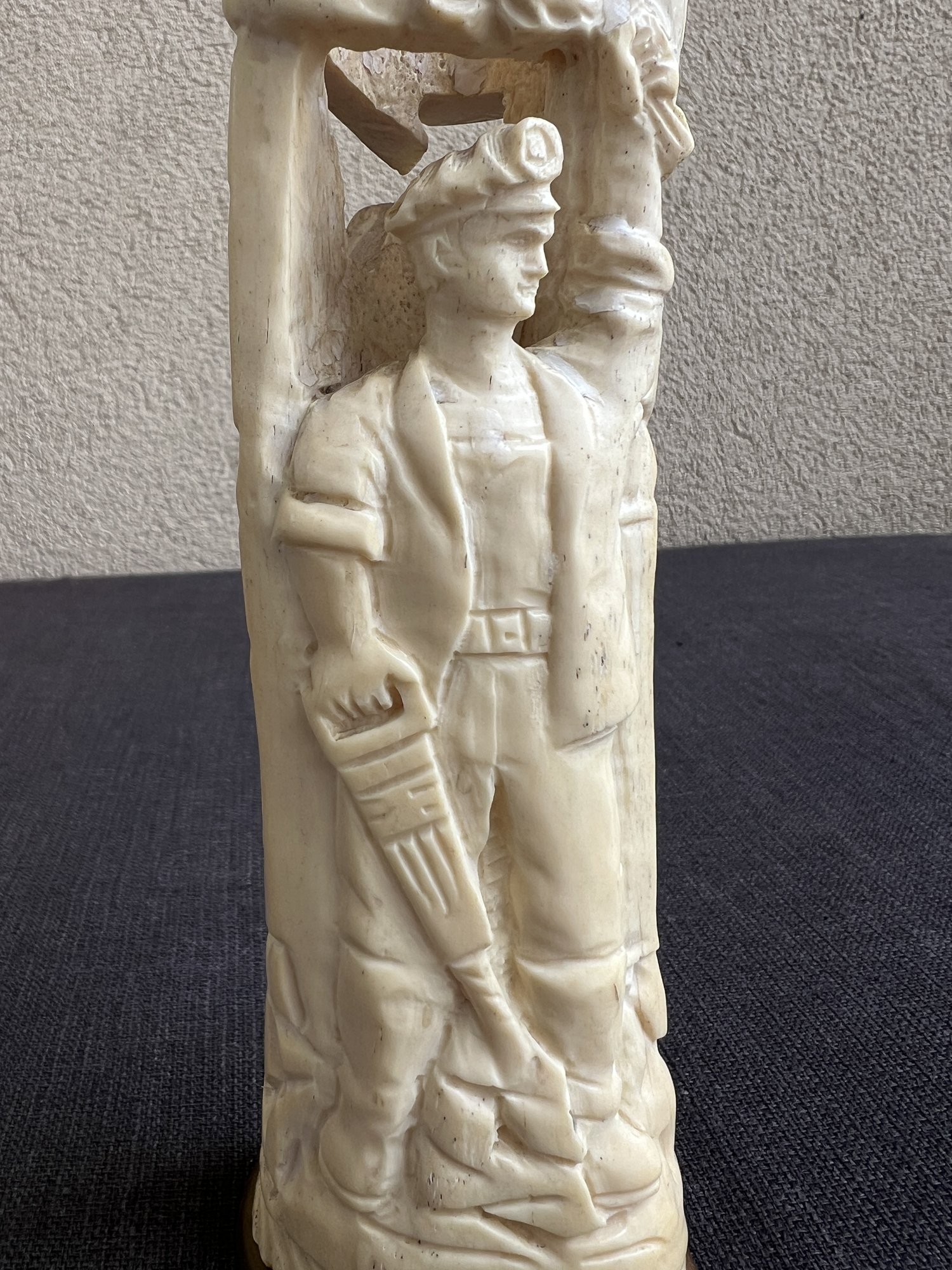
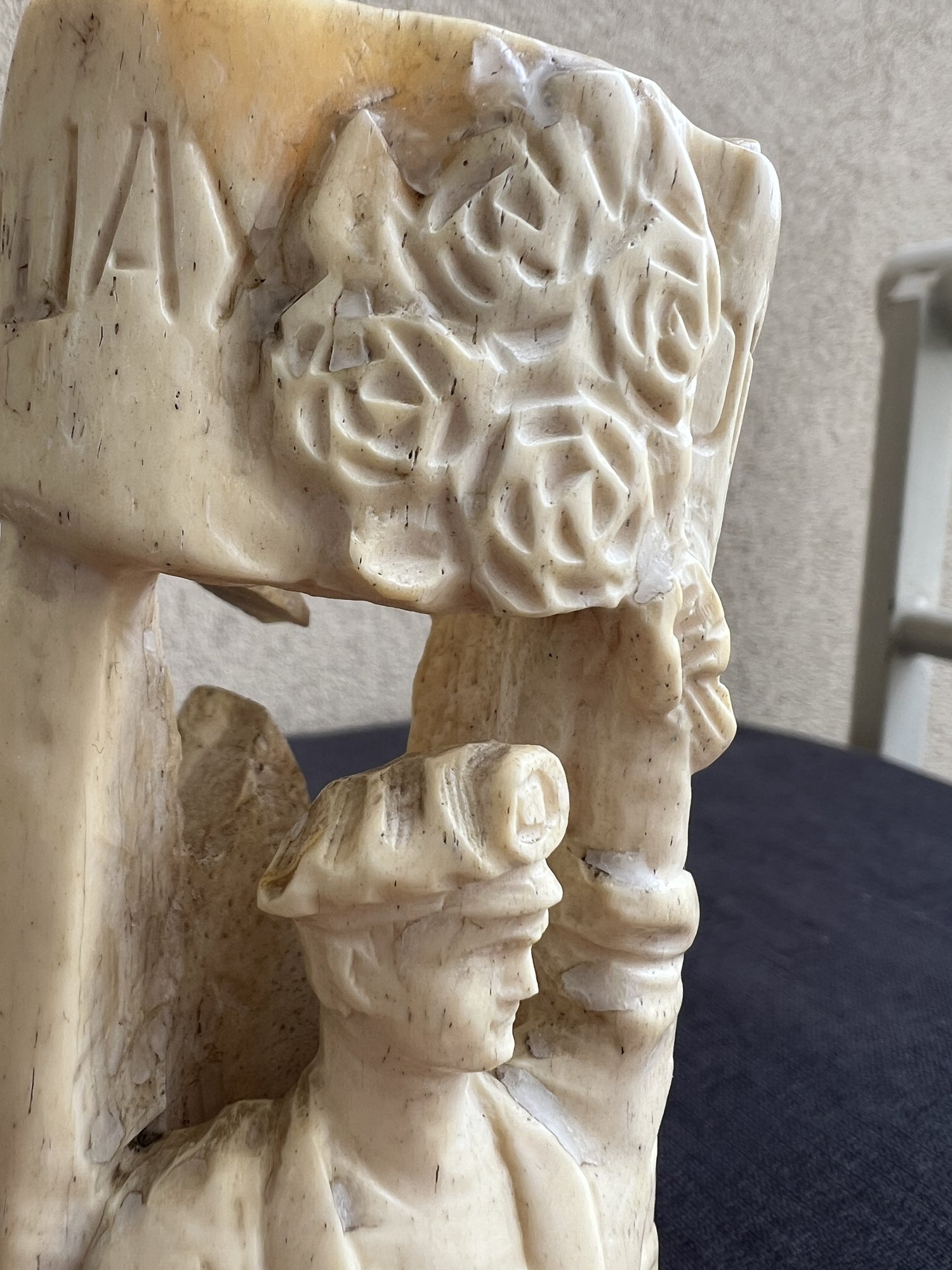
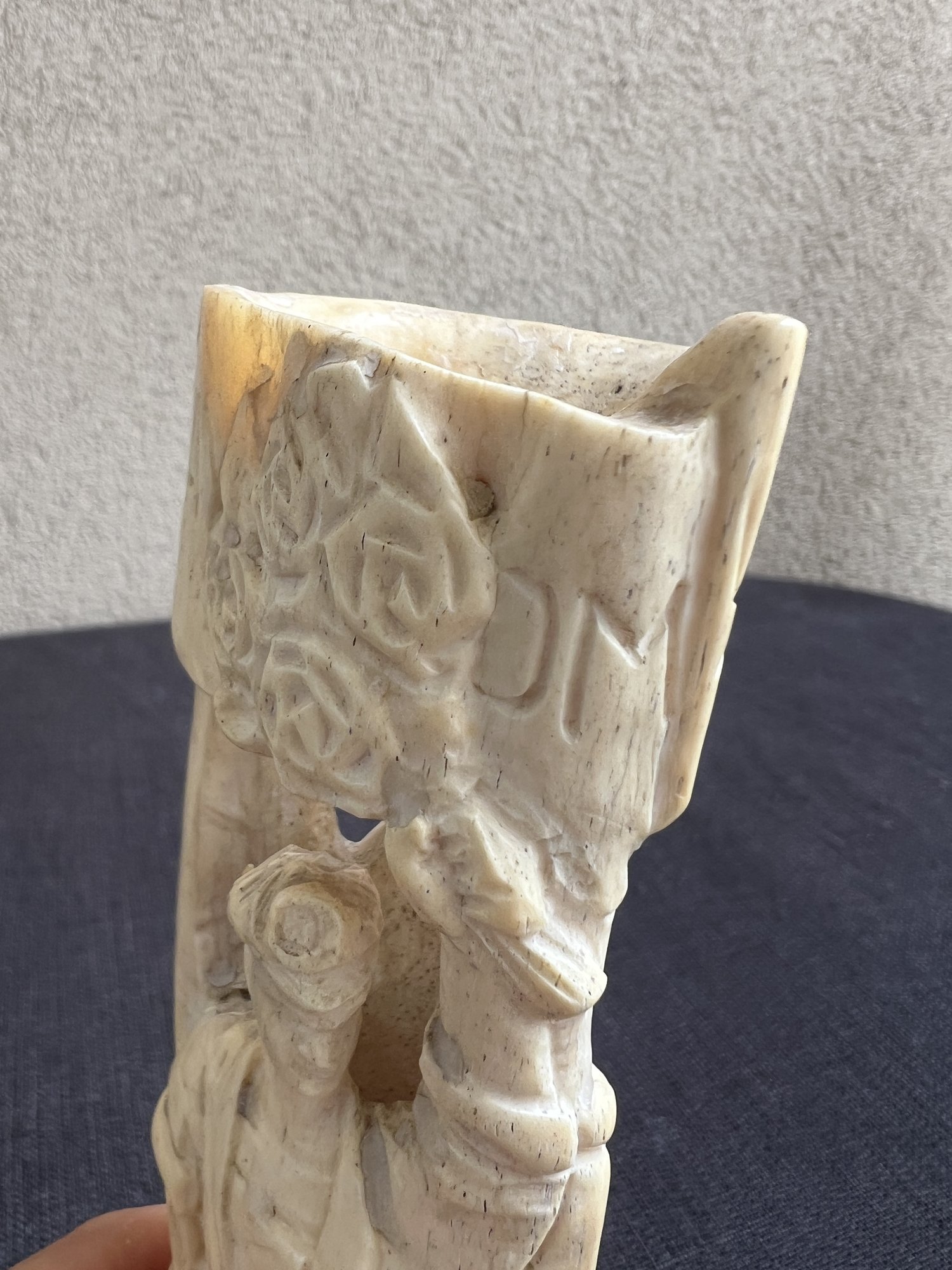
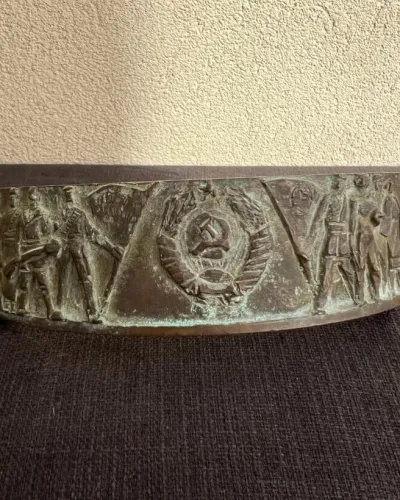
A cow bone carving set on a bakelite base, standing 20 cm high. It depicts a coal miner with a helmet lamp and a pneumatic pick, the figure most closely tied to Alexei Stakhanov. The carved banner reads ШАХ[ТЁРСКОМ]У ТРУДУ СЛАВА (Glory to miners’ labour), a variant of a poster slogan printed in Stalino, today’s Donetsk, for the Donbas coalfields. The reverse shows a spoil heap, a familiar feature of the Donbas mining landscape.
During the night of 30 to 31 August 1935, Alexei Stakhanov, a hewer at the Tsentralnaya-Irmino pit near Kadiyevka in the Donbas, cut 102 tonnes of coal in 5 hours 45 minutes, about fourteen times the quota. The feat was really a team effort, two timberers and two haulers backed him, but the Party turned it into the Stakhanovite movement, rewarding workers who beat their targets; a second record of 227 tonnes followed on 19 September. The pneumatic pick became the emblem of the labour hero. Stakhanov was made Hero of Socialist Labour in 1970, and Kadiyevka took his name in 1978, a year after his death. The cult of the miner carried on after the war with Miners’ Day, established in 1947 and held on the last Sunday of August from 1948.
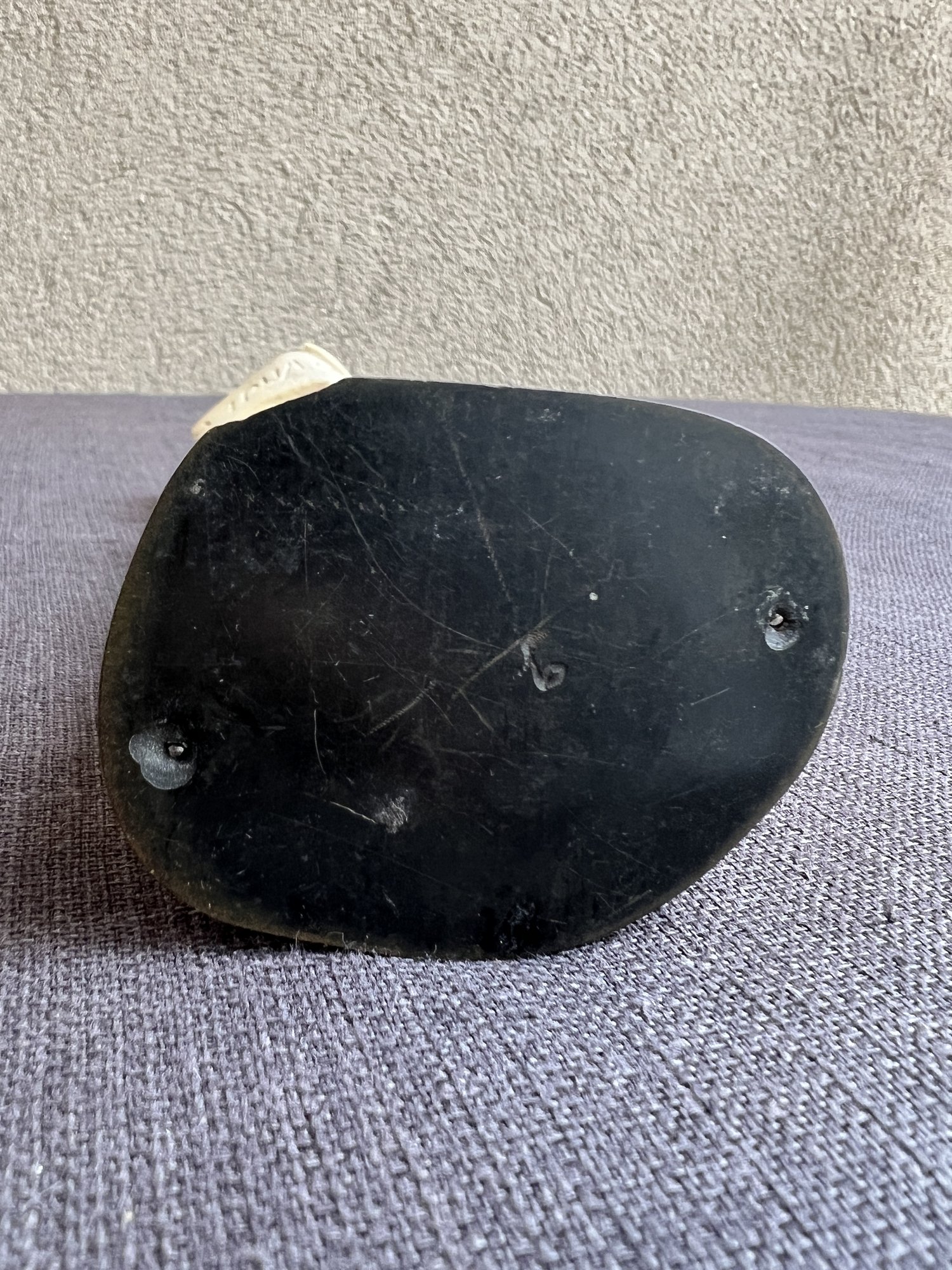
A handmade piece whose workshop is not established, the main bone-carving centres, Kholmogory and Tobolsk, working mostly in walrus ivory on northern subjects. Probably from the 1950s. Small chips on the banner and the flower bouquet, light scratches under the base from use.
Additional information
| Weight | 0.8 kg |
|---|---|
| Dimensions | 30.0 × 20.0 × 15.0 cm |

