




Napkin - Plauen Lace - GDR


Napkin - Plauen Lace - GDR
Plauen lace napkin carrying the inscription “National People’s Army”, awarded to all servicemen on completing their military service in the National People’s Army in the GDR.
Sold
Sale price
For newsletter subscribers. One price per month.
Like this model?
We sometimes find another one. Leave your email and we will let you know when it is listed.
Napkin · Plauen LaceOne email per arrival of this model, one-click unsubscribe. Your address is used for nothing else.
Message received, dear comrade.
Our information desk usually replies within 24 hours at the address provided.Related products
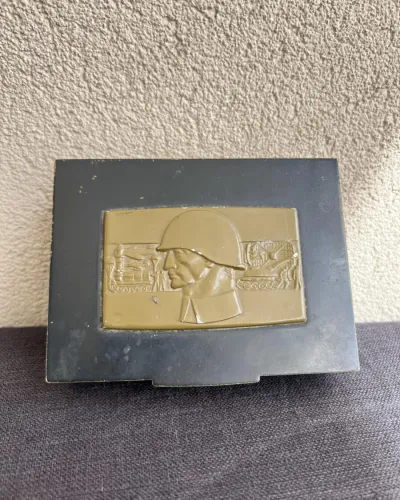
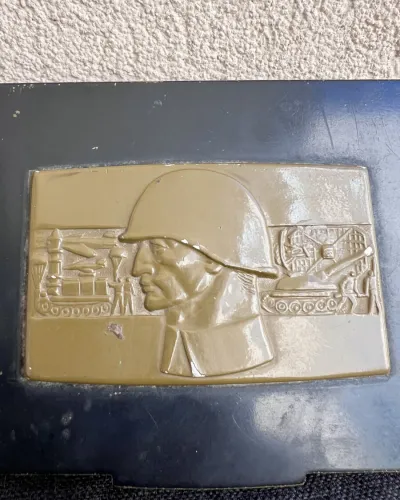
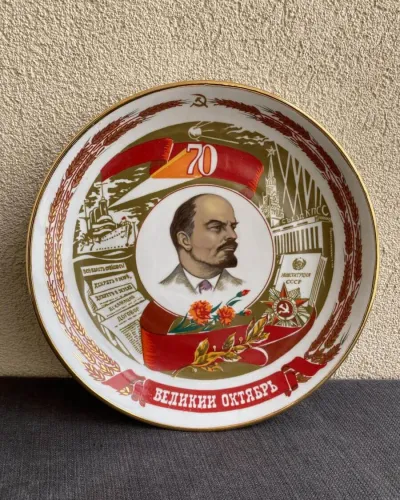
Plauen lace napkin carrying the inscription “National People’s Army”.
Awarded to all servicemen on completing their military service in the National People’s Army in the GDR.
The town of Plauen, in the valley of the White Elster in Saxony, is the regional capital of the Vogtland, an area strongly marked by the textile industry. In the 19th century this town, already a maker of cloth in the Middle Ages, became a centre of curtains, embroidery and lace (Spitze) and grew quickly (47,000 inhabitants in 1890, 128,000 in 1912, half that today, and 81,000 in 1972 in GDR times).
Its industrial plants were largely destroyed by the bombing of 1944-1945 (75 percent of the town’s buildings). The GDR rebuilt the textile industry there and developed heavy industry such as PLAMAG, which made presses, and the Fritz Heckert machine tool combine. A lamp factory started up, later brought into the large Narva combine. In the GDR years the lace enterprise VEB Plauener Spitze (1953) gradually brought together, notably in 1970, the various works of a sector made up of many small nationalised units. VEB Plauener Spitze had 8,000 employees in the 1980s (about 700 in 1956).
It was part of a group of enterprises (1958) and then of the “Deko” combine (1979), which also included the curtain works VEB Plauener Gardine, the largest enterprise in the combine.
Additional information
| Weight | 0.05 kg |
|---|

