




Fialka Rotor - KGB - M-125
Fialka Rotor - KGB - M-125
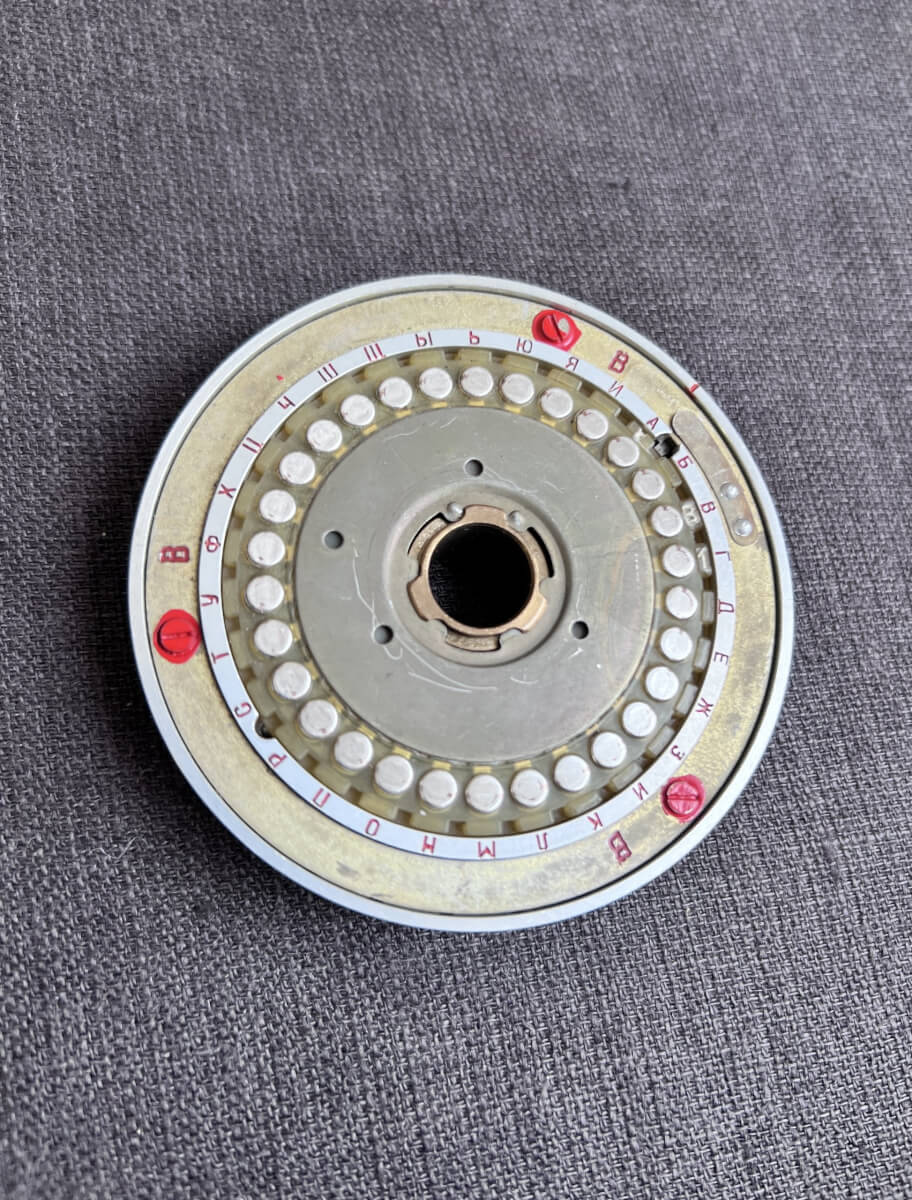
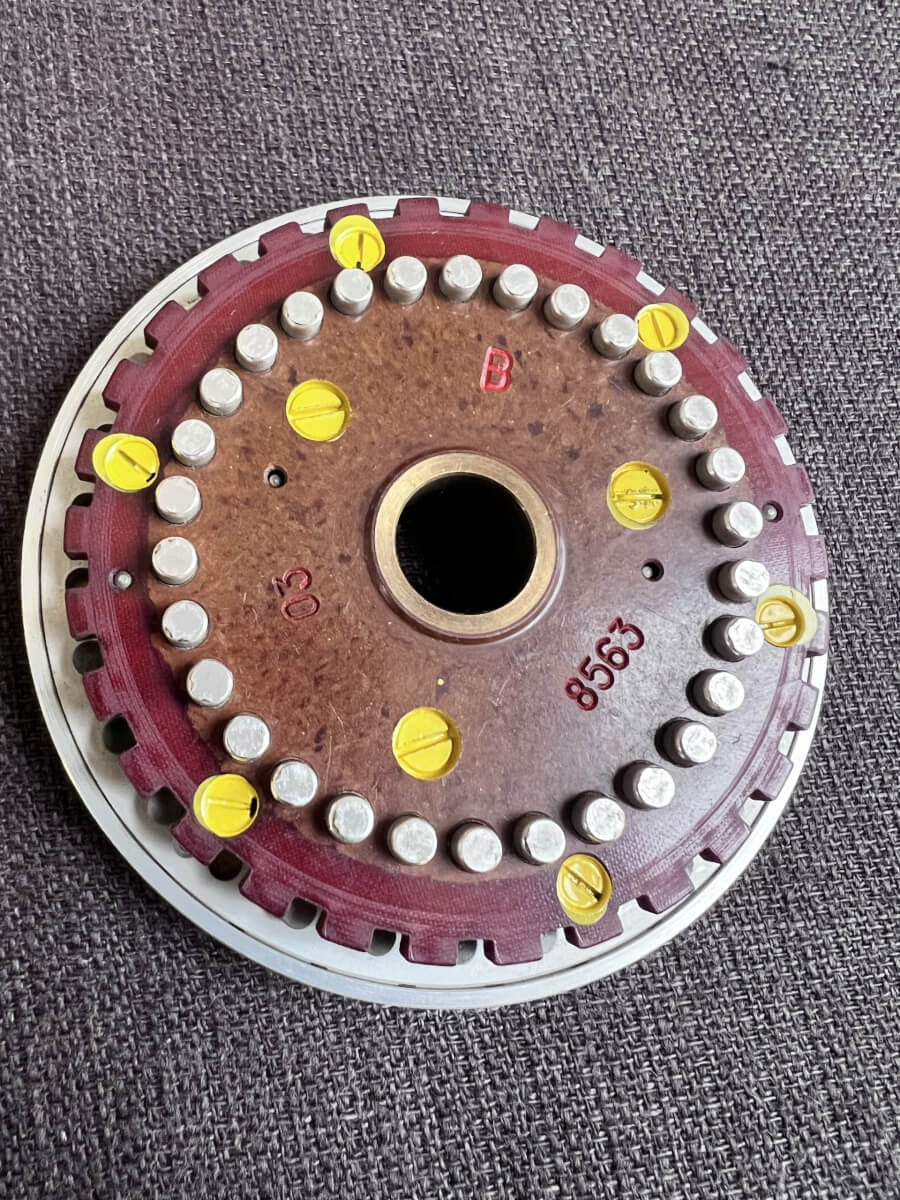
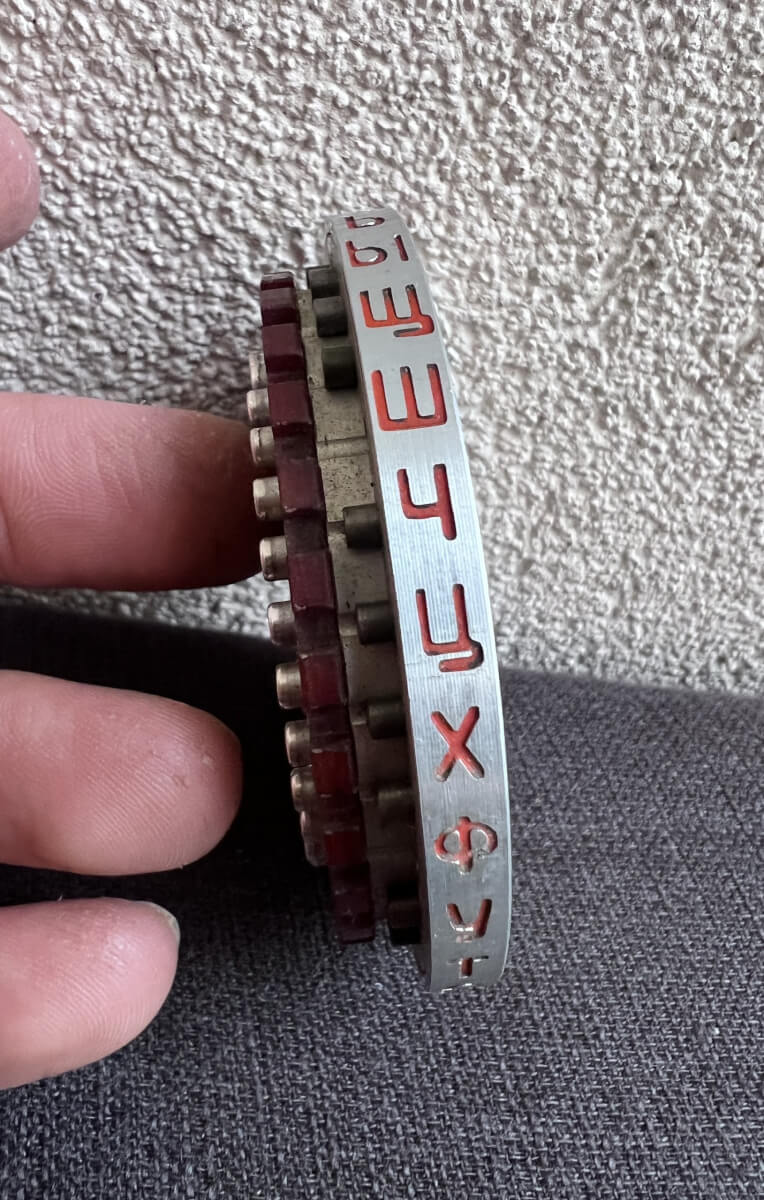
Rotor from the M-125, code name Fialka (in Russian: ФИАЛКА), an electromechanical rotor cipher machine developed in the USSR shortly after the Second World War, sometimes called the Russian Enigma.
Rotor in excellent condition, from a 1958 machine imported from Russia some years ago.
Sold
Sale price
For newsletter subscribers. One price per month.
Like this model?
We sometimes find another one. Leave your email and we will let you know when it is listed.
Fialka RotorOne email per arrival of this model, one-click unsubscribe. Your address is used for nothing else.
Message received, dear comrade.
Our information desk usually replies within 24 hours at the address provided.Related products
Peak of the space race won by the USSR: Sputnik 1 (1957), Gagarin's flight (1961), Tereshkova the first woman in orbit (1963). Khrushchev leads de-Stalinisation until 1964, then Brezhnev ushers in stagnation. Scientific and cultural high point.


Rotor from the M-125, code name Fialka (in Russian: ФИАЛКА), an electromechanical rotor cipher machine developed in the USSR shortly after the Second World War.
It was first introduced in 1956 and quickly became one of the favourite machines of the Warsaw Pact and of certain allied nations such as Cuba.
The machine is similar to the American Sigaba, to the KL-7 and, to a lesser extent, to the Enigma.
For that reason the machine is sometimes called the Russian Enigma.
The original M-125 was replaced by the M-125-3M in the mid 1960s and remained in service until the early 1990s.
At the heart of every Fialka machine is a drum with 10 different electromechanical cipher wheels (rotors) that move in a random fashion as a message is typed.
Each wheel is wired differently, and each country of the former Warsaw Pact had its own axle (wired differently for each country).
Such a country specific axle is called a series, identified by a number and the letter “K” (for example 3K for Poland).
Direct communication between Warsaw Pact countries was strictly forbidden in peacetime and all messages had to be sent through the Russians.
Only in the event of war with the West would a common set of wheels (known as the 0K series) be issued.
Each wheel has 30 electrical contacts on each side. The right side of the wheel is called the input, while the left side holds the output contacts. The input contacts are connected to the output contacts in a scrambled way. As there are 30 contacts, each wheel has 30 possible positions.
Rotor in excellent condition, from a 1958 machine imported from Russia some years ago.
Additional information
| Weight | 0.25 kg |
|---|

