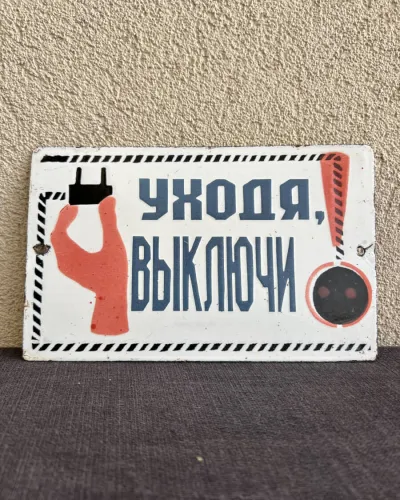
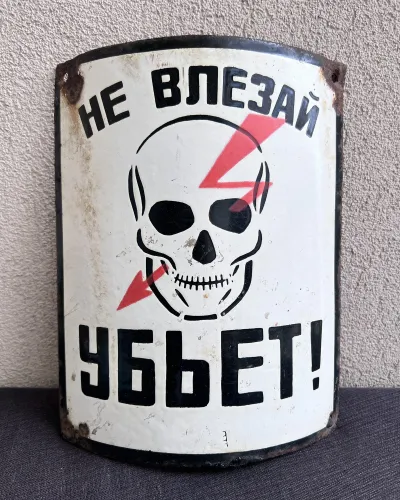
Soviet Enamel Sign - Household Danger - Fire Safety Fuse Warning USSR
$172.99Unique piece
Soviet Enamel Sign - Household Danger - Fire Safety Fuse Warning USSR
$172.99Unique piece
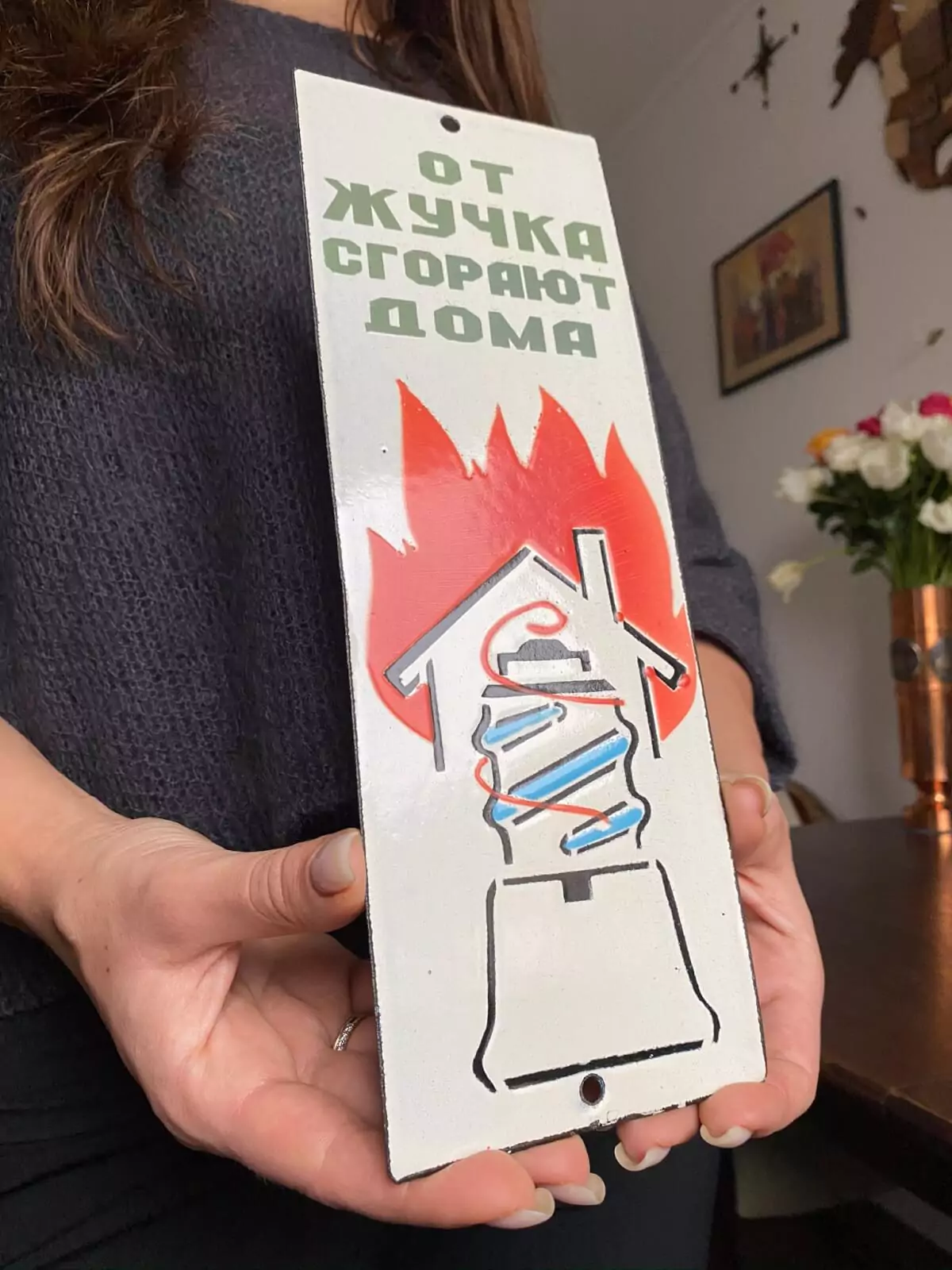
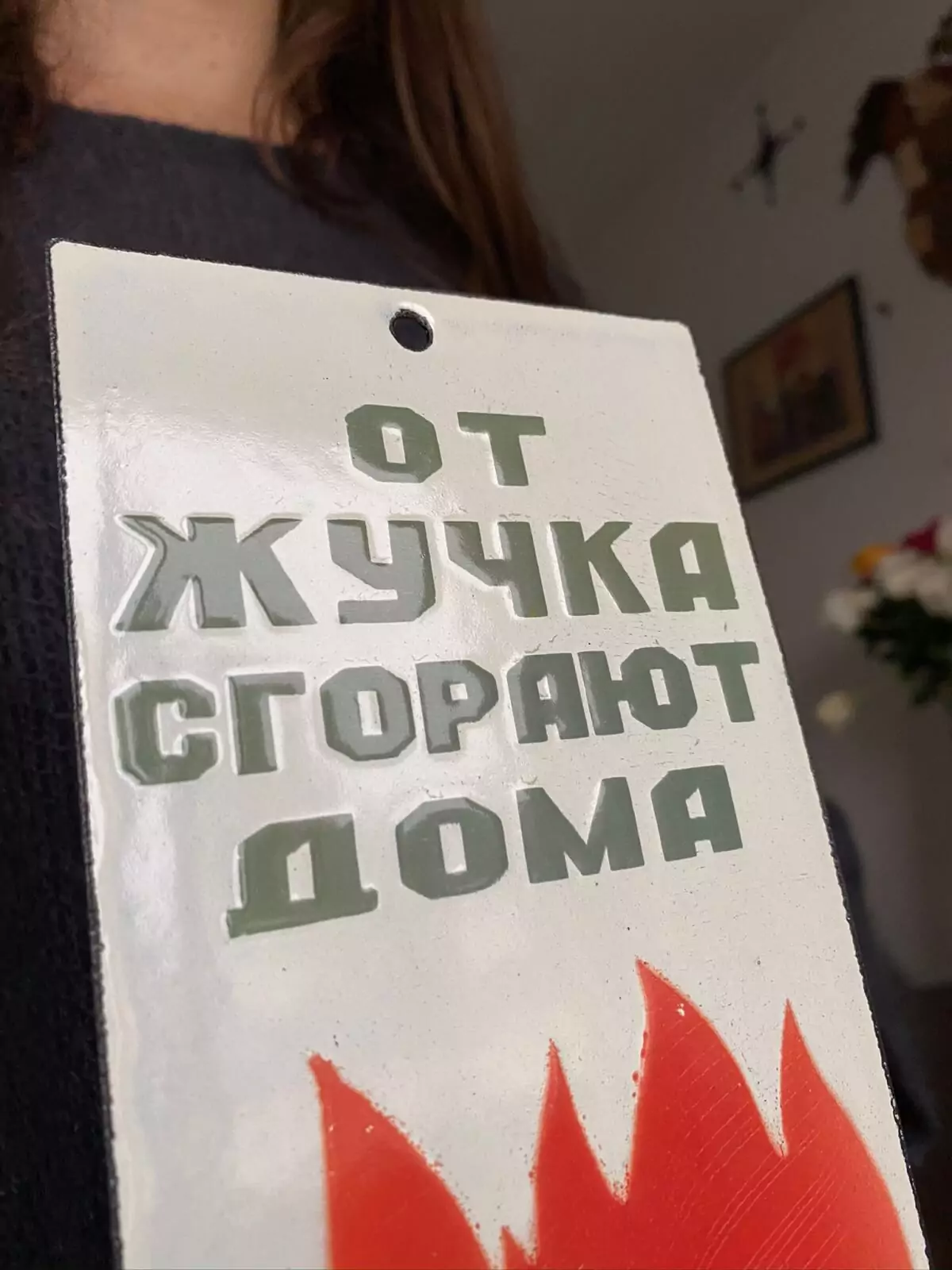
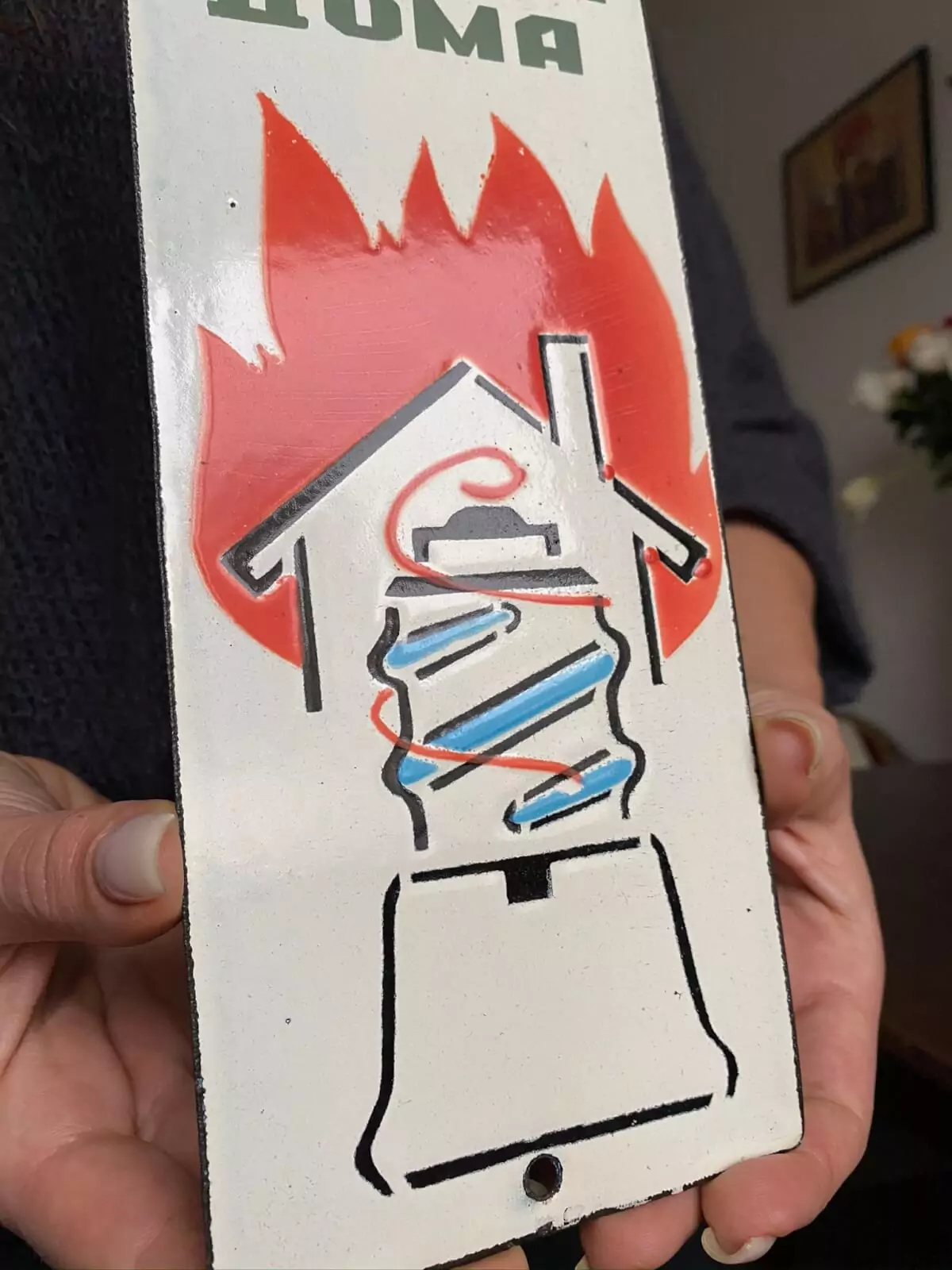
Soviet enamel fire safety sign with the inscription «От жучка сгорают дома» (Houses burn down because of a makeshift fuse). Burning house and fuse wrapped in wire, white, green, red and blue enamel.
1 in stock
Message received, dear comrade.
Our information desk usually replies within 24 hours at the address provided.Peak of the space race won by the USSR: Sputnik 1 (1957), Gagarin's flight (1961), Tereshkova the first woman in orbit (1963). Khrushchev leads de-Stalinisation until 1964, then Brezhnev ushers in stagnation. Scientific and cultural high point.
Soviet enamel fire safety sign in a vertical format, with one mounting hole at the top and another at the bottom. On the white ground, the inscription in large grey-green capitals fills the upper third: «От жучка сгорают дома» (Houses burn down because of a makeshift fuse). Below it, a black line drawing shows a stylised house with its chimney, engulfed in large red flames. In the middle of the house is a screw-in fuse, its thread picked out in light blue, with a red wire coiled around it. Below the house, the drawing continues with a large bell-shaped base in black outline that fills the lower part of the sign. The drawing is crisp and carefully done, and the colours are bright.
In the USSR, the word жучок (little beetle) was the common name for a makeshift fuse. When the plug fuse in a flat’s electrical panel blew, people would put it back into service by winding a piece of metal wire in place of the fuse element. The circuit was then left unprotected, the current could far exceed the permitted level and the wiring could heat up until it set the installation on fire. Fire prevention services made this a recurring theme, and present-day Russian safety leaflets still warn never to replace a fuse with a жучок (little beetle). The sign shows exactly that gesture: the red wire wound around the fuse, and the house on fire.
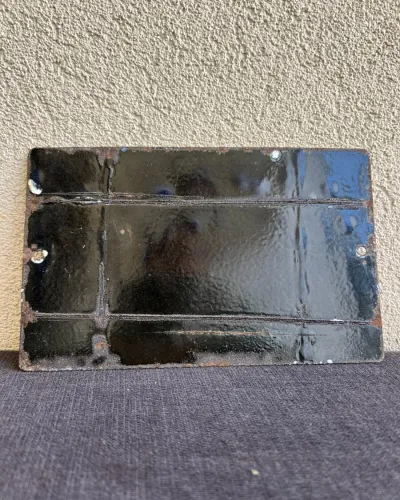
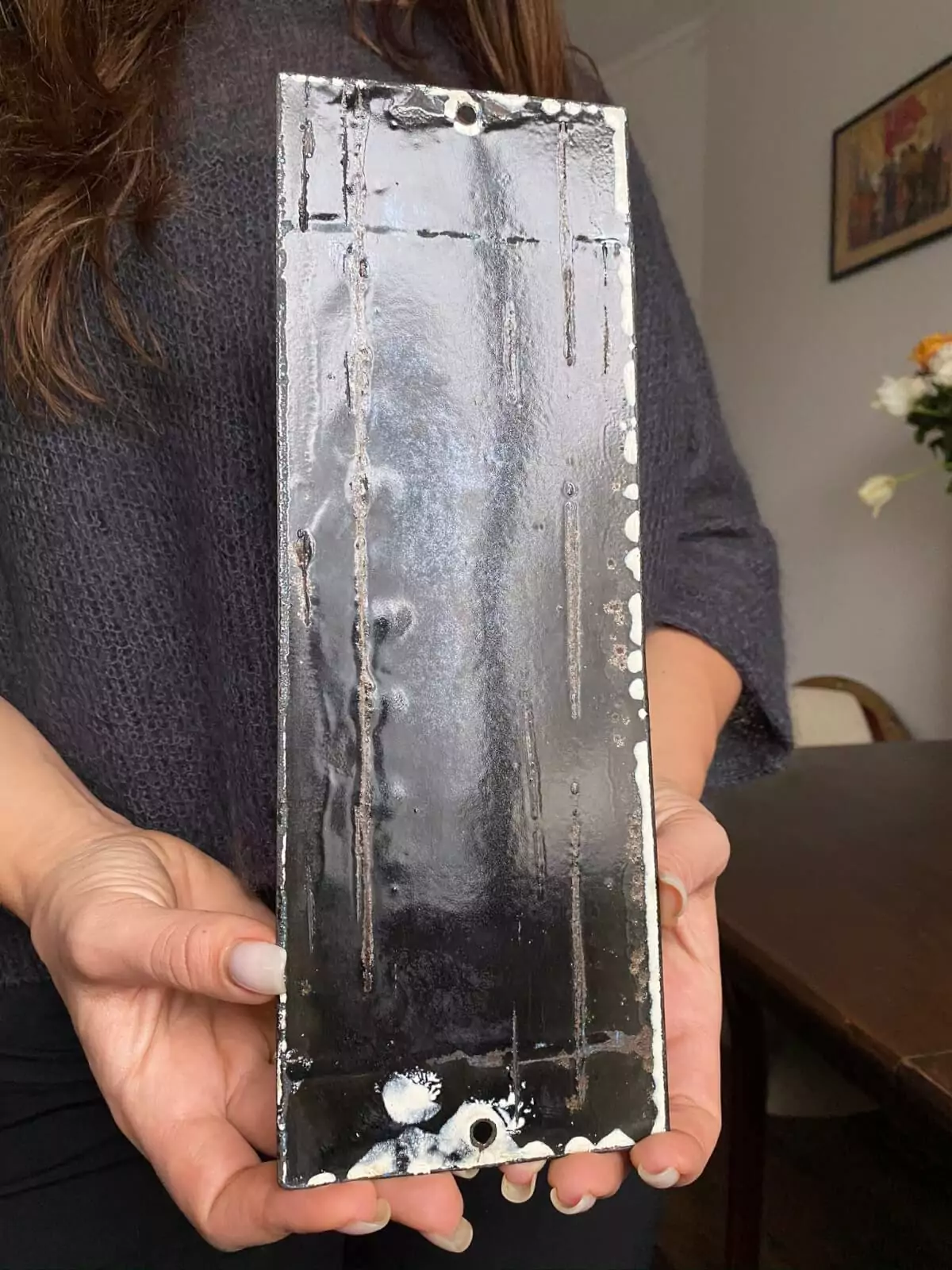
The front is glossy. The back, enamelled in black, shows drips of white enamel.
Additional information
| Weight | 1 kg |
|---|---|
| Dimensions | 40 × 30 × 5 cm |