Soviet Anatomical Relief Model - Human Torso - USSR 1960s
$415.99Unique piece

Soviet Anatomical Relief Model - Human Torso - USSR 1960s
$415.99Unique piece
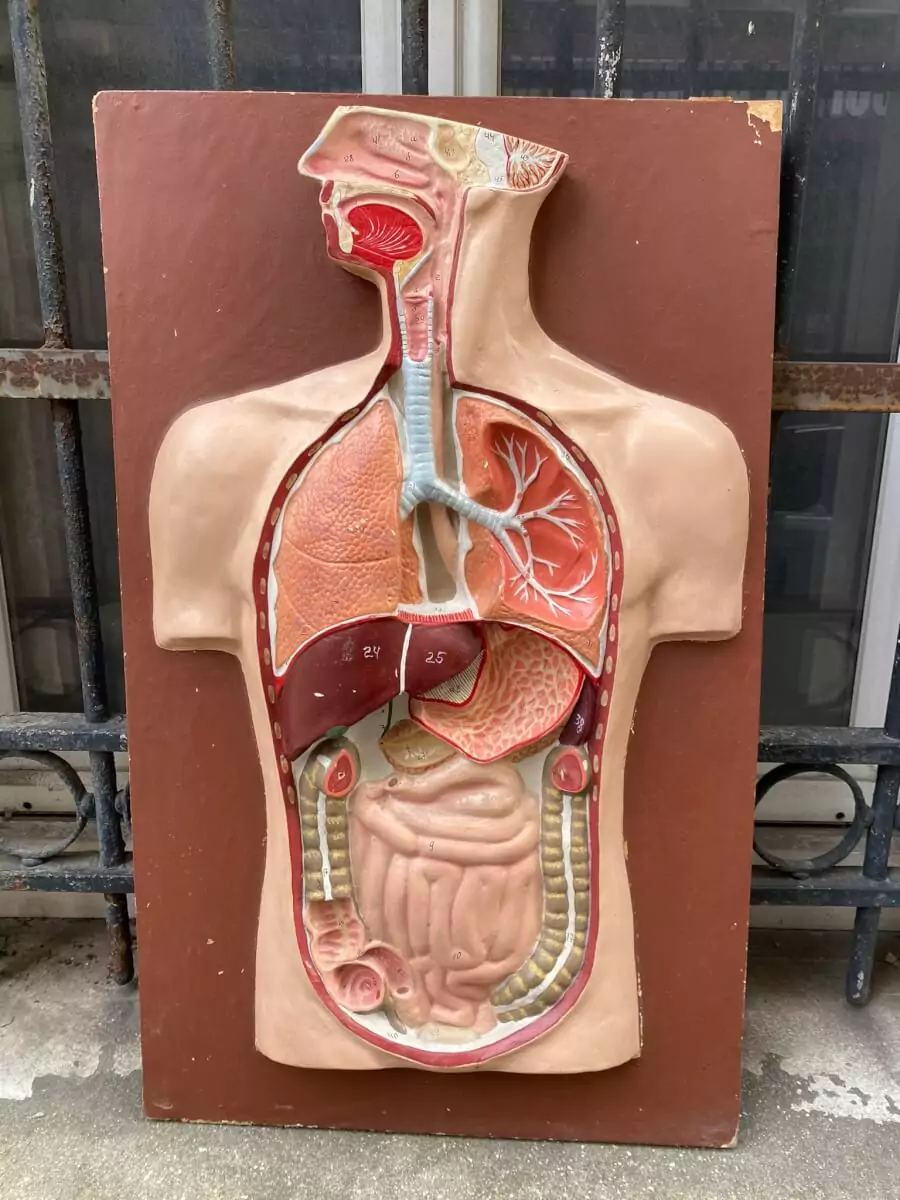
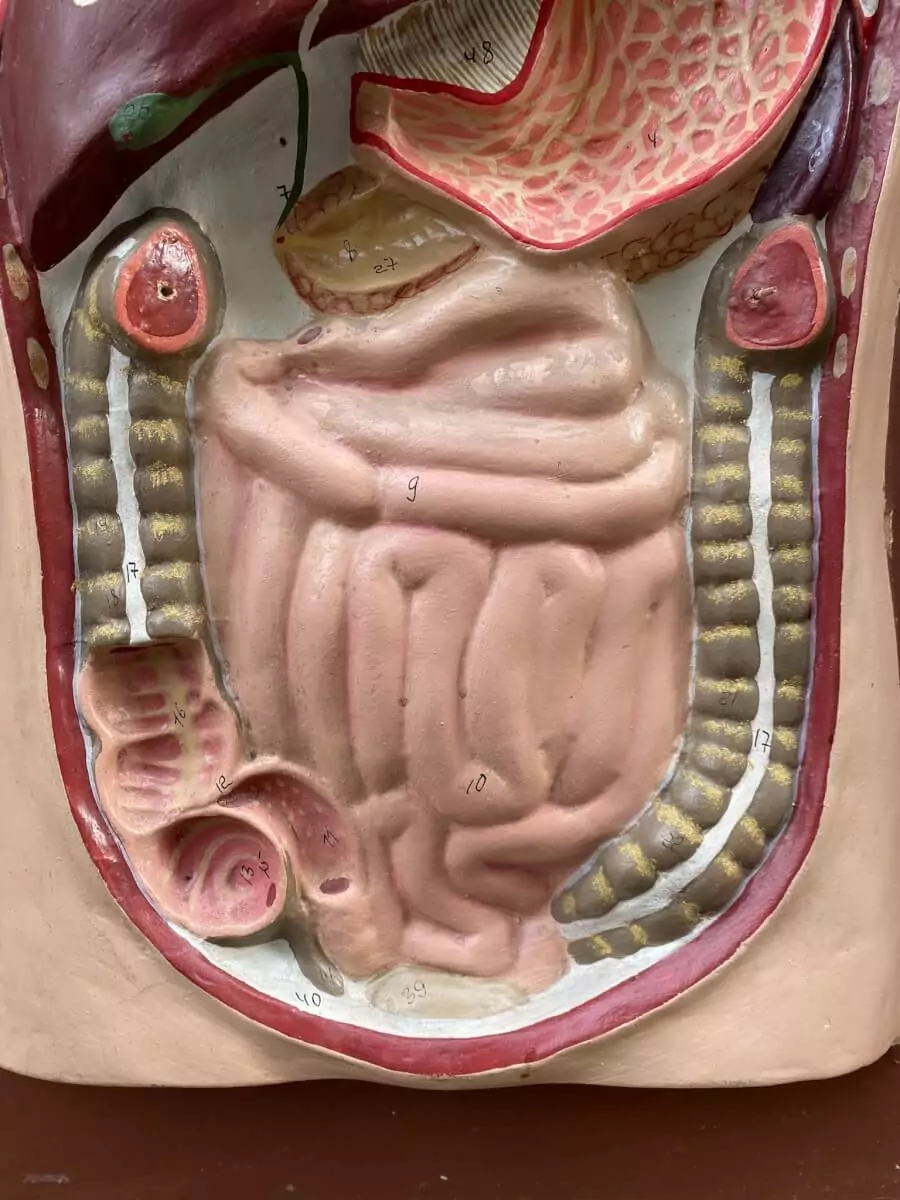
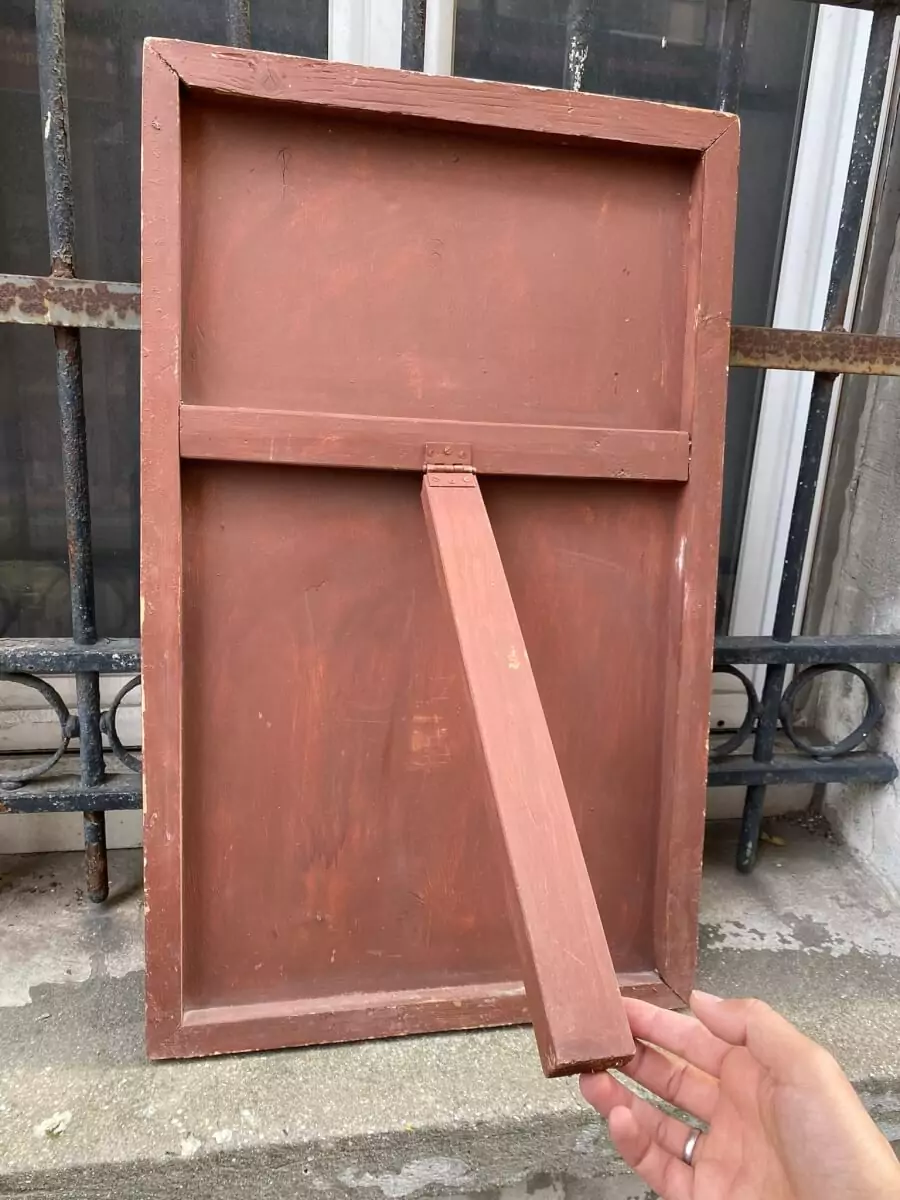
Soviet anatomical model from the 1960s in painted relief, showing a sectioned human torso from the head to the abdomen. Numbered organs, Cyrillic letters, wooden panel with a hinged leg to stand it on a table.
1 in stock
Message received, dear comrade.
Our information desk usually replies within 24 hours at the address provided.Peak of the space race won by the USSR: Sputnik 1 (1957), Gagarin's flight (1961), Tereshkova the first woman in orbit (1963). Khrushchev leads de-Stalinisation until 1964, then Brezhnev ushers in stagnation. Scientific and cultural high point.





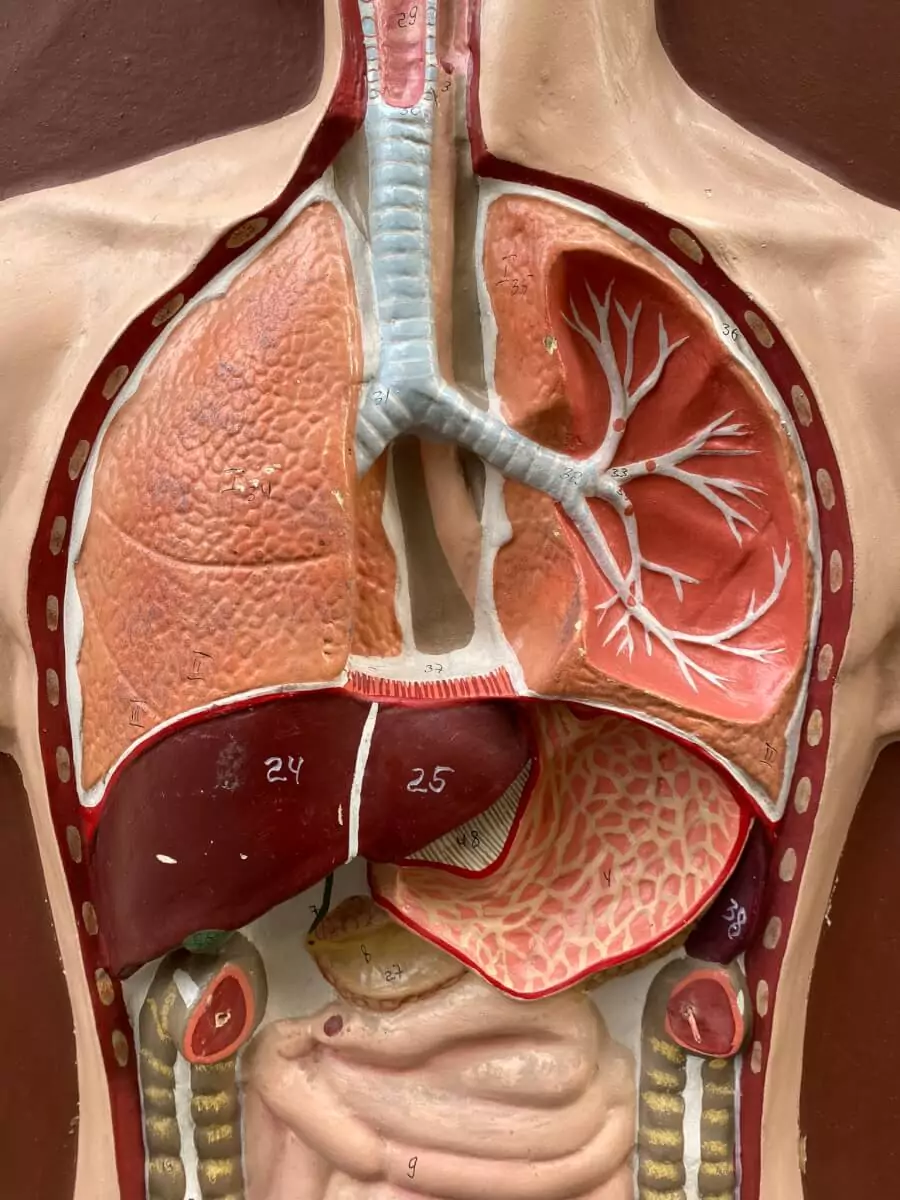
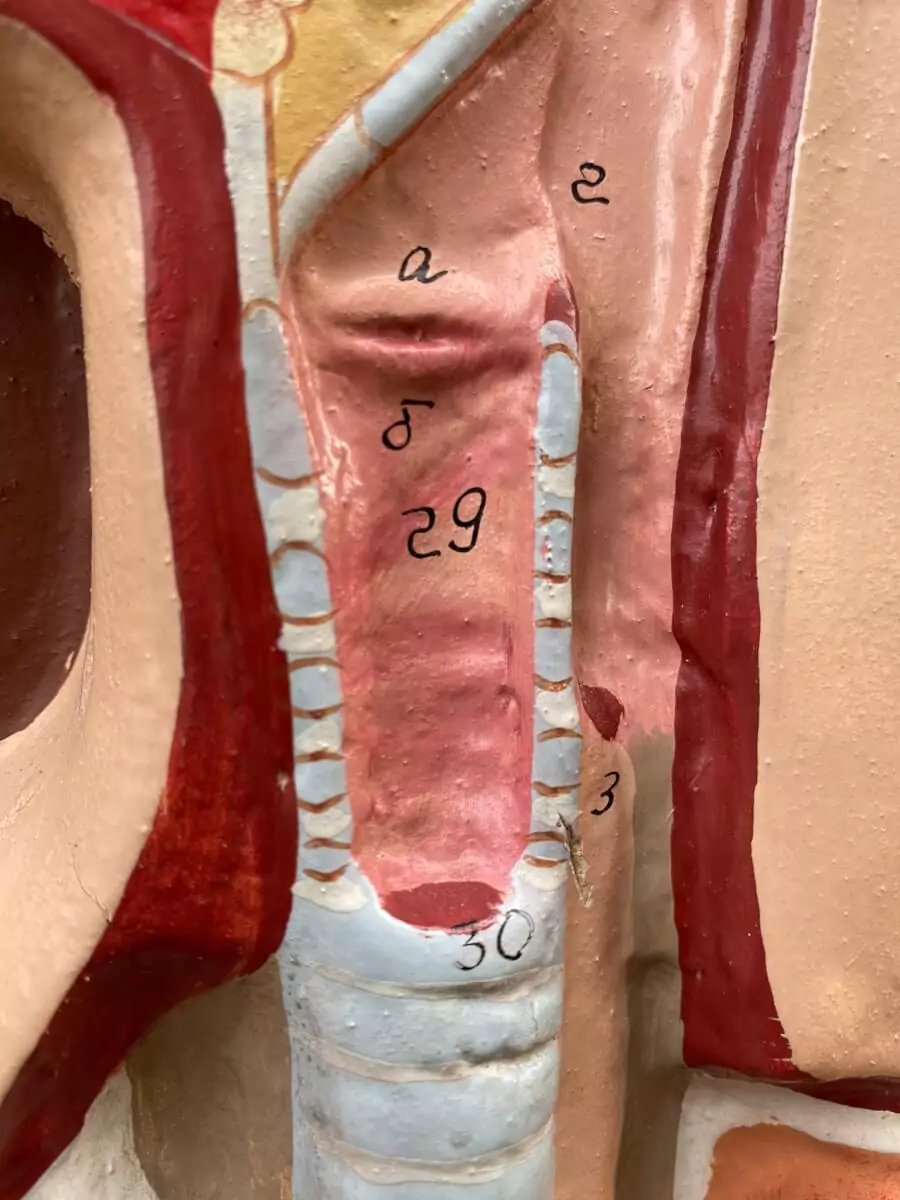
Soviet anatomical model from the 1960s, in painted relief, mounted on a brown wooden panel. It shows the opened human torso: the head in sagittal section with the nasal cavity, tongue, pharynx and a section of the brain, then the neck with the larynx and trachea, the chest with both lungs and the bronchial tree exposed on the left lung, and the abdomen with the liver, gallbladder, stomach opened to show its lining, spleen, small intestine, colon and caecum.
Each structure carries a reference painted in black or white: numbers from 1 to 48, Roman numerals I, II and III for the lung lobes, and the Cyrillic letters а, б, в, г (a, b, v, g) for subdivisions, such as the nasal conchae and the levels of the larynx. These references matched the key used by the teacher during the lesson. On the back, the panel is reinforced by a wooden frame and crossbar, which carries a hinged leg so the model can stand at an angle on a table or desk.
Schools and institutes across the USSR were equipped with wall charts, models and reliefs made in series for teaching the natural sciences. This type of relief was used in biology lessons on human anatomy, where it stayed on display in the classroom. Its reading by numbers and letters only, with no text, is typical of Soviet teaching material of the period.
A decorative scientific object, in good condition, which stands on a piece of furniture with its hinged leg.
Additional information
| Weight | 6 kg |
|---|---|
| Dimensions | 50 × 40 × 30 cm |