




Soviet Aircraft Machmeter Chislo M - Mach 0.4 to 2.5 - USSR Jet Cockpit

Soviet Aircraft Machmeter Chislo M - Mach 0.4 to 2.5 - USSR Jet Cockpit
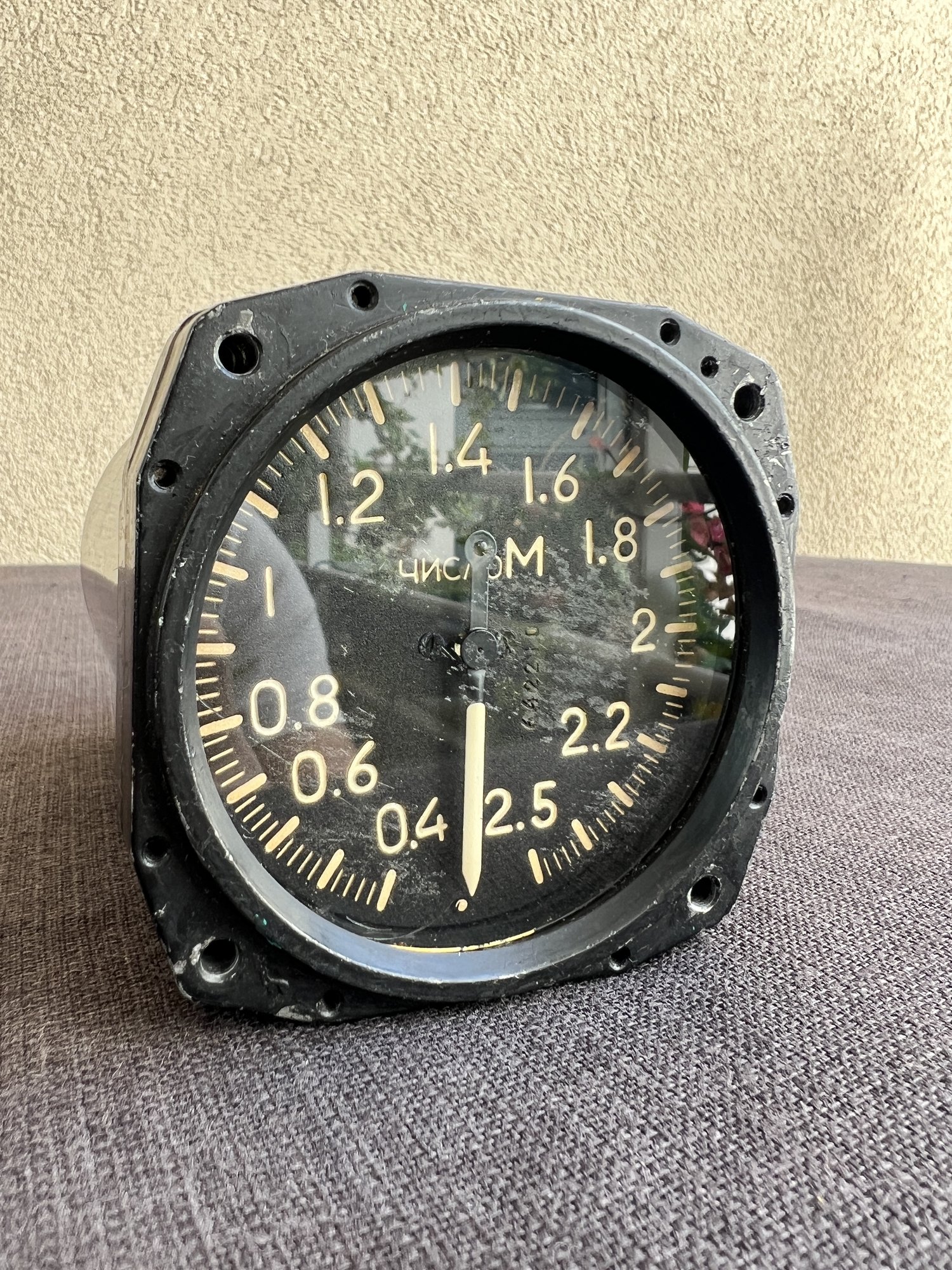
Soviet cockpit Machmeter reading from Mach 0.4 to 2.5, the gauge that showed speed relative to the speed of sound aboard USSR supersonic fighters.
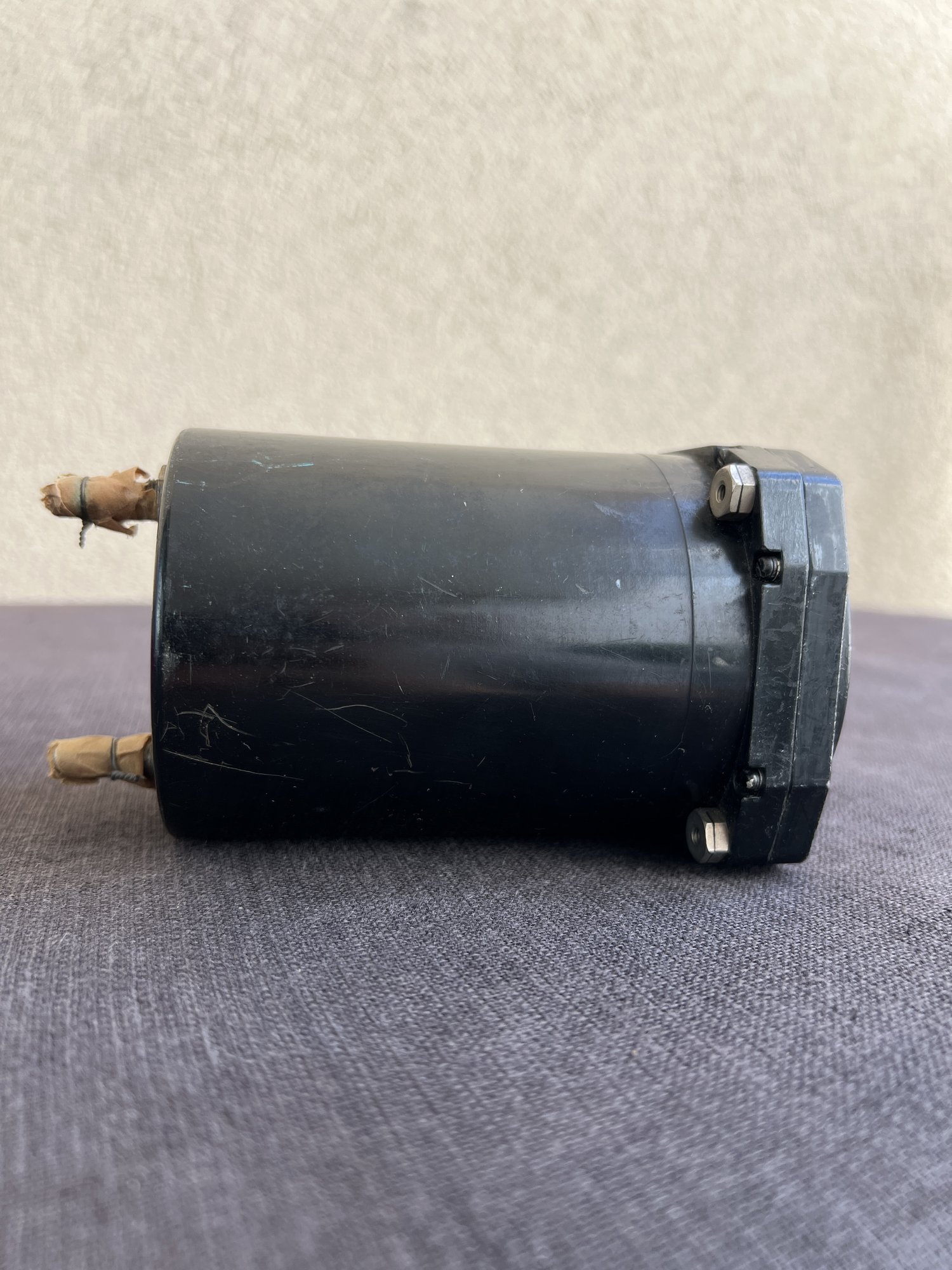
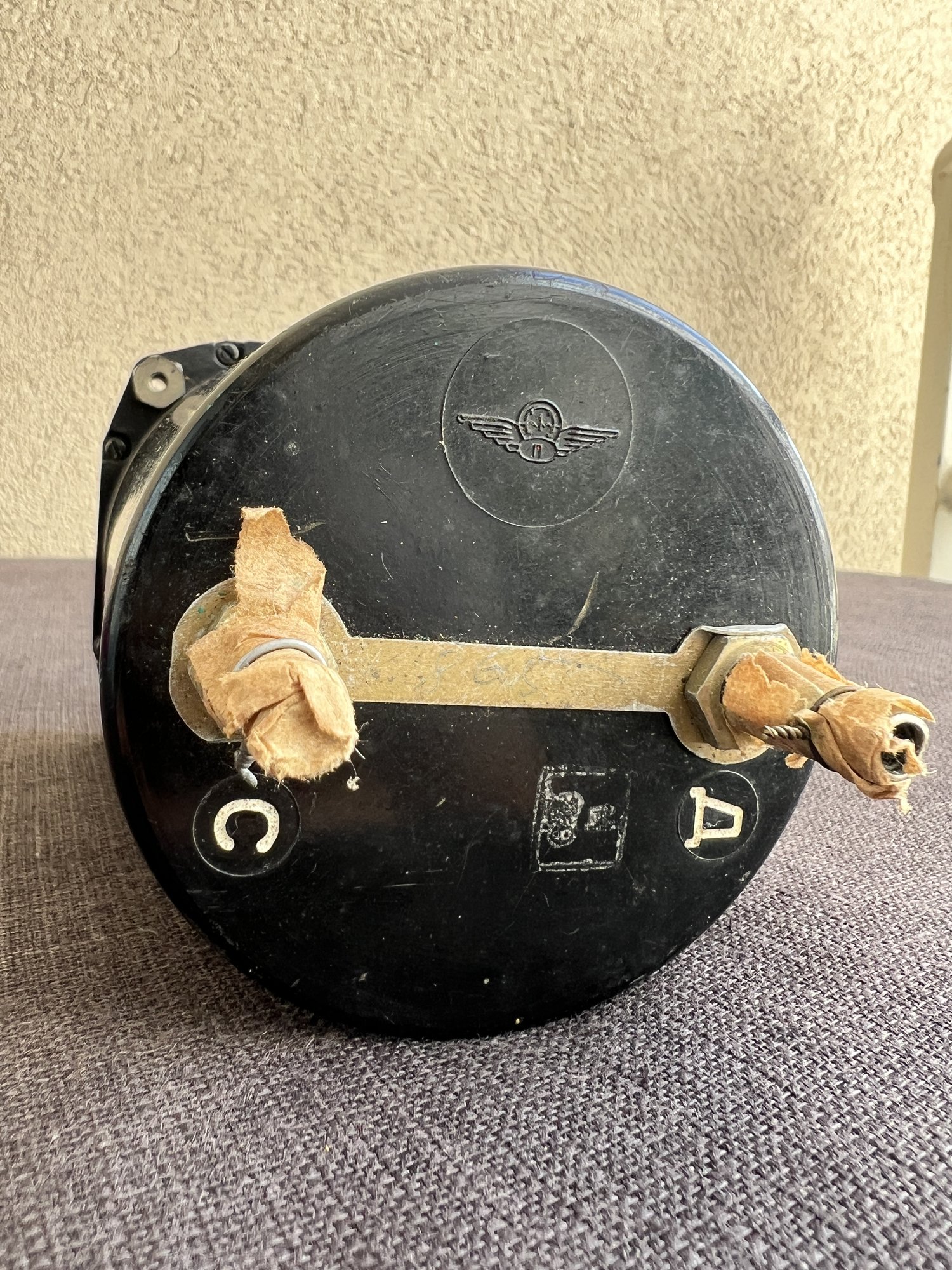
Both pressure ports still fitted with their protective caps.
Sold
Sale price
For newsletter subscribers. One price per month.
Like this model?
We sometimes find another one. Leave your email and we will let you know when it is listed.
Soviet Aircraft Machmeter Chislo MOne email per arrival of this model, one-click unsubscribe. Your address is used for nothing else.

Message received, dear comrade.
Our information desk usually replies within 24 hours at the address provided.Related products



Peak of the space race won by the USSR: Sputnik 1 (1957), Gagarin's flight (1961), Tereshkova the first woman in orbit (1963). Khrushchev leads de-Stalinisation until 1964, then Brezhnev ushers in stagnation. Scientific and cultural high point.






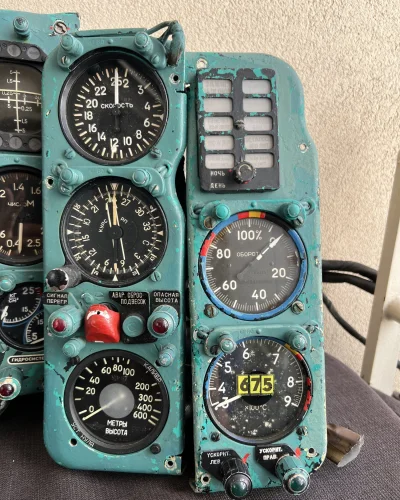
Soviet aircraft cockpit Machmeter. The dial reads ЧИСЛО М (Mach number) and is graduated from Mach 0.4 to Mach 2.5. The instrument measures 12 x 8 x 8 cm including the mounting flange.
The Mach number is the ratio between the aircraft’s speed and the speed of sound in the surrounding air. A Machmeter derives it from two pressures, which is what the two letters on the back of the case refer to: С for статическое (static pressure) and Д for динамическое (dynamic pressure), the two ports that connected to the aircraft’s pitot-static system. The instrument is purely pneumatic and needs no electrical supply. Both ports still carry their paper protective caps tied with wire, and a factory quality control stamp sits on the back next to a moulded winged emblem.
A scale reaching Mach 2.5 only makes sense in an aircraft able to fly at more than twice the speed of sound. The Soviet Union reached that class in the late 1950s with the MiG-21 and the Su-9, followed by the Su-15 and the Tu-128 interceptor. This indicator probably dates from the 1960s, when these Mach 2 fighters and interceptors formed the backbone of Soviet air defence. A link with the УМ-2,5 indicator series (Mach number indicator up to 2.5) is tempting, as the reading range matches exactly. The protective caps still in place suggest another hypothesis: a spare part kept in stock and never fitted to an instrument panel.
Wear from use on the flange and case, glass in place, needle present. Sold as a collector’s and display piece, not certified for aviation use.
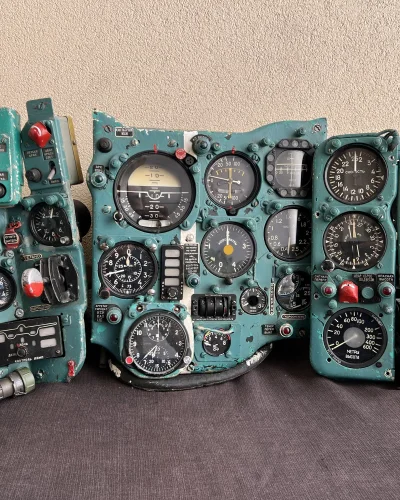
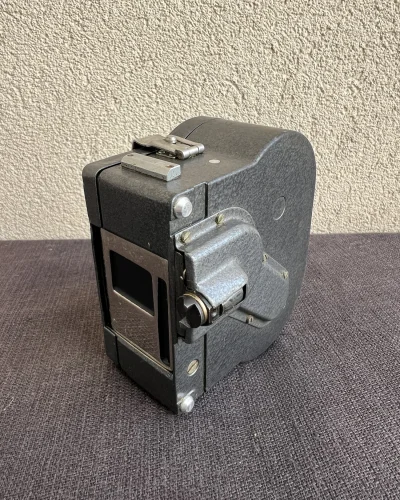
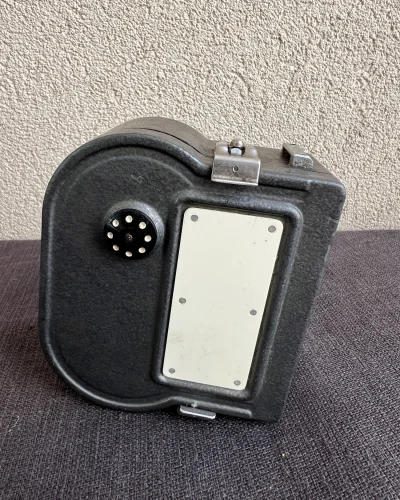
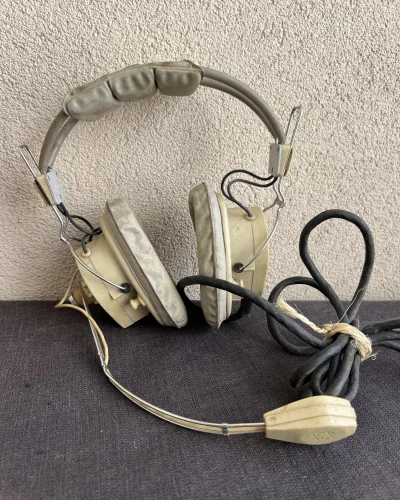
This piece is part of a group of equipment from a Soviet MiG-21 built from 1968 onwards, kept in the reserve collection of a military museum in Germany.
Additional information
| Weight | 0.8 kg |
|---|---|
| Dimensions | 20.0 × 20.0 × 15.0 cm |

