




Soviet Bas-Relief Palanga - Baltic Sea Resort - Lithuania USSR 1964
Soviet Bas-Relief Palanga - Baltic Sea Resort - Lithuania USSR 1964
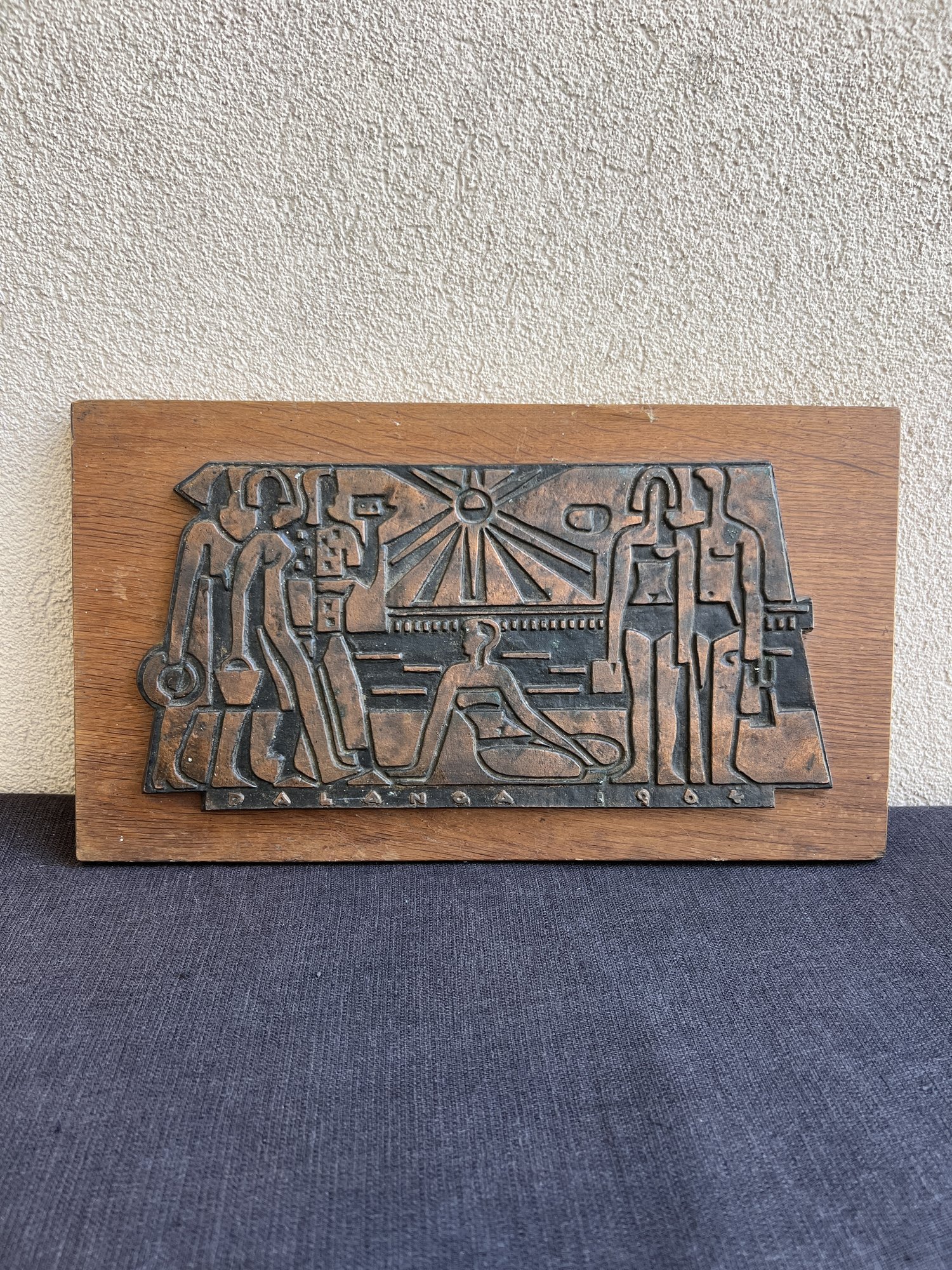
A 1964 bas-relief plaque from Palanga, the leading seaside resort of Soviet Lithuania on the Baltic Sea.
Copper-painted aluminium on a wooden panel, ready to hang, showing the honest patina of six decades.
Sold
Sale price
For newsletter subscribers. One price per month.
Like this model?
We sometimes find another one. Leave your email and we will let you know when it is listed.
Soviet Bas-Relief PalangaOne email per arrival of this model, one-click unsubscribe. Your address is used for nothing else.
Message received, dear comrade.
Our information desk usually replies within 24 hours at the address provided.Related products
Khrushchev deposed in October. Brezhnev comes to power and ushers in stagnation.



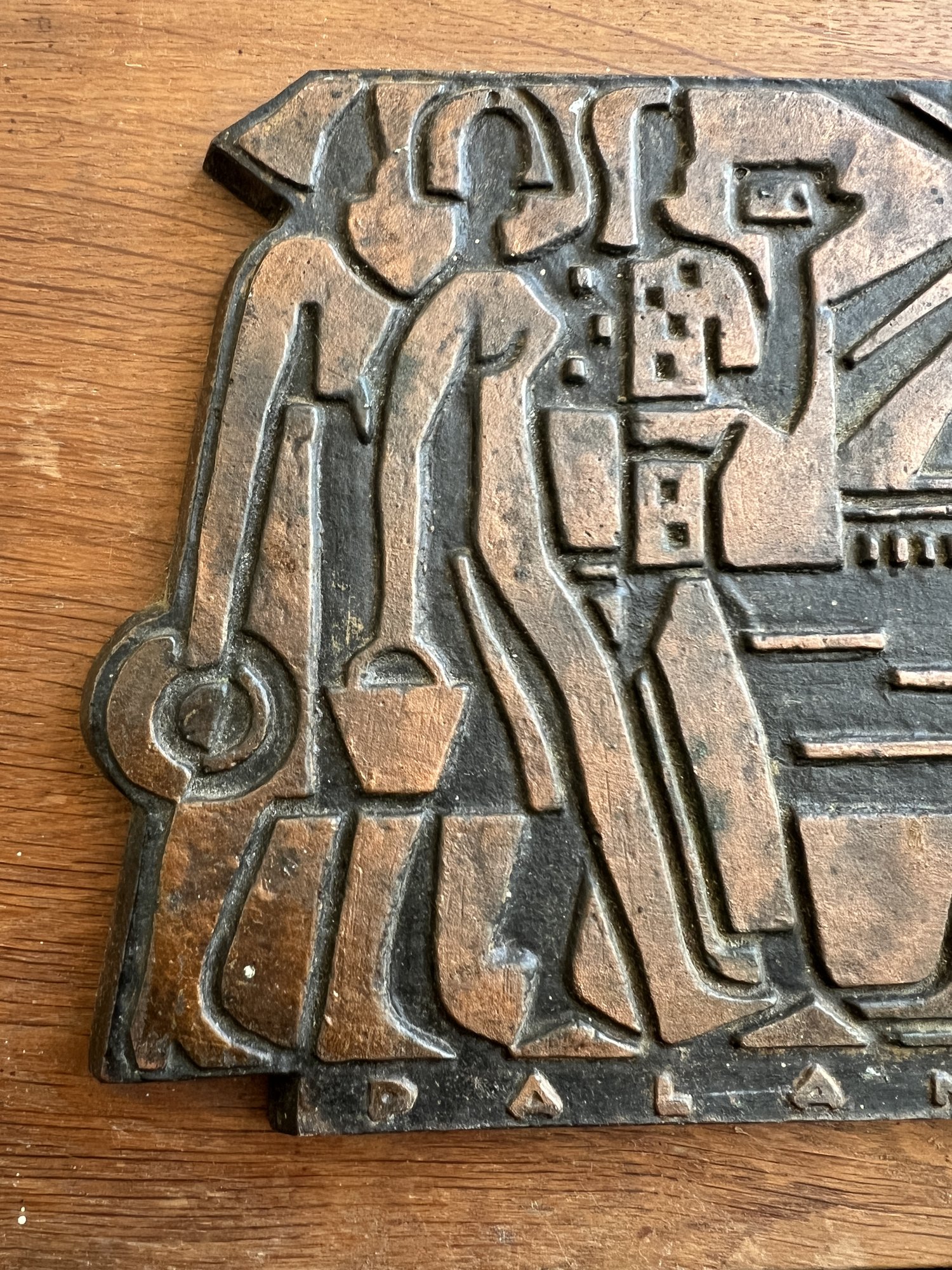
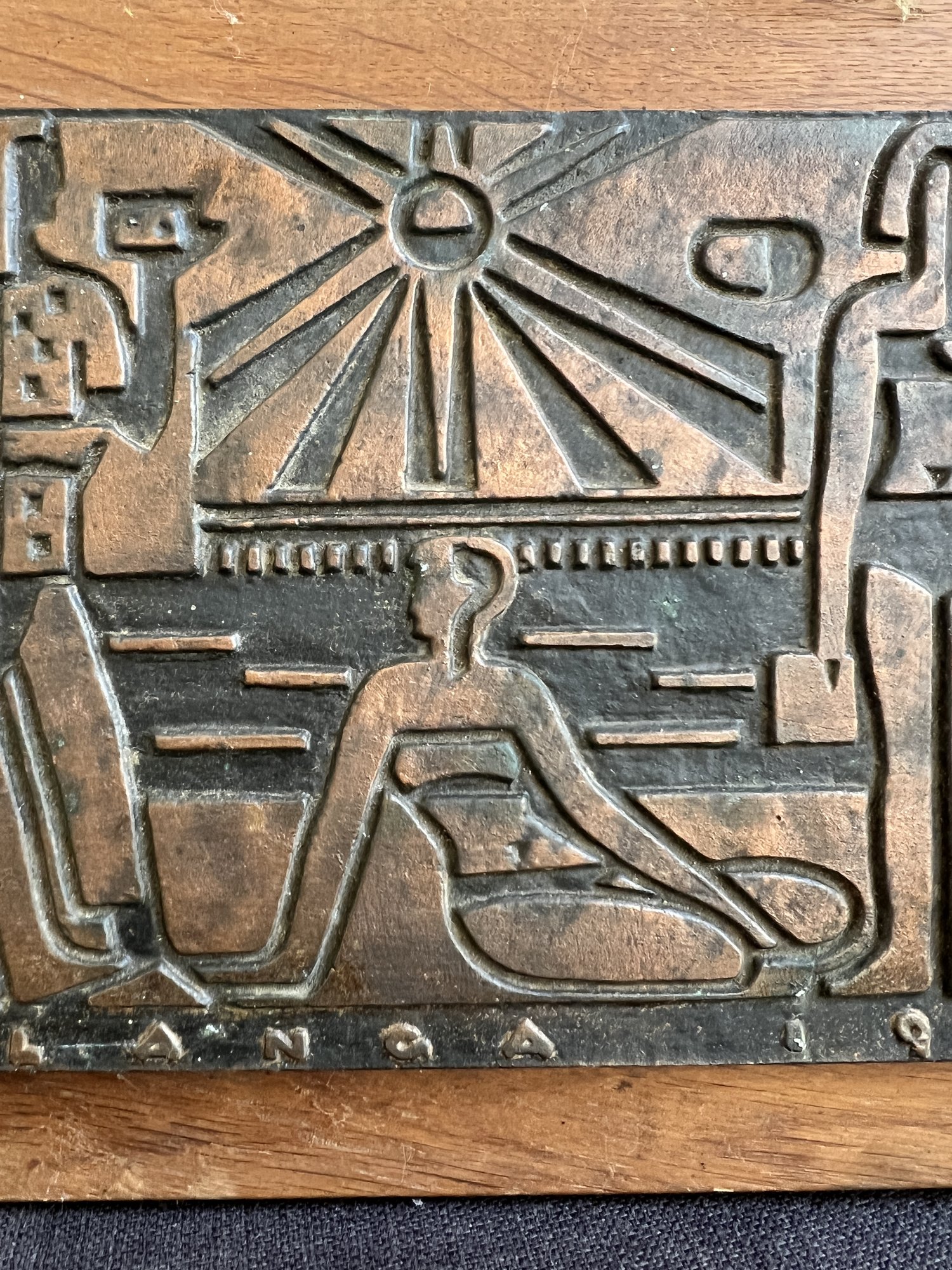
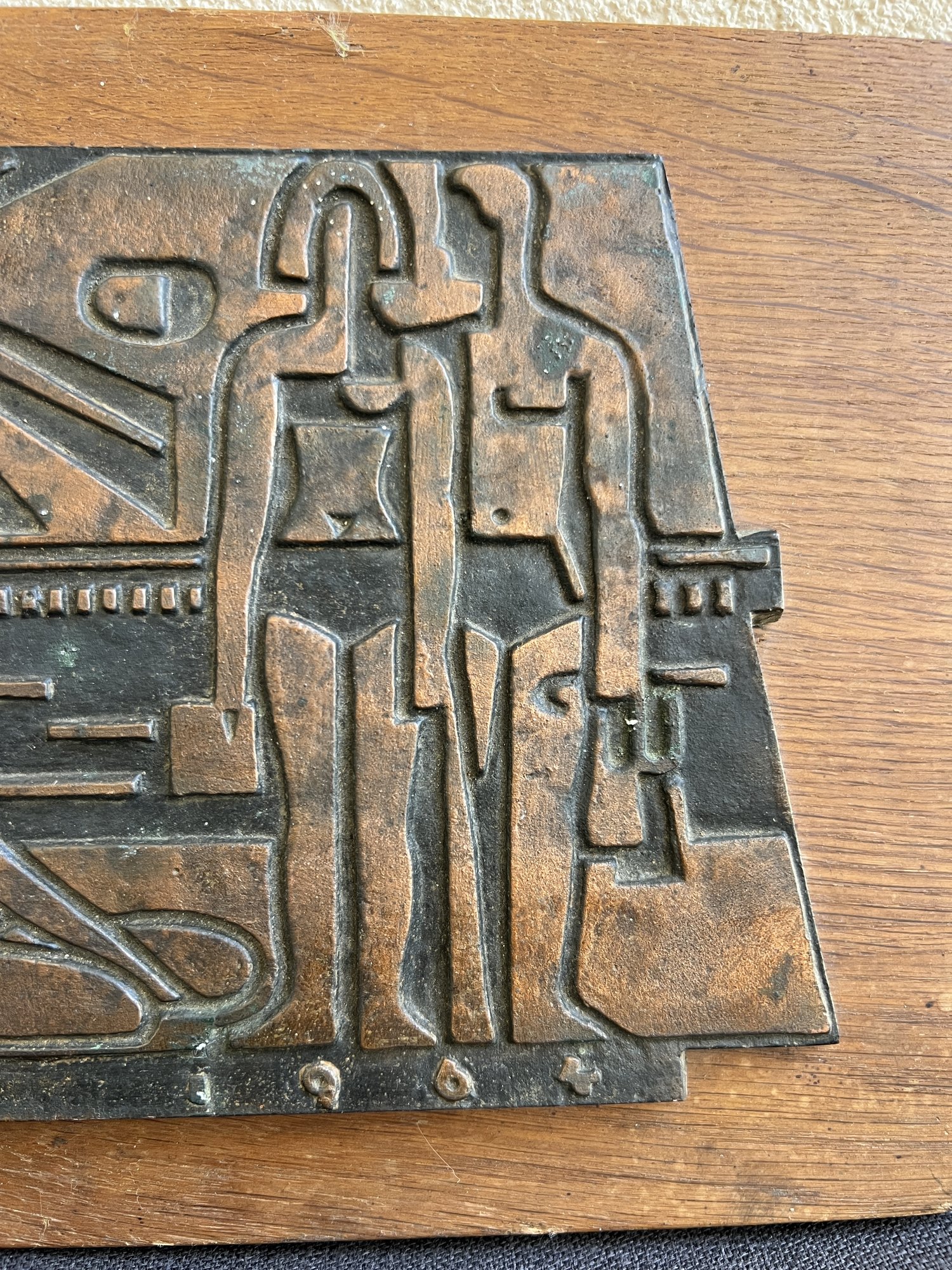
Soviet bas-relief in copper-painted aluminium, mounted on a 36 x 20.5 cm wooden panel. The cast lettering PALANGA 1964 gives both place and year. The scene shows the beach, with bathers, a radiant sun and the shoreline, exactly what the town was known for.
Palanga, on the Baltic coast of the Lithuanian SSR, was the republic’s main seaside resort and one of the busiest on the Soviet Baltic. Every summer its sanatoriums and trade union rest homes received holidaymakers from across the USSR. In 1963, a year before this plaque was made, the former Tyszkiewicz family palace in the town opened as the Amber Museum. The name is spelled in the Latin alphabet, in its Lithuanian form, rather than in Cyrillic (Паланга), a common feature on objects produced in the Baltic republics.
The geometric figures probably belong to the Lithuanian modernism of the 1960s, when Baltic applied arts of the Thaw era moved away from the strictest socialist realism. The piece was sold as a holiday souvenir or made for a commemorative purpose.
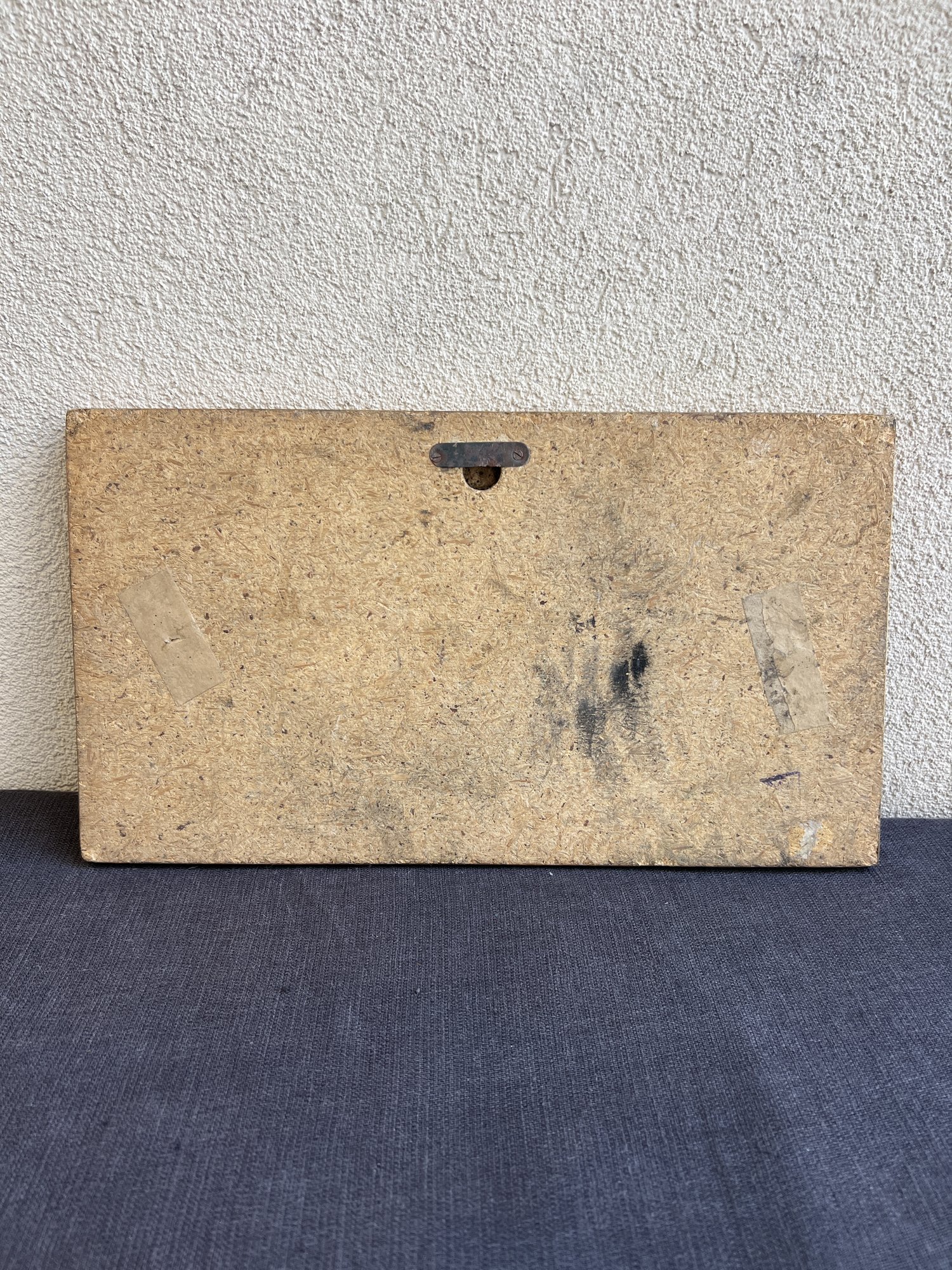
Honest patina from age and a few spots of oxidation on the metal. The back has a metal wall hanger and remains of old adhesive tape.
Additional information
| Weight | 1.5 kg |
|---|---|
| Dimensions | 45.0 × 30.0 × 10.0 cm |

