Soviet Chadburn Engine Order Telegraph - Twin Dial - 1964 - Aluminium
$2,014.99Unique piece
Soviet Chadburn Engine Order Telegraph - Twin Dial - 1964 - Aluminium
$2,014.99Unique piece
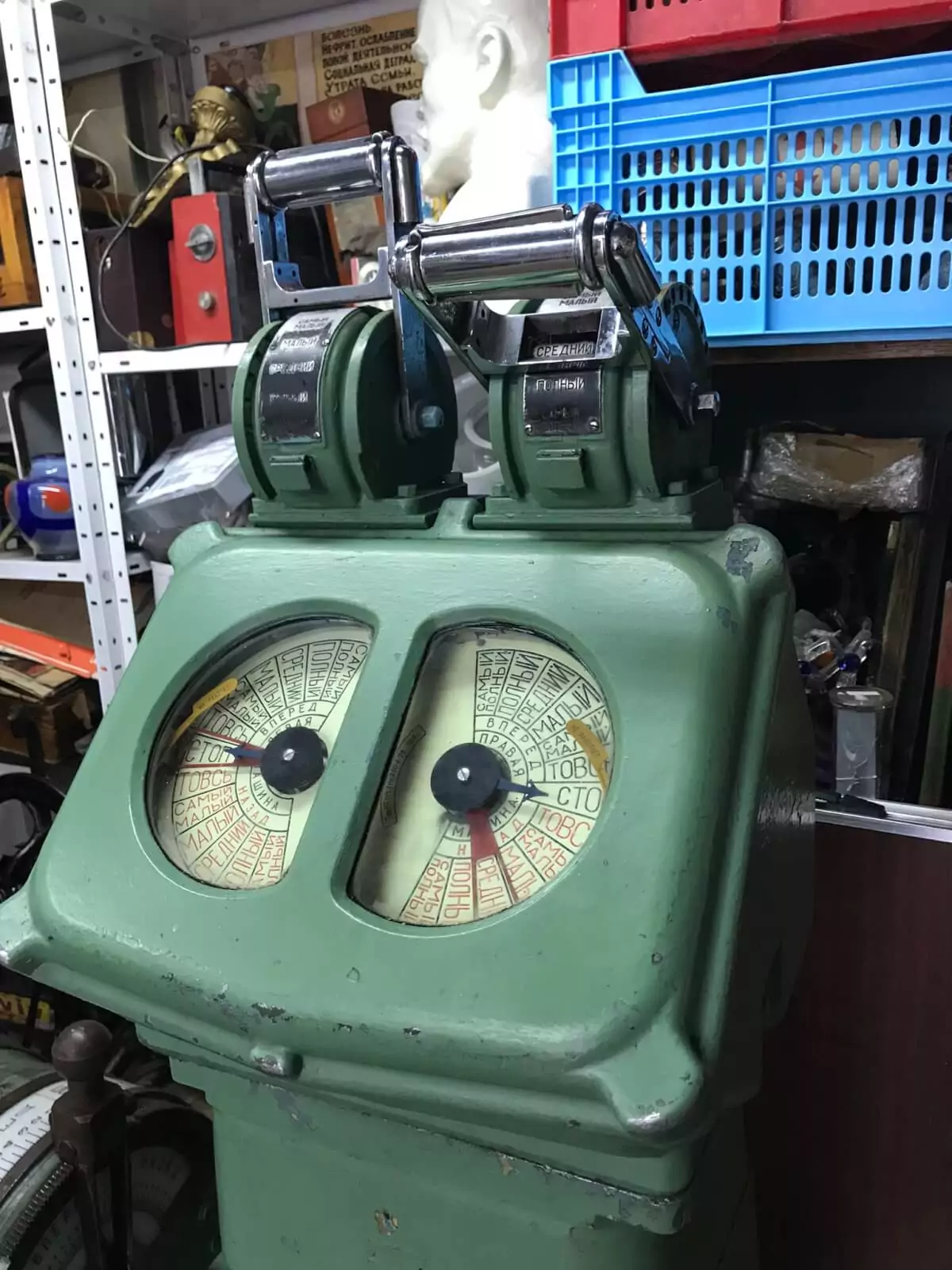
Soviet twin-dial Chadburn engine order telegraph for a twin-engine ship, dated 1964, in aluminium, not radioactive, with a second instrument, a two-lever engine control unit. About 125 cm tall and 80 kg, collection in person in Paris only, unless you arrange transport yourself.
1 in stock
Message received, dear comrade.
Our information desk usually replies within 24 hours at the address provided.Khrushchev deposed in October. Brezhnev comes to power and ushers in stagnation.



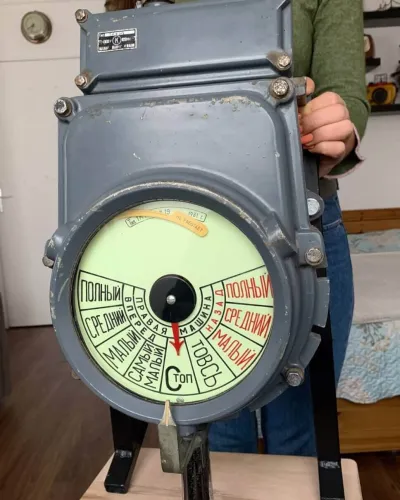
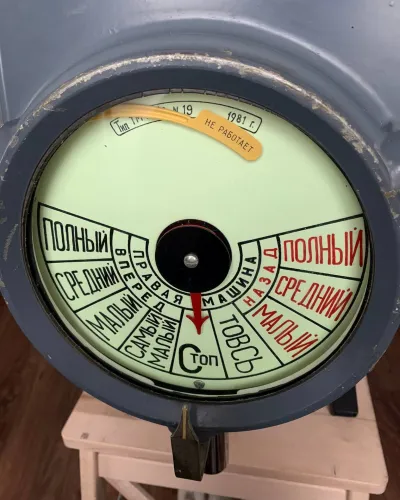
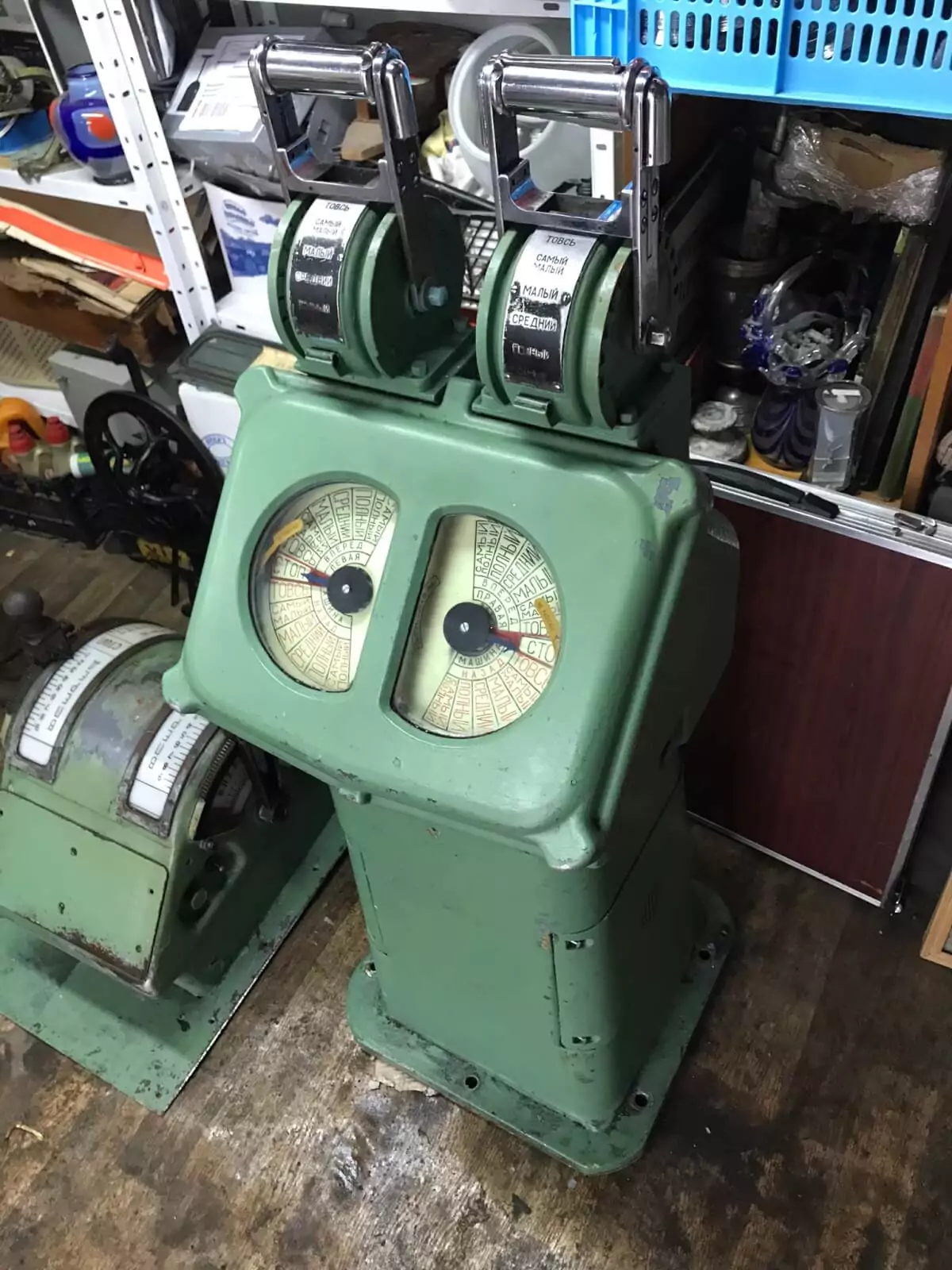
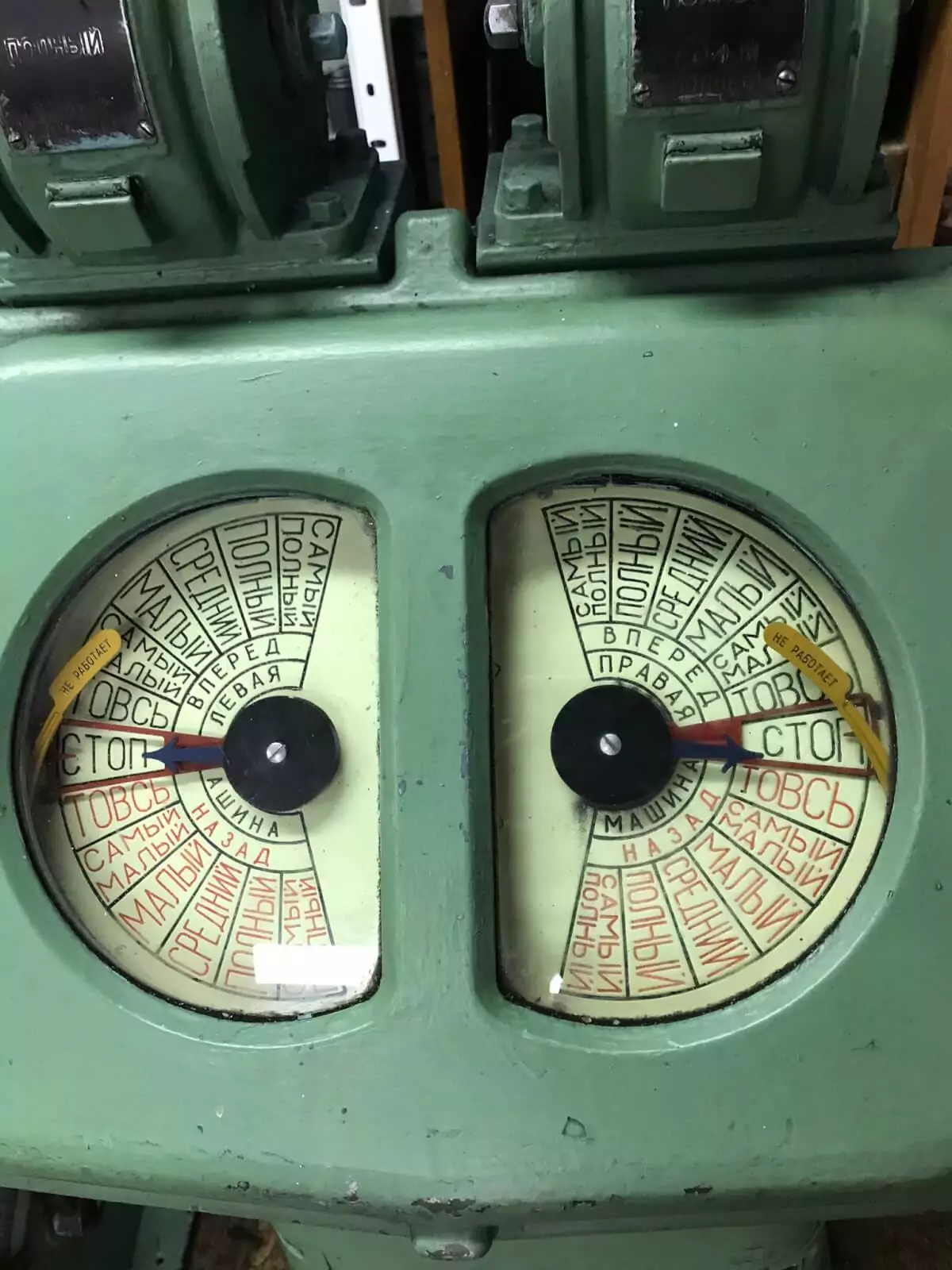
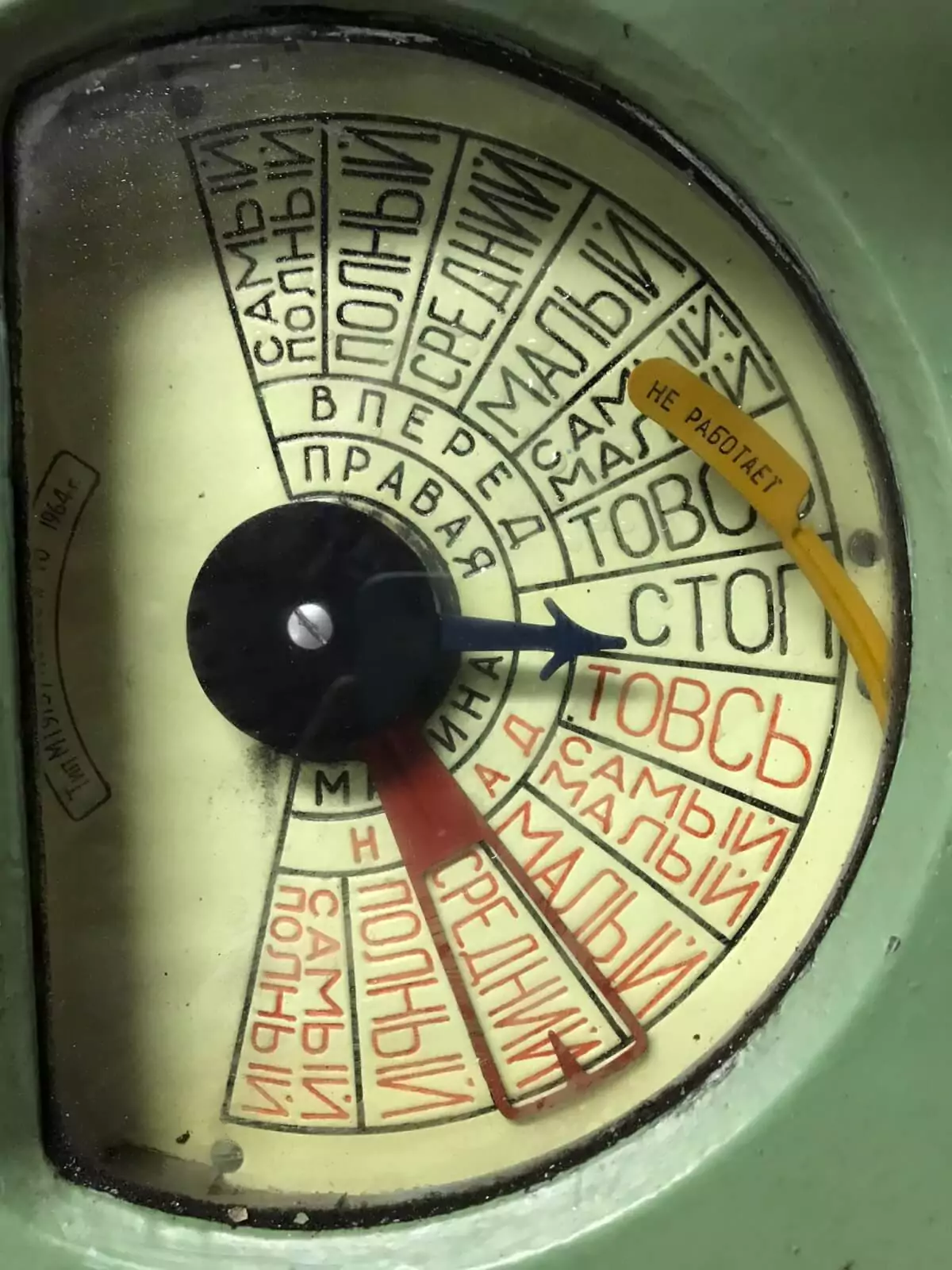
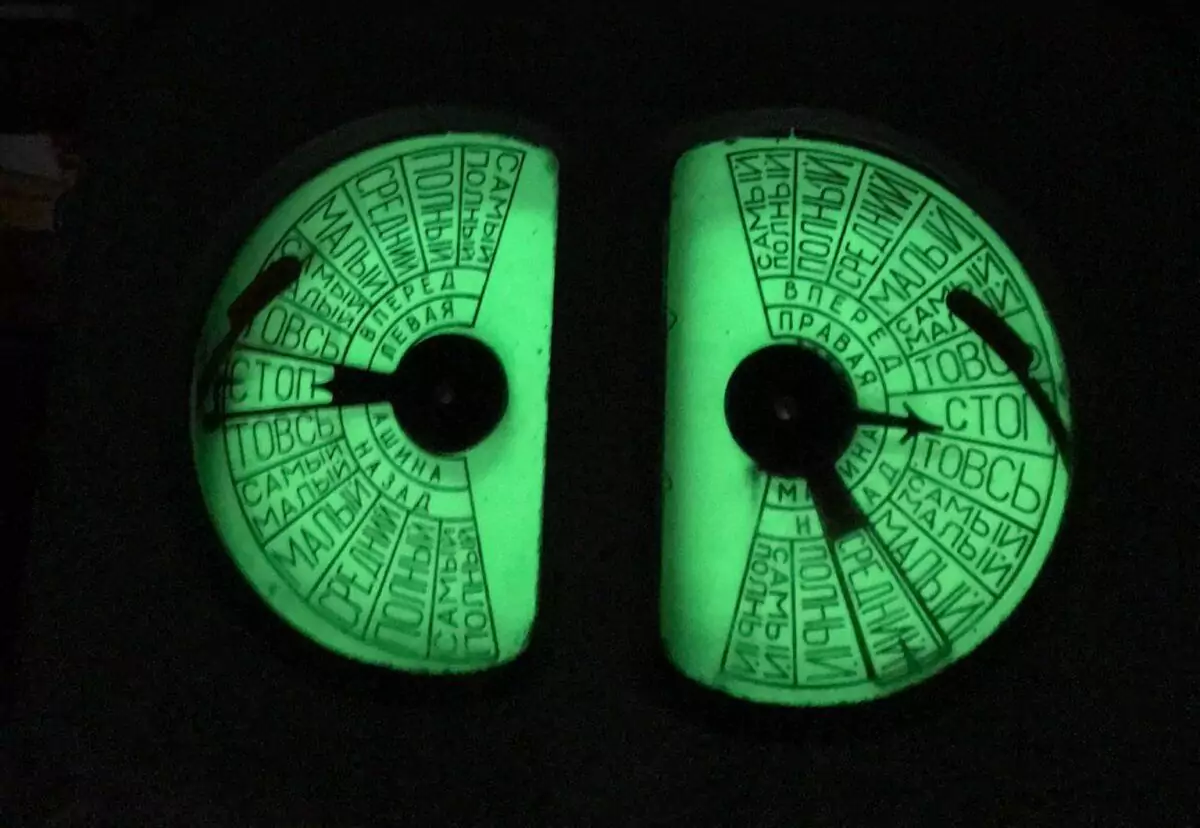
Soviet twin-dial Chadburn engine order telegraph, dated 1964 on the dial, in aluminium, not radioactive. It passed engine orders from the bridge to the engine room of a twin-engine ship: one dial for the port engine (ЛЕВАЯ МАШИНА), the other for the starboard engine (ПРАВАЯ МАШИНА).
These instruments are often simply called “chadburns”, after the Chadburn firm of Liverpool, the largest maker of ship’s telegraphs, which began building them in 1863 and took out a patent in 1870. The name became generic.
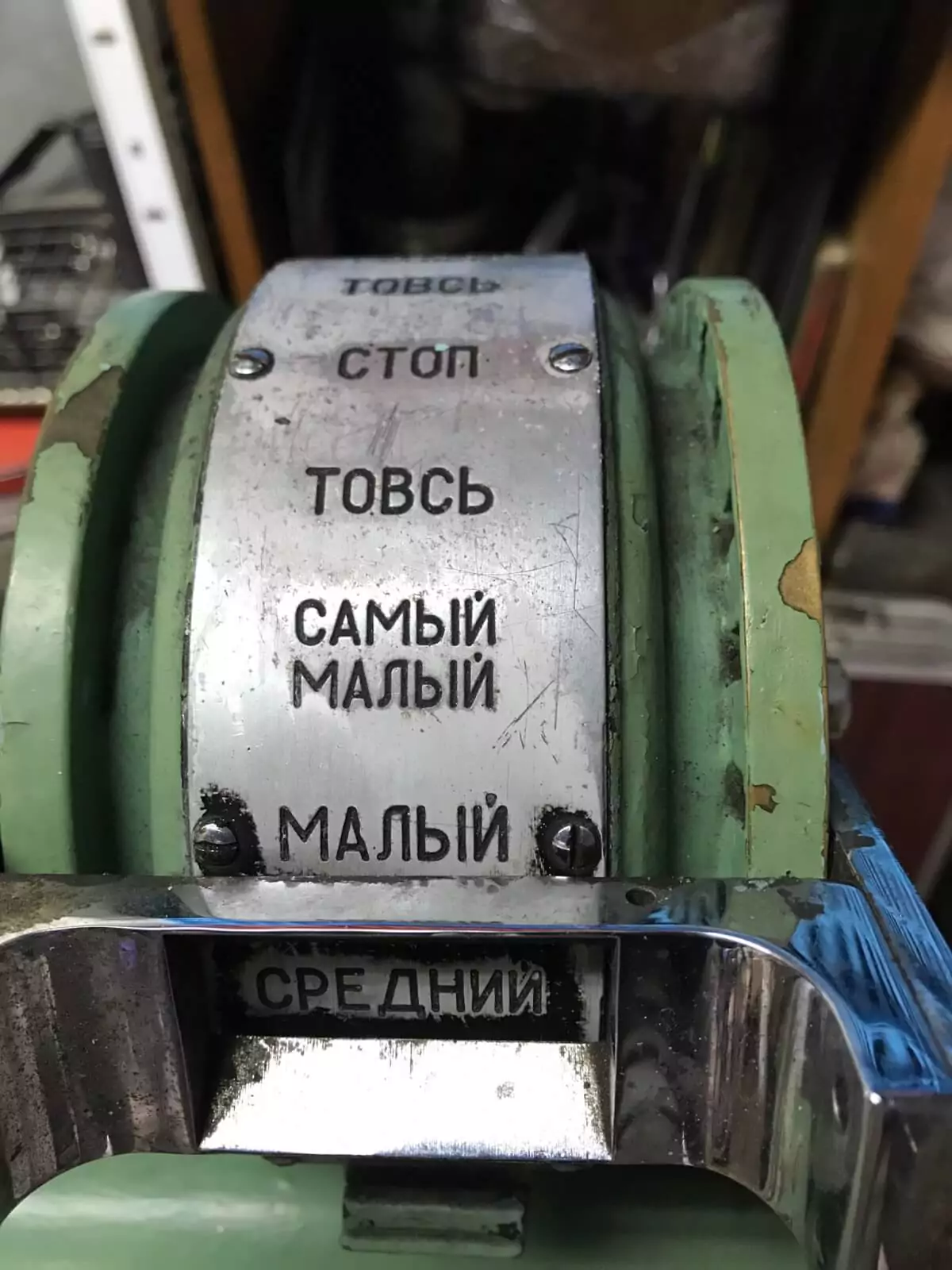
The principle is the same everywhere. On the bridge, the handle is set to the required order, the pointer moves at the same time on the instrument in the engine room, and the engineer answers by bringing his own handle into line to confirm. On Soviet ships the orders ran from СТОП (stop) and ТОВСЬ (stand by) up to САМЫЙ ПОЛНЫЙ (maximum speed). On this dial, ahead is marked in black and astern in red.
Each handle carries a small drum that shows the selected order in a window. Both dials are luminous, as our photo taken in the dark shows. A small yellow flag marked НЕ РАБОТАЕТ (“not working”) was most likely used to show that an engine was out of service. Green paint with chips and losses on the edges, the base and the drums, normal wear for shipboard equipment.
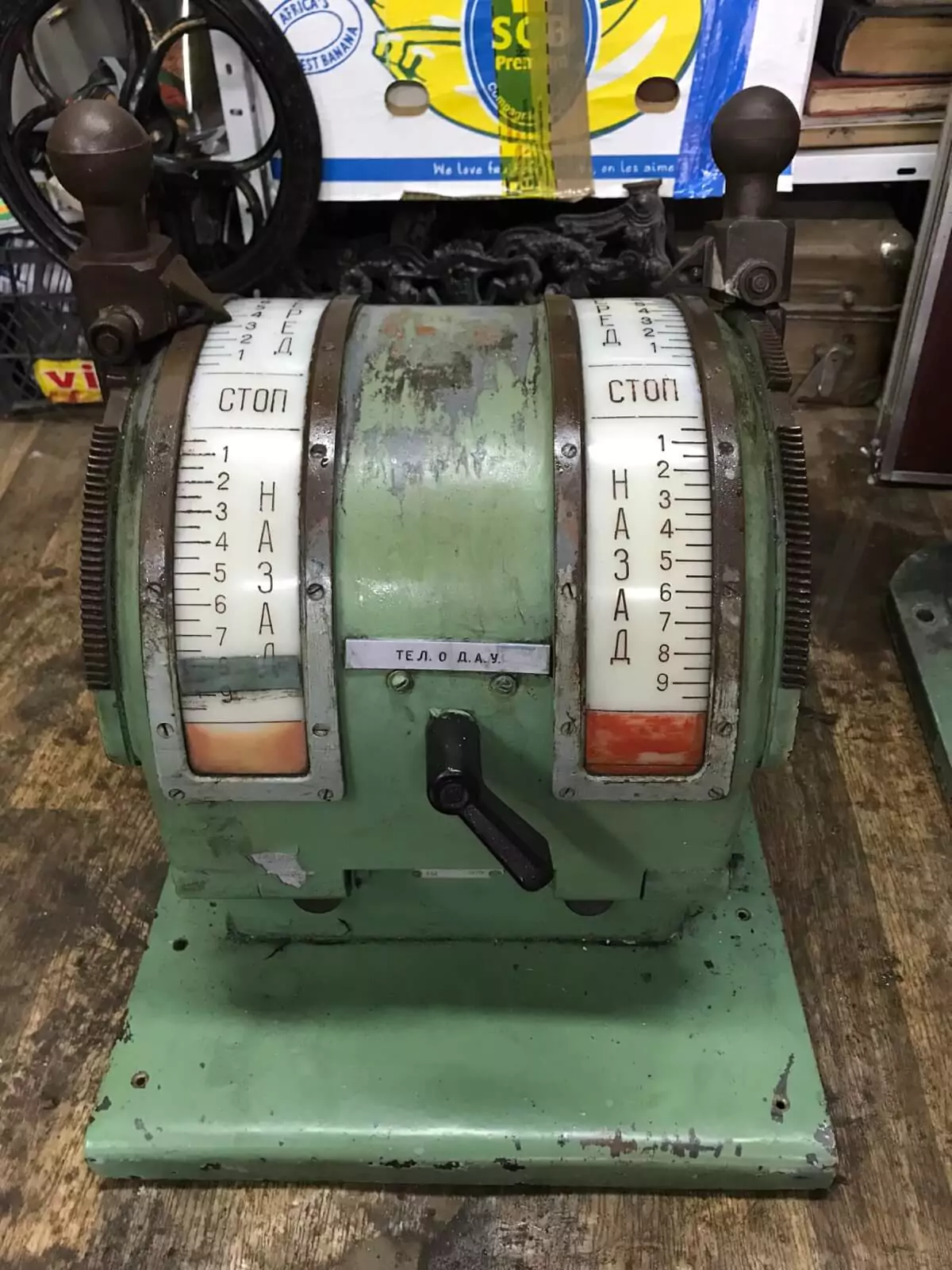
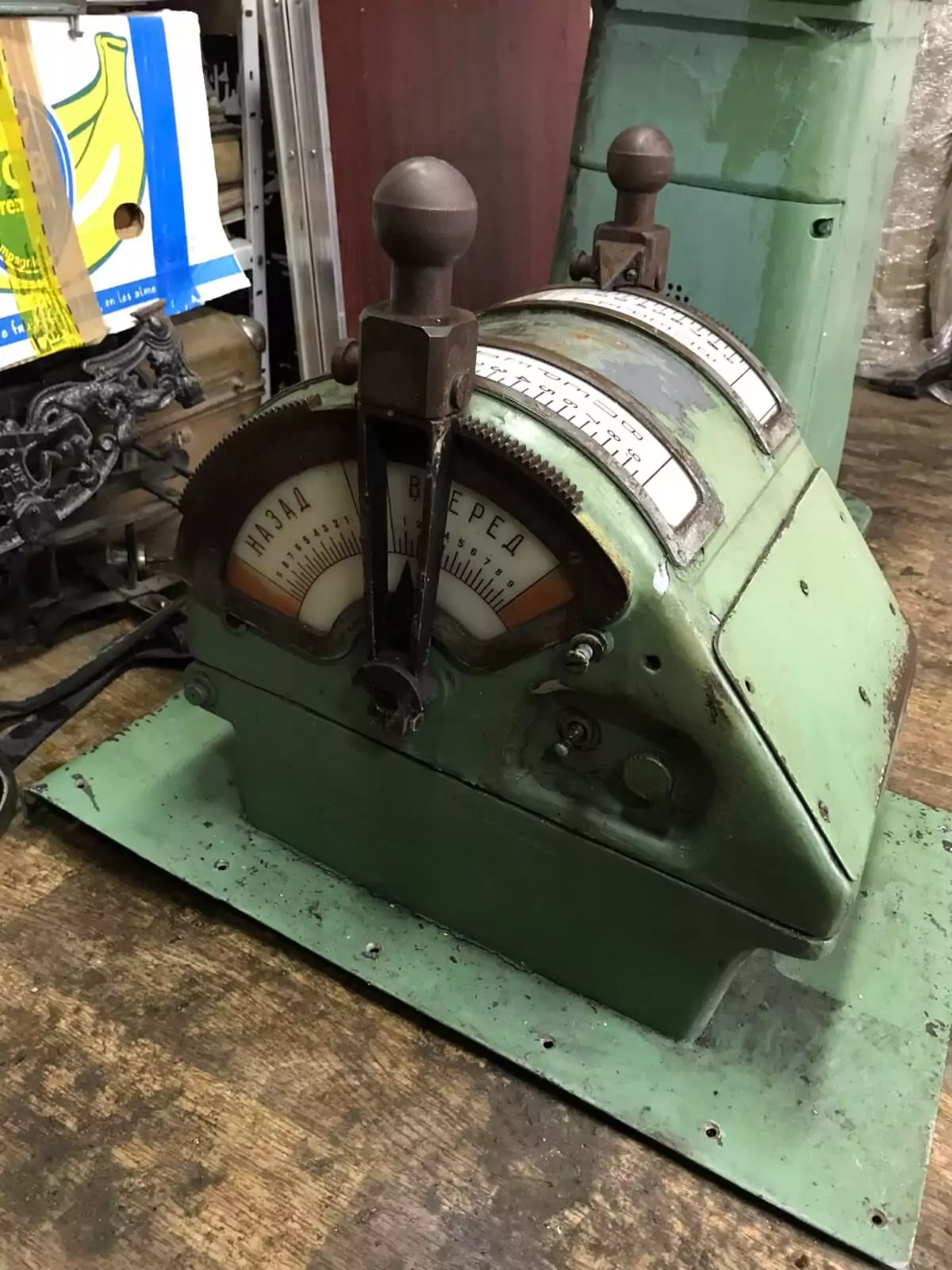
A second instrument is included in the price: a two-lever control unit, one lever per engine, on its mounting plate. Each lever has a scale graduated from 1 to 9 ahead (ВПЕРЕД) and astern (НАЗАД) on either side of СТОП, and a central switch carries the plate “ТЕЛ. О Д.А.У.”. It most likely belonged to a remote engine control system (ДАУ, remote automated control), and the switch was probably used to change over from the telegraph (ТЕЛ.) to remote control (Д.А.У.). Green paint worn in places.
The telegraph stands about 125 cm tall with the handles. Total weight about 80 kg. Given the weight, collection in person in Paris only, unless you arrange transport yourself.
Additional information
| Weight | 80 kg |
|---|---|
| Dimensions | 120 × 60 × 50 cm |