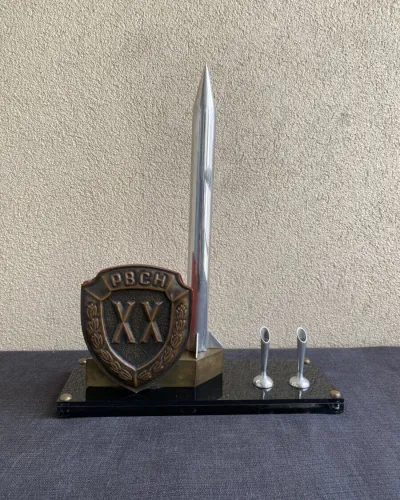
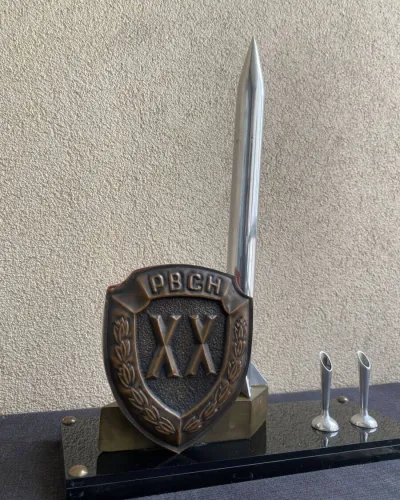
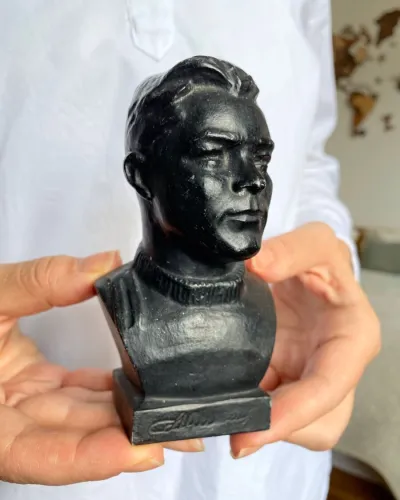
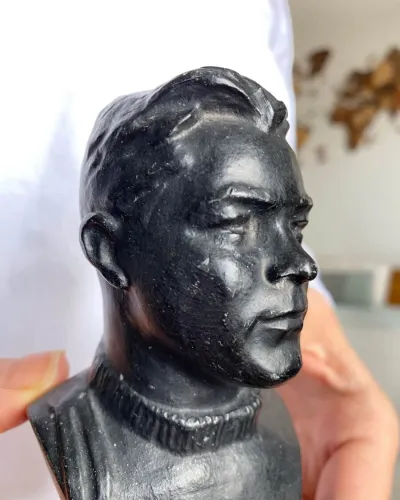
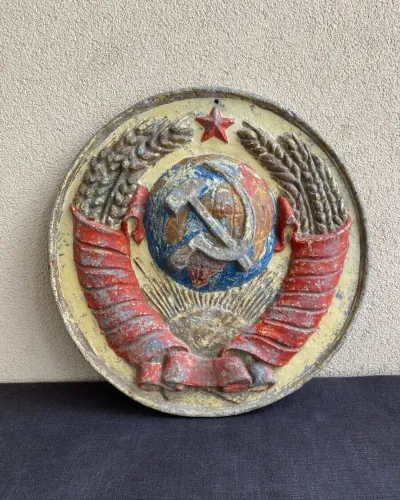
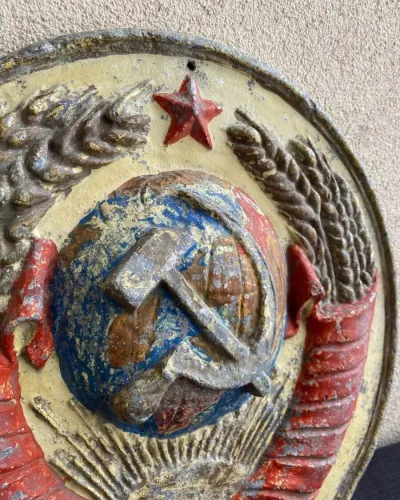
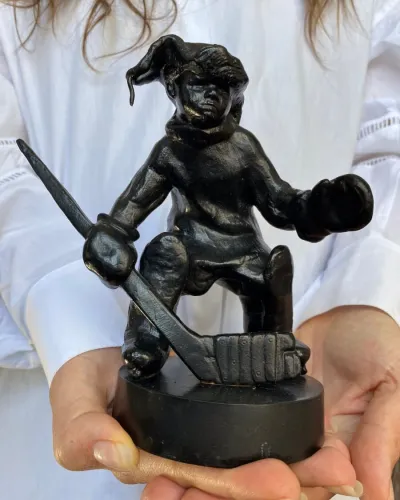
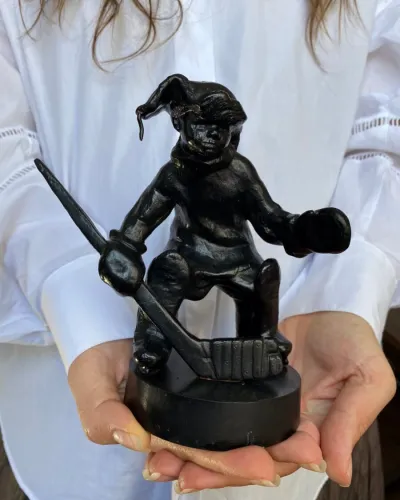
Karl Marx Cast Iron Relief - Lauchhammer Foundry - GDR - 1960s
$224.99Unique piece
Karl Marx Cast Iron Relief - Lauchhammer Foundry - GDR - 1960s
$224.99Unique piece
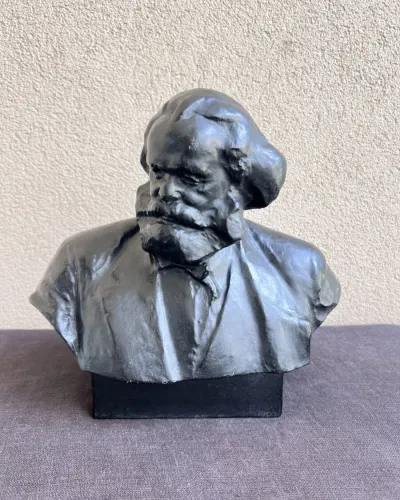
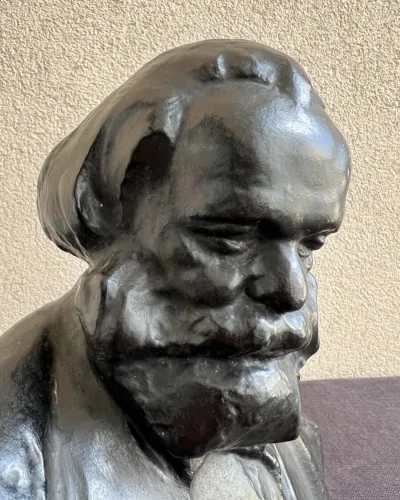
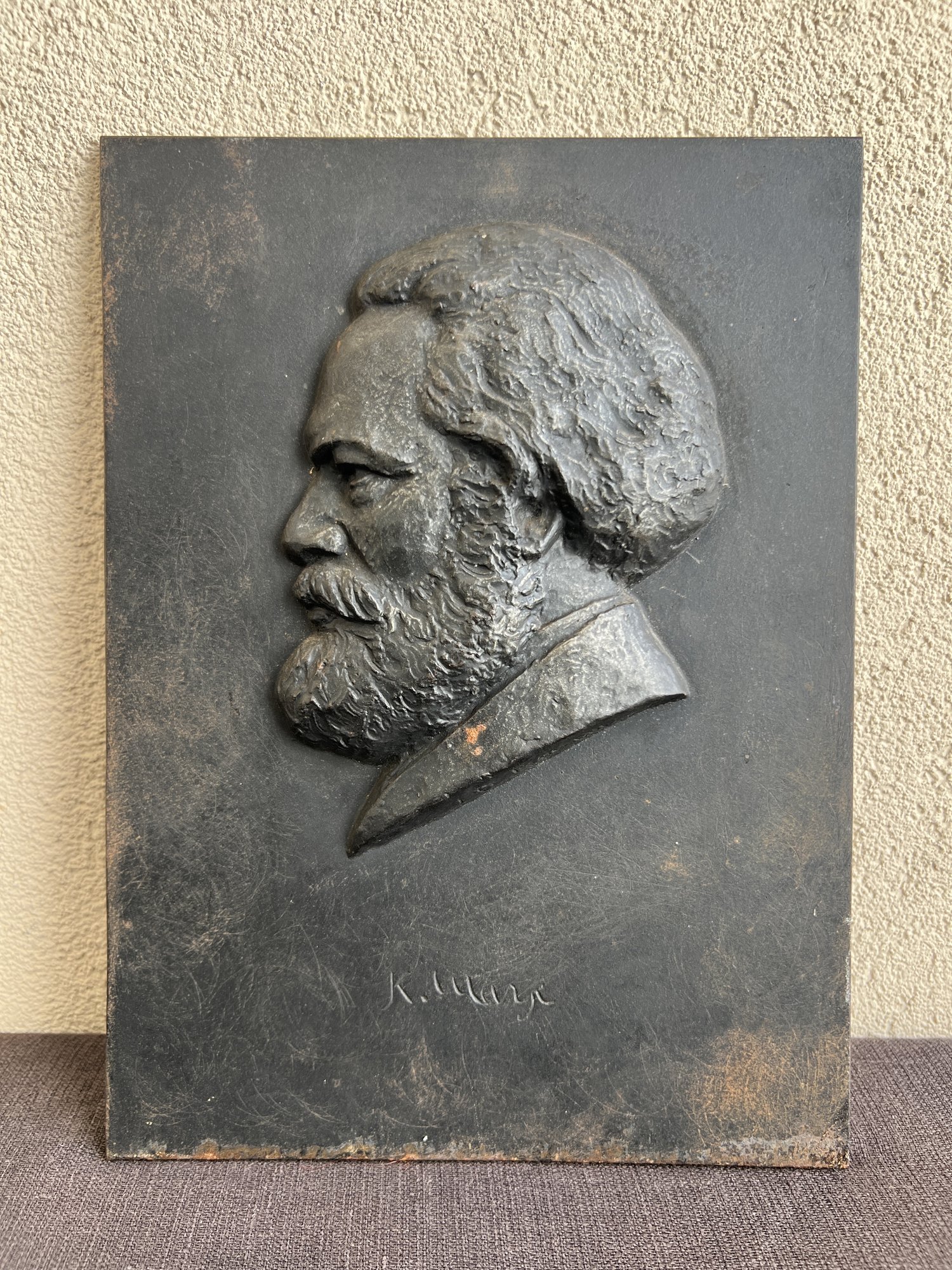
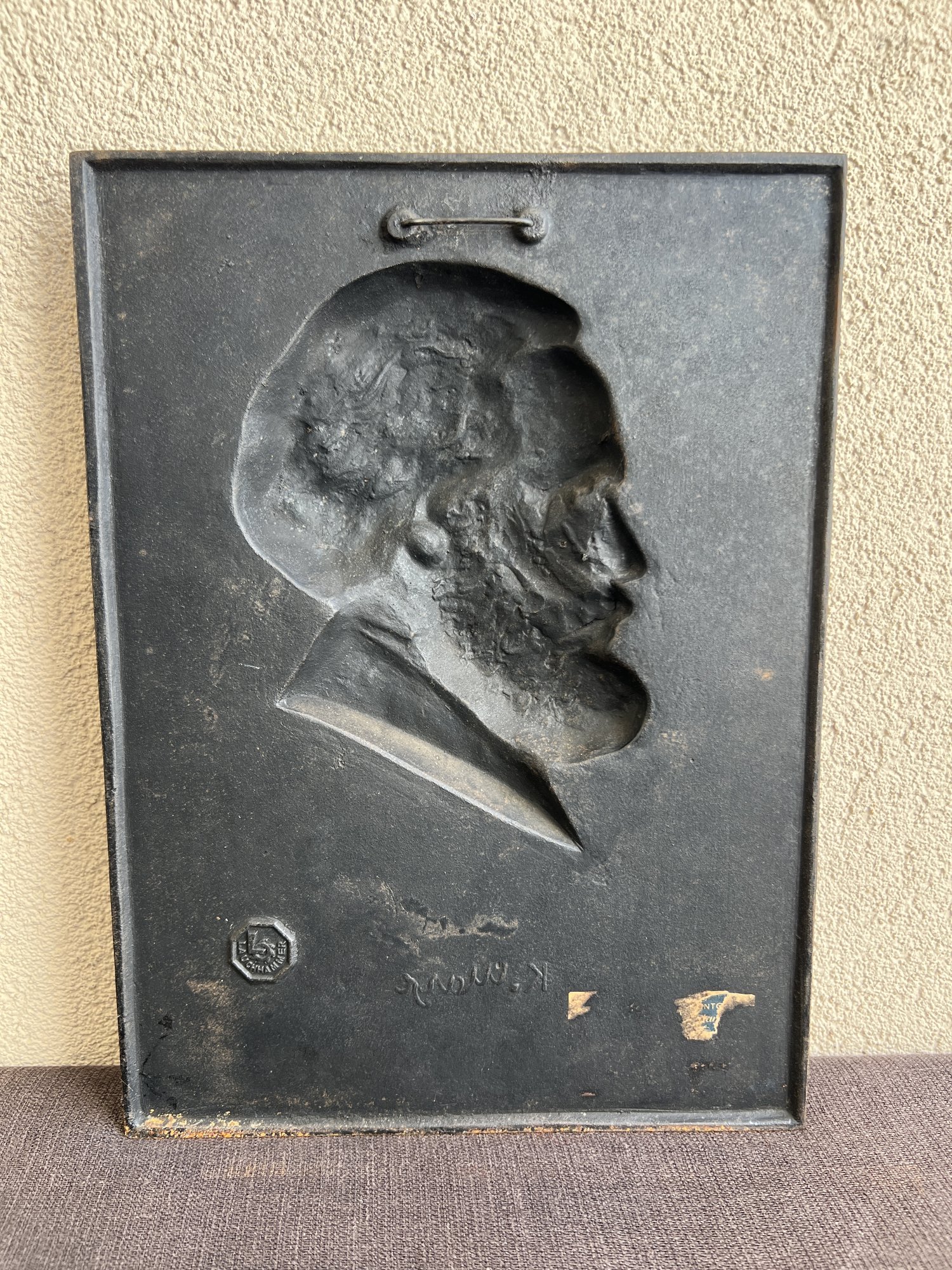
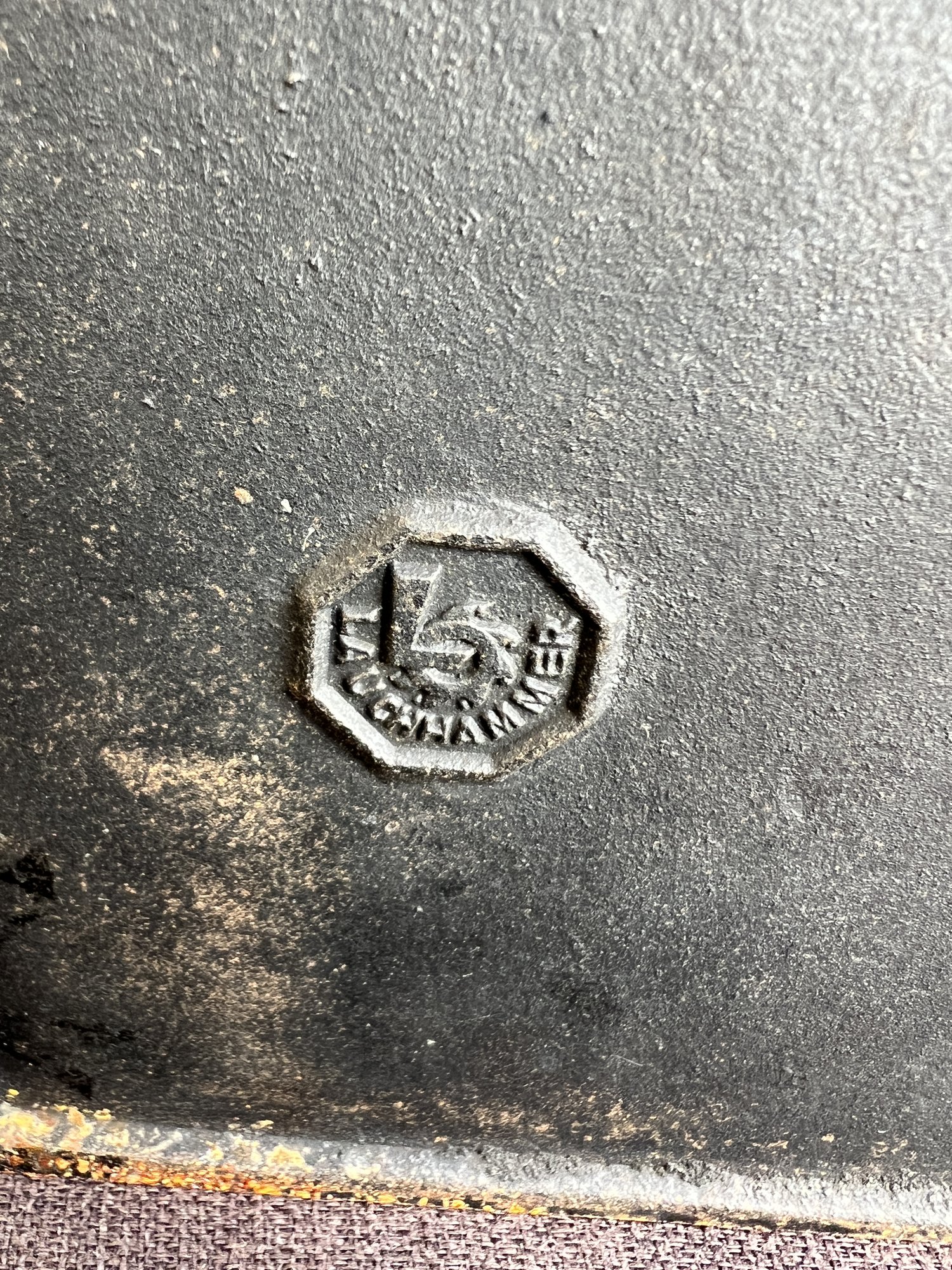
Karl Marx portrait in cast iron, stamped on the back with the octagonal mark of the Lauchhammer foundry, in business since 1725. An East German piece, most likely from the 1960s, rather than a Soviet one.
1 in stock
Message received, dear comrade.
Our information desk usually replies within 24 hours at the address provided.Peak of the space race won by the USSR: Sputnik 1 (1957), Gagarin's flight (1961), Tereshkova the first woman in orbit (1963). Khrushchev leads de-Stalinisation until 1964, then Brezhnev ushers in stagnation. Scientific and cultural high point.


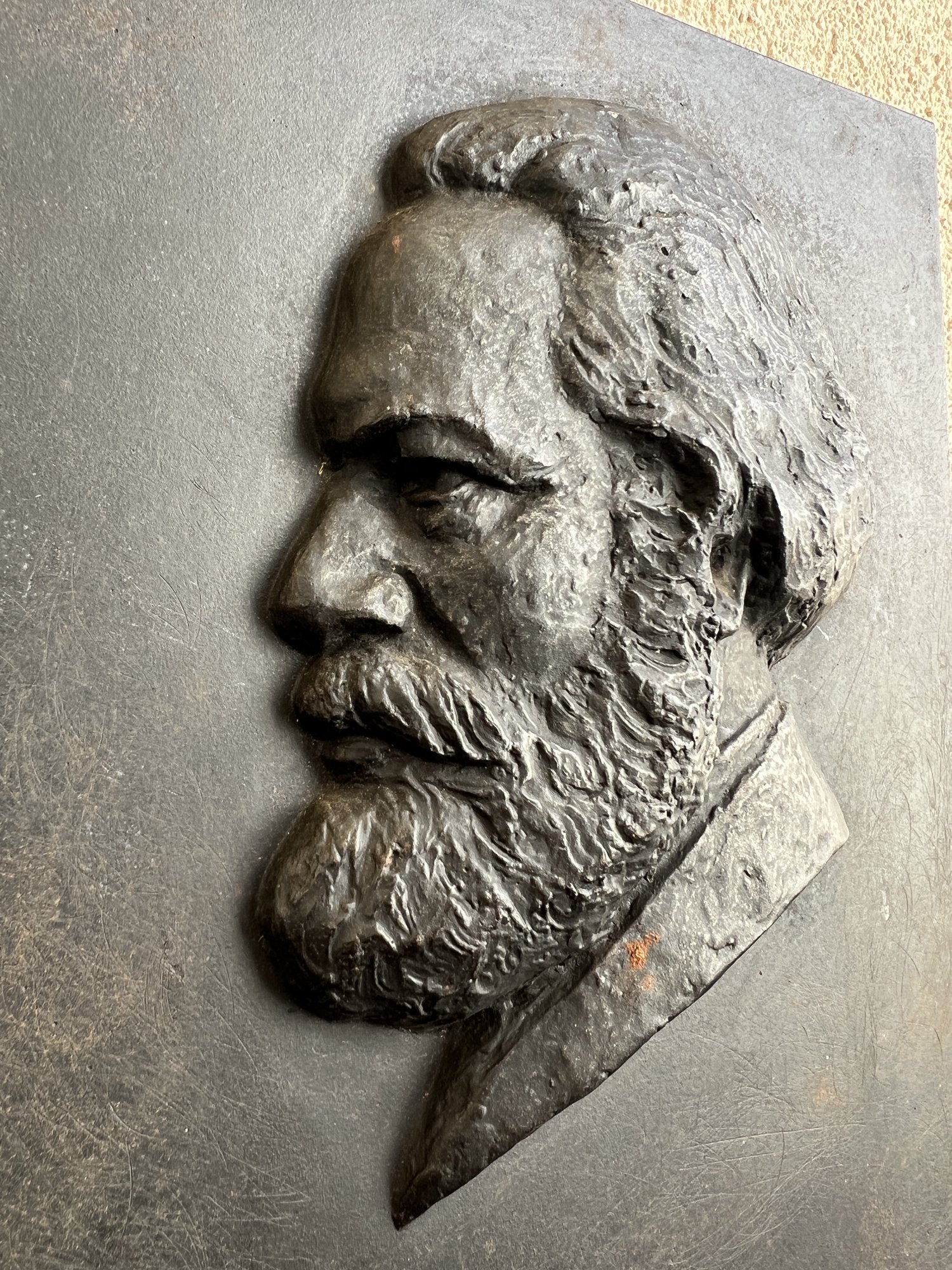
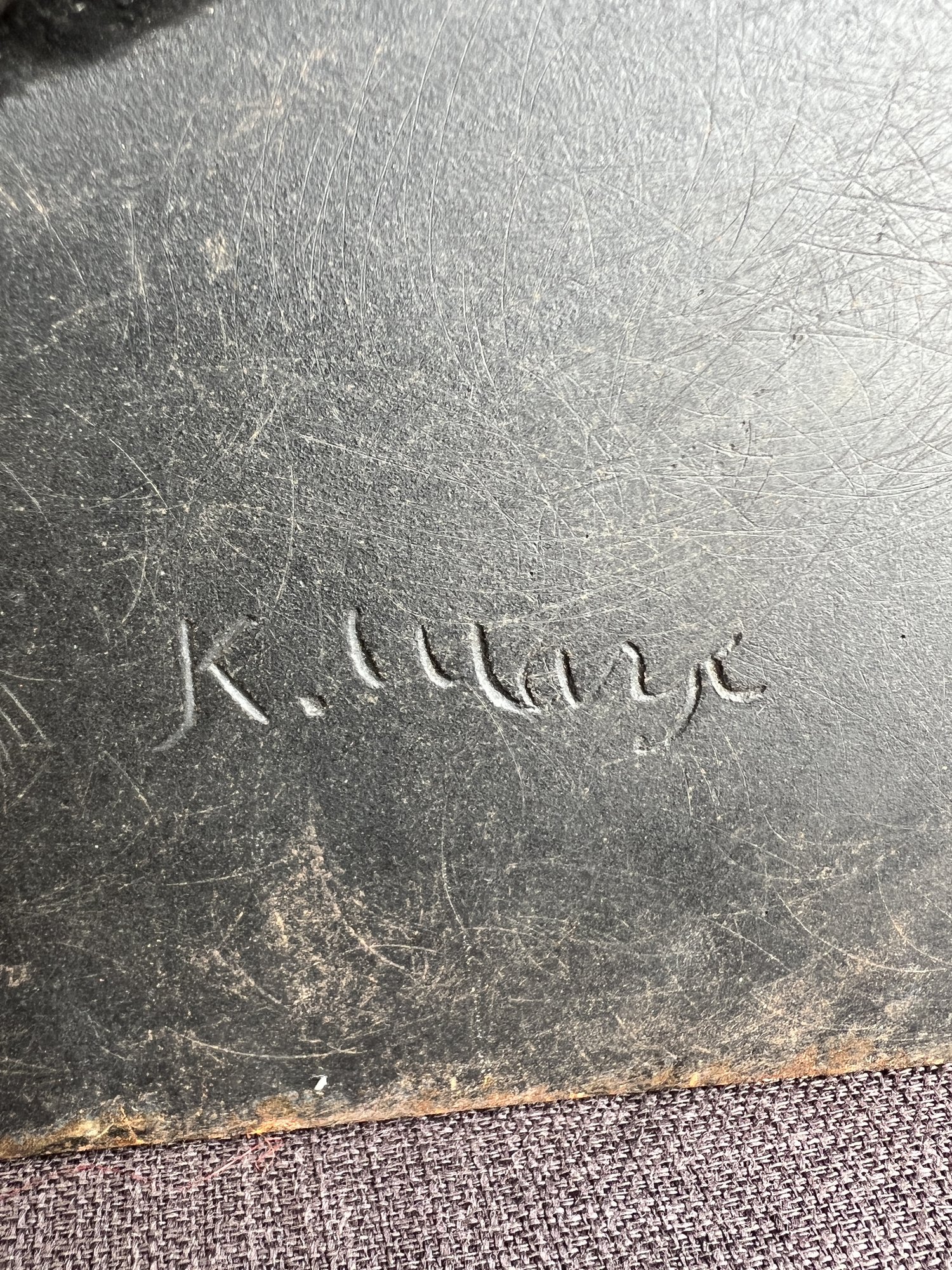
Cast iron relief portrait of Karl Marx, produced by the Lauchhammer art foundry in eastern Germany. This is not a Soviet piece: it was most likely cast during the German Democratic Republic era (1949-1990). The foundry’s octagonal mark, cast in with the plaque, sits on the reverse and reads LAUCHHAMMER around a monogram. The K. Marx signature below the portrait reproduces the philosopher’s own hand, not the sculptor’s, who remains unidentified. Dimensions: 30 x 22 cm.
Lauchhammer, in Lusatia, is one of the oldest foundries in Germany. Its first blast furnace was fired in 1725, and art casting began under Count Detlev Carl von Einsiedel, whose workshop cast an antique Bacchante in 1784, the first large figure cast in iron in a single piece. After the war the works were expropriated in 1947 and the art foundry became a department of VEB Schwermaschinenbau Lauchhammerwerk. It supplied monuments, plaquettes and portraits to the state and the ruling SED, including the bronze Marx plaquettes designed by the Berlin sculptor Gerhard Thieme that the SED Central Committee presented in the 1980s to members of several decades’ standing.
Marx held a central place in the GDR: Chemnitz was named Karl-Marx-Stadt from 1953 to 1990, the Order of Karl Marx was the country’s highest award, and the centenary of his death in 1983 was marked as Karl Marx Year. The plaque carries no date or model number; it most likely dates from the 1960s.
Additional information
| Weight | 3.5 kg |
|---|---|
| Dimensions | 40.0 × 30.0 × 10.0 cm |