Large Enamel Plaque - Portrait of D.I. Mendeleev - USSR 1960s
$322.99Unique piece
Large Enamel Plaque - Portrait of D.I. Mendeleev - USSR 1960s
$322.99Unique piece
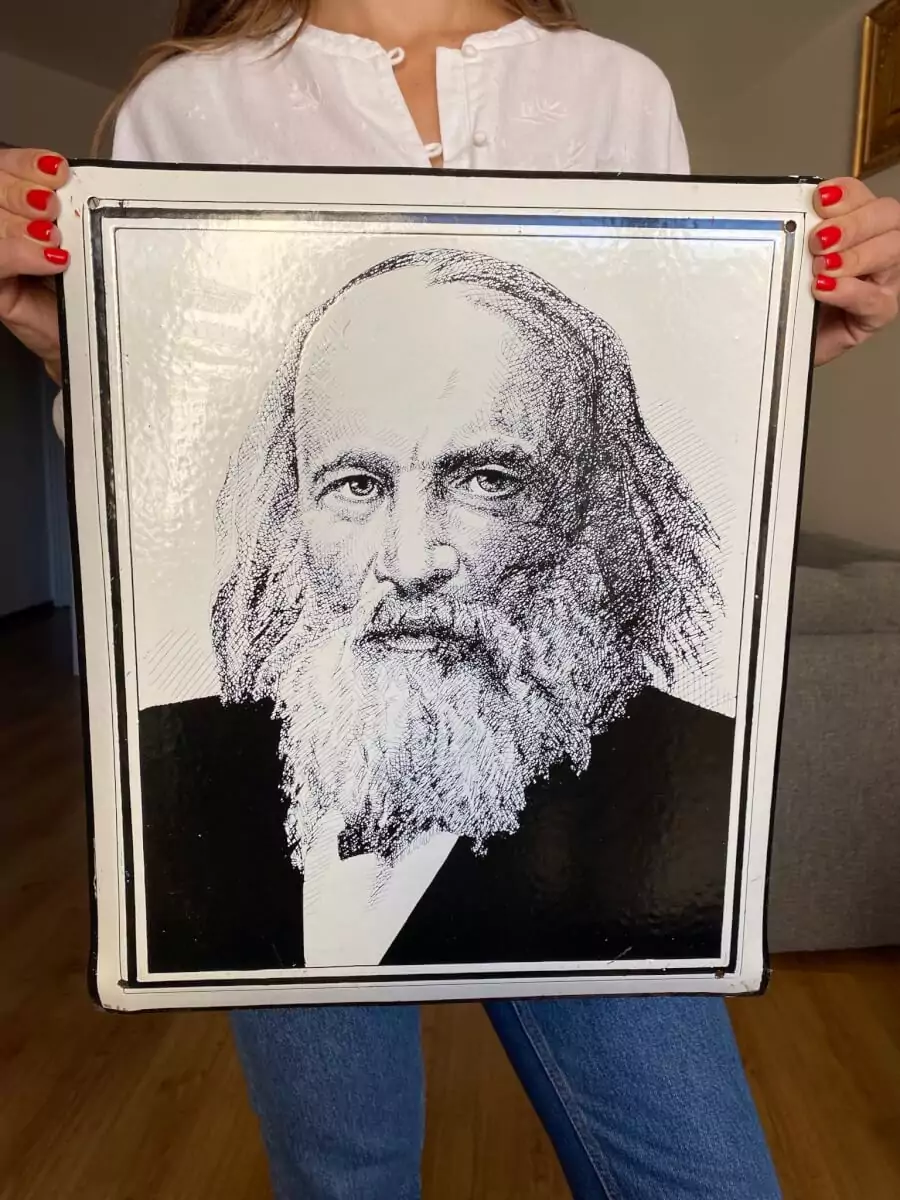
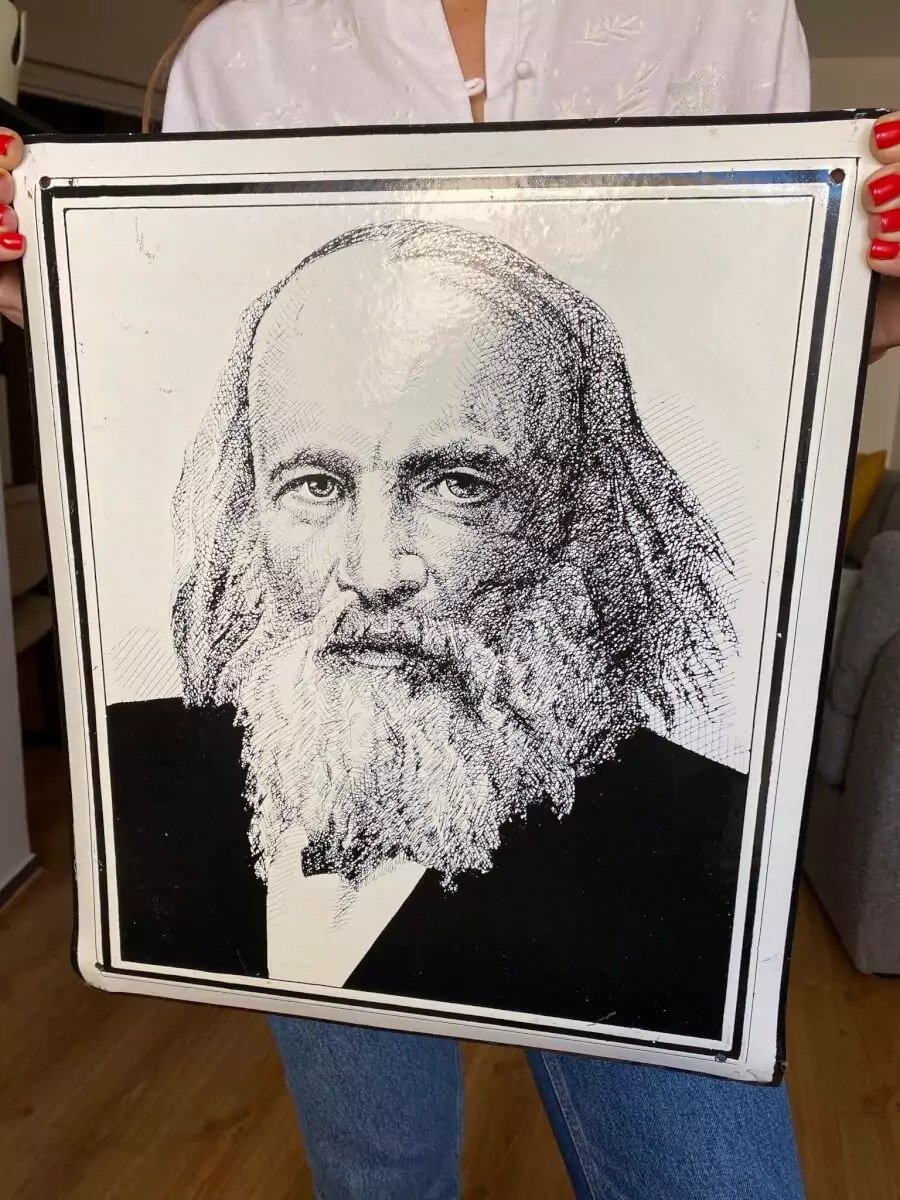
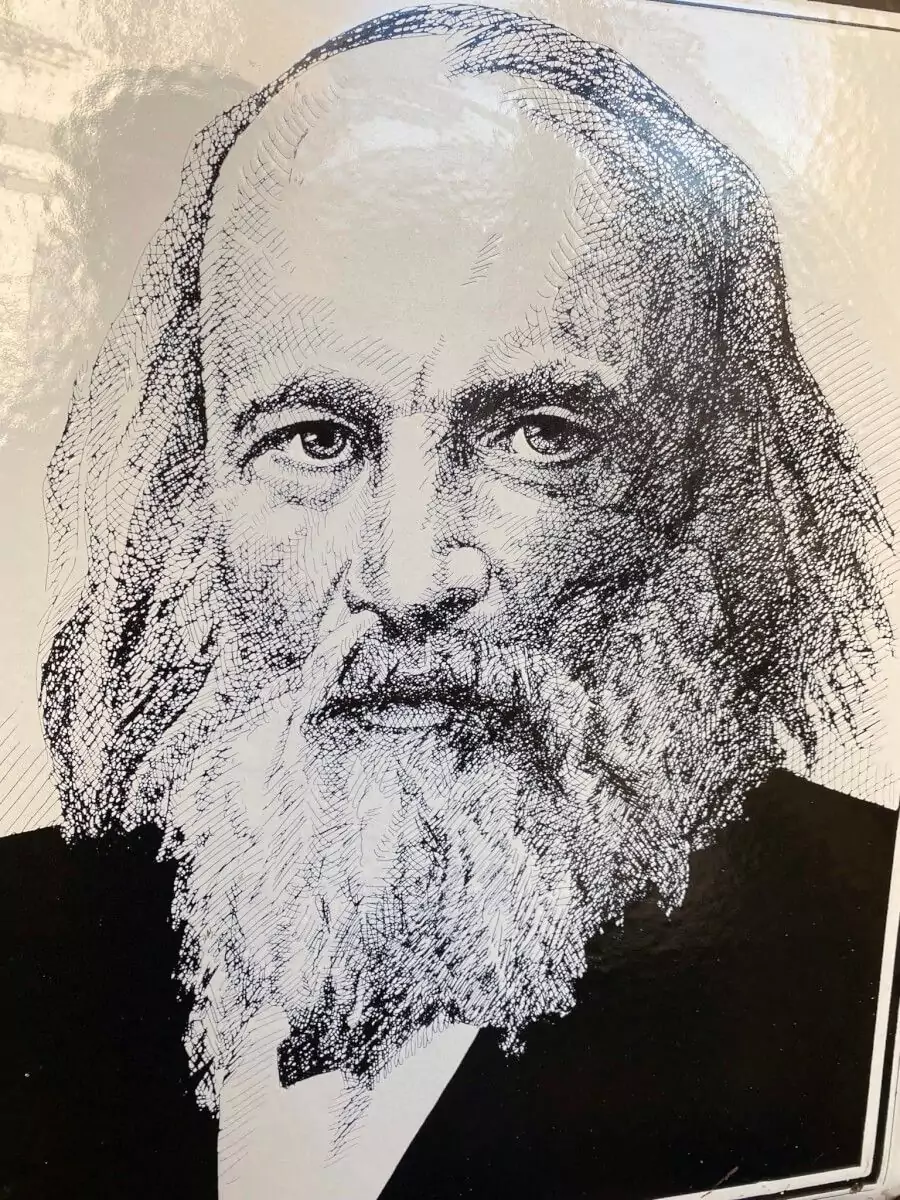
Large Soviet enamel plaque from the 1960s, a portrait of the chemist D.I. Mendeleev in black on a white ground, made to special order. It hung on the wall of a university in the city of Kharkov.
1 in stock
Message received, dear comrade.
Our information desk usually replies within 24 hours at the address provided.Peak of the space race won by the USSR: Sputnik 1 (1957), Gagarin's flight (1961), Tereshkova the first woman in orbit (1963). Khrushchev leads de-Stalinisation until 1964, then Brezhnev ushers in stagnation. Scientific and cultural high point.





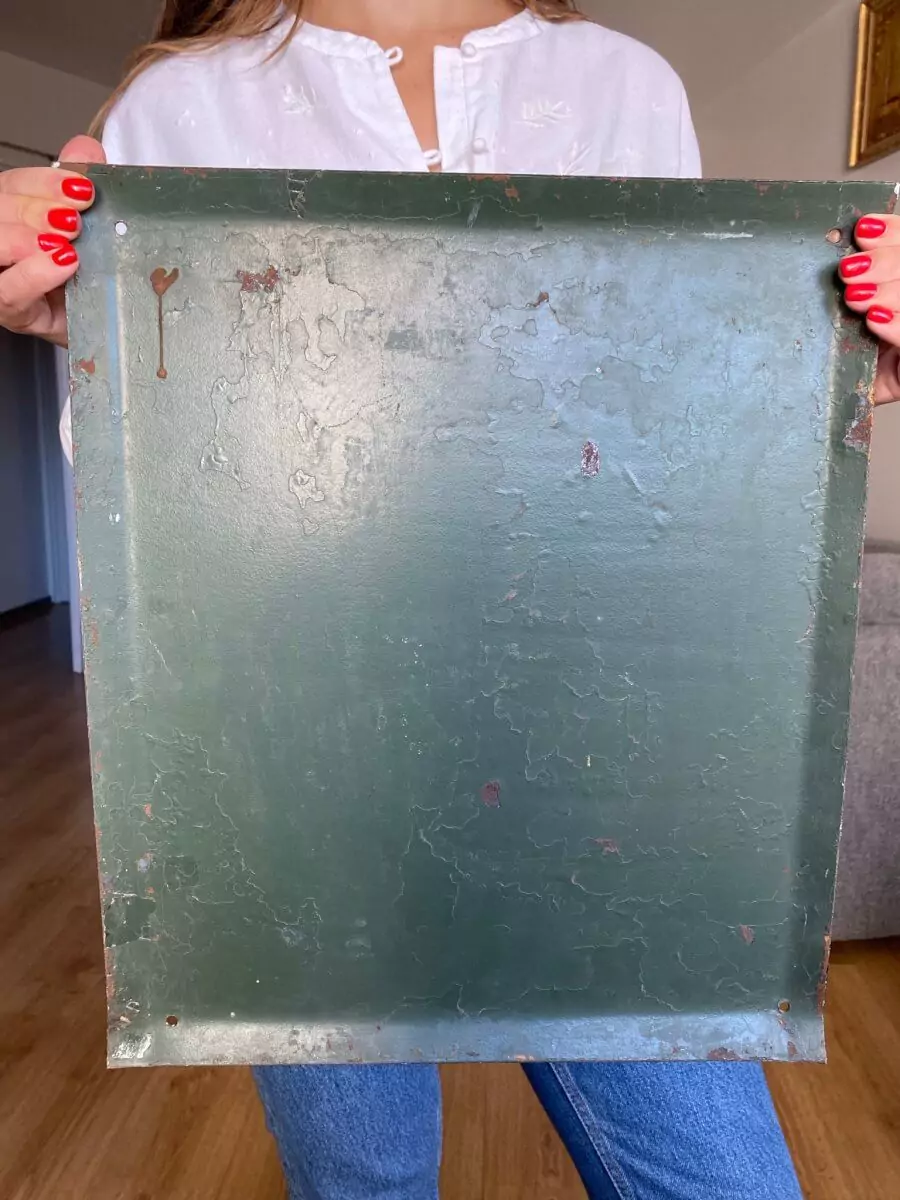
Large enamelled steel plaque made in the 1960s to special order, honouring the Russian scientist Dmitri Ivanovich Mendeleev. The portrait is reproduced in black enamel on a glossy white ground, in an engraving style with very fine hatching that renders the detail of the hair and long beard. It is framed by a double black line. The edges of the plaque are folded back and pierced with four holes at the corners for wall mounting. The reverse is green.
This plaque hung on the wall of a university in the city of Kharkov, in Soviet Ukraine, a major university and scientific centre of the USSR.
Born in 1834 in Tobolsk, Siberia, and died in 1907 in Saint Petersburg, Mendeleev is known above all for his work on the periodic classification of the elements, published in 1869 and also called the “Mendeleev table”. He left empty spaces for elements not yet known and predicted their properties, predictions confirmed by the discovery of gallium, scandium and germanium. In the USSR he was presented as one of the great figures of national science: his portrait hung in chemistry classrooms, and element 101, discovered in 1955, bears his name, mendelevium.
Additional information
| Weight | 6 kg |
|---|---|
| Dimensions | 50 × 35 × 8 cm |