Soviet Navy Barometer - 1946 - Marbled Bakelite - Brass Dial - USSR
$184.99Unique piece
Soviet Navy Barometer - 1946 - Marbled Bakelite - Brass Dial - USSR
$184.99Unique piece
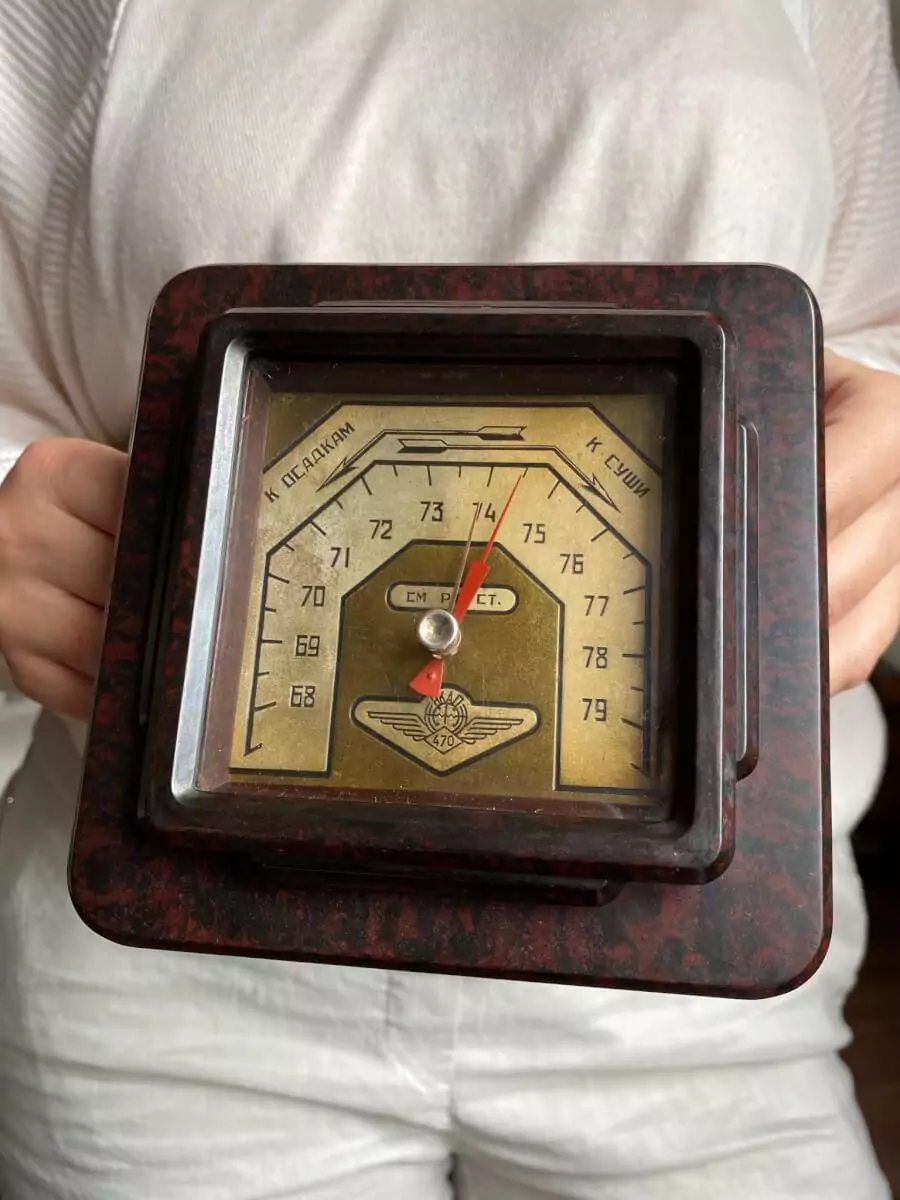
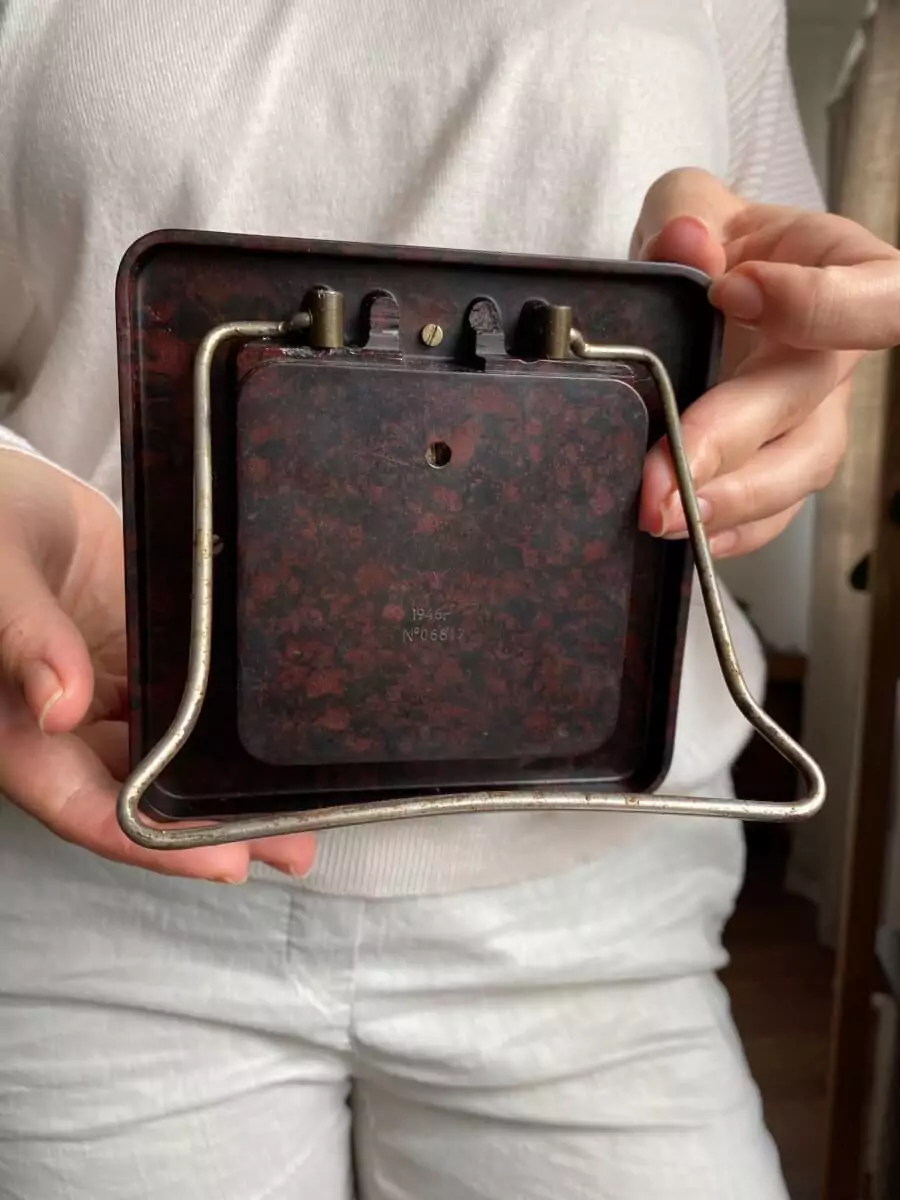
Soviet navy barometer dated 1946, in a red and black marbled bakelite case, with a brass dial graduated in centimetres of mercury and marked К ОСАДКАМ (towards precipitation) and К СУШИ (towards dry weather). Wire stand, in working order.
1 in stock
Message received, dear comrade.
Our information desk usually replies within 24 hours at the address provided.Start of the Cold War. Churchill's Fulton speech.


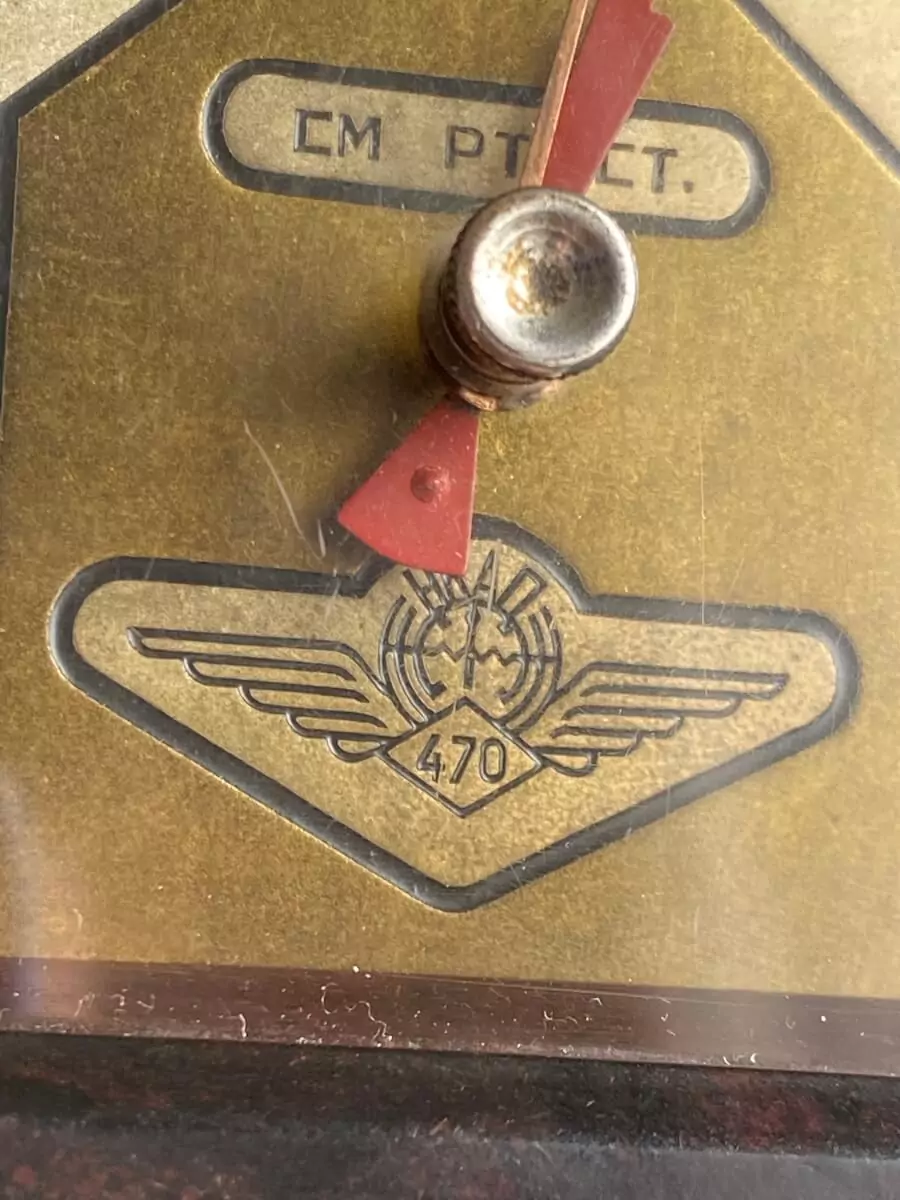
Soviet navy barometer dated 1946, in a square stepped case of red and black marbled bakelite. The brass dial sits behind glass, framed by a chromed metal bezel. The scale runs from 68 to 79 centimetres of mercury, as shown by the marking СМ РТ. СТ. (centimetres of mercury) in the centre. At the top, two inscriptions flank stylised arrows: К ОСАДКАМ (towards precipitation) on the left and К СУШИ (towards dry weather) on the right. The red hand shows the pressure, while a second thin hand, mounted on the central knob, serves as a reference to follow changes. Below the arbor is a winged emblem with a globe and the number 470 inside a diamond.
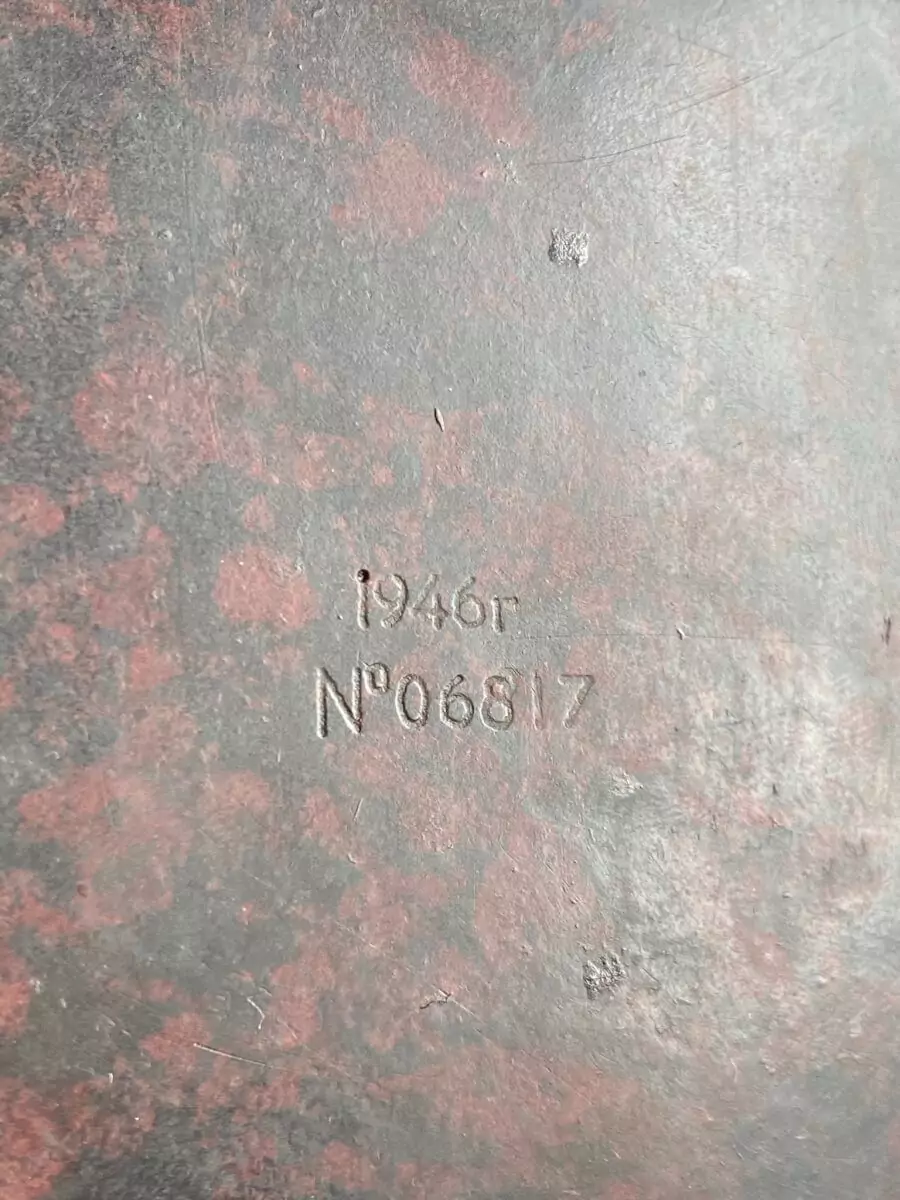
On the back, the date 1946г (1946) and the number №06817 are marked in the bakelite. A wire stand, hinged on two brass pivots, lets the barometer stand on a desk or table. A hole in the centre of the back appears to be intended for wall mounting.
In 1946, the first year of the fourth five-year plan, Soviet industry was converting its wartime factories and resuming the production of instruments. Bakelite, known in Russia as карболит (carbolite), was widely used for instrument cases at the time, combined with brass and chromed metal. On board, a barometer is used to follow changes in atmospheric pressure, which announce changes in the weather: a fall towards the left of the dial signals precipitation, a rise towards the right signals dry weather.
In working order.
Additional information
| Weight | 1 kg |
|---|---|
| Dimensions | 30 × 20 × 15 cm |