Soviet Sputnik Poster - Science and Youth - 1985 USSR - Wood Frame
$460.99Unique piece
Soviet Sputnik Poster - Science and Youth - 1985 USSR - Wood Frame
$460.99Unique piece
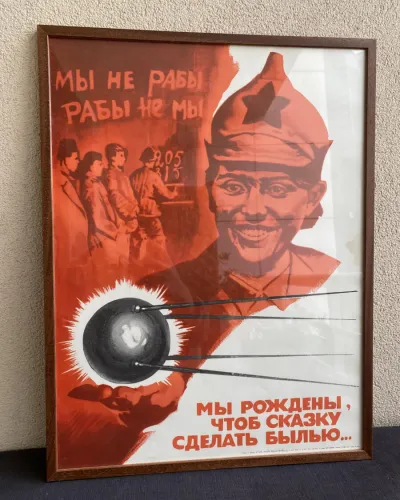
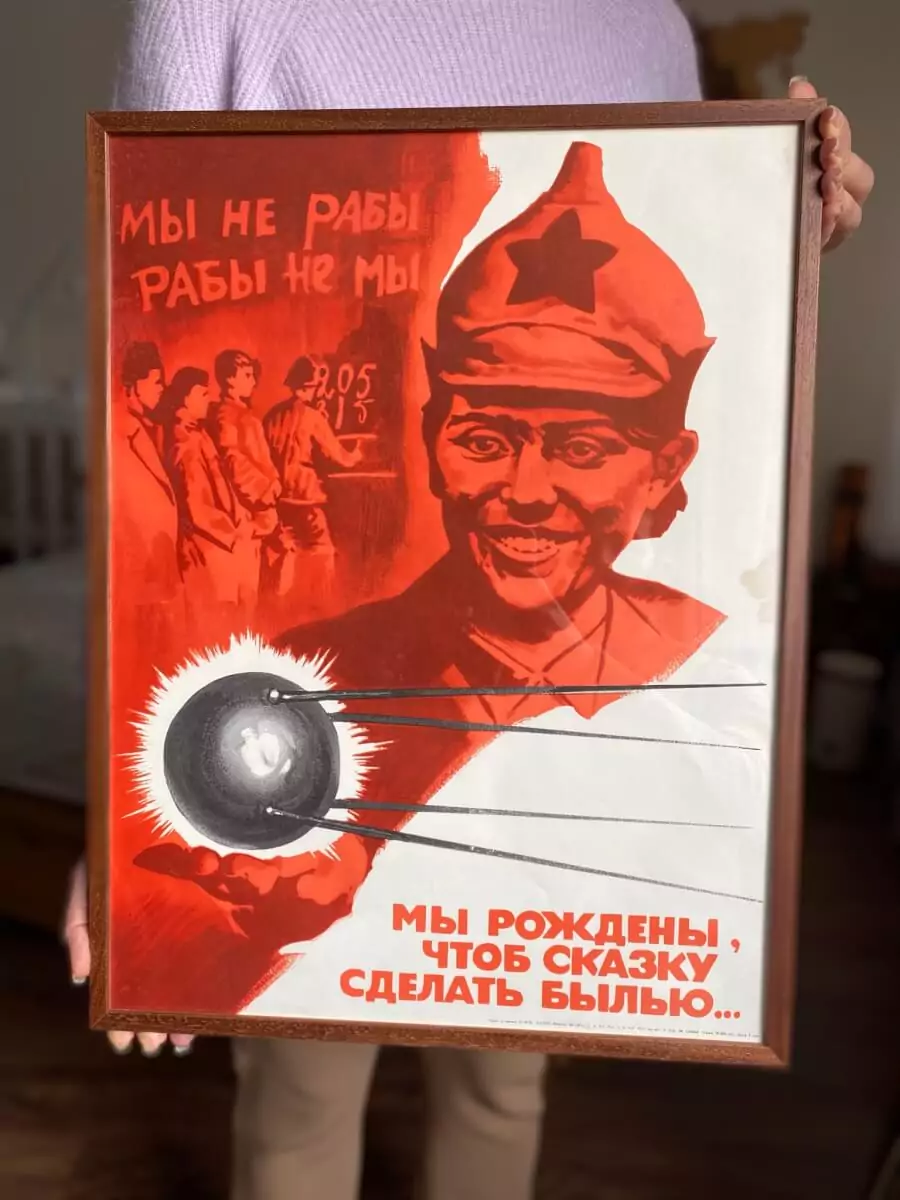
Soviet poster from 1985: a young soldier in a budenovka holds Sputnik in his hand, under the slogan “We were born to make the fairy tale come true”. Print run 30,000, presented in a wooden frame under glass.
1 in stock
Message received, dear comrade.
Our information desk usually replies within 24 hours at the address provided.Death of Chernenko. Mikhail Gorbachev comes to power. Launches Perestroika.
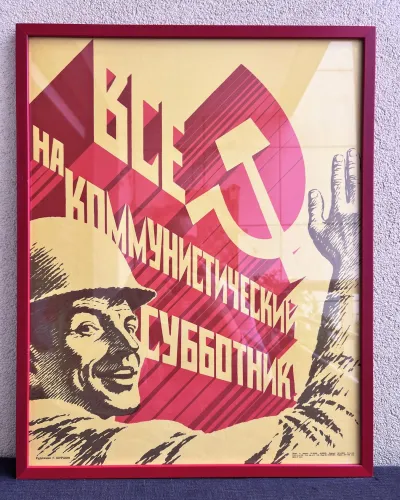
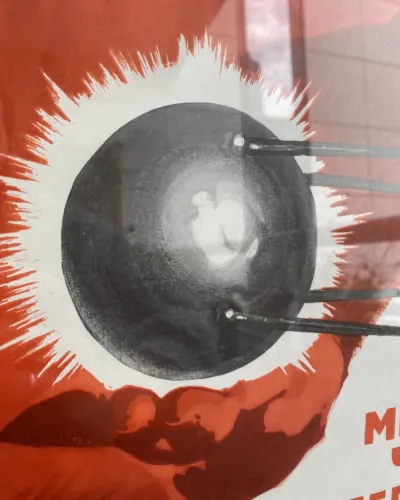
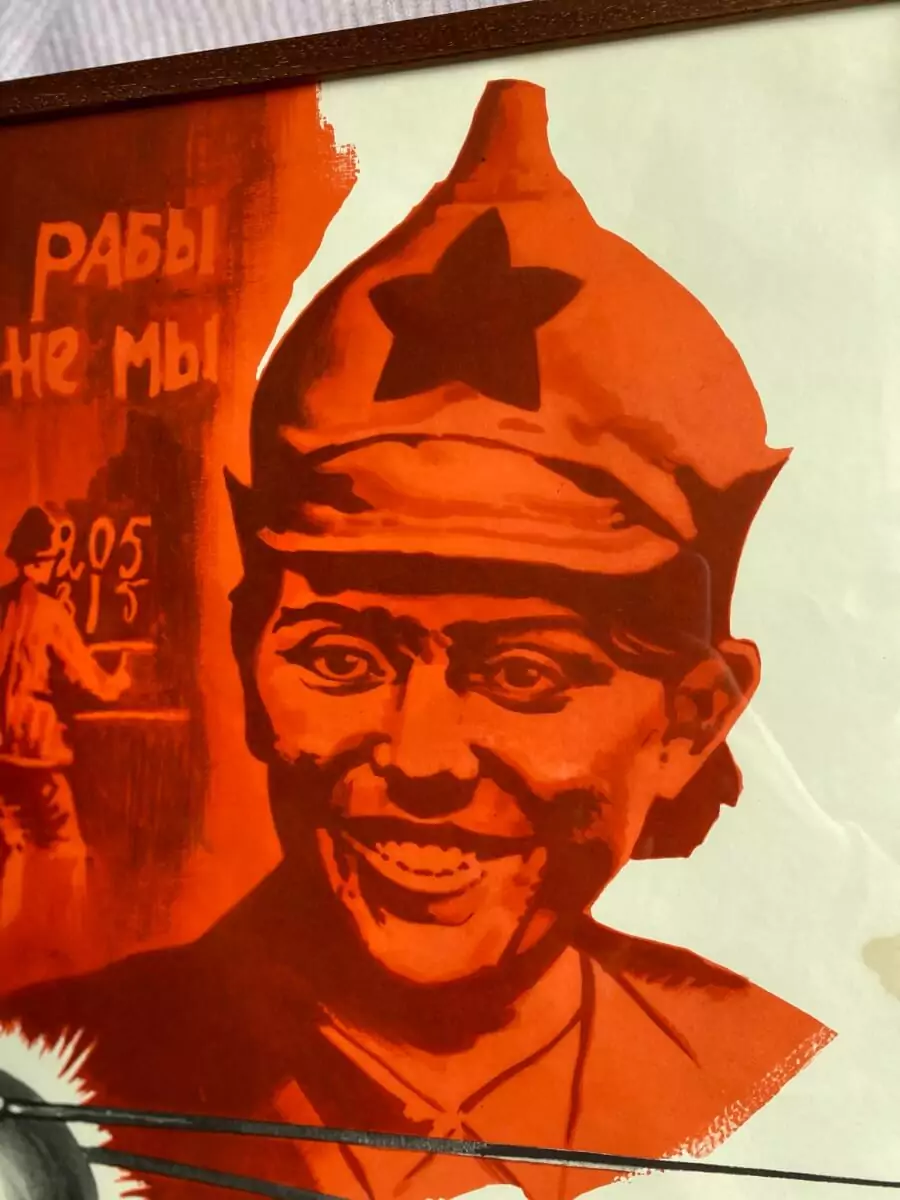
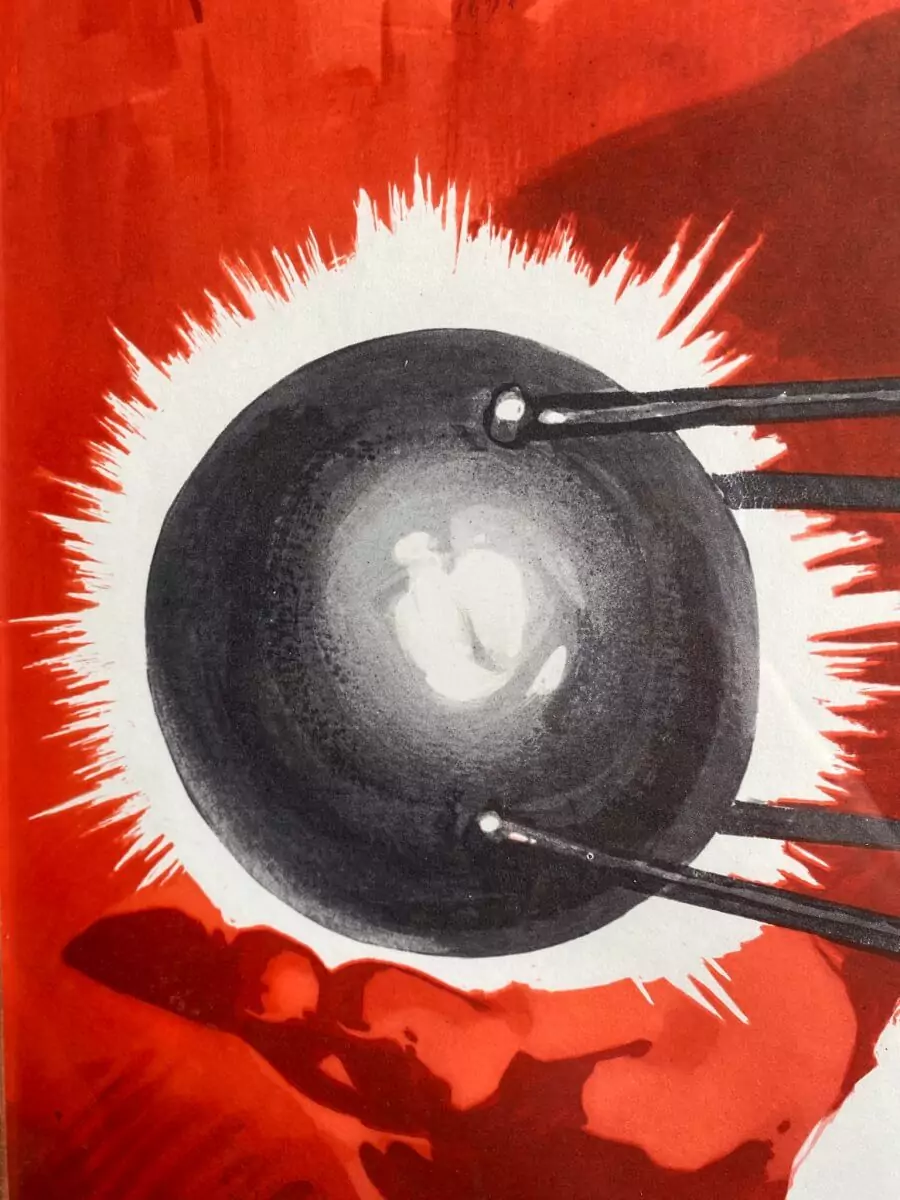
Soviet poster in portrait format, presented in a wooden frame under glass. A smiling young soldier, wearing the budenovka with its red star, holds Sputnik, the first artificial satellite, in his hand, surrounded by a white halo and trailing its four antennas. In the background, in shades of red, four adults stand before a blackboard on which one of them is writing figures, under the words Мы не рабы, рабы не мы (we are not slaves, slaves are not we). At the bottom, the slogan Мы рождены, чтоб сказку сделать былью (we were born to make the fairy tale come true).
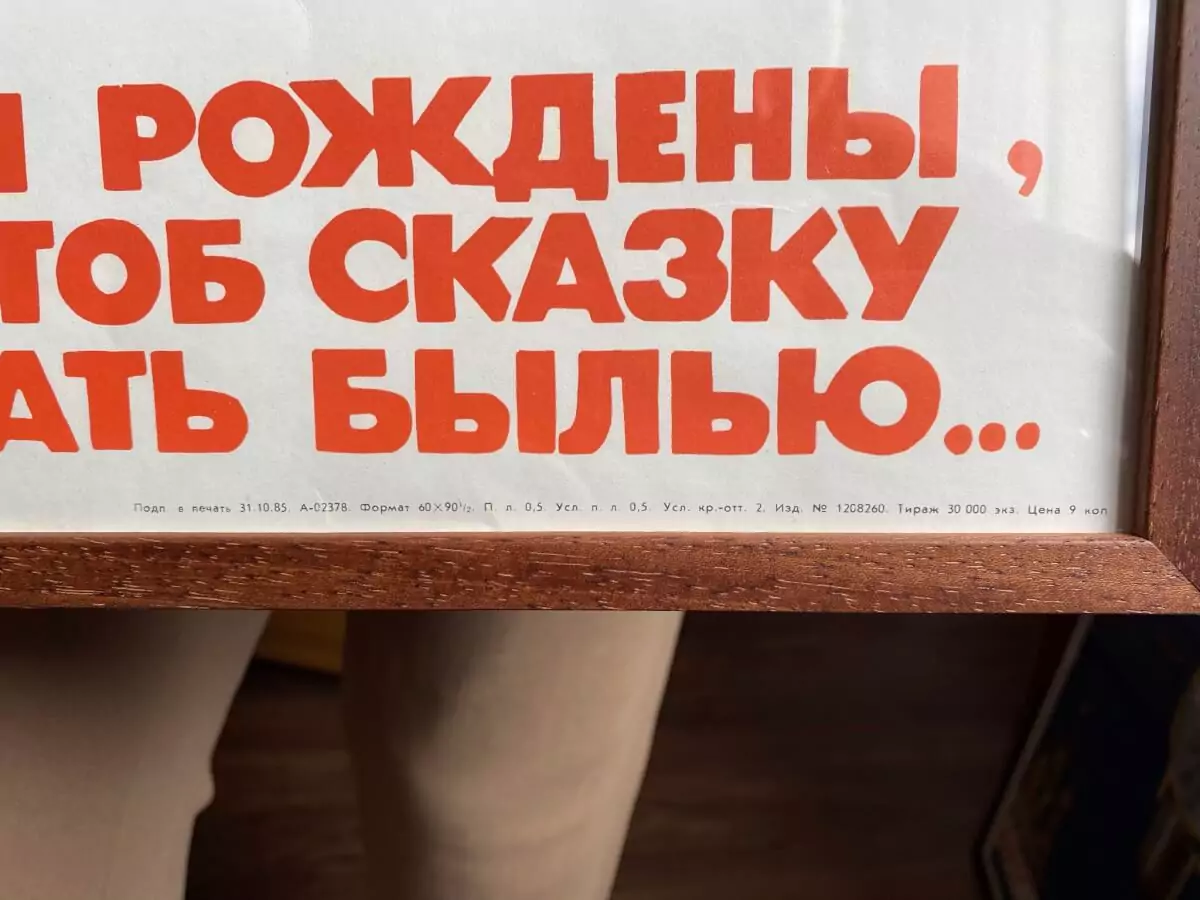
The printed credits under the slogan are legible: Подп. в печать 31.10.85 (passed for press on 31 October 1985), A-02378, edition no. 1208260, print run 30,000 copies, price 9 kopecks.
The poster ties three moments of Soviet history into one image. The blackboard phrase was the first sentence adults learned to read in the 1919 literacy primer, during the campaigns against illiteracy that followed the revolution. The slogan at the bottom is the opening line of the 1923 Aviators’ March, one of the best known songs of the USSR. Sputnik, launched on 4 October 1957, is the outcome: within one generation, Civil War fighters and workers learning to read had opened the space age. The message is aimed at young people and encourages them to study science.
Additional information
| Weight | 3 kg |
|---|---|
| Dimensions | 65 × 50 × 10 cm |