Dog and Cat Money Box - WMF Germany - Late 19th Century - Silver Plate
$219.99Unique piece
Dog and Cat Money Box - WMF Germany - Late 19th Century - Silver Plate
$219.99Unique piece
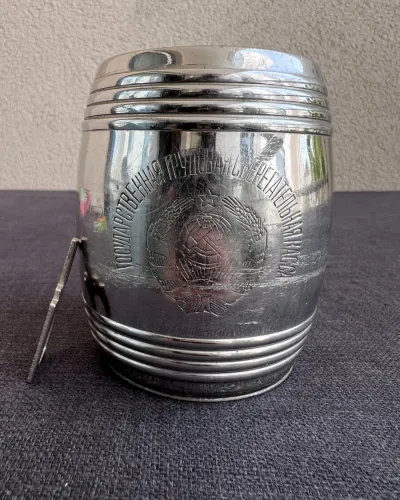
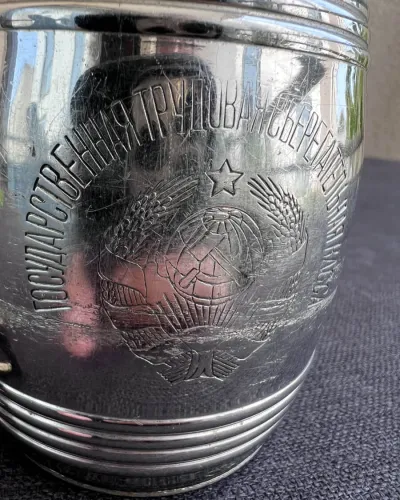
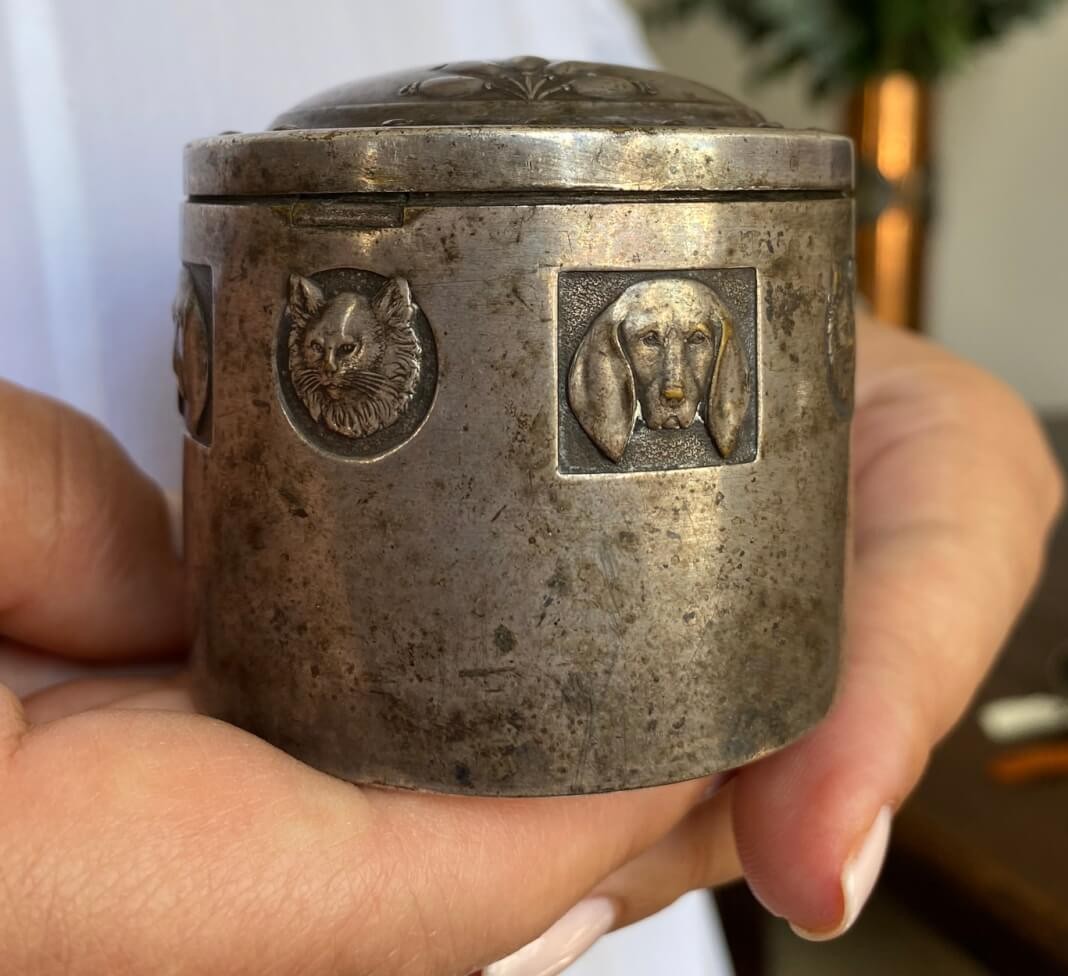
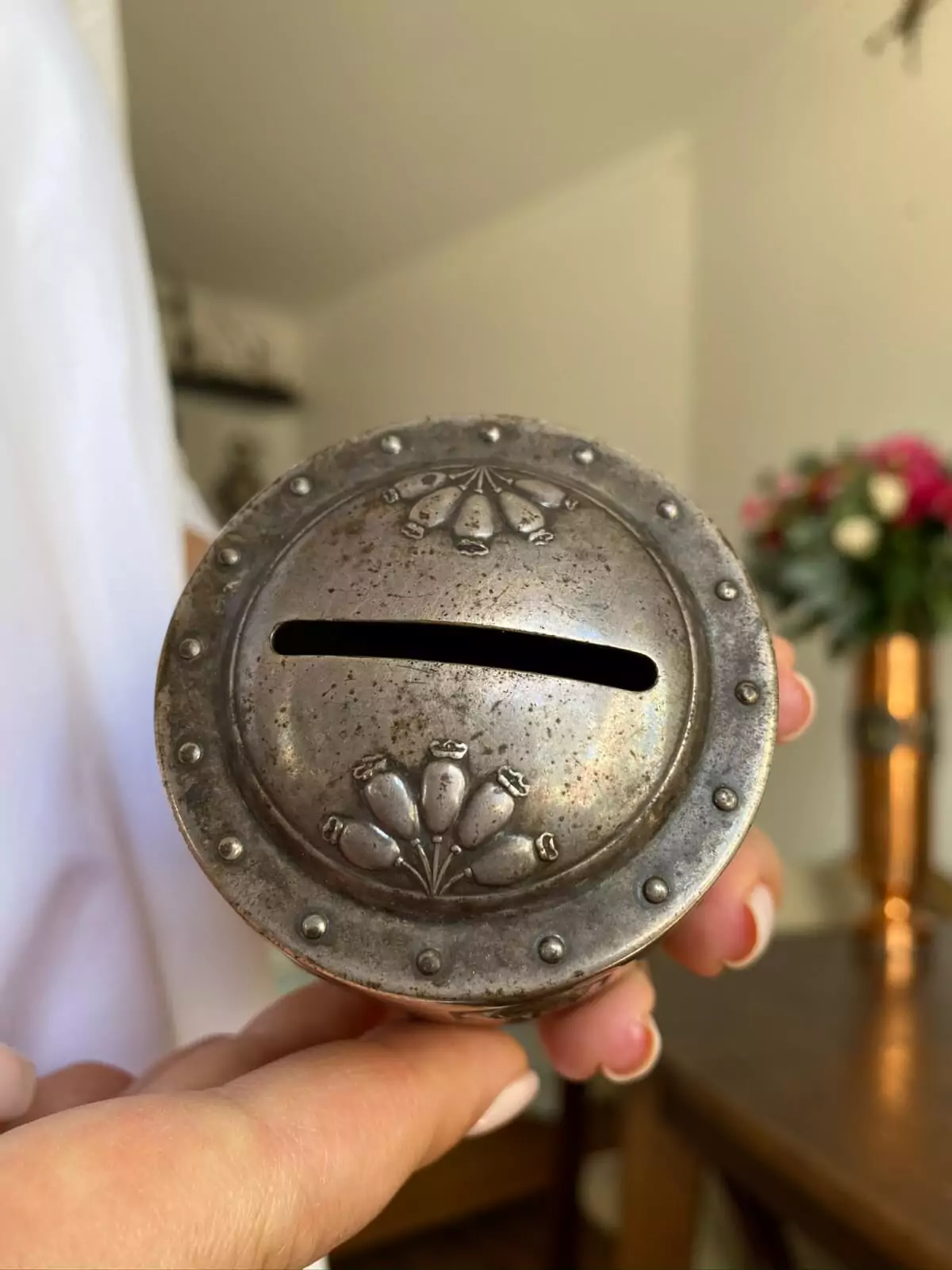
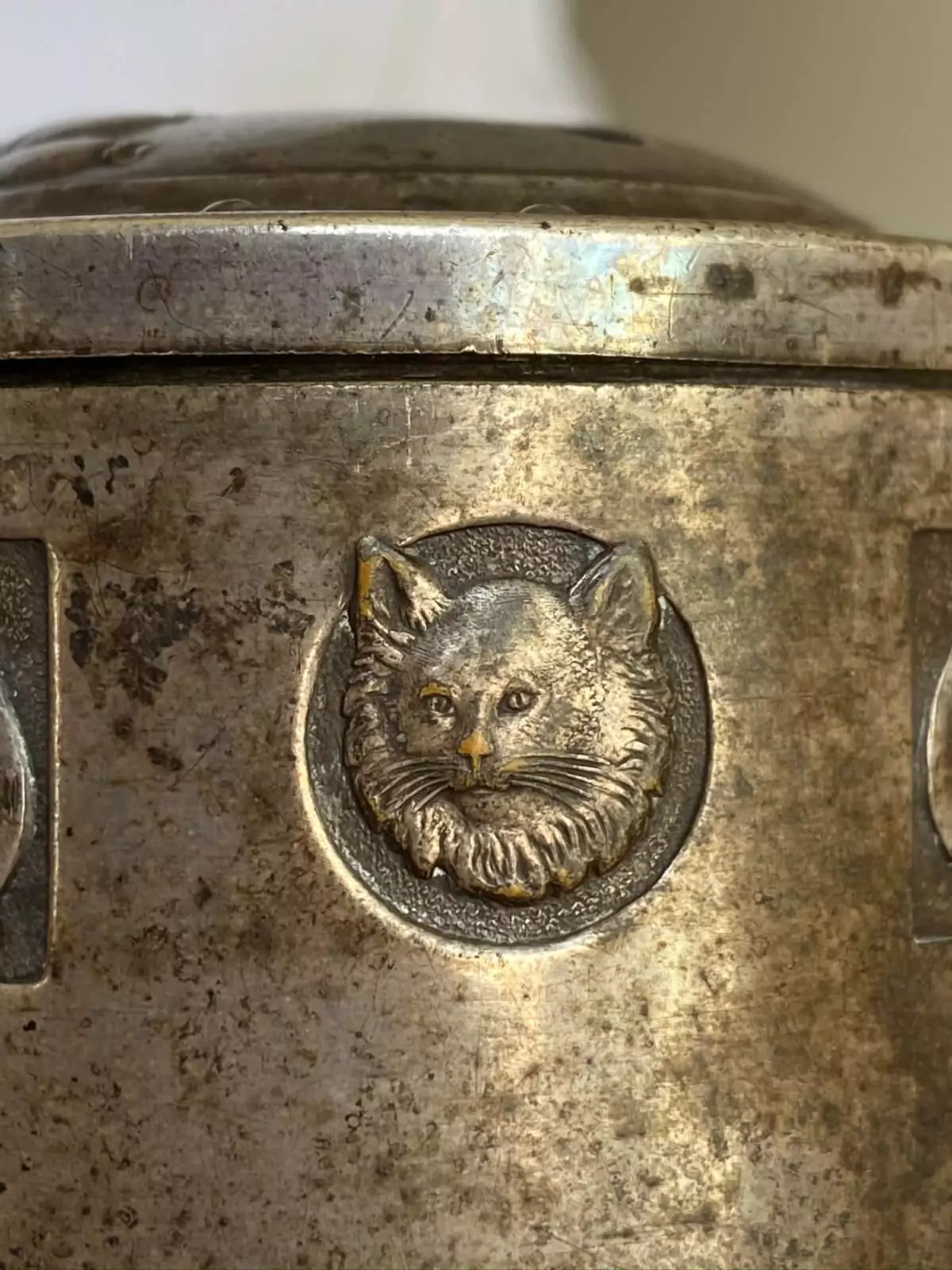
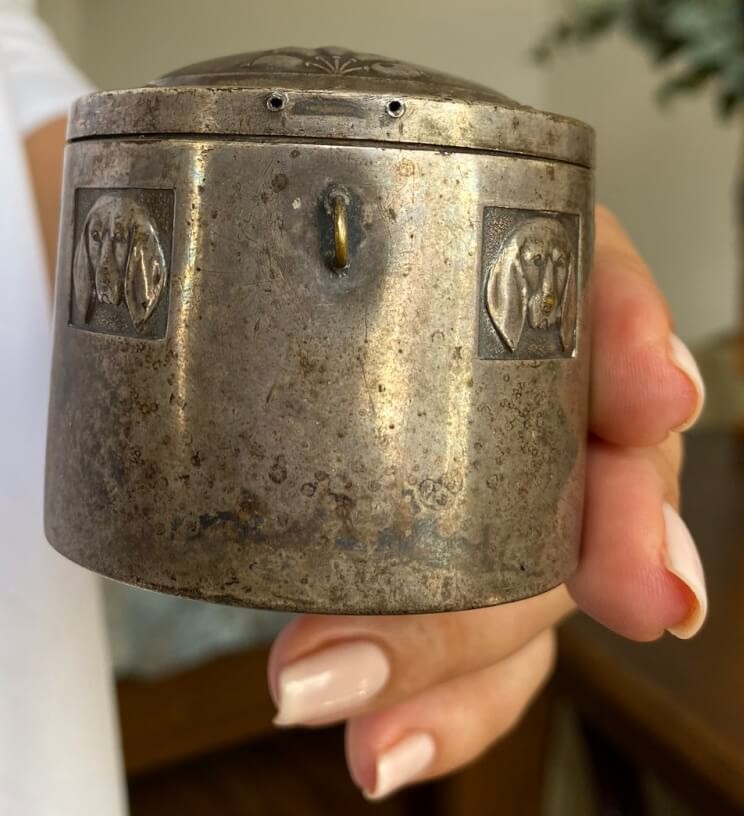
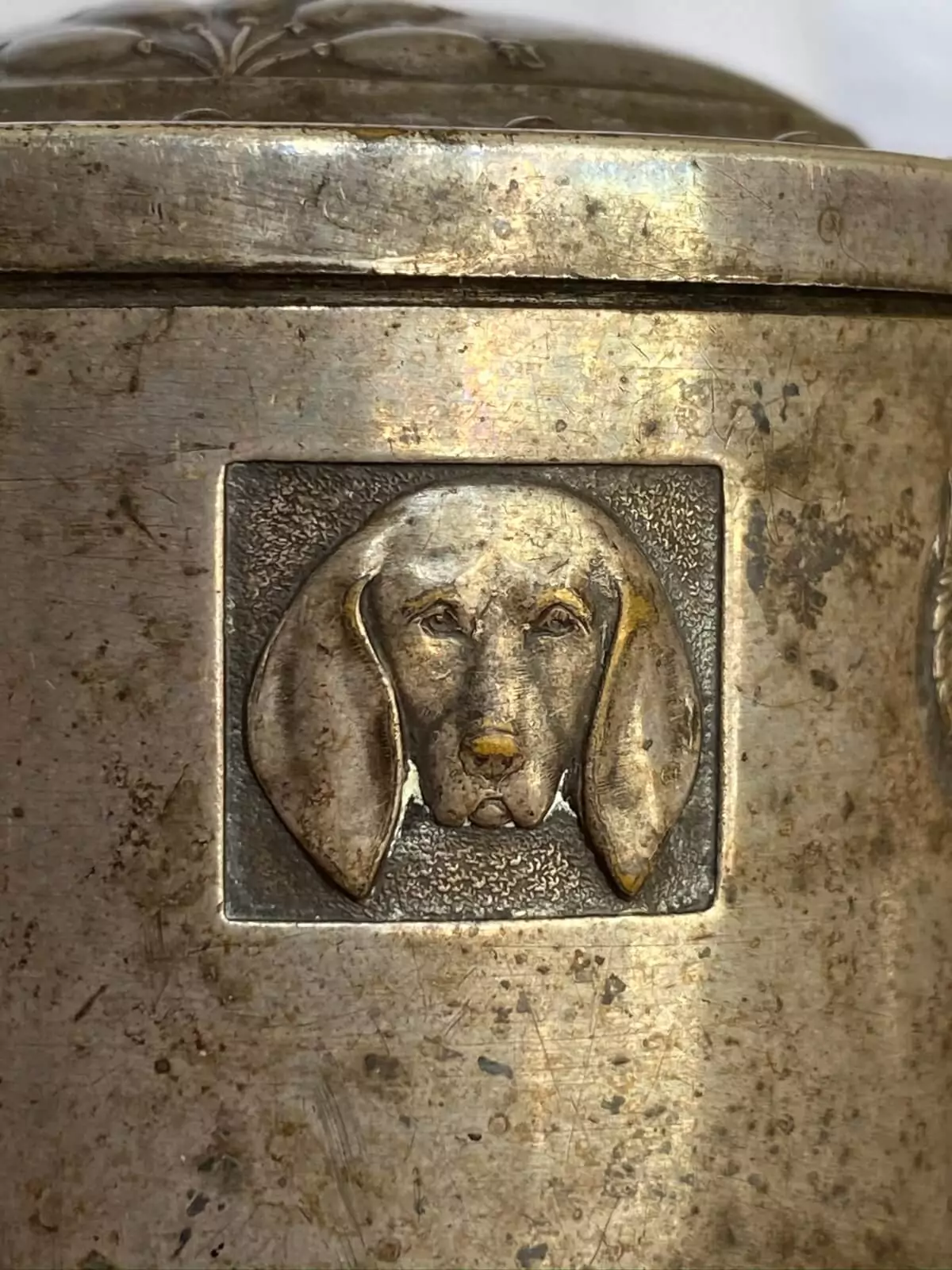
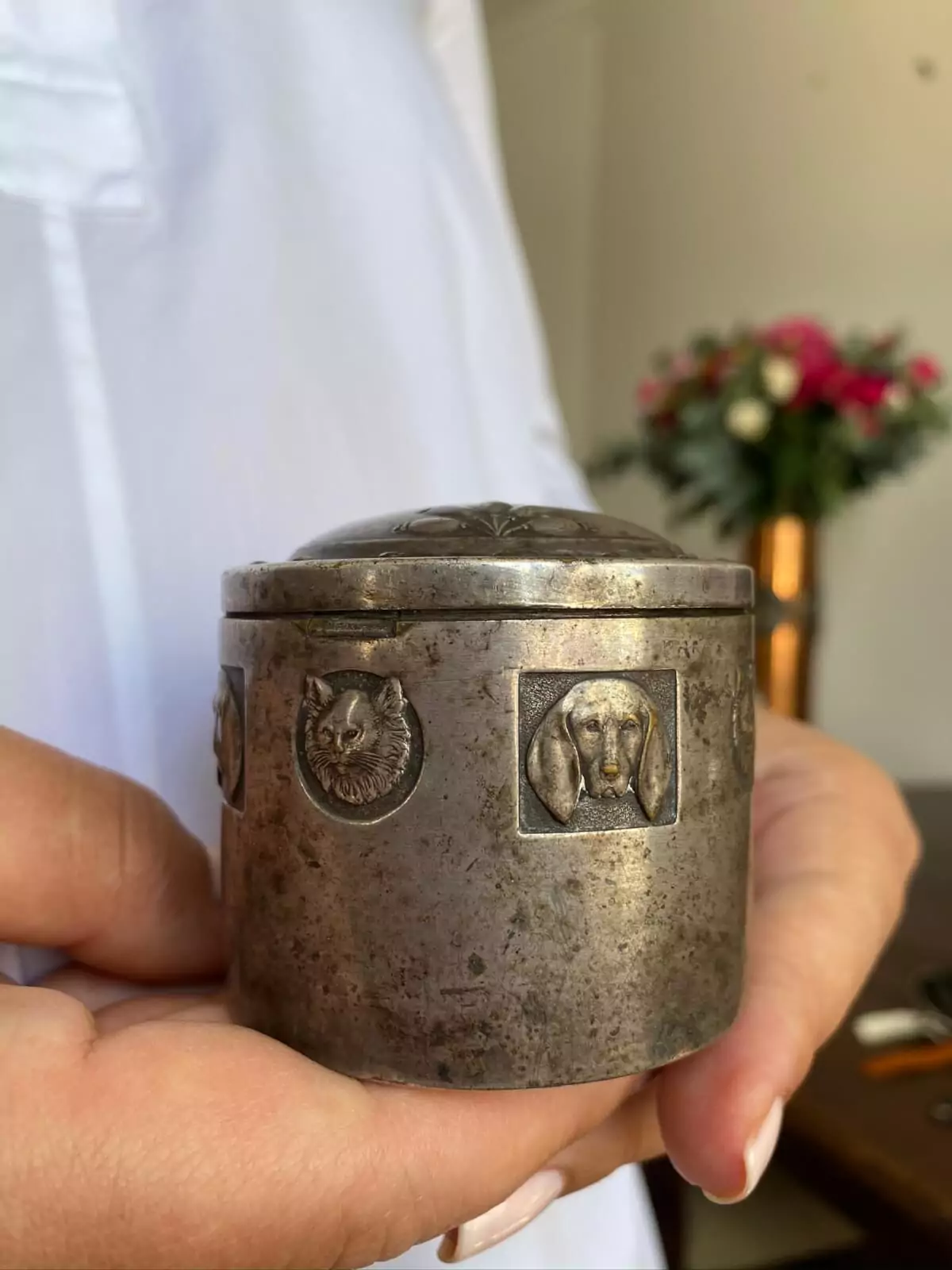
Cylindrical silver plate money box by WMF, Germany, late 19th century. Relief medallions with cat and dog heads, domed lid with coin slot and Jugendstil plant motifs. Closing catch missing.
1 in stock
Message received, dear comrade.
Our information desk usually replies within 24 hours at the address provided.Death of Stalin in 1953, Khrushchev. Secret speech of 1956, relative openness. Launch of Sputnik in 1957.
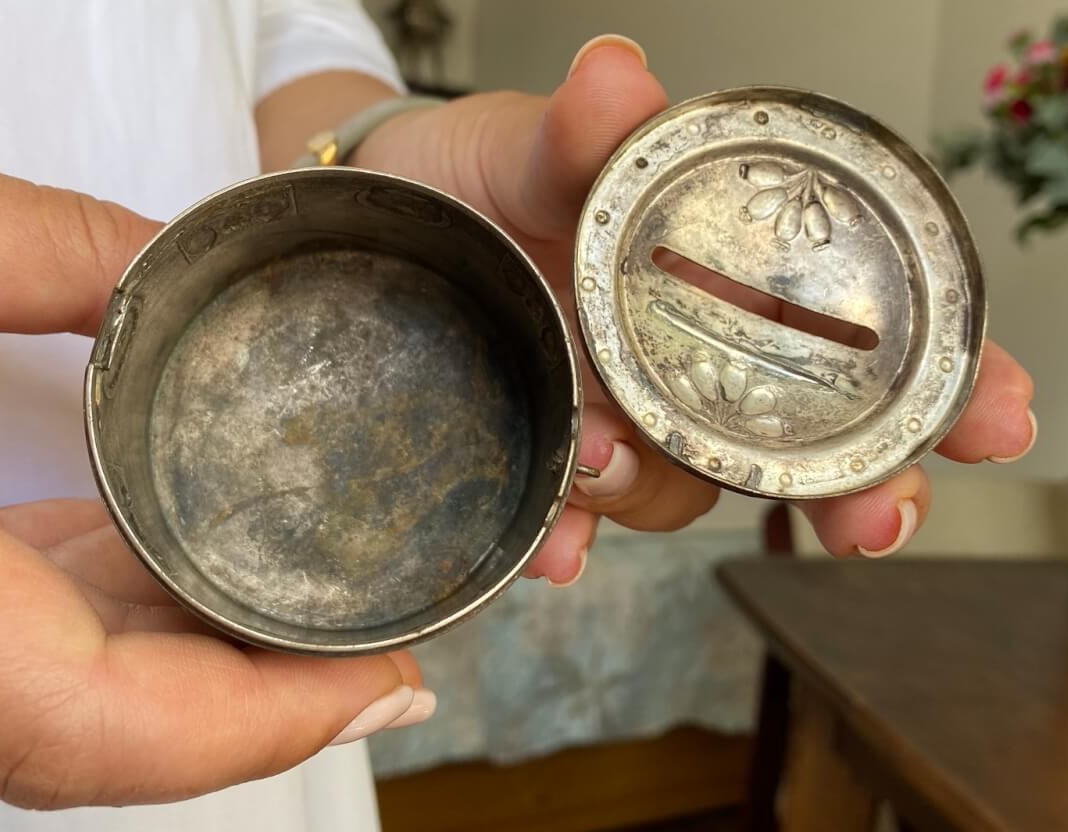
Cylindrical silver plate money box, made by WMF in Germany at the end of the 19th century. The body is decorated in relief with alternating round medallions showing the head of a long-haired cat and square panels showing the head of a dog with drooping ears, on a matted ground. The domed lid has a coin slot set between two clusters of stylised seed pods, and is ringed with a row of raised beads.
The box was closed by a catch fixed to the edge of the lid, which engaged with the ring on the body. The catch is missing: the two fixing holes are visible on the lid and the ring is still in place. The box nevertheless stays closed once the lid is on.
The Württembergische Metallwarenfabrik (WMF) was formed in 1880 by the merger of Daniel Straub’s works in Geislingen and Alfred Ritter’s works in Esslingen. It exported its silver plate across Europe, printed its catalogues in three languages and in 1886 bought a firm in Warsaw, then part of the Russian Empire. By 1914 its Geislingen factory employed around 3,500 people. The stylised plant motifs on the lid belong to Jugendstil, the German form of Art Nouveau, a period of WMF production sought after by collectors.
This money box most likely reached Russia before 1917, or was brought back to the USSR as a war trophy in 1945.
Closing catch missing.
Additional information
| Weight | 0.25 kg |
|---|---|
| Dimensions | 20 × 15 × 10 cm |