Soviet Thermograph 1968 Riga - USSR Weather Recorder - Bakelite
$126.99Unique piece
Soviet Thermograph 1968 Riga - USSR Weather Recorder - Bakelite
$126.99Unique piece
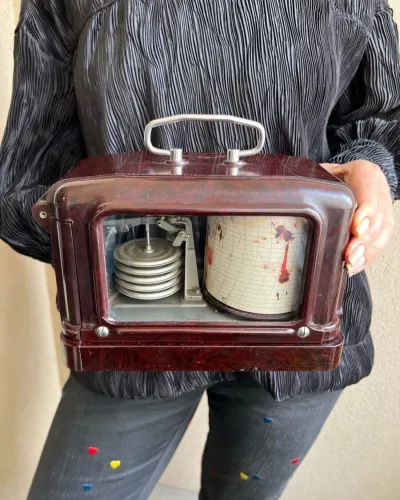
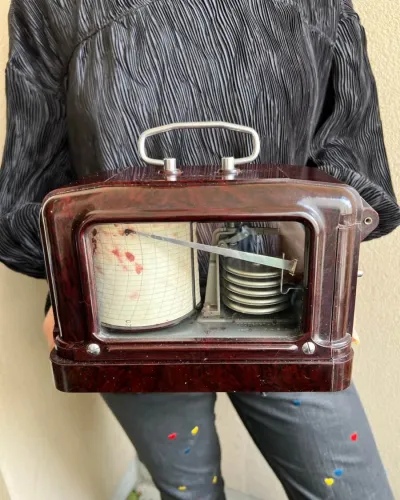
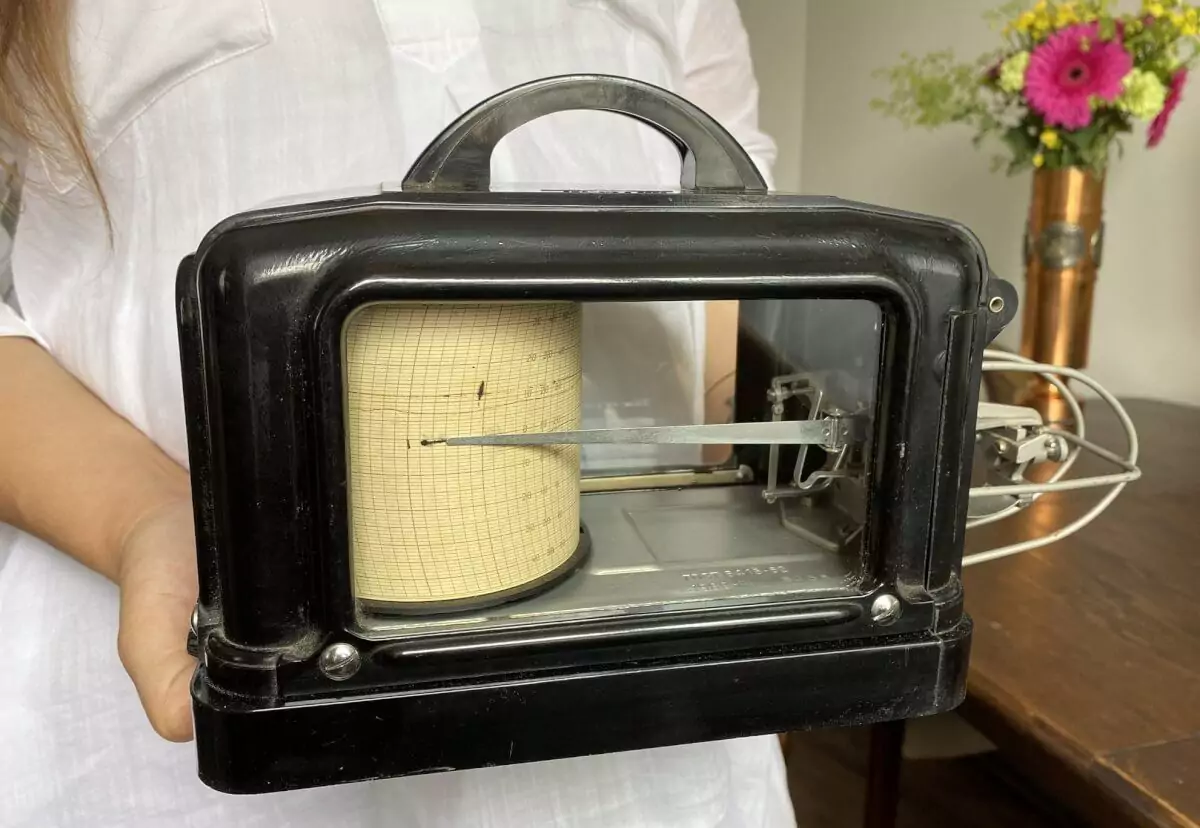
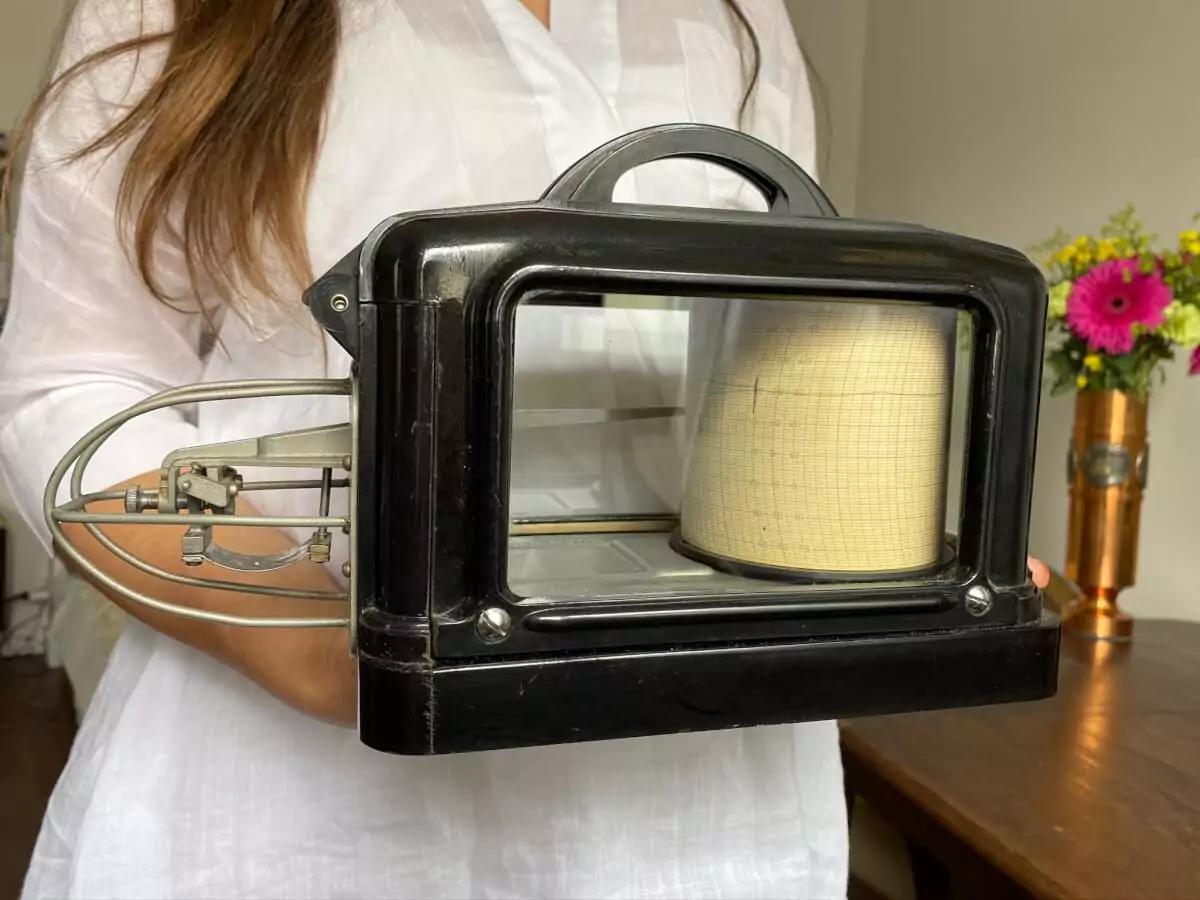
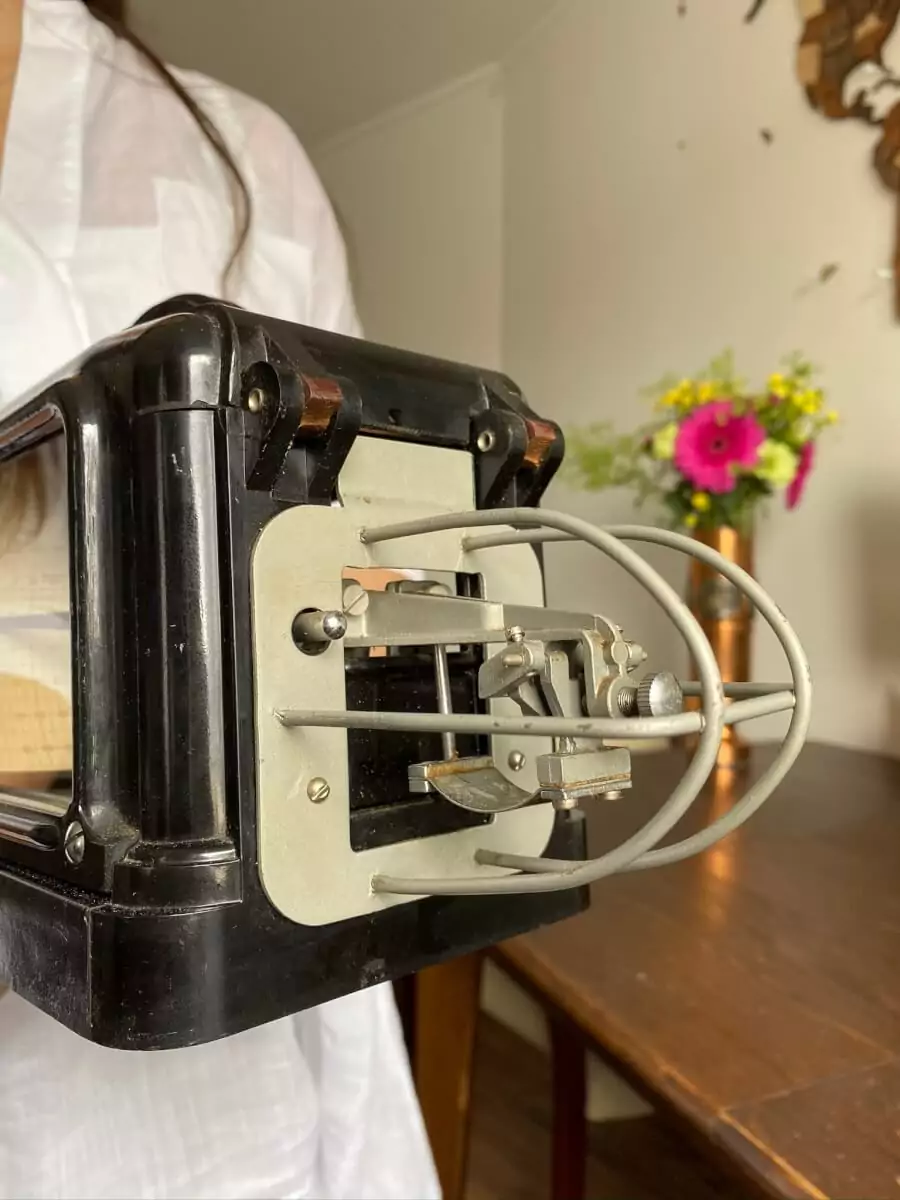
Soviet meteorological thermograph made in Riga in March 1968, glazed black bakelite case with handle, clockwork recording drum and caged bimetallic sensor. The drum mechanism works, the accuracy has not been tested.
1 in stock
Message received, dear comrade.
Our information desk usually replies within 24 hours at the address provided.Prague Spring crushed in August by Warsaw Pact tanks.


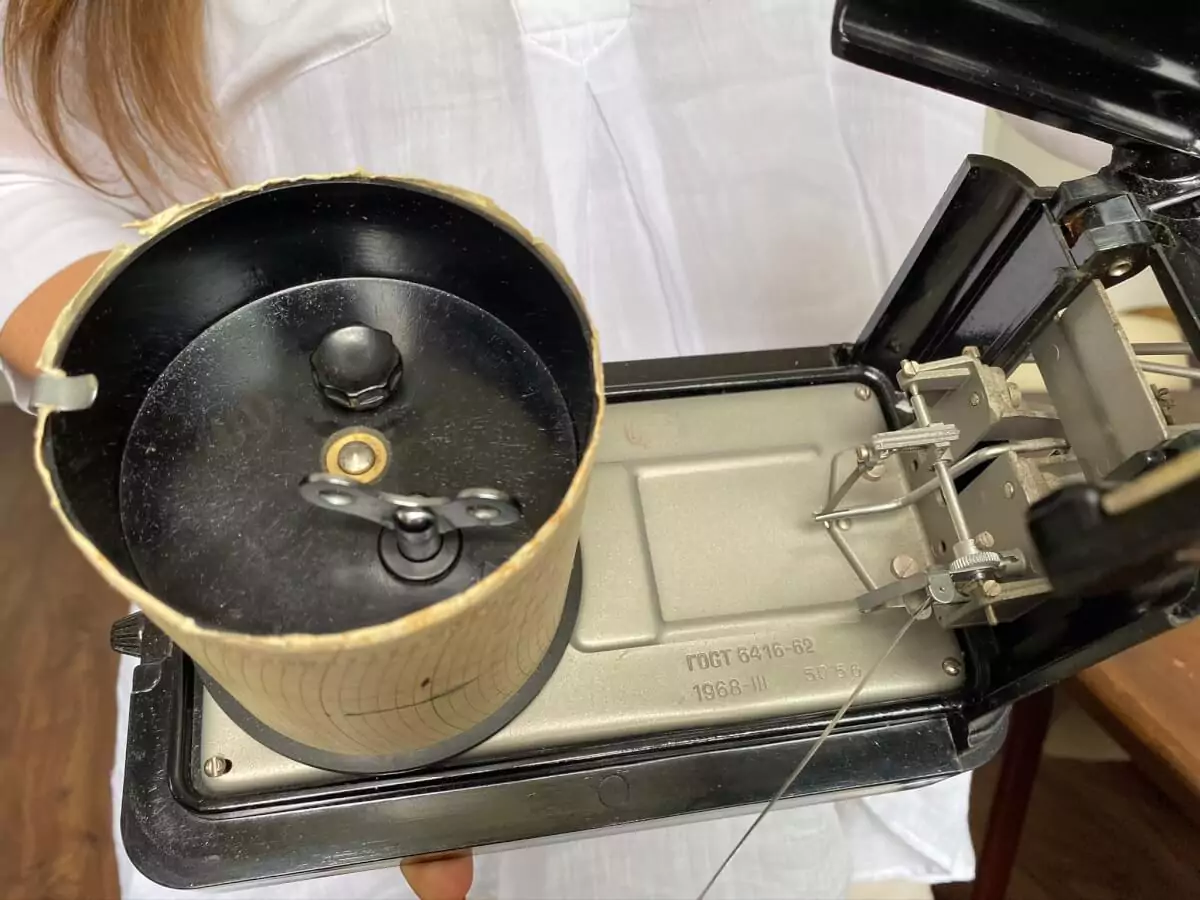
Soviet meteorological thermograph made in Riga in 1968. The black bakelite case, with a moulded carrying handle, is glazed on both long sides and shows the recording drum, the pen arm and its linkage. The upper part lifts on a hinge to give access to the drum. The sensing element sits outside the case, on one end, protected by a wire cage.
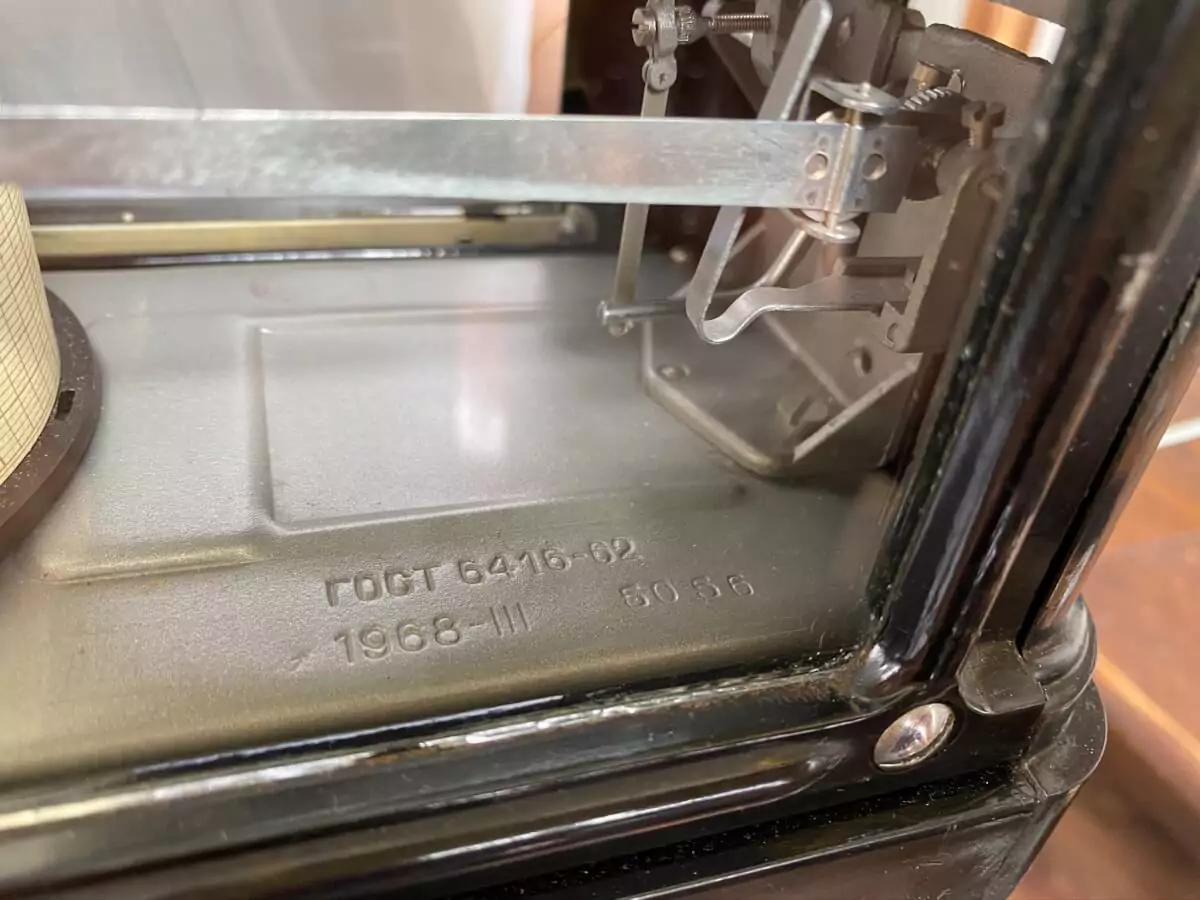
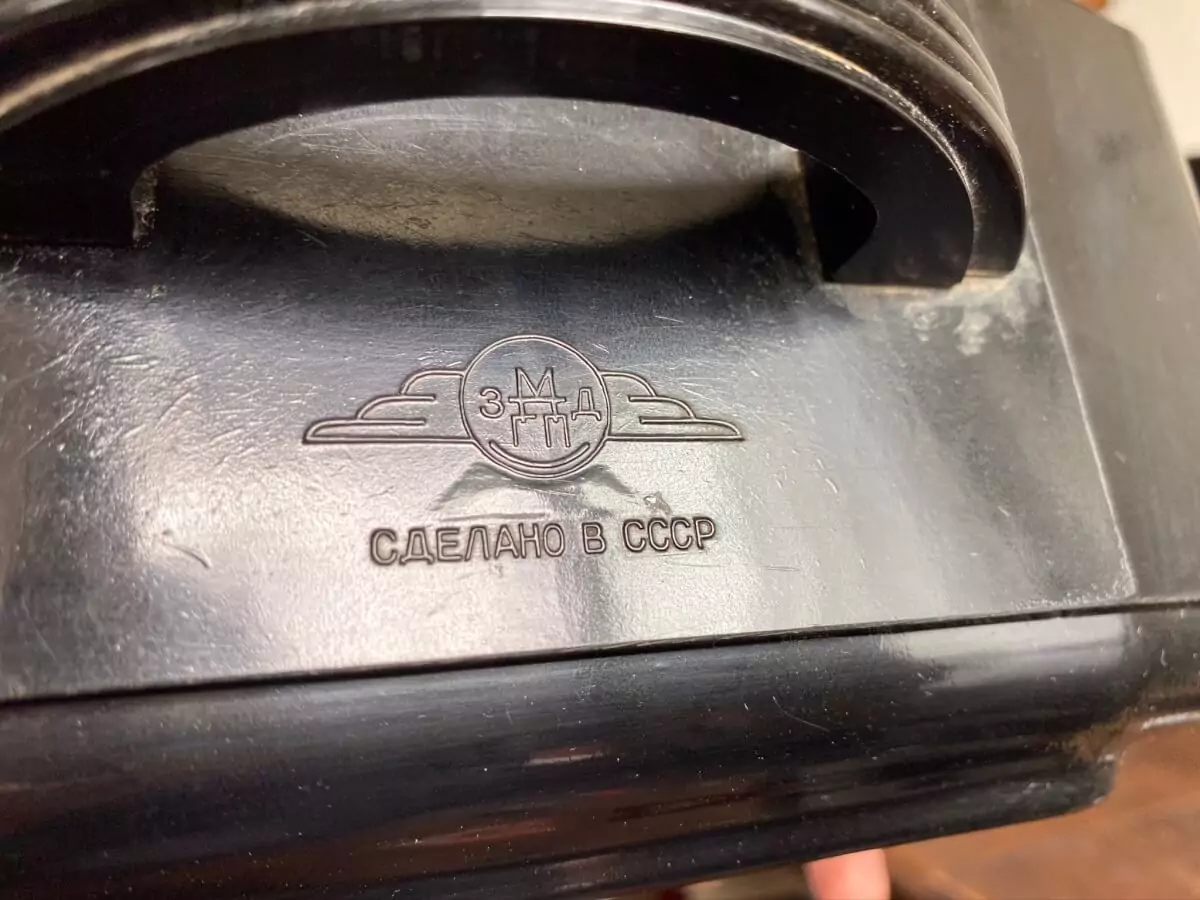
Under the handle, a winged logo in relief accompanies the inscription СДЕЛАНО В СССР (made in the USSR). The grey metal base plate inside is stamped ГОСТ 6416-62 (state standard 6416 of 1962), the date 1968-III, meaning March 1968, and the number 50 56. The drum, shown removed from its seat in one of the photos, still carries a gridded and graduated recording chart. On its lid are the winding key of the clockwork movement and the fixing knob.
A thermograph records air temperature continuously. A bimetallic strip bends with temperature and passes this movement to a pen that traces a curve on the chart wrapped around the drum, which is turned by a clockwork movement. In the USSR, the ГОСТ 6416 standard covered meteorological thermographs with a bimetallic sensing element, designated M-16 in its 1975 revision. These instruments were used in weather stations, in daily or weekly versions depending on the drum movement. In Riga, the experimental Гидрометприбор (hydrometeorological instruments) factory produced weather measuring instruments in the 1960s.
The drum mechanism works, the accuracy of the measurement has not been tested.
Additional information
| Weight | 2 kg |
|---|---|
| Dimensions | 25 × 20 × 15 cm |