Spider Gear Shift Knob in Plexiglass - Soviet Prison Art - USSR
$92.99Unique piece
Spider Gear Shift Knob in Plexiglass - Soviet Prison Art - USSR
$92.99Unique piece
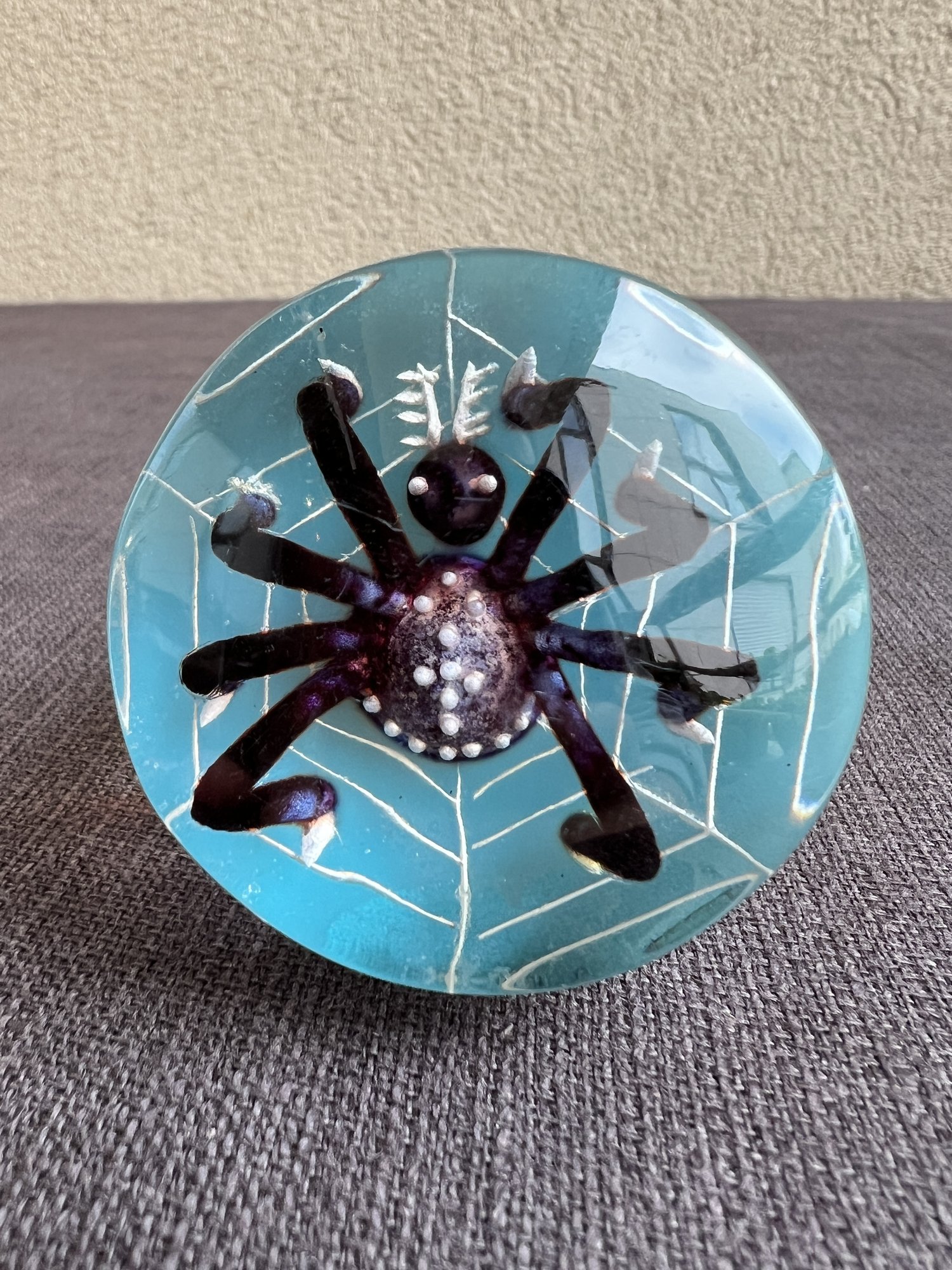
Handmade Soviet gear shift knob with a spider on its web embedded in plexiglass.
Popular with drivers, such knobs were made in prison and camp workshops, this one in the 1980s.
1 in stock
Message received, dear comrade.
Our information desk usually replies within 24 hours at the address provided.Invasion of Afghanistan (1979), boycotted Moscow Olympics (1980). Gorbachev comes to power in 1985, launching Perestroika and Glasnost. Chernobyl in 1986.

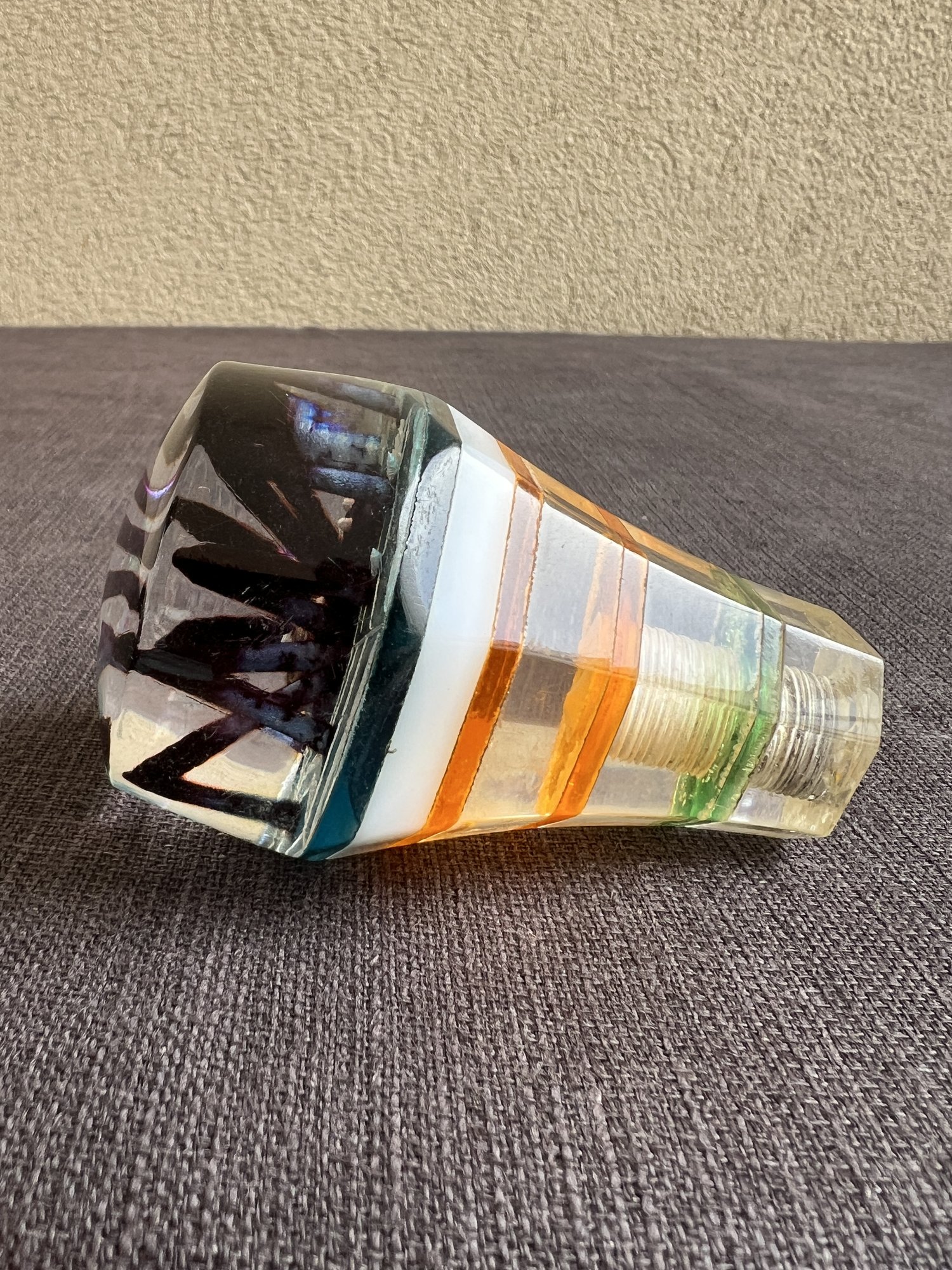
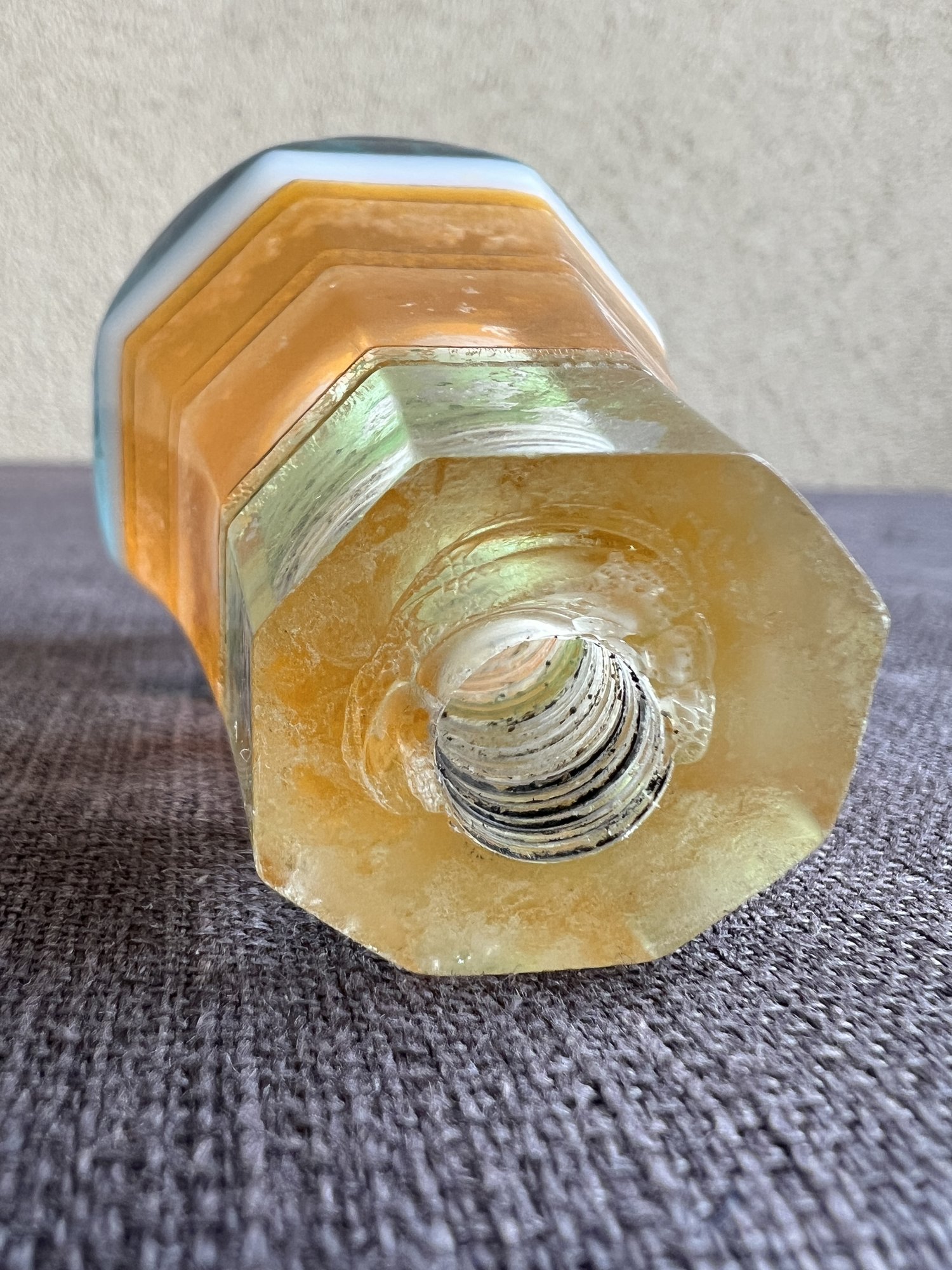
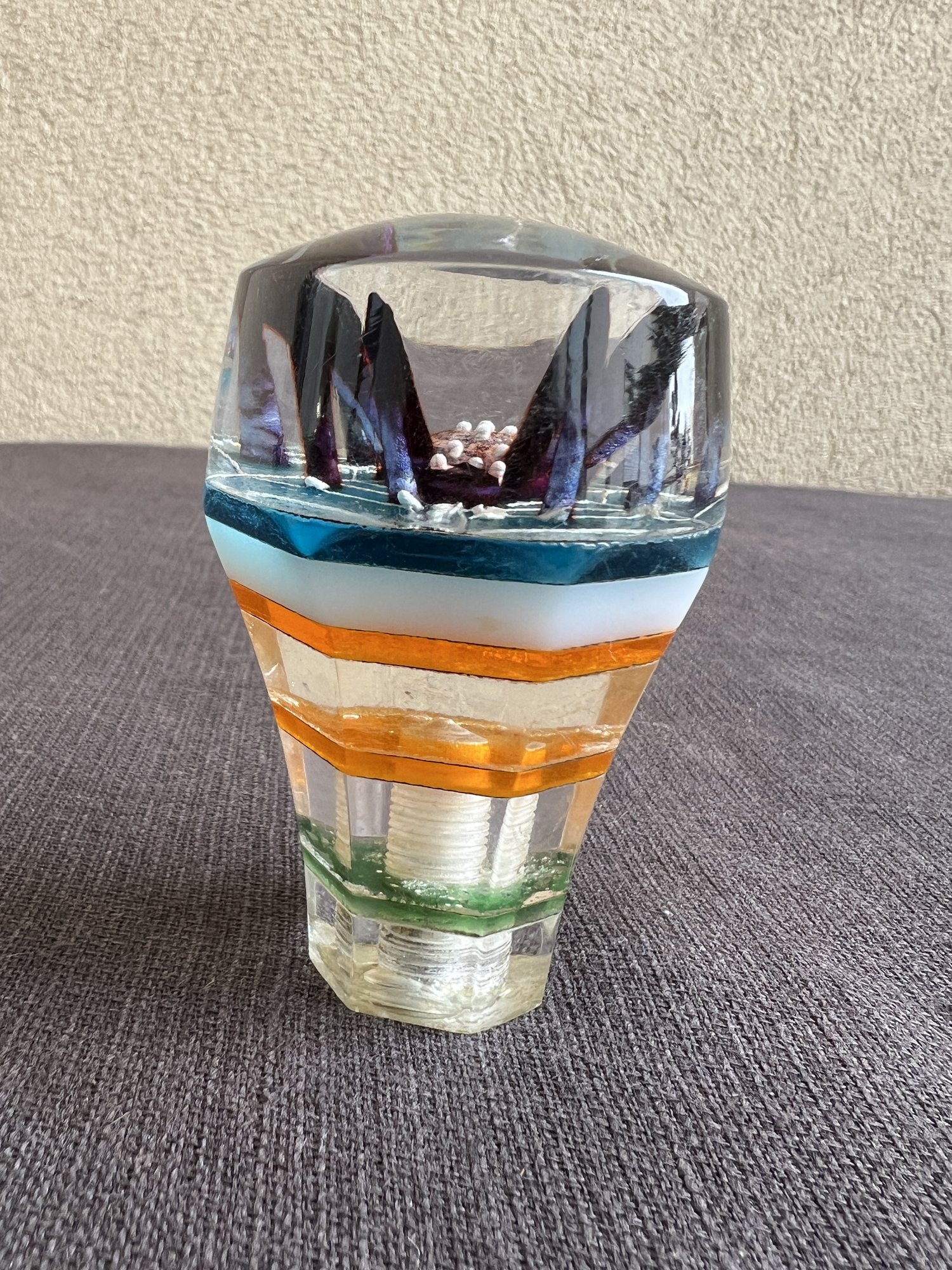
Handmade gear shift knob in plexiglass, with a spider on its web set inside the material. It stands 8 cm high with a diameter of 5 cm. A threaded insert lets it screw straight onto the gear lever.
In the Soviet Union, layered plexiglass objects are closely linked to prison and labour camp workshops. Inmates worked with offcuts of plexiglass, often salvaged from the aviation industry, and turned them into knife handles, pens and gear knobs. Knobs with an embedded motif, a rose, a spider, an insect or a portrait, were prized by taxi and truck drivers, who fitted them to their Volga, Moskvitch or Zhiguli cars. This one belongs to that tradition, although no mark or inscription allows a firm attribution.
In the symbolism of Soviet criminal tattoos, a spider on its web is usually read as the sign of a thief, or of someone caught in a trap, which supports the idea of a prison origin for the piece. Probably made in the 1980s, this one-off piece reflects an unofficial craft carried out by hand with makeshift means, and is now sought after by collectors of Soviet folk art.
Additional information
| Weight | 0.3 kg |
|---|---|
| Dimensions | 20.0 × 20.0 × 10.0 cm |