KGB Marquetry Portrait - Felix Dzerzhinsky - 1977 - Korosten Porcelain USSR
$298.99Unique piece


KGB Marquetry Portrait - Felix Dzerzhinsky - 1977 - Korosten Porcelain USSR
$298.99Unique piece
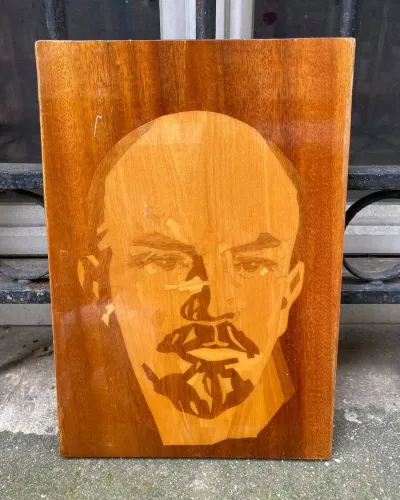
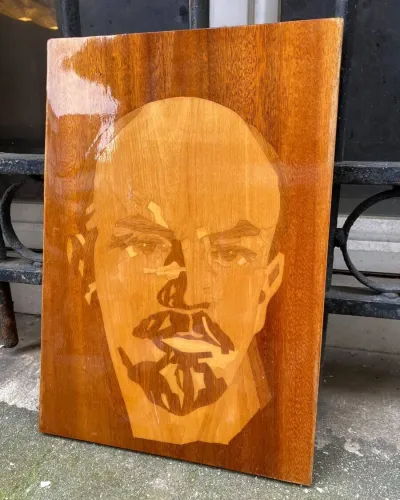
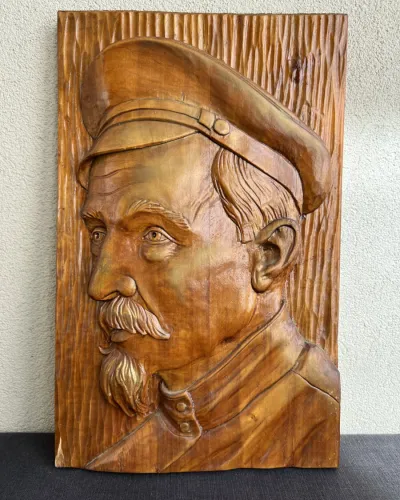
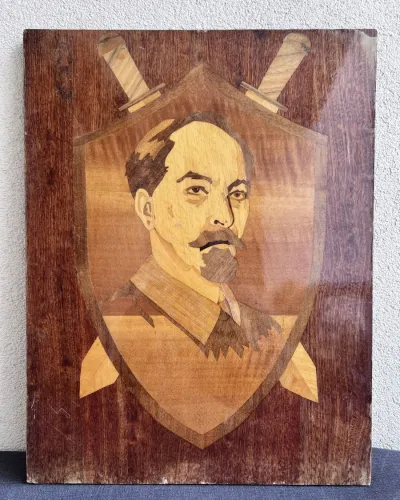
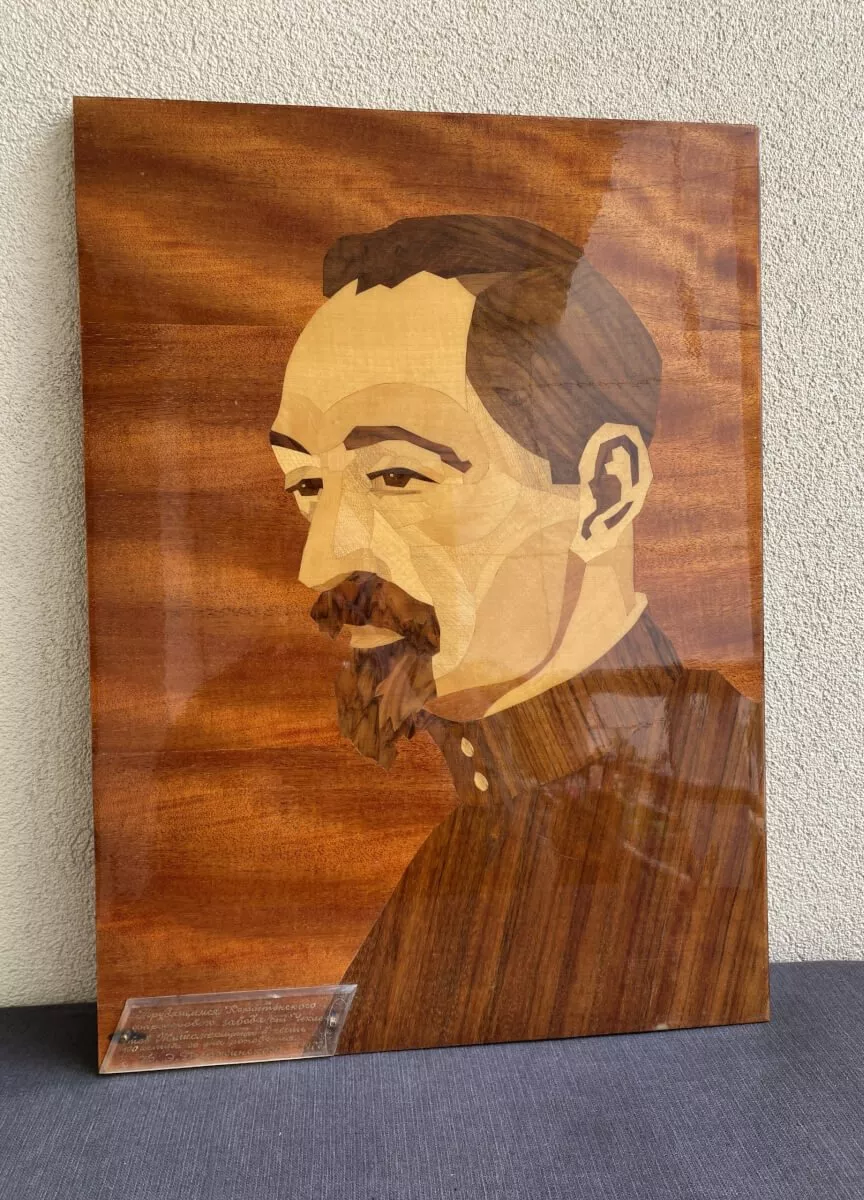
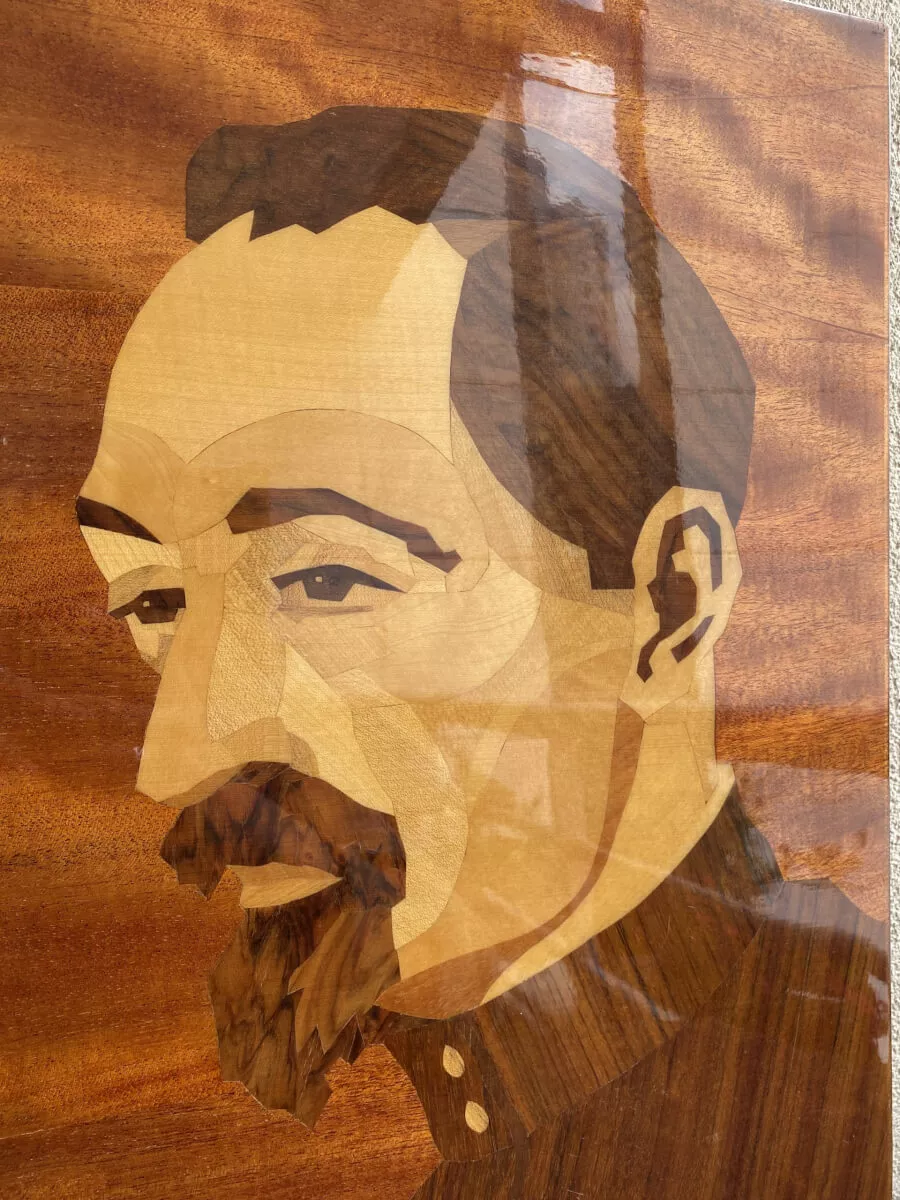
Wood marquetry portrait of Felix Dzerzhinsky, presented in 1977 by the Chekists of the Zhytomyr region to the workers of the Korosten porcelain factory for the centenary of his birth. Engraved plexiglass dedication plate.
1 in stock
Message received, dear comrade.
Our information desk usually replies within 24 hours at the address provided.New Soviet Constitution, known as the "Brezhnev Constitution".
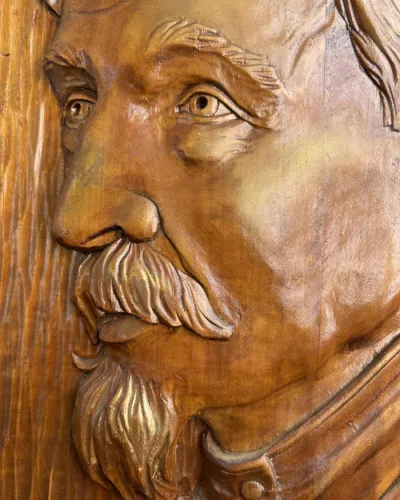
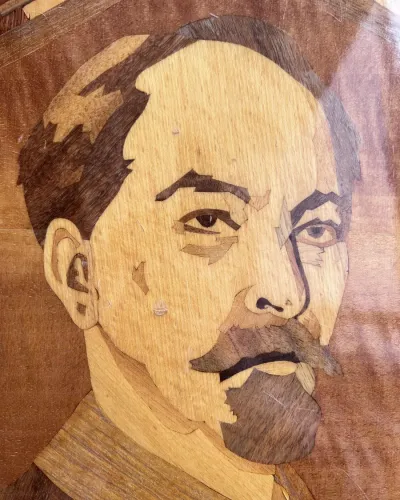
Portrait of Felix Dzerzhinsky in wood marquetry on a varnished panel. The founder of the Cheka is shown in three-quarter view, turned to the left, with his characteristic goatee and moustache, wearing a buttoned tunic. The face is built from many pieces of light veneer, the hair, beard and tunic in dark wood, set against a warm grained background. The panel is finished with a glossy varnish.
In the lower left corner, a plexiglass plate held by two screws carries a gilt engraved dedication in cursive script: “Трудящимся Коростенского фарфорового завода от чекистов Житомирщины в честь 100-летия со дня рождения Ф. Э. Дзержинского 1977 г.” (To the workers of the Korosten porcelain factory, from the Chekists of the Zhytomyr region, in honour of the 100th anniversary of the birth of F. E. Dzerzhinsky, 1977).
Felix Edmundovich Dzerzhinsky, born in 1877, founded the Cheka in December 1917, the first Soviet political police, which the KGB later succeeded. KGB officers kept calling themselves “Chekists” until the end of the USSR. The 1977 centenary was marked by many commemorations, and regional services commonly presented gifts of this kind to the enterprises in their area. The Korosten porcelain factory, in the Zhytomyr region of Ukraine, is recorded from 1904, was nationalised in 1918 and became one of the main producers of decorative porcelain in the Ukrainian SSR.
A one-off presentation piece linking the history of the Soviet secret services with that of a Ukrainian factory. Very good condition.
Additional information
| Weight | 3.5 kg |
|---|---|
| Dimensions | 50 × 40 × 30 cm |