KGB Shield and Sword Emblem - Repoussé Copper - Soviet 1970s
$109.99Unique piece
KGB Shield and Sword Emblem - Repoussé Copper - Soviet 1970s
$109.99Unique piece
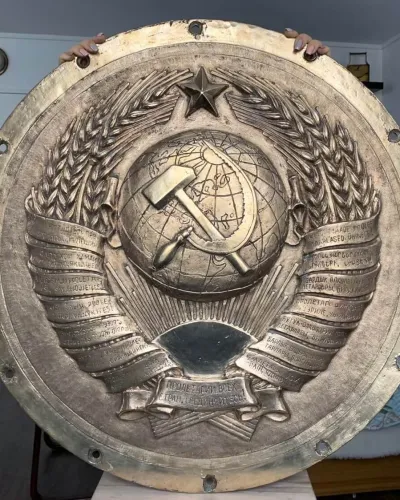
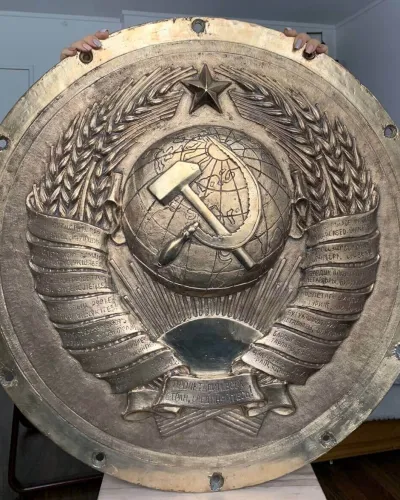
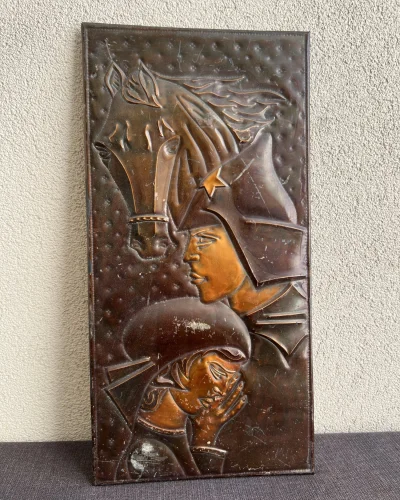
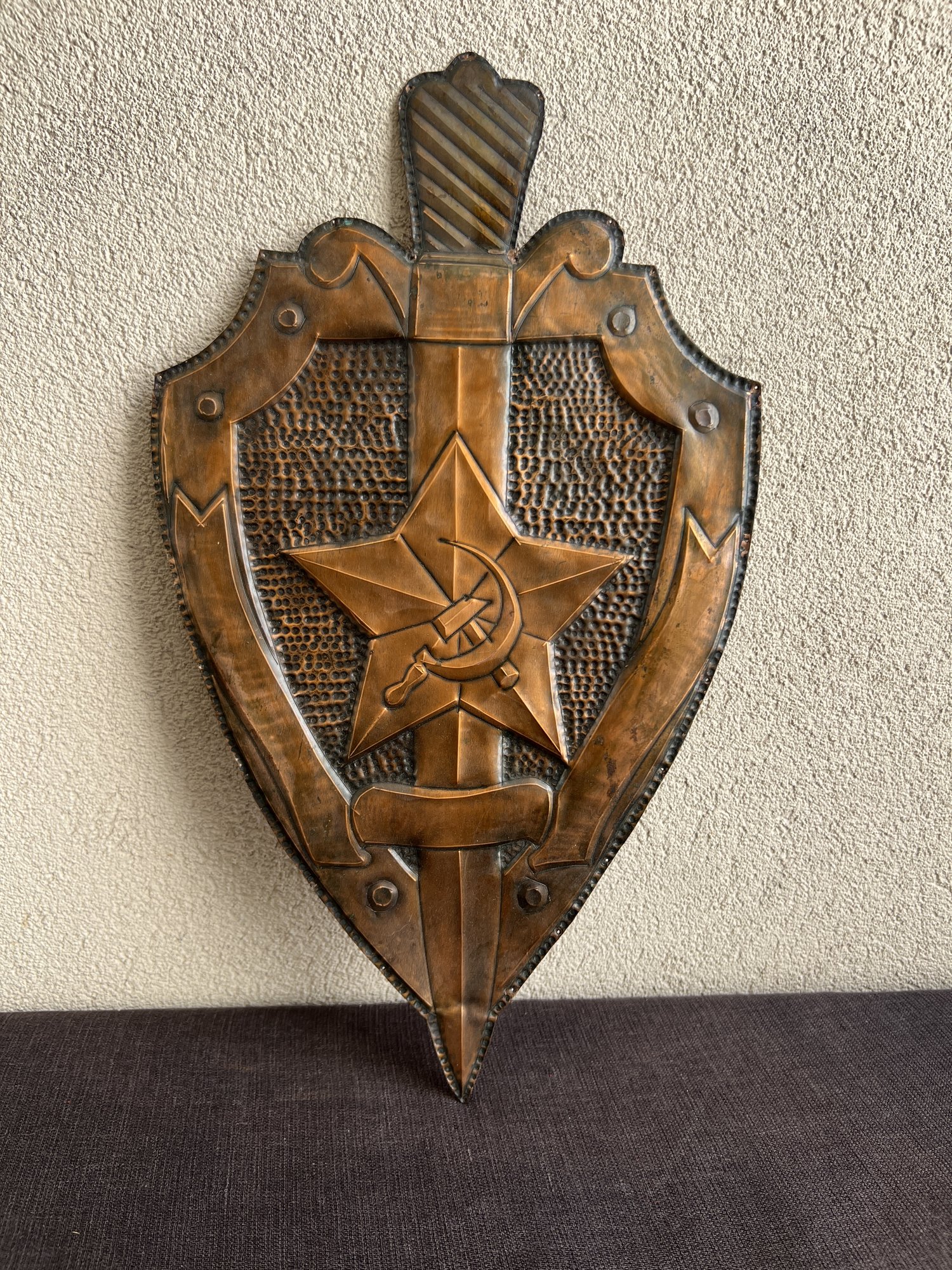
Large Soviet shield and sword emblem in repoussé copper, most likely from the 1970s. Its layout follows the Honoured State Security Officer badge introduced by the KGB in 1957. No maker’s mark or inscription.
1 in stock
Message received, dear comrade.
Our information desk usually replies within 24 hours at the address provided.The Brezhnev era. Détente with the West, SALT treaties, the Apollo-Soyuz mission. Economic stagnation and growing corruption.
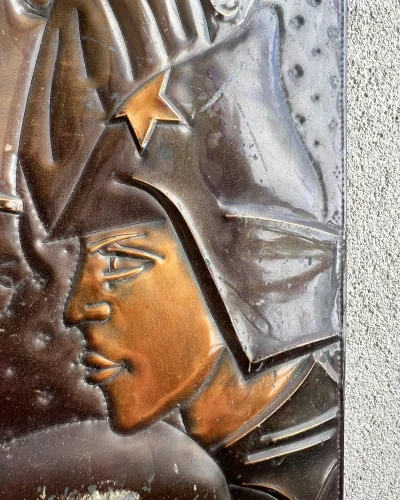
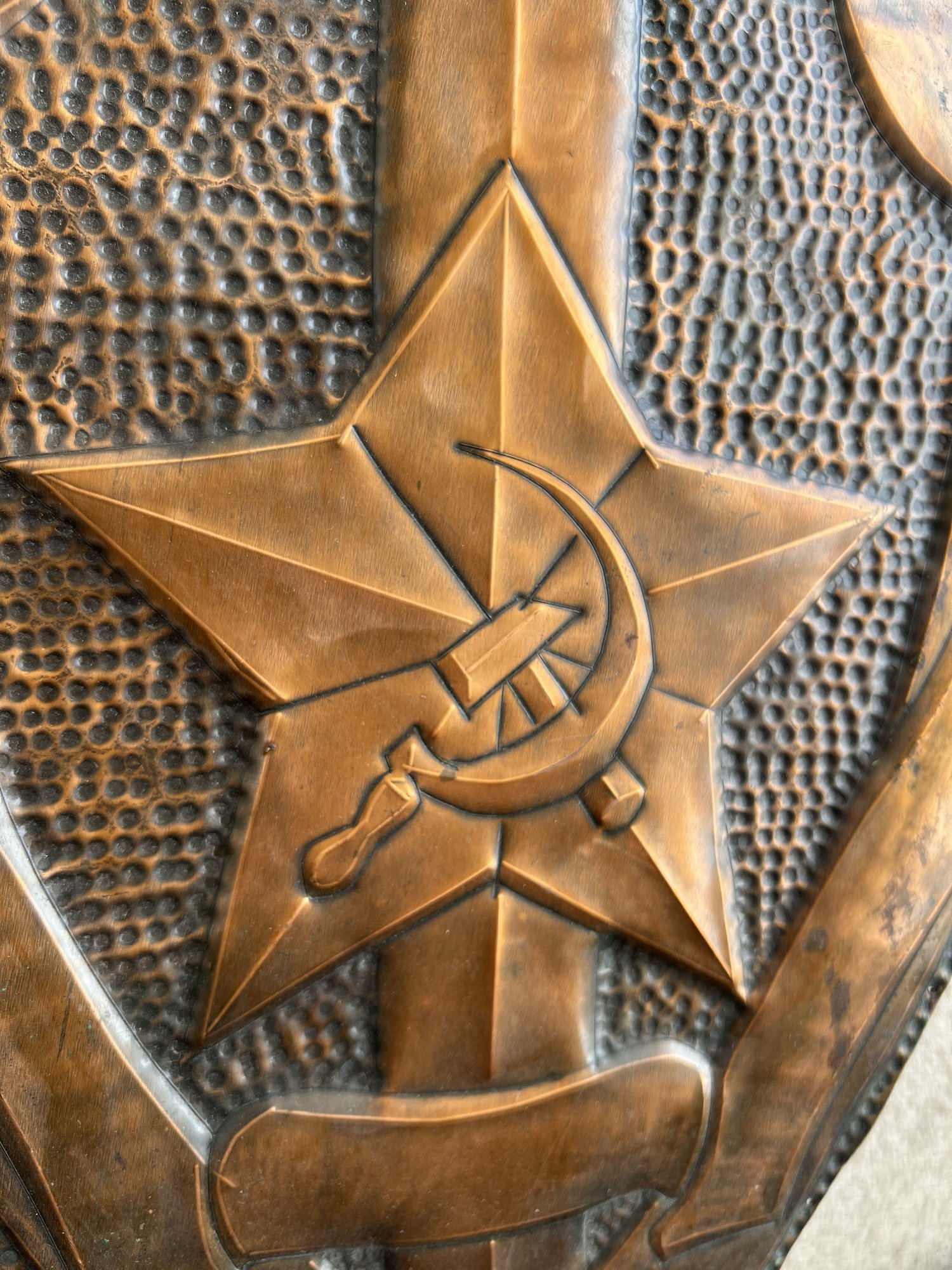
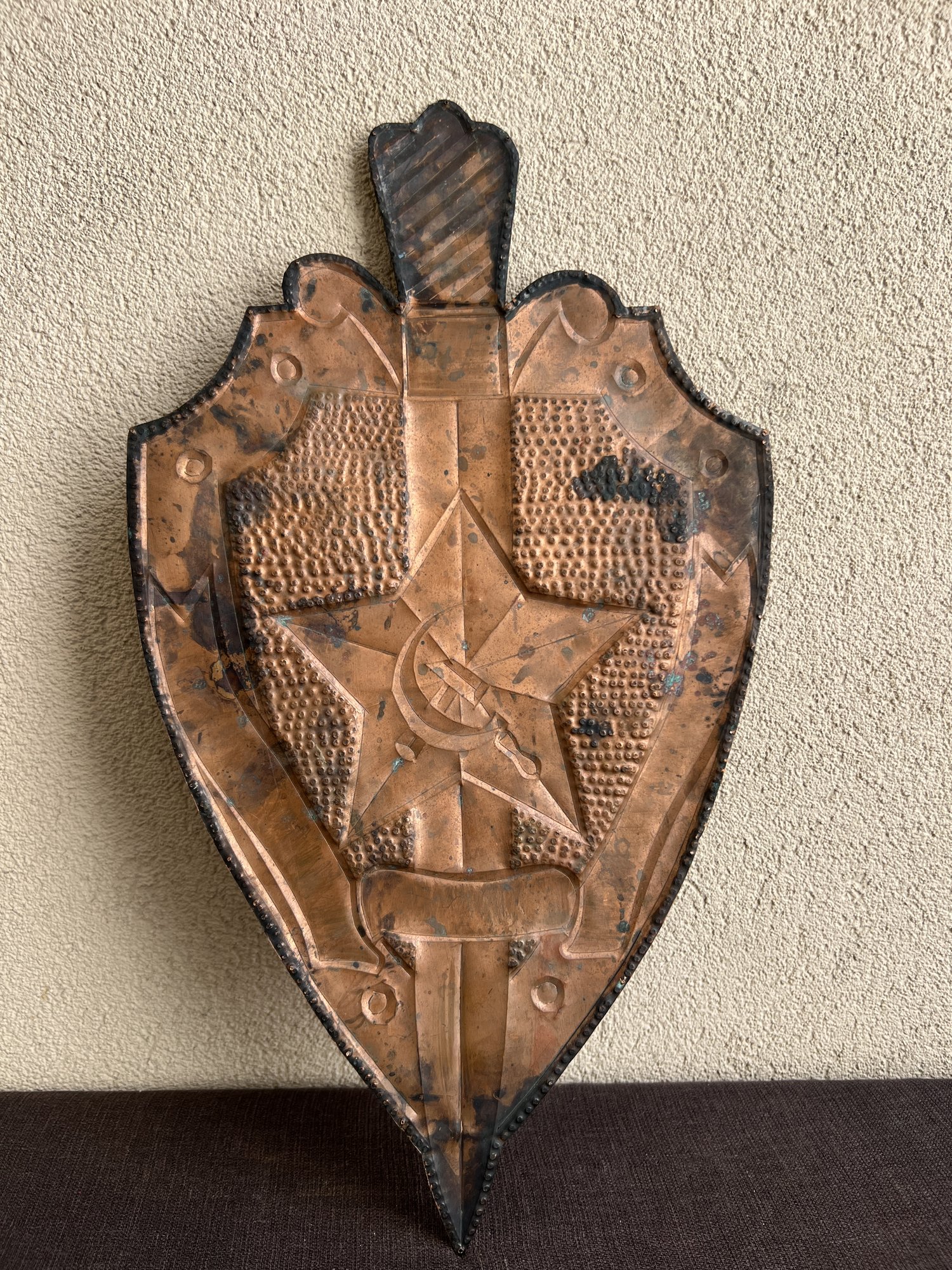
KGB emblem in repoussé and chased copper on a hammered ground, showing the shield and sword of the Soviet security services. The layout, a shield, an upright sword with the hilt at the top, a star bearing the hammer and sickle and a scroll, follows the ‘Почётный сотрудник госбезопасности’ badge (Honoured State Security Officer), instituted by the KGB on 6 December 1957 for the 40th anniversary of the ‘organs’. The scroll is left blank. The sheet is not mounted on a backing and carries no signature, maker’s mark or inscription. Dimensions: 46 x 26 cm. Most likely from the 1970s.
The sword already appears on the badge created in 1922 for the fifth anniversary of the VChK-GPU, that is the Cheka founded on 20 December 1917 under Felix Dzerzhinsky. Shield and sword then became the shared symbol of the successive security ‘organs’, OGPU, NKVD, MGB and KGB, on their badges and jubilee medals. The usual reading, often credited to Dzerzhinsky without a verified source, makes the shield the defence of the state and the sword the weapon against its enemies. Both still appear on the emblem of the Russian FSB.
The KGB (Комитет государственной безопасности, Committee for State Security) was created on 13 March 1954, split off from the Ministry of Internal Affairs after Beria’s fall. It combined foreign intelligence, counter-intelligence, the border troops, protection of the leadership and the fight against dissent, until its official dissolution on 3 December 1991.
Additional information
| Weight | 1.2 kg |
|---|---|
| Dimensions | 55.0 × 35.0 × 10.0 cm |